
Heritage estate gardens aren’t just backdrops—they’re your most valuable design asset. You’ll save 70% on décor costs by embracing mature scenery that already provide symmetry, focal points, and natural lighting. The centuries-old trees, established rose beds, and espaliered fruit create magazine-worthy settings with minimal intervention. Trust the garden’s inherent structure to guide ceremony placement and photography composition. Your budget breathes easier when you let the terrain speak its elegant, time-tested language.
The Heritage Landscape Advantage

When you select a heritage estate for your wedding day, you’re inheriting three decades of botanical investment that money simply can’t buy overnight. Those espaliered fruit trees, formal rose beds, and centuries-old oaks aren’t décor—they’re living architecture that transforms your historic garden wedding into a masterpiece of effortless elegance.
The math is brutally simple: mature southern magnolias, meticulously trimmed boxwood, and cascading rhododendrons eliminate 70% of typical decoration costs. And yet, it’s not merely financial calculus—it’s aesthetic inevitability. Your estate landscape wedding benefits from nature’s patient craftsmanship, delivering soft, diffused lighting that makes everyone look 5 years younger in photos, without a single artificial enhancement. Just as Chanel’s beauty collection enhances natural elegance without overwhelming it, the estate’s inherent sophistication requires minimal intervention to achieve timeless sophistication.
The rolling hills, meadow vistas, and garden fountains work overtime as your silent styling team, delivering magazine-worthy backdrops that would cost thousands to fabricate elsewhere—but here, they’re simply Tuesday’s view. The natural landscapes provide a stunning backdrop that enhances the overall wedding atmosphere without requiring additional decorative elements.
Venue: Estate with 30-Year Gardens
Unlike their fast-fashion counterparts, estates with 30-year gardens transcend simple venue status—they’ve become living biospheres of botanical perfection. You’re not renting space; you’re inheriting generations of horticultural intention. Every espaliered fruit tree, formal rose bed, and centuries-old oak stands as testament to patience your historic garden wedding needn’t replicate.
The math is brutally simple: three decades of root development means irrigation systems that know their job, soil microbiology that self-regulates, and seasonal transition that unfold with clockwork reliability. Your heritage garden celebration leverages decomposed mulch layers and established canopy structures that would cost six figures to replicate artificially. These established gardens typically require minimal intervention with seasonal plant rotation already incorporated to maintain vibrant, year-round interest.
These gardens aren’t merely pretty—they’re functional ecosystems. The estate garden wedding benefits from nature’s infrastructure: natural privacy screening, defined traffic patterns, and tested event zones. For couples considering international celebrations, understanding destination wedding planning processes can help compare the complexity of overseas venues against the straightforward elegance of domestic heritage estates. The landscape performs without intervention, having already survived countless seasonal cycles, providing the ultimate luxury—ecological confidence amid wedding-day unpredictability.
Design Philosophy: Landscape Does the Work
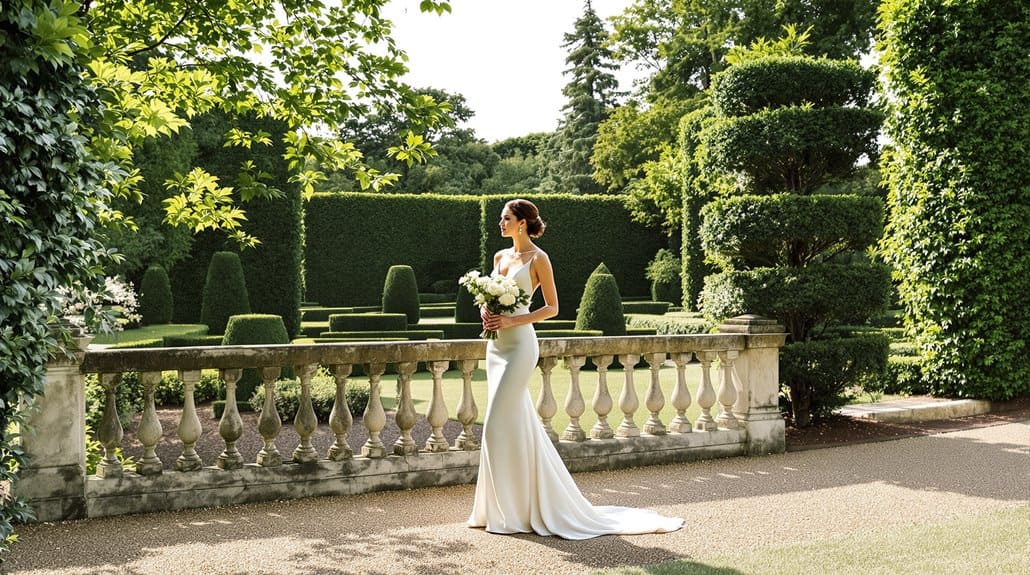
Because ancient trees don’t need sparkly tulle to command attention, the estate garden‘s design philosophy revolves around natural supremacy rather than decorative intervention. When planning your historic garden wedding, you’ll find these scenes operate from a position of inherent confidence—they’ve stood the test of time, and they know it. The estate garden wedding venue doesn’t require elaborate floral installations or hanging installations; instead, it utilizes what’s already magnificently present.
Estate gardens speak with centuries of confidence—no tulle required when ancient oaks serve as your witnesses.
Three elements that make this garden wedding feature work without additional decor:
- Axial symmetry and geometric precision that creates visual balance through repetition and mirrored pathways
- Evergreen structural plantings that maintain year-round definition independent of seasonal fluctuations
- Carefully framed vistas and focal points that guide the eye naturally toward architectural elements
You’re fundamentally borrowing centuries of thoughtful design—the hard work’s been done for you, and yet each space still feels uniquely yours through selective, minimal styling choices. This philosophy extends to beauty services, where professional guarantees ensure your appearance complements the timeless setting rather than competing with it.
Minimal Floral Additions Strategy
Though garden estates provide lush natural beauty in abundance, tactical minimal floral additions create those perfect punctuation marks throughout your celebration’s visual narrative. You’ll find single-stem focal points—one spectacular bloom per vase, clustered at varied heights—deliver sophisticated impact without overwhelming your historic garden wedding setting.
Consider sculptural branch displays, where one perfectly curved flowering branch creates architectural presence while echoing the estate landscape wedding’s natural elements. Or float single roses in shallow water bowls, where reflections double their visual impact while using half the flowers. Brilliant, yet economical.
Foliage-forward compositions work magnificently for estate garden weddings—billowing eucalyptus clouds require no blooms yet deliver dramatic presence. Incorporate herbs like rosemary and sage for fragrance that engages guests’ senses beyond sight alone. These minimal interventions acknowledge what you already have—a heritage landscape doing the heavy aesthetic lifting, requiring only your thoughtful, restrained enhancement.
Selecting blooms at their natural peak ensures your minimal additions arrive with maximum vase life and fuller appearance, extending 3-5 days longer than imported alternatives while honoring the estate’s seasonal character.
Restraint as Sophistication

Restraint in wedding design transcends mere aesthetic preference—it’s the hallmark of true sophistication. When planning your historic property garden celebration, remember that what you omit often matters more than what you include. The mature landscape of a heritage estate already tells a compelling story—your job is simply not to interrupt it.
Consider these principles when embracing restraint:
- Architectural dialogue – Allow clean, geometric elements to complement, never compete with, the estate landscape wedding’s inherent structure
- Singular focal moments – Create one breathtaking installation rather than scattered, competing vignettes
- Material integrity – Choose fewer, finer pieces in natural materials that honor the property’s character
You’ll discover that restraint isn’t about limitations—it’s liberation. By trusting the estate’s centuries-old trees and established gardens to provide the backdrop, you’re free to focus on quality over quantity, on meaning over ornament. Much like the preserved traditional architecture found in mountain villages across Epirus and Zagori, where historic structures speak volumes through their enduring authenticity, a heritage garden requires only the lightest touch to reveal its inherent elegance. And isn’t that what sophistication truly requires?
Ceremony in Garden Setting
When you stand beneath the canopy of centuries-old oak trees, their branches forming nature’s cathedral above you, something exceptional happens to time itself. Your estate garden wedding transcends mere event status—it becomes historical communion.
You’ll notice how the classical white pavilion, with its delicate architectural details, requires nothing more than 150 precisely arranged garden chairs creating an elegant ceremonial path. The historic environment, planted thirty years ago, does the heavy lifting—espaliered fruit trees and formal rose beds frame your vows without a single additional decoration required.
The estate’s Queen Anne Victorian architecture provides the backdrop while accommodating up to 220 guests, each with sightlines strategically directed toward your exchange. And yet, Michigan weather demands pragmatism—your historic garden wedding includes indoor contingencies without interrupting the flow between ceremony and cocktail hour on those emerald lawns.
Before finalizing your ceremony plans, verify that backup indoor space can accommodate your entire guest count should weather conditions require a last-minute shift from the gardens.
The estate environment wedding’s most profound luxury? Restraint—letting three decades of intentional botanical growth speak for itself.
Photography: How Heritage Landscape Read

Estate gardens cultivated over decades offer photographers something modern venues simply cannot replicate—natural leading lines etched into the scenery by time itself. Those espaliered fruit trees frame couples with mathematical precision; ancient oaks create sweeping compositional arcs that guide the eye. You’ll capture depth impossible to manufacture elsewhere.
Working within these spaces demands attention to three critical elements:
- Golden hour timing – Schedule portrait sessions 60-90 minutes before sunset when slanting light illuminates garden textures and creates dramatic backlighting through heritage trees
- Natural framing devices – Position couples beneath archways, between hedgerows, or alongside formal rose gardens for ready-made compositional structure
- Dynamic range management – Employ HDR techniques or graduated filters to balance exposure between bright skies and shadowed garden pathways
The scenery does the heavy lifting—and yet, it requires a photographer’s eye to truly access these centuries-old visual narratives waiting within every carefully planted row.
Budget Savings Through Restraint
Although couples dream of limitless wedding budgets, the shrewdest celebrations emerge from tactical restraint rather than reckless spending. Your historic estate’s three-decade-old gardens—with espaliered fruit trees and formal rose beds—already do the heavy lifting, slashing your décor budget dramatically.
Consider this: booking off-peak (November-March) cuts venue costs by 20-30%. Layer on a weekday ceremony for another 40% reduction. You’re not compromising; you’re strategizing.
The estate’s centuries-old trees provide natural canopies, eliminating $200-5,000 in lighting expenses. Meanwhile, working with seasonal botanicals reduces standard floral costs ($5,100-7,600) substantially. Let the existing scenery work for you.
Budget allocation remains critical: venue and rentals should represent 11%, catering 22%. But watch for preservation surcharges ($500-1,500) that historic properties often require. These hidden costs derail even carefully planned celebrations—and yet, with proper anticipation, they become merely another line item rather than budget-destroying surprises.
When negotiating with your estate venue, focus on scope modifications—such as adjusting service hours or customizing package components—rather than demanding discounts that devalue their preservation expertise.
Conclusion
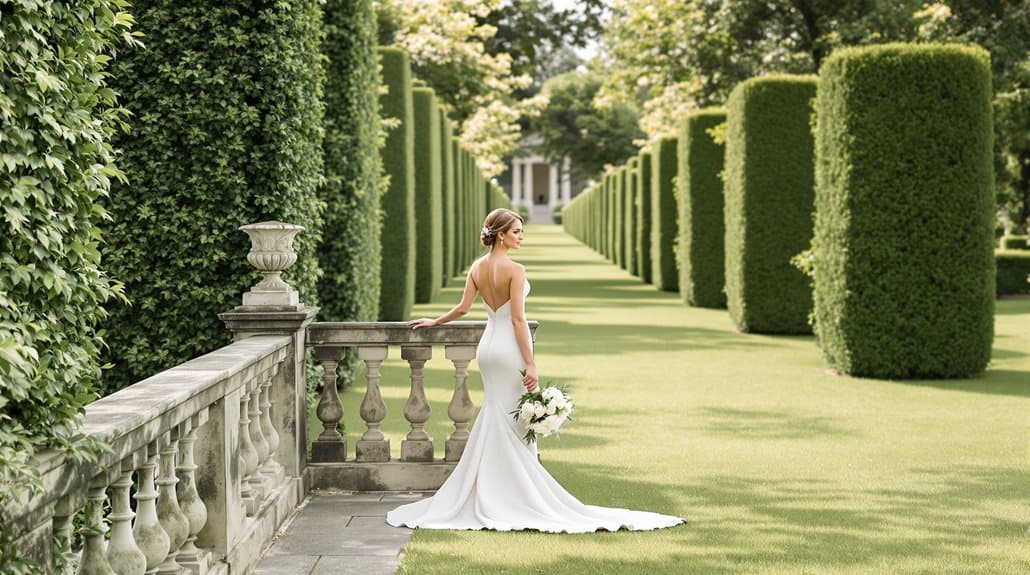
As your journey through this historic estate garden wedding guide concludes, you’ve witnessed how the most memorable celebrations emerge not from excessive additions but from respectful restraint. When working with a landscape that’s been thoughtfully cultivated for decades—those espaliered fruit trees, formal rose beds, and centuries-old sentinels—your greatest contribution might simply be appreciation.
The heritage property speaks its own elegant language, and you’ve learned to listen:
- Preservation through celebration – By choosing minimal intervention, you’ve honored both history and your budget, creating an event that feels authentic rather than manufactured
- Nature’s timing as luxury – Three decades of garden development cannot be replicated with temporary installations, no matter how expensive
- Legacy continuity – Your wedding becomes part of the estate’s ongoing story, neither disturbing nor diminishing its character but enhancing it through deliberate restraint
Your celebration will be remembered not for what you added, but for what you wisely left untouched. This same philosophy of strategic restraint applies to your beauty choices—invest in photography-friendly makeup and proven styling techniques that complement rather than compete with the estate’s natural grandeur, ensuring your images honor both the setting and your authentic presence within it.