
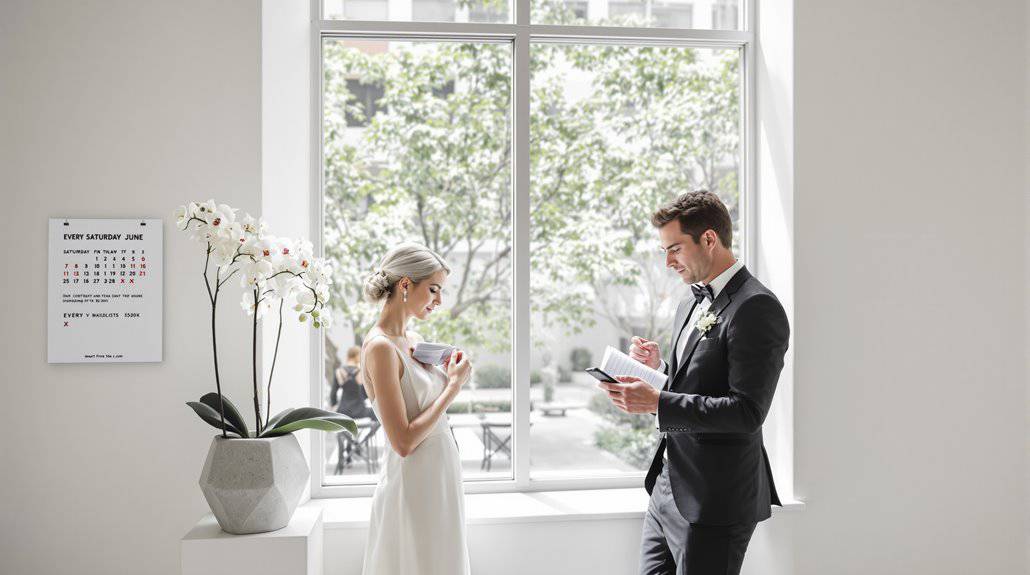
Spring weddings command a hefty premium—you’ll pay 5% more than off-season, with venues demanding $10,000+ minimums. May-June hosts 22% of all ceremonies, creating a self-perpetuating nightmare: popularity breeds scarcity, transforming romance into logistics. You’re competing for vendors who require booking 18+ months ahead, collapsing decision windows from weeks to days. And yet, autumn offers comparable charm with 10-15% savings and far less scheduling stress. The smartest couples are already pivoting toward September.
Spring Wedding Saturation
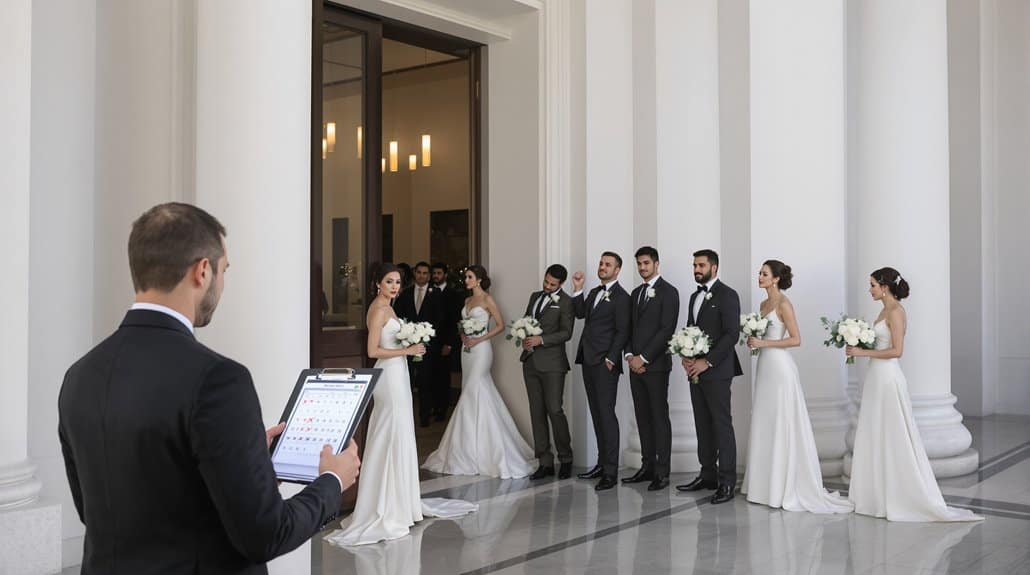
While many couples dream of the perfect spring wedding, the reality hits hard when you begin planning: spring represents the most saturated period in the wedding calendar. The numbers don’t lie—May and June alone account for 22% of all weddings, with spring months collectively hosting a staggering 32% of annual ceremonies. And yet, demand keeps rising, with spring weddings growing 18% in recent years.
You’re not just competing with other couples. You’re battling the mathematics of peak wedding season timing: 100-150 guests per event (the range for one-third of all weddings), limited premium venues, and vendors who know they can command top dollar during April-June. When venues are booked, couples often overlook how seating arrangements can dramatically impact their reception’s success—a critical decision that requires systematic rather than intuitive planning.
The crush is predictable—blooming flowers, pleasant temperatures, symbolic fresh starts—and yet couples continue flocking to these dates, creating a self-perpetuating cycle of scarcity that transforms your romantic vision into a logistical nightmare. This competition is intensified as Fall weddings account for approximately 41% of ceremonies, making it the truly dominant season that many overlook when planning.
Vendor Availability Constraints April-June
As soon as spring wedding planning begins, you’ll confront the harsh mathematics of vendor scarcity during the April-June peak. Spring wedding problems aren’t theoretical—they’re statistical inevitabilities. Your dream photographer? Booked 7 months ago. Your perfect venue? Already hosting someone else’s perfect day.
Vendor saturation reaches critical mass by early January, creating a brutal supply-demand equation that’s working against you. Consider these realities:
- Saturday venues show near-zero availability while Tuesday venues maintain 95% openings
- Florists require December/January reservations for spring dates—5.7 months beforehand
- All 14 average vendors per couple compete for the same limited calendar blocks
Early booking isn’t just advisable—it’s mathematically required. The difference between December planning and February planning isn’t minor, it’s existential. Booking weekday weddings could save you between $1,250-$2,000 compared to Saturday costs while providing more scheduling flexibility. For couples seeking distinctive alternatives, museum private spaces offer architectural sophistication and built-in aesthetic appeal that transcends seasonal competition. And yet, weekday weddings offer a tactical backdoor to spring’s beauty without its competitive bloodsport.
Cost Premiums at Peak Season
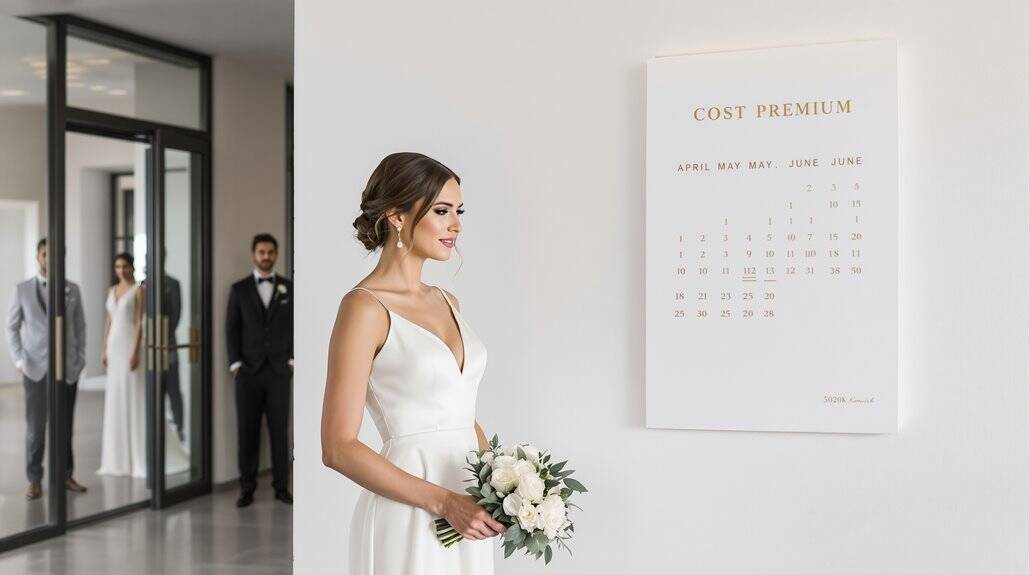
Securing your vendors constitutes just the first logistical hurdle—your budget faces the next impact. Spring wedding problems extend directly to your wallet, with April-June ceremonies commanding a hefty 5% premium above off-season rates. You’re looking at approximately $33,000 for spring celebrations versus $32,000 during fall or winter—a clean $2,000 differential that could fund your honeymoon.
May deserves special caution, commanding the highest spring price tag at $33,900. Wedding season saturation hits hardest on Saturdays, where peak season price escalation creates a perfect storm of financial pressure—venue minimums exceeding $10,000 just for booking rights, catering packages averaging nearly $7,000, and bundled pricing structures that magnify your negotiation power. And yet, Thursday ceremonies offer surprising relief at $31,100, though you’ll sacrifice guest convenience for that $2,000 savings. High-demand metropolitan areas enhance these premiums further, widening regional disparities when everyone wants the same spring dates. Before finalizing your spring wedding date and budget, ensure you’ve secured your California marriage license to avoid last-minute complications that could delay your ceremony.
Booking Windows: 18 Months for Spring
Once you decide on spring nuptials, the clock starts ticking—immediately. While pre-pandemic booking windows stretched comfortably to 12-24 months, the current terrain has compressed dramatically—and yet, spring wedding season still demands earlier planning than any other time. Popular venues fill their May-June calendars with startling velocity, leaving countless couples scrambling for alternatives when they discover their “perfect date” vanished months ago.
Spring weddings operate on a ticking clock. While booking windows compress elsewhere, this season still demands the earliest planning—or risk watching your dream date vanish.
The spring wedding problems timeline looks brutally pragmatic:
- Saturdays in May-June: Require 18+ month commitments at desirable venues, especially those with $10,000+ minimums
- Premium properties: Fill 25-35% of their entire annual wedding calendar during spring months alone
- Decision windows: Collapse from weeks to days as venues experience unprecedented booking speeds
You’re navigating a terrain where booking windows have contracted overall but spring’s popularity creates a contradictory pressure—forcing faster decisions about longer-term commitments. In high-cost metros like Manhattan, where venue costs run 146% above national averages, early booking becomes even more critical to securing any spring availability. The math is simple: delay equals disappointment.
Shoulder Season Advantages: September-October
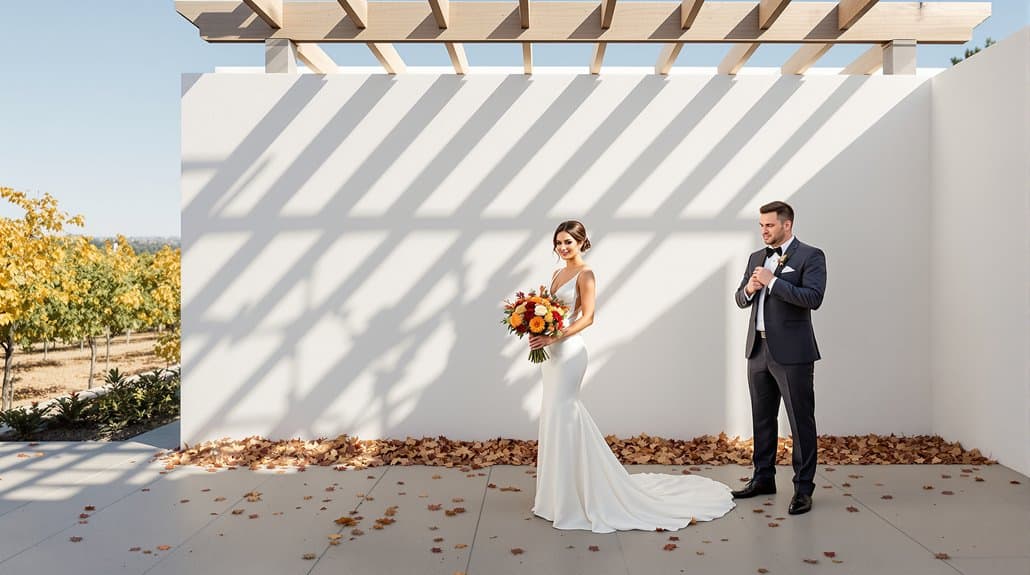
While peak spring dates vanish with near-mythical speed, the September-October corridor offers a brilliant alternative that savvy couples increasingly exploit. This shoulder season delivers captivating foliage backdrops with temperatures that won’t leave your grandmother fanning herself furiously during vows. Vendors who couldn’t squeeze you in during May suddenly have calendar flexibility—and negotiate accordingly.
You’ll find venue and vendor availability dramatically improved compared to spring’s 18-month booking windows. That rustic barn venue booked solid through June 2025? They might have three October dates open next year. And yet, this isn’t winter’s ghost town either—you’re still capturing autumn’s inherent romance without the desperation discount.
Cost savings materialize not just in base prices but negotiating power. While June commands premium rates without flinching, October venues frequently trim 10-15% off peak pricing. The difference? Your dream photographer plus those hand-calligraphed place cards you’ve been eyeing.
For couples planning multi-day celebrations, the shoulder season’s vendor availability becomes even more critical, as coordinating multiple venues and service providers across consecutive days requires scheduling flexibility that peak seasons simply cannot accommodate.
When Popular Timing Worth Premium vs Unnecessary Limitation
The question haunting every wedding budget meeting deserves unflinching honesty: does that coveted Saturday in June truly justify its eye-watering 30% premium? Spring wedding problems stem directly from this popularity paradox—everyone wants those perfect-weather weekends, yet they’re precisely what drives costs into stratospheric territory.
Your peak season premium costs aren’t arbitrary; they’re the predictable result of concentrated demand meeting limited supply. Consider these critical questions before committing to popular wedding season dates:
- Will your specific guests actually attend better during peak season? (Data shows only 5% attendance difference between seasons)
- Is your dream venue genuinely irreplaceable, justifying that 15-30% markup?
- Could an 18-month planning timeline create unnecessary stress compared to a 6-month off-peak alternative?
Sometimes premium dates deliver genuine value—holiday weekends boost attendance substantially. But often, you’re paying primarily for the privilege of competing with thousands of other couples for identical Saturday slots. Historic hotels in city centers offer an alternative approach, combining significant architectural heritage with romance packages that can deliver memorable experiences without the peak-season venue competition.
Strategic Season Selection
Savvy couples recognize that choosing a wedding date involves more than circling a pretty month on your calendar—it’s a tactical decision that reverberates through every aspect of planning. With spring wedding season consuming a staggering 65% of annual celebrations and June alone claiming 35% of all weddings, you’re fighting an uphill battle against established tradition. Consider the spring wedding problems lurking beneath those picturesque blooms: venues booked 18 months in advance, premium pricing that tests even the most generous budget, and vendors stretched impossibly thin.
And yet, alternatives exist just beyond this matrimonial traffic jam. September-October delivers comparable weather conditions with dramatically improved availability. You’ll still capture those romantic outdoor moments—the #1 venue choice for 2026—without paying the “peak tax” that accompanies May-June dates. For couples seeking even more distinctive options, Jamaica destination weddings offer year-round tropical beauty with all-inclusive resort packages that sidestep traditional seasonal constraints entirely. The spring wedding drawbacks (heightened competition, inflated costs, limited options) simply aren’t worth the squeeze when equally beautiful alternatives wait just a few calendar pages away.
Conclusion
Despite spring’s enduring allure as wedding season, shrewd couples must confront its substantial trade-offs—crushing vendor competition, stratospheric pricing, and venues locked down over a year in advance. Your dream celebration needn’t become a financial nightmare when alternatives exist. Fall weddings, particularly in September and October, deliver comparable weather with dramatically improved vendor availability and potential savings of thousands.
When weighing the spring wedding dilemma, consider these tactical alternatives:
- Shift to autumn dates for 20-30% savings without sacrificing aesthetic quality
- Explore Friday or Sunday celebrations, which instantly unbolt vendor flexibility
- Consider morning ceremonies followed by brunch receptions—cutting per-head costs by nearly 40%
You’ll sacrifice nothing meaningful by abandoning spring’s overcrowded calendar. Museum venues themselves present another strategic choice—contemporary museums offer 90% fewer decoration restrictions and unlimited color options compared to classical spaces, potentially streamlining your planning timeline during competitive booking seasons. And yet, timing remains deeply personal—some traditions transcend practicality. The perfect wedding date balances pragmatic concerns against emotional significance, a calculation only you can make with confidence.