
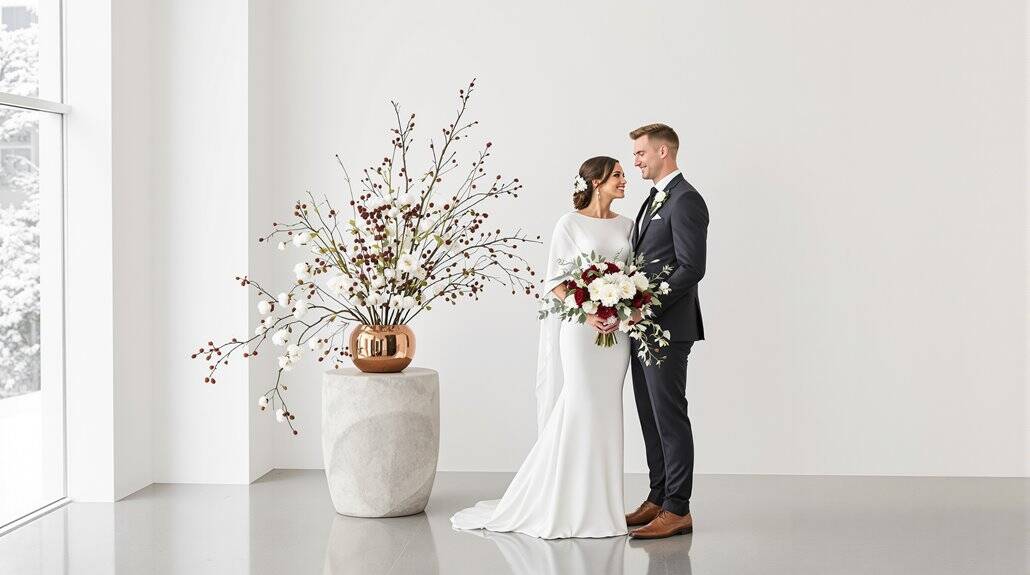
For a winter wedding beyond evergreens, embrace refined alternatives: white anemones, architectural branch work (birch, cherry), and dried elements like bleached ruscus. Replace holiday red-green with jewel tones—emerald, burgundy, navy—or unexpected pairings like maroon-teal. You’ll save 15-20% with dried botanicals while creating high-impact photo moments. Amaryllis and hellebores offer seasonal elegance without screaming “Christmas tree lot.” The most unforgettable winter celebrations reject holiday defaults for intentional, contradictory beauty that honors the season’s austere magic.
The Christmas Decor Problem
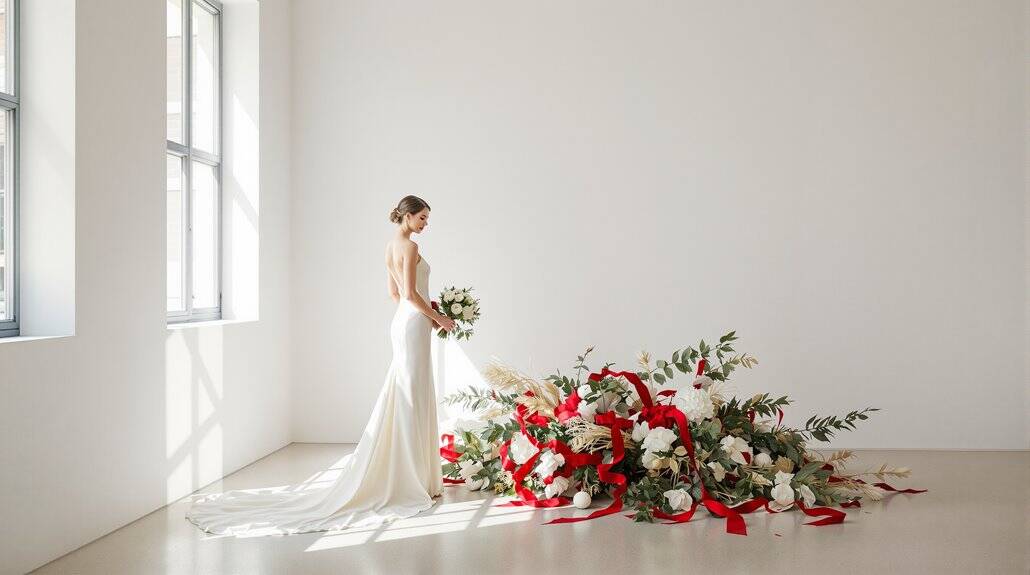
The evergreen monoculture problem transforms your refined affair into what guests might mistake for a corporate Christmas function. Pine and spruce, when used exclusively, create that unmistakable Christmas tree lot vibe. And yet, winter floral design offers rich alternatives—anemones, ranunculus, and hellebores that speak to the season without carol-singing.
Those holiday symbols—candy canes, poinsettias, traditional wreaths—immediately signal “December 25th,” not “wedding day.” Your color palette compounds the issue: combine red and green, and you’ve essentially hung a mental mistletoe over your entire reception. The trap is subtle but absolute—one moment you’re planning a winter wonderland, the next you’re accidentally hosting Santa’s workshop. Consider incorporating geometric accessories in your centerpieces for a modern winter aesthetic that avoids the predictable holiday motifs. Your Cartier bridal jewelry deserves a setting equally elegant and intentional, not one that competes with tinsel and tree toppers.
Winter Blooms Beyond Evergreens: Amaryllis Anemones Ranunculus
Moving beyond the Christmas cliché requires knowledge of winter’s secret floral arsenal—those spectacular blooms that thrive precisely when everything else retreats. Your elegant winter flowers needn’t scream “holiday party” when amaryllis delivers drama from October through April in eight striking hues, from coral to classic red, making immediate visual impact whether standalone or layered.
Anemones—available October to May—offer that vital black-centered distinction (except in white varieties, which feature green or yellow centers) at $95-$125 per bouquet versus $125-$175 for imported alternatives. And yet, it’s ranunculus that might become your winter floral design salvation, emerging in January with substantial blooms requiring fewer stems for maximum effect.
The savviest winter couples supplement these seasonal stars with architectural elements—hypericum berries, magnolia leaves (two textures in one!), silver brunia—creating textural complexity while stretching budgets through deliberate winter bloom options that embrace, rather than fight, the season. Consider incorporating hellebore flowers for their unique star-shaped blooms in green, purple, burgundy, and brown tones that perfectly complement boho or eclectic winter wedding aesthetics.
Architectural Branch Work
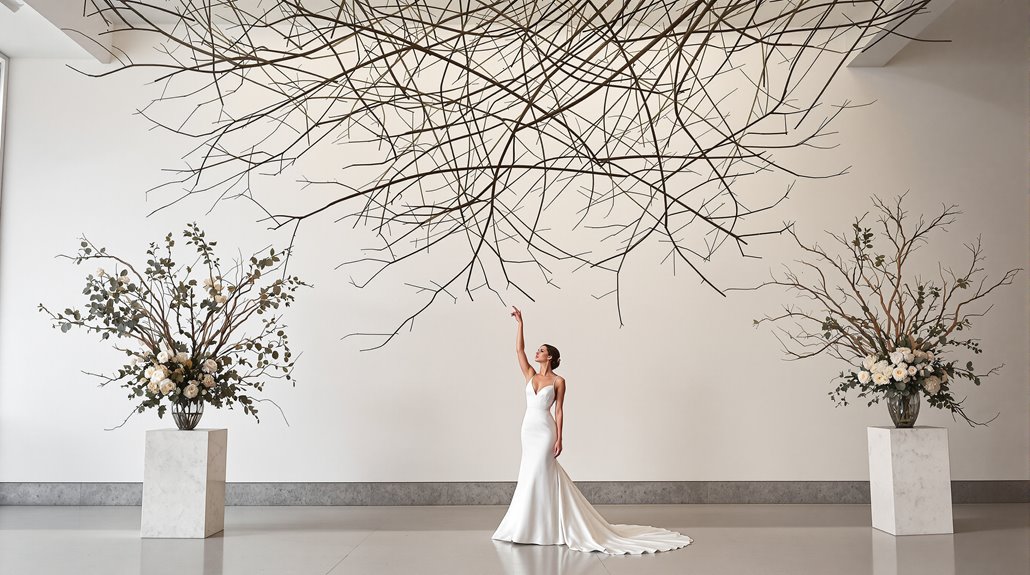
While seasonal blooms create delicate color stories, architectural branch work constructs the visual backbone that defines your winter wedding’s physical presence. Birch delivers clean contemporary lines, while cherry branches offer delicate linear elements—each material speaking its own design language within your winter floral design vocabulary.
Grapevine emerges as the workhorse of structural installations, creating ceremony arches that support additional greenery without screaming “Christmas.” Your chuppah framework needn’t default to predictable evergreen when curly willow intertwined with orchids creates breathtaking ceremony structures that honor tradition while avoiding seasonal clichés.
Don’t underestimate lighting’s critical role. Winter’s early sunsets demand tactical illumination—warm white string lights woven through branch structures create celestial effects, and yet, without proper uplighting, your most stunning branch work disappears into darkness by 4pm. Consider ballroom venues for climate control advantages that eliminate the unpredictability of outdoor winter conditions while showcasing your branch installations under consistent lighting. Placement matters: overhead installations command attention without consuming floor space, transforming ordinary venues into immersive winter wonderlands that never once rely on a single pine cone.
Dried Elements and Grasses
As winter strips scenery bare, dried botanicals emerge as floral design’s unsung heroes—offering sculptural permanence where fresh blooms demand constant replacement. Your winter palette wedding needn’t surrender to predictable evergreens when pampas grass, preserved roses, and architectural seedpods create refined alternatives that won’t wilt mid-reception.
Consider the budget math: dried arrangements eliminate the 15-20% waste factor inherent in fresh florals—and you’ll keep your bouquet forever, not just Instagram memories of it. The warm earth tones of bleached ruscus and bunny tail grass create depth without screaming “Christmas party,” a distinction worth pursuing.
Dried grasses introduce verticality to installations—lagurus reaching skyward while statice and strawflowers provide earthbound structure. And yet, their true power lies in their season-defying presence; these elements bring summer’s abundance into winter’s austerity, creating warmth through texture rather than predictable holly berries and pine. For destination weddings in warmer climates, dried arrangements travel remarkably well, maintaining their structure through multiple language accommodations and international transit without the fragility concerns of fresh florals.
Sophisticated Winter Palettes
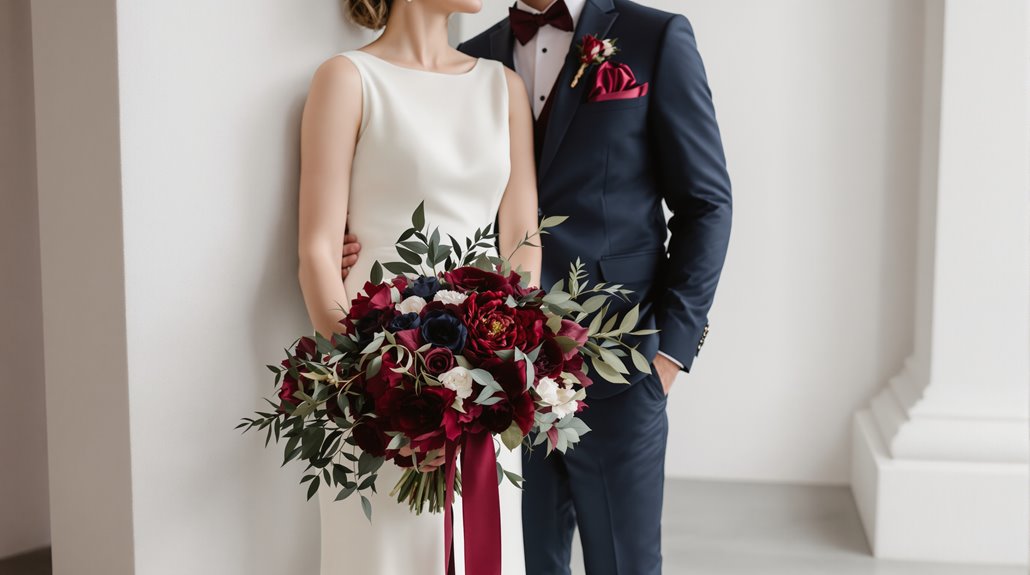
The color selection trap awaiting winter brides has claimed countless Pinterest-perfect weddings—predictable red and green schemes that read less “sophisticated union” and more “office Christmas party.” Your winter palette deserves liberation from these seasonal clichés.
Consider jewel tones—emerald, amethyst, ruby—for bridesmaid dresses that complement refined winter florals like anemones and hellebores. Navy blue paired with burgundy creates depth without screaming “holiday.” Or embrace metallics: silver and gold combinations on tablescapes create magical shimmer while copper accents warm any winter floral design.
Winter’s palette demands liberation from clichés—jewel tones and rich metals create sophisticated elegance beyond predictable seasonal expectations.
For contemporary elegance, dusty blue and sage green arrangements offer sophistication without seasonal dependency. Neutral refinement works brilliantly too—taupe and chocolate brown evoke cozy sophistication, while black-and-white schemes eliminate decision fatigue altogether.
The secret to winter wedding flowers? They shouldn’t remind guests of their Christmas trees. Instead, ranunculus and amaryllis arrangements in unexpected palettes—maroon with dark teal, icy blues with cream—elevate your celebration beyond seasonal tropes. When planning your floral budget, remember that seasonal availability can significantly impact costs, with winter blooms averaging around $2,200 for a typical wedding.
Avoiding Christmas Adjacency
You’ve got options—rich, textural options. Pair deep raspberries and royal purples with blue thistle for refined arrangements that honor the season without holiday baggage. Or pivot completely: citrus tones like orange ranunculus and peachy pink mother of pearl roses inject warmth into winter bloom options while creating decisive distance from traditional Christmas palettes.
Winter wedding flowers should celebrate, not imitate. Hellebores offer moody burgundy-mauve combinations that feel distinctly seasonal yet festive-neutral. And yes, you can incorporate evergreens—Leyland cedar paired with saturated jewel tones creates rich textures without reading as holiday decor. The distinction lies in thoughtful combinations rather than reflexive seasonal defaults. For couples seeking luxurious settings that complement these sophisticated floral choices, consider destinations that prioritize both aesthetic refinement and memorable experiences.
Examples: Elegant Winter Florals
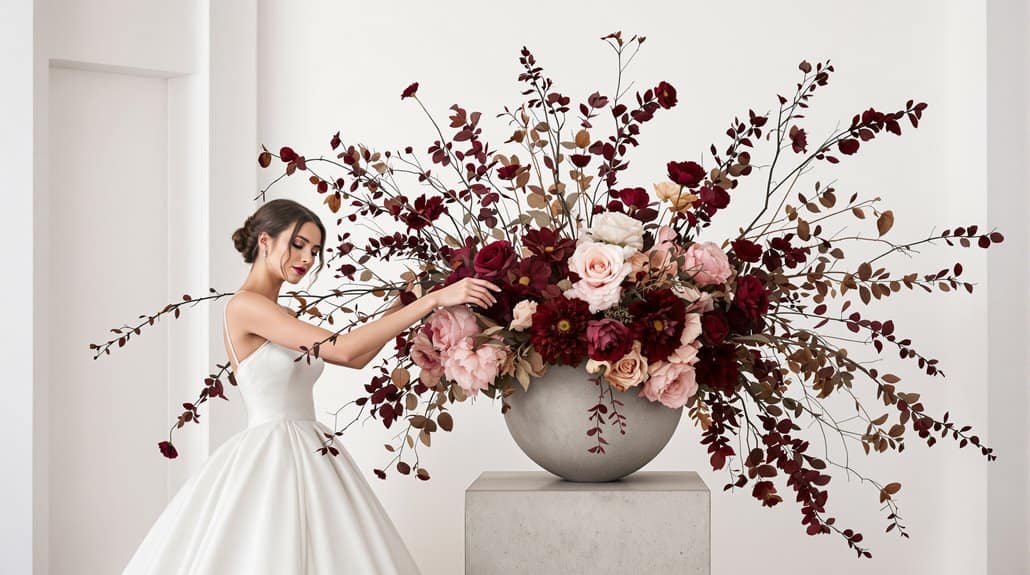
Winter florals offer remarkably polished possibilities—far beyond the evergreen arrangements many couples default to. White roses, anemones with striking black centers, and lilies establish timeless elegance while avoiding the Christmas trap. You’ll find winter bloom options possess unexpected drama: black tulips and burgundy scabiosa create sophisticated depth, transforming ordinary bouquets into conversation pieces.
For textural complexity, consider ranunculus—those ruffled, rose-like blooms available in delicate pinks and reds—paired with cotton bolls and silver brunia. These combinations create winter floral design that feels intentional rather than seasonal by default. Blush roses offset with deeper burgundy tones strike that perfect balance between winter warmth and cool elegance. And yes, you can incorporate amaryllis and peach tulips for unexpected warmth—but carefully, lest your arrangements veer into holiday territory. Winter wedding flowers demand precision: the line between “winter elegant” and “office Christmas party” remains precariously thin. Remember that while florals typically represent 8-10% of wedding budgets, they’ll occupy only a fraction of your photographs—so choose arrangements that photograph beautifully in the lighting conditions your venue provides.
Conclusion
Planning your dream winter wedding finally requires both vision and tactical restraint, doesn’t it? The seasonal floral trap—defaulting to evergreens and pine cones that scream “Christmas party!”—ensnares countless couples who don’t recognize the abundant alternatives awaiting their discovery. Your winter celebration deserves distinctive seasonal decor that honors the season without mimicking holiday conventions.
| Winter Bloom Options | Seasonal Impact | Design Potential |
|---|---|---|
| Amaryllis & Anemones | Dramatic focal points | High-contrast arrangements |
| Ranunculus | Delicate texture | Layered compositions |
| Hellebores | Understated elegance | Sophisticated tablescapes |
Winter floral design thrives on contradiction—embracing winter’s austere beauty while rejecting its commercial interpretations. The season offers rare opportunity to create something truly memorable, something guests haven’t seen at seventeen other weddings. Just as dermatologist-developed skincare considers individual sensitivities, your floral choices should reflect your unique needs and preferences rather than one-size-fits-all seasonal defaults. Trust your instincts toward the unexpected. Your winter wedding deserves more than tradition—it deserves authenticity, intention, and your distinctive vision executed flawlessly.