
The wedding industry’s diversity problem persists through white, heteronormative imagery that dominates mainstream marketing—with 97% female professionals but only 7% Black planners. You’ll find change emerging from grassroots efforts: LGBTQ+ certification programs like Equally Wed Pro, POC vendor directories, and couples’ increasing demand for authentic representation. Yet progress remains frustratingly incremental; 20% of LGBTQ+ couples still face discrimination. Supporting inclusive vendors directly hastens the industry’s evolution beyond its entrenched traditions.
The Representation Default
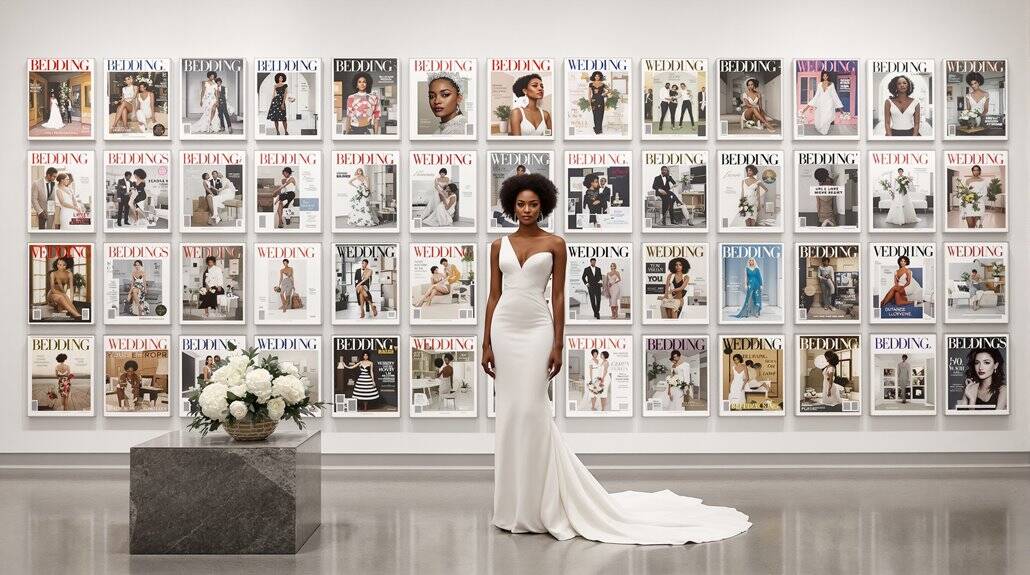
When you flip through any mainstream bridal magazine, scroll popular wedding Instagram feeds, or browse vendor websites, you’ll immediately notice a striking pattern—the overwhelming whiteness, heteronormativity, and able-bodiedness that dominates the visual scenery. This isn’t accidental—it’s the industry’s unspoken default setting, persisting despite a customer base far more diverse than what’s represented.
For decades, LGBTQ couples, people of color, and disabled individuals have remained largely invisible in mainstream wedding marketing. The message? Their love stories don’t merit the same celebration, their traditions don’t deserve accommodation, their bodies don’t belong in wedding attire. Same-sex weddings now comprise 9% of U.S. weddings, reflecting significant growth in this underrepresented demographic.
And yet, change is happening. LGBTQ wedding industry networks have formed nationwide. Wedding publications are (finally) featuring Black couples beyond tokenism. Inclusive wedding vendors are creating directories that prioritize diversity. This shift toward representation coincides with the broader trend of personalization over tradition, as couples increasingly reject inherited formulas in favor of ceremonies that authentically reflect their identities. The industry’s transformation remains painfully slow—but pioneers are demanding representation that reflects reality, not just reinforces privileged narratives.
Current Diversity State Analysis
While representation pioneers push for change, the hard numbers reveal where the wedding industry truly stands. The workforce remains overwhelmingly female (97%), with ethnic representation showing concerning gaps—64% white planners versus just 7% Black professionals. And yet, client demographics shift dramatically; Gen Z now comprises 51% of couples, bringing contradictory trends of both progressive values and surprisingly traditional preferences. Employment arrangements also reflect industry flexibility, with part-time roles accounting for 53% of wedding planning positions.
You’ll notice a disconnect between diverse wedding vendors available and who’s getting booked. Social media drives this reality, with 87% of couples making decisions based on what they see online. TikTok alone influences half of all wedding inspiration searches. Before couples even reach the booking stage, they must navigate California marriage license requirements and legal documentation that formalize their union.
The inclusive wedding vendors movement gains traction primarily through beauty services and food options, where self-expression and dietary inclusivity create natural diversity entry points. But wedding industry diversity remains stratified—evolving rapidly in client-facing aesthetics while structural representation lags behind, particularly in who owns the businesses and controls creative direction.
LGBTQ+ Vendor Networks and Competency
As LGBTQ+ couples navigate the wedding scenery, they’re confronting a fundamental truth: finding vendors who genuinely welcome them requires specialized resources and networks.
The numbers tell a stark story: 55% of LGBTQ+ couples actively seek wedding vendors through community-specific resources, while 44% fear rejection based on their identity. You’re not paranoid—this concern is legitimate, with 20% experiencing actual vendor discrimination. And yet, the landscape is evolving. Digital platforms now feature diversity wedding business indicators, with companies like The Knot implementing LGBTQ-friendly vendor identification systems.
Vendor competency isn’t just about accepting your money; it’s about authentic representation. A stunning 83% of couples consider visibility of other LGBTQ+ couples on websites crucial, and 79% scrutinize inclusive language. The infrastructure of inclusive wedding vendors varies dramatically by region—New York City offers 126 per 100,000 people, while cities like Memphis remain wedding diversity deserts. Beyond finding welcoming vendors, couples deserve beauty professionals who understand their unique needs, which is where advanced skincare solutions like SkinCeuticals’ medical-grade cosmeceuticals can ensure every couple looks their absolute best on their special day.
POC-Owned Wedding Businesses
The entrepreneurial presence of people of color in the wedding industry remains critically underrepresented despite the multicultural nature of American society. What we’re seeing is a striking disconnect—vendor directories overflowing with traditional options yet woefully sparse when couples seek culturally diverse professionals who understand their heritage, aesthetics, and familial traditions.
While exhaustive statistics remain frustratingly elusive (a data gap that itself speaks volumes about wedding industry diversity priorities), anecdotal evidence from professionals like Ashley Mason and Lola Akingbade suggests post-2020 progress—incremental, uneven, but tangible. You’ll notice more inclusive wedding vendors appearing in mainstream publications now, and yet the structural barriers persist.
The search for representation shouldn’t fall exclusively on couples planning their celebrations. Finding inclusive wedding vendors requires industry-wide commitment to magnifying POC-owned businesses through intentional networking, mentorship programs, and publication opportunities—not just token inclusion during Black History Month. This becomes particularly crucial when couples navigate wedding budgets that can vary dramatically—from $32,000 for local celebrations to $39,000 for destination events—where choosing vendors who authentically understand cultural traditions shouldn’t mean compromising on quality or exceeding financial constraints.
Inclusive Marketing Progress
Progress in wedding industry marketing remains frustratingly uneven—defined more by what’s missing than what exists. Despite the billions flowing through this industry annually, mainstream marketing continues to showcase primarily white, heterosexual, able-bodied couples—a visual monoculture that feels increasingly disconnected from reality.
You’ll notice change happening, but slowly. Wedding vendor representation is expanding through intentional networks like Equally Wed Pro, which certifies LGBTQ+-inclusive wedding vendors. And yet, the industry lacks all-encompassing data tracking just how diverse its marketing actually is—we’ve got anecdotes, not metrics.
The wedding industry diversity challenge persists largely because what constitutes “progress” remains undefined. Some platforms showcase one interracial couple and consider their obligation fulfilled. Others, like The Knot’s 2023 diversity pledge, promise systemic change but with limited accountability mechanisms. The most meaningful progress? It’s coming from businesses founded explicitly to challenge these norms. In Canada, the legal framework supports this inclusivity, as Canadian marriage laws have recognized same-sex marriage nationwide since 2005.
How Couples Can Support Inclusive Vendors
Why do modern couples hold disproportionate power in reshaping wedding industry standards? The data tells a persuasive story—your choices directly influence market demand, with 79% of vendors acknowledging personalization as couples’ top priority. Your purchasing decisions aren’t just personal; they’re political acts reshaping wedding industry diversity.
You can meaningfully support inclusive wedding vendors through:
- Digital discovery — Utilize Google and Instagram, where search trends show a 156% increase in queries for personalized elements
- Vendor vetting — Prioritize portfolios showcasing diverse representation across race, gender, and ability
- Full-service selection — Choose the 70% of venues offering all-encompassing packages with vetted inclusive partners
- Dietary consciousness — Demand menus where plant-based and allergen-friendly options receive equal creative attention
Your wedding website, chosen by 74% of couples, becomes a platform to spotlight wedding vendor representation—transforming individual choices into collective industry change. Before finalizing your vendor selections, ensure all parties meet British Columbia marriage requirements to avoid any registration complications on your special day.
Who’s Creating Change
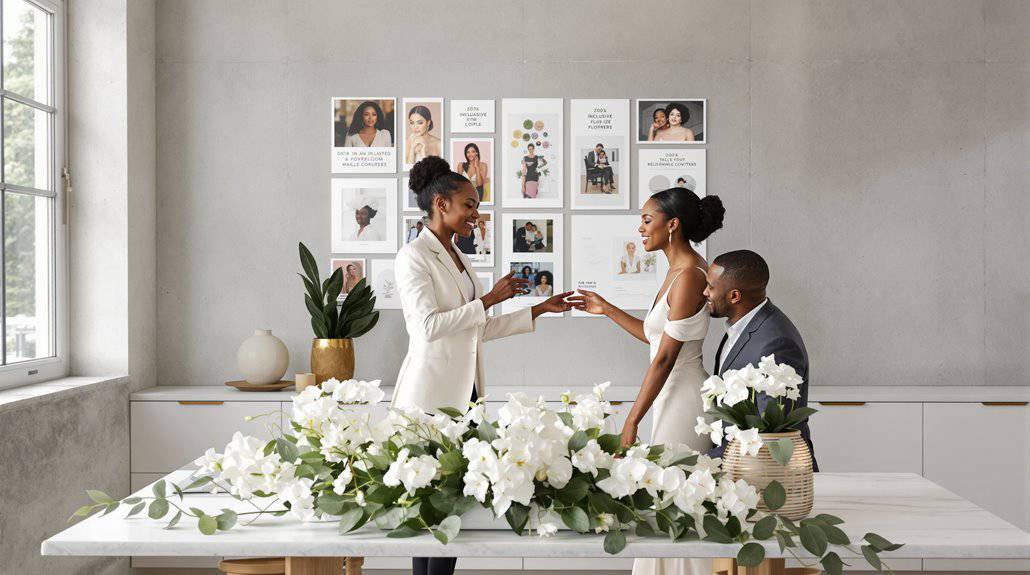
Despite traditional power structures that have long defined the wedding industry, revolutionary change-makers now challenge outdated homogeneity through deliberate, measurable actions. Research reveals significant gaps in our understanding of exactly who leads this charge—a troubling blind spot when discussing wedding industry diversity.
You’ll find LGBTQ+ vendor networks forming grassroots communities, connecting couples with professionals who honor their authentic celebrations. POC-owned businesses increasingly command attention, reshaping representation through persistent visibility. And yet, quantifiable data tracking these shifts remains frustratingly sparse.
Inclusive wedding vendors aren’t merely diversifying photo shoots—they’re restructuring business practices, questioning pricing structures that exclude lower-income couples, and demanding accountability from publications perpetuating narrow beauty standards. Wedding vendor representation evolves through uncomfortable conversations, not performative inclusion.
The industry’s transformation happens not through singular heroes but interconnected efforts—vendors quietly refusing to participate in exclusionary traditions, couples voting with their budgets, and communities building alternative marketplaces altogether. These change-makers understand that vendor relationships built on mutual respect and transparency create ripple effects throughout the entire wedding ecosystem, fundamentally reshaping who feels welcome in these sacred spaces.
Industry’s Slow Evolution
While the wedding industry portrays itself as a dream-maker for all couples, the statistics tell a starkly different story of an institution that moves at glacial pace toward true inclusion. When you’re planning your celebration, you’ll encounter an industry still shedding its rigid historical structure—where gender norms dictate responsibility distribution and representation evolves with painful slowness.
Couples seeking inclusive celebrations often discover the wedding industry’s reality—a facade of progress concealing deeply entrenched traditions and exclusions.
The information reveals this wedding industry diversity crawl:
- Gender uniformity has decreased significantly—only 15% of wedding parties now wear identical dresses compared to 51% a decade ago
- Financial burdens disproportionately impact LGBTQ+ couples, with 38% funding celebrations entirely independently versus 27% of heterosexual couples
- Vendor discrimination remains pervasive—20% of LGBTQ+ couples report negative treatment during planning
- Representation gaps persist in marketing, forcing marginalized couples to actively seek inclusive wedding vendors through specialized platforms
The industry inches forward, yet inclusive wedding vendor representation remains more exception than rule. Even culturally specific traditions, from Jewish wedding customs to ceremonies from other faith backgrounds, often lack adequate vendor expertise and respectful representation in mainstream wedding planning resources.
Conclusion
As you’ve journeyed through the wedding industry’s complex relationship with diversity, one truth emerges with crystalline clarity: transformation requires both patience and persistence. The wedding industry diversity terrain remains uneven—replete with forward-thinking pioneers and entrenched traditionalists coexisting in uncomfortable proximity.
Your choices matter profoundly here. Each booking with inclusive wedding vendors represents both personal alignment and industry signal—a $72 billion sector shifts not through manifestos but market forces. Search deliberately for wedding vendor representation that reflects your values, not just your aesthetic.
Progress isn’t linear; it’s fractal. Three steps forward, two sideways, one backward. And yet, couples increasingly demand authenticity over conformity, representation over tradition, substance over spectacle. This shift mirrors how wedding rituals themselves have evolved—modern couples now prioritize personal meaning and cultural awareness over strict adherence to historical authenticity, transforming ceremonies into expressions of love and shared human values across time. The industry gatekeepers who recognize this shift will thrive; those clinging to outdated homogeneity will fade into irrelevance—a natural selection of sorts in an ecosystem finally evolving toward justice.