

Traditional vows offer centuries-tested language with ceremonial weight—41% higher success rates when paired with premarital preparation. Personal vows (chosen by 47% of couples) provide authenticity through relationship-specific promises and inside jokes. Your choice reflects your comfort with vulnerability: traditional vows create public witnesses to your covenant, while personal vows expose your emotional fingerprint. Both require deliberate decision-making rather than impulse, and you’ll need to weigh historical continuity against intimate specificity. The perfect choice awaits in the nuances.
The Vow Choice

How do you decide between time-honored tradition and deeply personal expression when it comes to your wedding vows? This choice reveals more about your priorities than almost any other wedding decision. Traditional vows carry centuries of meaning, offering a safety net of perfectly articulated promises—and yet, they weren’t written specifically for your love story.
Personal vows, embraced by 47% of couples according to The Knot’s research, create those raw, unforgettable moments that guests still mention years later. They allow you to incorporate inside jokes, specific gratitudes, and authentic promises without censoring yourself. When writing personal vows, remember to start early to give yourself time for reflection and revisions. But they also demand vulnerability—a blank page that requires excavating your deepest feelings about your partner.
Your vow choice finally reflects what matters most: the comfort of established ritual or the power of unfiltered self-expression. Traditional ceremonies demand physical presence and shared witness, creating connections that transcend individual expression. Neither path is wrong; both require clear-eyed assessment of what you want guests—and your partner—to remember.
Traditional Vows: Benefits and Limitations
Research confirms that institutional marital commitment predicts relationship success far better than communication skills alone. Couples with premarital training are 30% less likely to divorce—and traditional vows function as a public declaration of that commitment.
The historical richness of these vows traces back to medieval fealty oaths that emphasized mutual service and loyalty.
And yet, these time-tested promises face modern skepticism. Many couples doubt the permanence these vows suggest, given divorce rates between 30-50%. The vows’ significance transcends personal feelings, framing marriage as both intimate relationship and social contract. They’re simultaneously ancient and immediate, communal and deeply personal—a linguistic inheritance that still demands everything from you. As couples navigate this decision, registry essentials and wedding planning resources can help organize the practical aspects of beginning married life together.
Personal Vows: Freedom and Terror

While traditional vows offer a tested structure, personal vows present something both irresistible and terrifying: a blank canvas. You’re joining nearly half of modern couples who choose this path—47% according to The Knot’s research—embracing the chance to express what actually matters in your relationship.
Personal vows access emotional depth impossible within traditional frameworks. You’ll connect with gratitude, lessons learned, shared jokes that’d make no sense from a minister’s mouth. And yet, this freedom demands preparation. Begin writing three months before your wedding, minimum. The blank page paralyzes even the most articulate souls.
The customization possibilities stretch endlessly: private exchanges, public declarations, or something hybrid. You’ll need to decide whether your vows belong solely between you two or deserve witness. Either way, you’re crafting something uniquely yours in a world skeptical of institutional promises—creating vows that reflect your actual relationship, not someone else’s template.
What Traditional Offers: Certainty and Tested Language
Traditional vows, despite their formulaic reputation, carry a profound weight that personal declarations often struggle to match. You’re not just speaking words—you’re joining a centuries-old conversation structured since medieval times, when Thomas Cranmer first wove “love” and “cherish” into matrimonial promises. This tested language offers ceremonial significance beyond what you could craft overnight.
When you repeat “for better, for worse, for richer, for poorer,” you’re embracing language that’s survived endless marital tests—language with a 41% higher success rate when coupled with commitment-focused preparation. The predictability isn’t boring; it’s foundational.
These aren’t just pretty words. They’re a public declaration, a social contract with witnesses. The organized format—where you repeat after the officiant—creates a framework for the opposing demands of marriage: intimate partnership and public institution, personal desire and societal responsibility. Centuries of refinement have eliminated the unnecessary, leaving only what matters. For Catholic couples, these vows hold additional significance as part of the marriage sacrament, representing a sacred covenant blessed by the Church.
What Personal Offers: Specificity and Vulnerability

Personal vows open a domain where your relationship’s fingerprint becomes visible to every witness in the room. You’re crafting something utterly yours—referencing that disastrous first date, acknowledging how she steadied you through your father’s illness, promising to always stock his favorite cereal. This specificity transforms a legal ceremony into an emotional covenant that couldn’t possibly belong to any other couple.
- Your authentic voice emerges without ceremonial formality, allowing vulnerability that traditional language politely avoids
- You create space for relationship-specific promises that address your actual challenges—not generic ones
- Your words become a time capsule, preserving this moment’s truth about why you’re choosing this particular person
When you write personal vows, you’re risking emotional exposure. And yet, that vulnerability becomes your greatest strength—the willingness to stand unveiled before your partner and say: “This is exactly who I am, and exactly how I love you.” Just as wedding planning decisions serve as practice for navigating shared life goals, your personalized vows become foundational exercises in expressing the values and commitments that will shape your marriage.
Assessing Your Comfort with Public Vulnerability
Before declaring your deepest feelings in front of Aunt Marge and your partner’s college roommates, you must honestly gauge your tolerance for emotional exposure. Public vows demand vulnerability that 30-50% of couples eventually renege on—a sobering statistic that should prompt serious self-reflection, not deterrence.
Your personal expression serves dual purposes: affirming internal commitment while establishing social accountability. The witnesses surrounding you aren’t merely decorative; they’re guardians of your promises, creating collective investment in your success. And yet, modern guests often remain unaware of this responsibility, diluting the traditional weight of witnessing.
Consider: Are you comfortable having your intimate sentiments referenced years later? Can you articulate genuine commitment without sounding either trite or overly revealing? The blank page terrifies precisely because it demands authenticity balanced with appropriate boundaries—a tightrope walk between generic platitudes and TMI confessions that might make your father-in-law squirm in perpetual discomfort. Much like wedding paper goods that act as silent storytellers of your celebration’s quality, your spoken vows become the verbal embodiment of your commitment’s depth—a tactile, auditory moment that guests will carry forward as confirmation of your intentionality.
Decision Framework
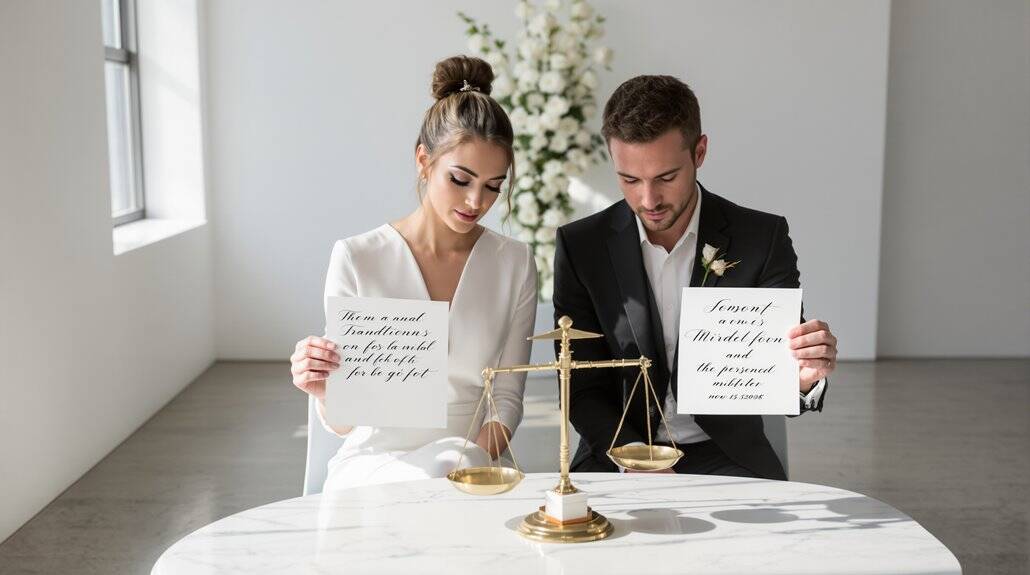
Choosing your vow approach requires a structured system—not merely a gut reaction or Pinterest-induced panic. You’re selecting between traditional vows with centuries of gravitas and personal vows that reflect your unique bond—and the right choice emerges from methodical consideration, not impulse.
Your wedding vows demand systematic deliberation—not emotional whim—to authentically represent your relationship’s essence and intentions.
- Identify your ceremony’s non-negotiables: religious requirements, family expectations, and personal comfort zones—three pillars that determine your customization latitude
- Assess your priorities: Do you value historical continuity (traditional) or intimate authenticity (personal)?
- Consider a hybrid approach: traditional schema with personal flourishes offers both security and personalization
The schema isn’t about right versus wrong but alignment with your values. Traditional vows provide time-tested language that resonate across generations; personal vows create unfiltered emotional intimacy. And yet, the most successful vows—regardless of format—reflect deliberate decisions rather than default choices, creating promises that feel authentic to you both. Just as thoughtful curation defines luxury beauty products, your vows deserve the same intentional selection process that honors both tradition and personal expression.
Conclusion
While the vow decision may feel overwhelming in the midst of wedding planning chaos, your definitive choice represents far more than just ceremony logistics—it’s a declaration of your relationship’s authentic voice. Traditional vows carry centuries of weight, connecting you to generations past through time-tested language. And yet, personal vows offer the raw vulnerability of your specific journey—words no other couple could truthfully speak.
Your authenticity shines through either approach. The question isn’t which option holds more meaning, but which vessel best carries your particular truth. Some couples find deeper authenticity in honoring tradition; others in crafting custom promises. The hybrid approaches—private letter exchanges, modified traditional vows, first-look personal readings—offer middle paths worth exploring.
Like other wedding rituals that have evolved from their original purposes, vows ultimately derive their power from the meaning infused by the couple speaking them. Trust yourselves. Whether you choose the comfortable embrace of traditional vows or brave the beautiful terror of personal composition, what matters is that your promises reflect who you truly are—together.