
Scheduling your ceremony at 3pm during summer is a recipe for disaster—punishing 85-95°F temperatures, makeup meltdowns, and harsh overhead lighting that creates raccoon-eye shadows in photos. Your guests will endure rather than celebrate, sweating through formalwear while elderly relatives risk heat-related emergencies. A 6pm ceremony instantly solves 90% of these problems—temperatures drop 10-15°F and golden hour begins around 7pm, transforming both comfort levels and photography quality. The choice between endurance test and magical evening awaits your decision.
The 3pm Summer Ceremony Disaster
When couples schedule their summer ceremony for 3 PM, they’re unwittingly signing up for a heat-drenched disaster that undermines every aspect of their celebration. You’ll be subjecting everyone—your 87-year-old grandmother, your friend’s toddlers, even your resilient college buddies—to temperatures at their daily zenith, typically 85-95°F depending on your location. Your summer wedding heat strategy? Nonexistent.
The consequences cascade mercilessly: makeup melting into unrecognizable smudges by vow exchange, photographers struggling against harsh overhead sun creating raccoon-eye shadows, and guests shifting uncomfortably in sweat-dampened formalwear. Early vendor teams might arrive before dawn, leading to higher labor fees and additional stress for everyone involved. And yet, the most devastating effect remains largely invisible until afterward—the energy depletion that transforms your reception into a room of exhausted guests checking watches by 8 PM.
Your hot weather wedding doesn’t need to follow this predictable tragedy. The solution? Push that summer ceremony time to 6 PM and transform everything.
Why Afternoon Sounds Nice But Isn’t
Despite its initial appeal on wedding invitation templates, the 3 PM ceremony time represents perhaps the single most catastrophic planning decision couples make. You’re selecting the day’s meteorological apex—when the sun hangs mercilessly overhead and ambient temperatures typically peak between 2-4 PM—for your summer ceremony time.
The afternoon summer wedding creates a perfect storm of discomfort: ultraviolet radiation at maximum intensity, heat-stressed guests trapped in formal attire, and makeup literally melting off your wedding party’s faces. And yet, the allure persists because “afternoon wedding” sounds elegantly traditional, conjuring images from period films rather than the sweaty reality. Consider setting up water stations with refreshing infused options to help guests stay hydrated during these challenging conditions.
Your heat management wedding strategy should acknowledge biological truths: humans function less ideal in peak afternoon temperatures. Protecting skin from intense UV exposure becomes critical, which is why medical-grade cosmeceuticals can provide superior defense against sun damage during outdoor celebrations. By 6 PM, the atmospheric situation dramatically improves—temperatures drop 5-10 degrees, lighting softens into photographer’s gold, and guests’ energy rebounds for celebration rather than survival.
Peak Heat Guest Discomfort
The uncomfortable truth about your 3 PM summer ceremony reveals itself most painfully in the misery you’ll inflict on your captive guests. Your summer wedding timing choice creates a perfect storm of physical distress—formal attire trapping heat against already-perspiring bodies, alcohol accelerating dehydration, all while the sun beats down mercilessly.
| Guest Experience | 3 PM Ceremony | 6 PM Ceremony |
|---|---|---|
| Physical Comfort | Excessive sweating, visible dampness | Cool, comfortable, relaxed |
| Vulnerability | Elderly & children at health risk | Reduced heat exposure danger |
| Alertness | Fatigue-impaired participation | Engaged, present celebration |
| Overall Mood | Irritable, uncomfortable | Relaxed, festive atmosphere |
Your summer ceremony time creates a ripple effect of discomfort. Those vulnerable guests—your 82-year-old grandmother, your cousin’s toddler—face genuine health risks under sustained heat exposure. Your summer wedding schedule should prioritize guest experience, not traditional timing that sounds nice but delivers misery. Consider that daytime ceremonies like your 3 PM slot may save costs compared to evening events, but the trade-off in guest comfort can significantly impact your celebration’s success.
Harsh Light Photography Problems
Your dream wedding photos are quietly being sabotaged by harsh 3 PM sunlight, transforming what should be timeless memories into a visual catastrophe of squinting eyes and unflattering shadows. Even professional photographers struggle against these conditions—no amount of expertise can overcome physics.
Planning a 3 PM wedding ceremony? Physics will sabotage your photos, no matter how skilled your photographer.
The technical challenges are relentless: raccoon-eye shadows beneath squinting eyes, blown-out backgrounds when subjects are properly exposed, and skin tones that photograph with patchy sun blotches. Your photographer’s equipment hits hard limitations too, with flash ineffective against full daylight and diffusers acting like wind sails in summer breezes.
Camera settings become severely restricted—ISO locked at 100, apertures forced between f/1.2-2.5—leaving precious few creative options. And those dense tree canopies you’re eyeing for shade? They’ll cast unfixable green tints across everyone’s skin.
The solution isn’t better photography; it’s better timing. Understanding wedding traditions through cultural history reveals that ceremony timing has always adapted to practical needs, from weather patterns to seasonal light—and modern couples can make the same smart adjustments. Shift to 6 PM, and watch these problems evaporate instantly.
6pm Ceremony Solves Everything
Shifting your ceremony to 6 PM instantly transforms what would have been a sweat-drenched ordeal into the elegant celebration you’ve actually been picturing. Let’s be brutally honest about the thermodynamics at play: the temperature differential between 3 PM (peak solar radiation) and 6 PM (declining heat curve) can mean guests experiencing a 10-15 degree comfort upgrade—the difference between dabbing foreheads with cocktail napkins and actually hearing your vows.
The golden-hour lighting that photographers chase? It begins around 7 PM in summer months, perfectly timed for your portrait session following a 6 PM ceremony. Your timeline recalibrates beautifully—cocktail hour during sunset, reception under twinkling market lights rather than harsh sunshine. Vendors appreciate the merciful scheduling too; caterers aren’t battling melting buttercream, and musicians aren’t protecting equipment from heat damage. And you? You’ll look composed in photos rather than glistening with perspiration. If you’re considering an indoor alternative, venues like the Guggenheim Museum accommodate up to 300 seated guests with state-of-the-art climate control and architecture that serves as its own décor. The physics of summer celebrations demand this temporal adjustment.
Summer Timing Optimization Strategy
When approaching summer wedding timing, precision matters more than preference—a truth veteran planners understand after witnessing countless ceremonies wilt under unforgiving heat.
Consider the 5:00-6:00pm outdoor ceremony window your gold standard. You’ll hit the sweet spot where sun angles soften, temperatures drop, and guests arrive refreshed rather than depleted. Photographers capture your day in that golden-hour glow, not harsh midday shadows that flatten faces and create raccoon eyes.
Your vendors secretly beg for these later starts. Morning setups beginning at 6:00am drive overtime costs and exhausted teams—yet afternoon scheduling eliminates this entirely. Everything flows naturally: ceremony into sunset cocktails into candlelit reception.
Most critically, you’re preventing the dreaded mid-celebration energy crash. Guests who aren’t recovering from heat stroke actually dance. They remember your vows instead of their sweat-soaked shirts. And you’ll look radiant in photos, not wilted in them.
This timing strategy extends to your floral arrangements too—locally sourced seasonal flowers arrive fresher and more fragrant within hours of harvest, maintaining their beauty throughout your evening celebration without the stress of midday heat exposure.
Heat Management If Afternoon Unavoidable
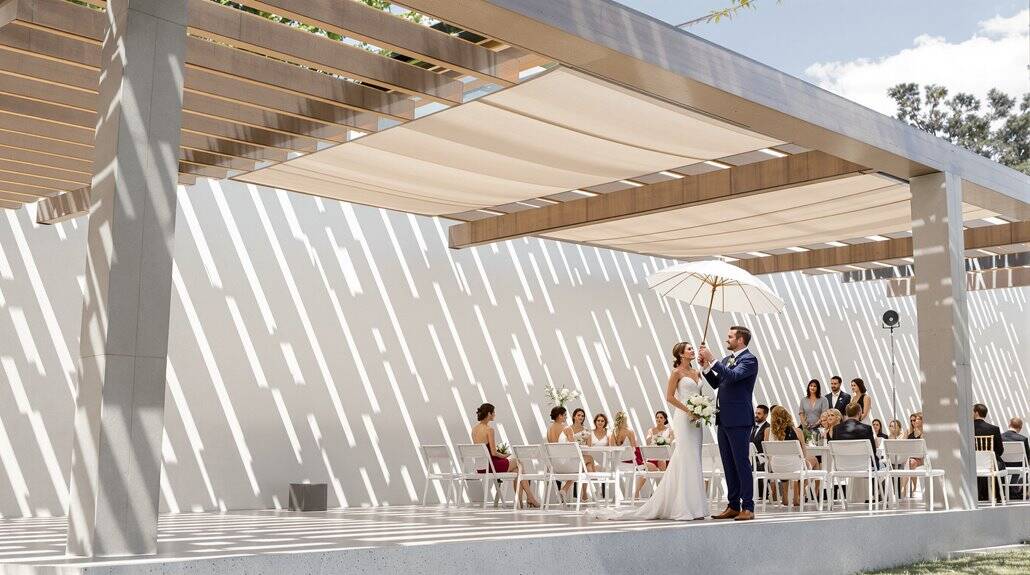
Should afternoon scheduling become your only option—despite the extensive warnings detailed previously—aggressive heat management isn’t optional, it’s survival. You’re fighting the day’s peak temperature while protecting guests whose medications—antihistamines, antidepressants—may compromise their heat tolerance. Your approach must be thorough yet unobtrusive.
Prioritize these four critical interventions:
- Shade infrastructure – Deploy commercial-grade tents, strategically positioned gazebos, and large umbrellas that create continuous protection pathways throughout your venue.
- Hydration stations – Establish visually appealing drink stations featuring electrolyte beverages and sparkling water, not just alcohol which exacerbates dehydration.
- Active cooling – Rent misting fans and distribute cooling towels to guests upon arrival, with dedicated cooling areas for elderly or medically vulnerable attendees.
- Indoor backup – Secure climate-controlled alternative spaces with proper ventilation should temperatures exceed safe thresholds—a contingency that respects both comfort and medical necessity.
Many venues now offer flexible spaces that can accommodate both outdoor ceremonies and climate-controlled reception areas, allowing you to transition guests seamlessly when heat becomes dangerous.
Conclusion
Although the allure of a 3pm summer ceremony persists in wedding planning imagination, reality demands a clear-eyed assessment of what you’re actually signing up for—punishing heat, squinting guests, wilted flowers, and photography that captures everyone at their most uncomfortable.
The math is devastatingly simple: pushing your ceremony to 6pm instantly solves 90% of summer wedding problems. You’ll gain golden hour lighting (7:45-8:15pm), comfortable guests who actually listen to your vows instead of mentally calculating how long until air conditioning, and photos that don’t feature everyone’s “I’m melting” face. And yet, tradition exerts powerful gravity, pulling well-meaning couples toward that midday disaster zone.
Your wedding deserves better than arbitrary timing conventions. By choosing sunset-adjacent ceremony times, you’re not being difficult—you’re being smart. This choice reflects the broader shift toward intentional, personalized celebrations that prioritize authentic guest experience over prescribed traditions. The solution isn’t complicated: work backward from sunset, build in buffer time, and watch as everything—from guest experience to photography—transforms from endurance test to genuine celebration.