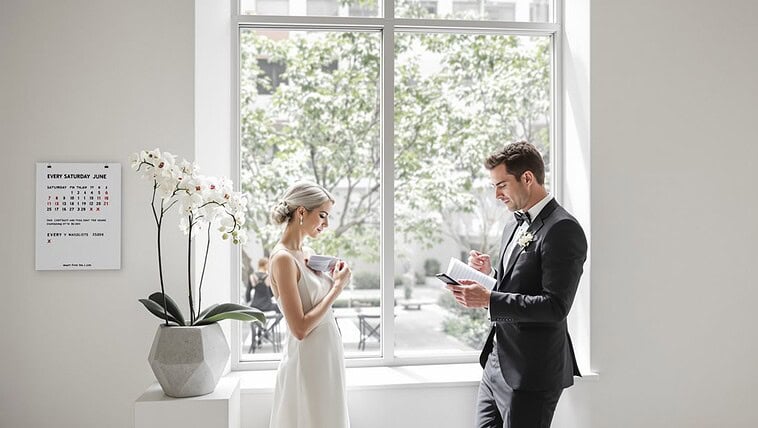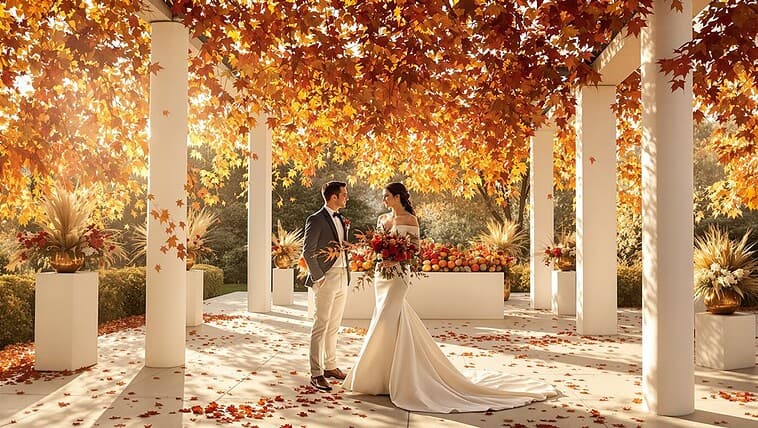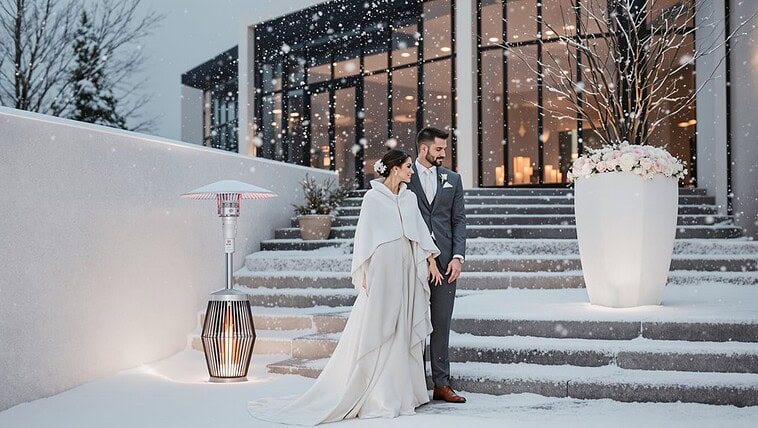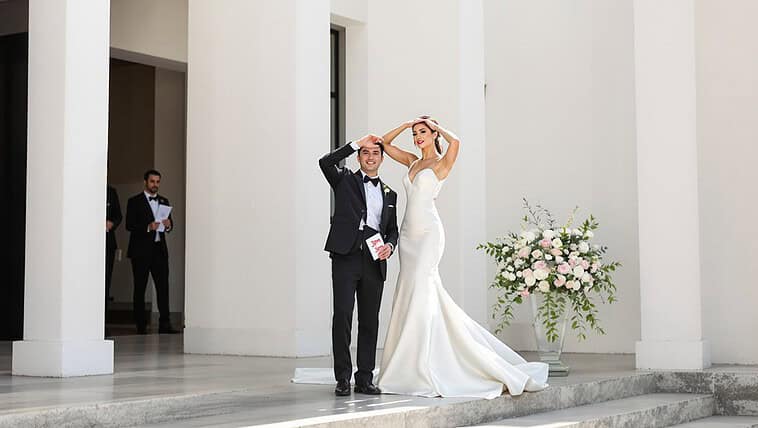
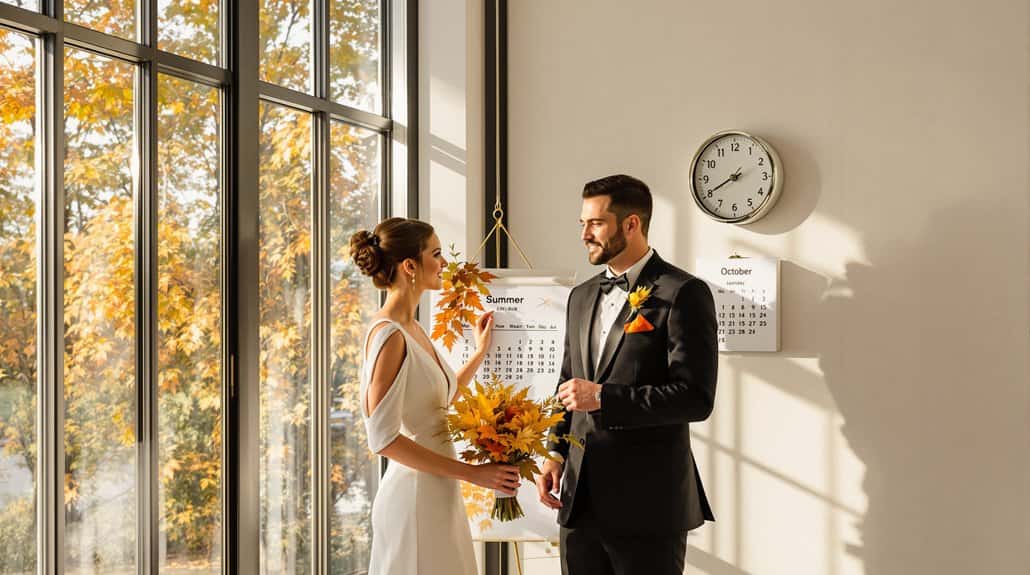
Your wedding season dictates far more than scenery—it’s the invisible architect of your entire experience. Spring’s soft light creates ethereal photos while winter demands timeline compression. You’ll face 20-30% higher costs for October nuptials, yet January offers $5,000+ savings. Temperature affects everything: guest comfort (optimal: 75°F), medication reactions, even decision-making psychology. Floral choices reflect either environmental consciousness (local blooms reduce CO2 by tenfold) or budget flexibility. The season’s impact extends beyond aesthetics into every practical and emotional dimension.
Season as Design Foundation – Essay opening
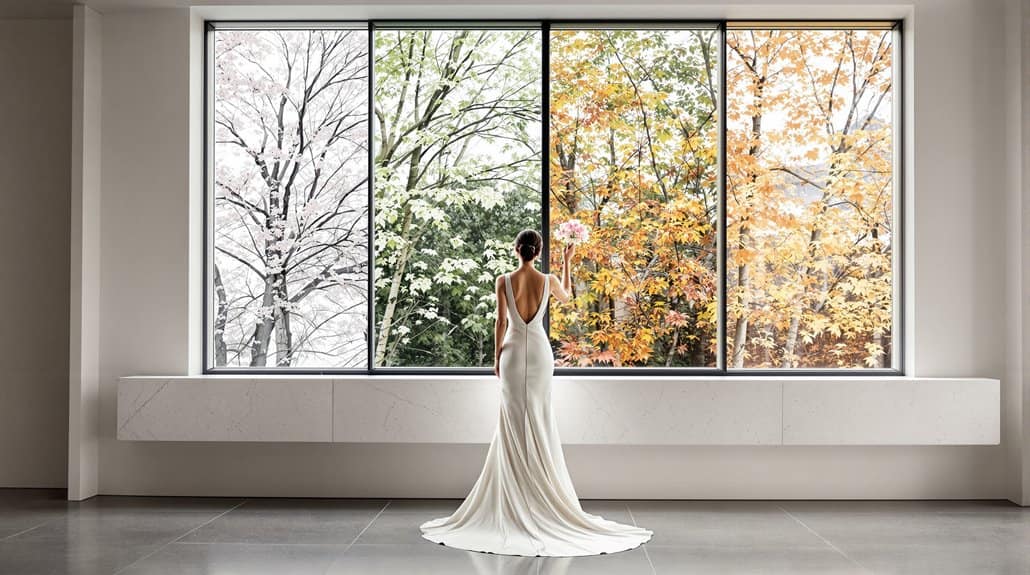
While most couples fixate on the perfect venue or dream gown, the season of your wedding silently shapes nearly every design decision you’ll make—functioning as the invisible foundation upon which all other choices must logically build.
Think about it: your season determines available light (golden hour at 5pm versus 8pm), temperature comfort for guests (sweating in silk versus shivering in strapless), floral possibilities (peonies in June, dahlias in September), appropriate menu selections (nobody wants beef Wellington in August), and capacity for outdoor elements. And yet, when choosing wedding dates, most couples prioritize anniversary significance or venue availability over seasonal wedding planning fundamentals. Just as ancient Greeks designed their homes with southern orientation to maximize winter warmth and summer shade, your wedding venue should similarly respect seasonal realities.
To choose wedding season intelligently means acknowledging its outsized influence—it’s not merely backdrop but director. The wedding industry’s dirty secret? Wedding season importance extends beyond aesthetics into logistics, budget, and guest experience. Your season dictates not just which flowers bloom but their cost—with amaryllis blooms commanding premium prices despite their October-to-April availability, while spring ranunculus require fewer stems for comparable visual impact. Your perfect day exists within a specific seasonal container—one that can’t be Pinterest-ed away with enough twinkle lights or heaters.
How Season Shapes Every Choice
Beyond the obvious aesthetics, your chosen wedding season subtly orchestrates a complex choreography of cognitive function, physiological responses, and decision-making patterns among you and your guests—effects so profound they’re measurable in laboratory settings.
Your summer wedding? Core body temperatures running higher (37.46°C versus winter’s 37.34°C), affecting everything from manual dexterity to thermal comfort ratings. The season impact wedding decisions extend beyond flowers and food—winter conditions trigger affective decision-making while summer heat pushes guests toward cognitive-based choices. Even moral values fluctuate: binding values like loyalty peak in spring/fall and dip mid-summer. For outdoor summer ceremonies, guests will experience significantly higher environmental stress with temperatures averaging 33.3 ± 4.2°C and moderate humidity levels.
The wedding season matters in ways most planners never discuss. That dreamy December ceremony might leave guests making more emotional, impulsive decisions about everything from your gift registry to their dance floor participation. Summer ceremonies, on the contrary, prompt more analytical thinking—and yet, they’ll feel the heat more acutely, with thermal sensation ratings climbing considerably. Consider how architectural grandeur can compensate for seasonal challenges—venues with soaring ceilings, marble floors, and dramatic natural light create temperature-moderating environments that require minimal decoration while providing visual impact regardless of the season outside. Your seasonal design wedding isn’t just aesthetic—it’s neurological.
Light Quality by Season
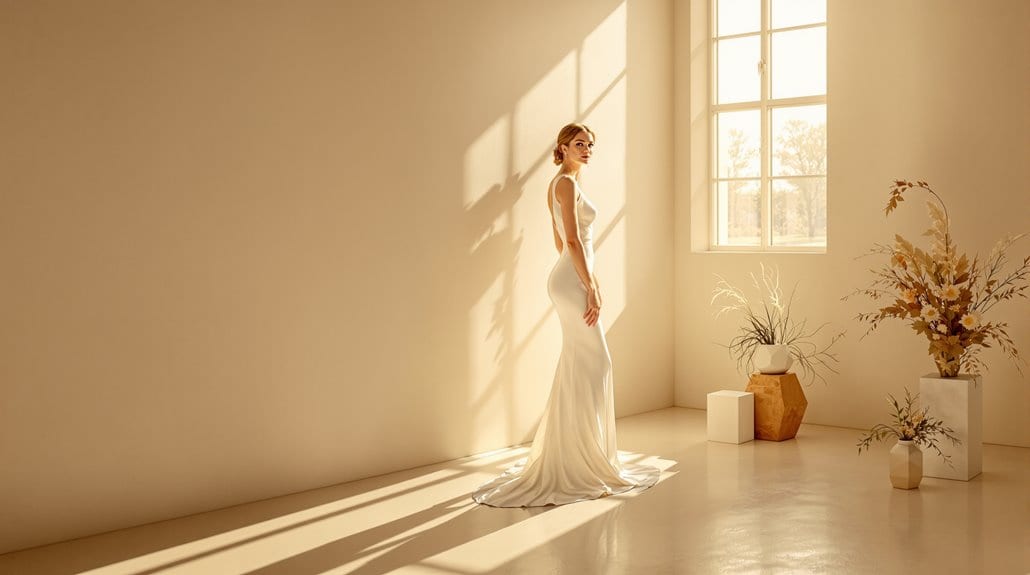
How rarely do couples consider what’s arguably the most revolutionary element of their wedding aesthetic—the very light that bathes their celebration. Wedding season matters more profoundly in this domain than anywhere else: each season delivers utterly distinct illumination characteristics that transform every photograph, every moment.
Spring offers lengthening days with soft, diffused light—gentle on skin tones, forgiving on features. Summer brings dramatic, high-contrast brilliance with golden hour stretching luxuriously past 8pm. Fall’s low-angled amber glow creates that cinematic warmth photographers chase relentlessly, while winter’s short days mean working within compressed timelines but reward you with crystalline clarity and snow-reflected luminosity.
The season affects wedding photography so fundamentally that professionals charge differently depending on when you marry. And yet, the most significant impact comes not from technical considerations but emotional ones—how the season’s light quality shapes your guests’ experience, their comfort, their very memory of your day. When natural light fades early, candlelight becomes essential for maintaining that warm, golden hue that avoids circadian disruption from harsh artificial lighting while creating an atmosphere that genuinely calms your guests.
Temperature and Guest Comfort
Few couples realize that choosing their wedding season is fundamentally a temperature decision—one that will determine whether your grandmother removes her jacket or your college roommate develops a visible sweat stain during your vows. The sweet spot hovers around 75°F, but that seemingly innocuous number conceals a multitude of variables.
- Heat sensitivity spikes with common medications like antihistamines—the very pills your guests pop before your flower-filled spring ceremony
- Chicago summers break 84°F in July, transforming your elegant affair into an endurance test for anyone in formal attire
- Cold-weather weddings demand infrastructure: heaters, blankets, fire pits
- Regional variations render general advice useless; research historical patterns for your specific locale
You’ll instinctively prioritize your own comfort threshold, and yet your guest list spans generations, medical conditions, and personal preferences. The temperature that feels invigorating to your CrossFit enthusiasts might send your elderly relatives seeking shelter—a calculus worth solving before selecting your date. Just as wedding dresses function as complex visual communication tools that broadcast values before vows are exchanged, your seasonal choice silently announces your priorities regarding guest experience and practical hospitality.
Floral and Food Seasonal Appropriateness
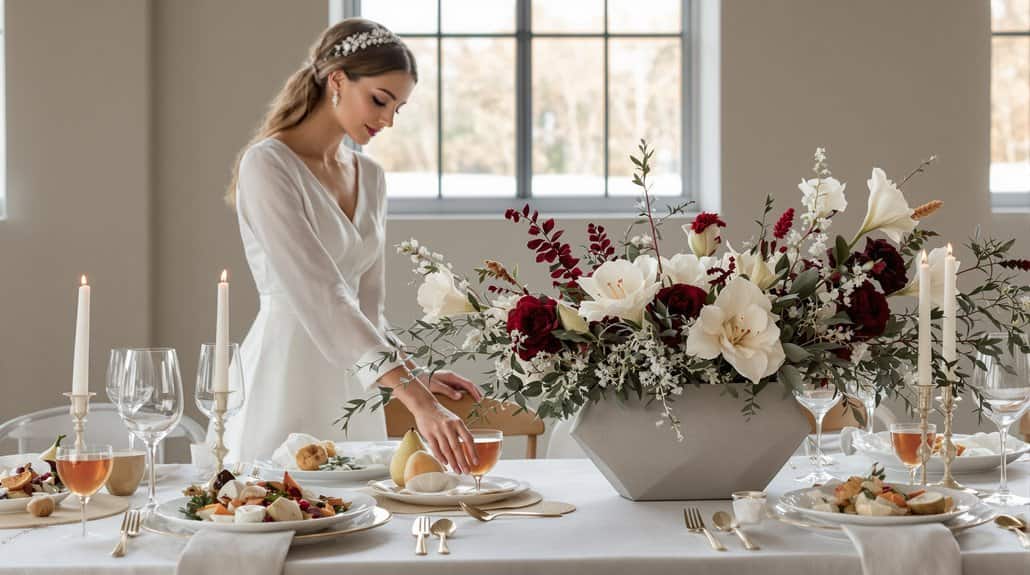
While your guests’ physical comfort sets the foundation for your celebration, it’s the visual and gustatory elements that transform a wedding from functional to memorable. Selecting in-season flowers drastically impacts your budget—seasonal bouquets typically run $95-$125 compared to $150+ for imported blooms. And yet, climate change complicates this traditional wisdom.
Spring offers abundant peonies and tulips at moderate prices, while summer provides sunflowers and hydrangeas, though expect premium pricing during peak wedding season. Winter celebrations? Prepare for sticker shock as limited local availability necessitates imports.
Your flower choices reflect more than aesthetics; they’re environmental statements. Seasonal selections reduce shipping distances, carbon emissions, and fungicide requirements—increasingly important as rising temperatures upset traditional growth cycles. Imported bouquets generate up to 10 times more CO2 emissions than their locally sourced counterparts, making your floral decisions a matter of global consequence.
Remember: seasonality isn’t just floral theater. The same principles apply to your menu. Local, seasonal ingredients deliver superior freshness at better value. Your guests might forget your centerpieces, but they’ll remember that perfect strawberry tart.
Choosing Date for Season vs Convenience
Despite what wedding magazines suggest about perfect dates, your wedding timing boils down to a stark choice: prioritize the experience or your bank account. October commands 17% of all US weddings for good reason—ideal temperatures, breathtaking foliage, comfortable guests—and yet this premium experience extracts a premium price. You’re essentially competing with 41% of couples who’ve selected fall dates, driving up costs while limiting availability.
The wedding date decision presents a harsh reality: chase the perfect autumn experience or preserve your financial future.
Consider these trade-offs:
- Saturday celebrations cost 20-30% more than Sundays for identical experiences
- Off-season dates (December-March) can slash venue expenses by $5,000+
- Weekday weddings offer substantial savings but may reduce guest attendance
- Regional weather patterns should dictate timing more than arbitrary preferences
You’re battling market forces whenever you select a date, not just planning a celebration. Wedding economics reward flexibility—booking January through March delivers near-identical services at dramatic discounts, though admittedly with less predictable weather patterns and limited floral options. Before finalizing your wedding date, verify that it allows sufficient time to obtain your California marriage license, which has specific validity periods and legal requirements that could impact your timeline.
Season Deserves Primary Consideration
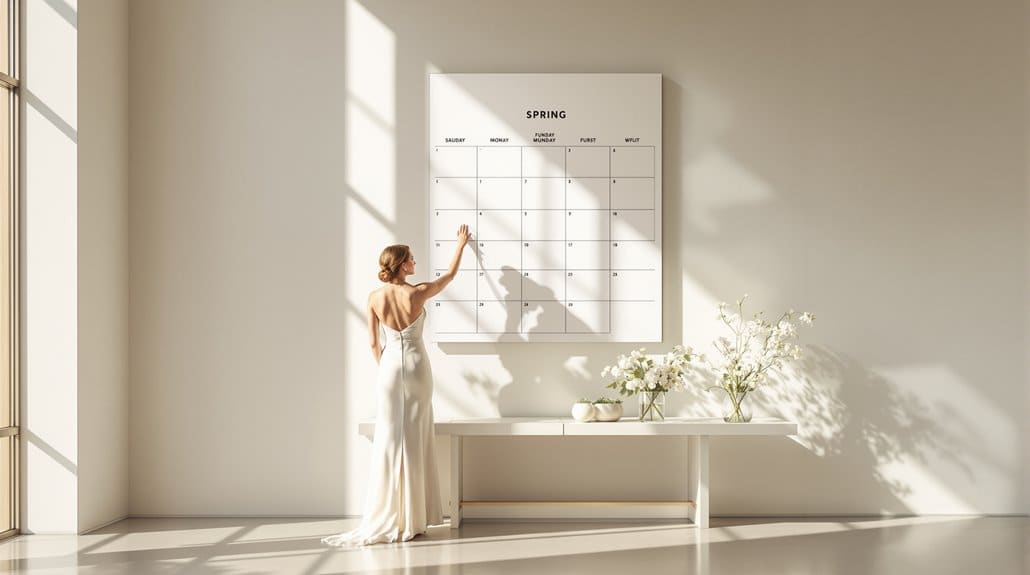
The raw numbers make the case more powerfully than any wedding planner’s encouragement: season fundamentally determines your entire wedding experience. With 41-43% of couples flocking to fall, you’re facing a mathematical reality that shapes everything from your budget to guest attendance.
October’s 17% market share isn’t accidental—it’s earned through predictable weather patterns that won’t leave you frantically deploying rain tents or watching guests sweat through formal attire. Your financial calculus changes dramatically too; January ceremonies (a mere 2% of weddings) access vendor availability and negotiating advantage impossible during peak months. For destination weddings specifically, timing decisions become even more consequential—peak season surcharges can add thousands to packages that already exceed hometown celebrations by $7,000 on average. And yet, convenience often trumps these considerations. You’ll casually select a date that works for your venue or matches an anniversary, overlooking how season influences the comfort, aesthetics, and financial structure of your entire celebration. The choice between a $33,000 peak-season affair and potentially thousands less deserves primary consideration, not afterthought status.
Conclusion
As your wedding day inches closer, every decision now carries the weight of both financial consequence and emotional satisfaction. Season stands among your most consequential choices—dictating everything from your guests’ comfort to your photographer’s lighting challenges. The perfect June wedding might mean premium pricing and venue competition; December’s magical atmosphere comes with weather uncertainties and holiday conflicts.
Consider your seasonal selection through these critical lenses:
- Light quality and duration—summer’s golden hour arrives late, while winter’s early sunset demands timeline compression
- Temperature management—spring’s unpredictability vs. fall’s reliable moderation
- Floral and décor availability—seasonal blooms commanding dramatically different price points
- Guest experience—travel conditions, accommodation costs, and competing obligations
- Personal significance—the anniversary you’ll celebrate annually deserves contextual meaning
Your chosen season becomes the backdrop for every wedding memory. Choose intentionally, not merely by venue availability or arbitrary preference. Season also influences your floral design possibilities—where summer offers cascading amaranthus and architectural tropical blooms, winter demands the structured elegance of monochromatic arrangements with seasonal branches and dramatic foliage. And yet, ultimately, your marriage transcends the day that begins it.