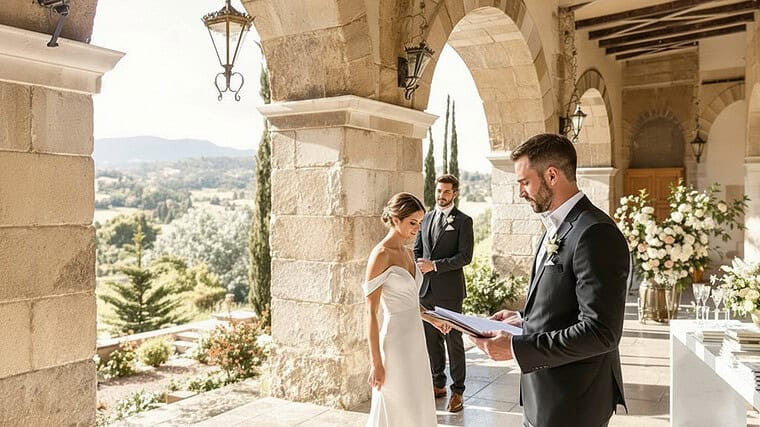

To create a destination wedding that feels authentically local, you’ll need to craft a three-day experience that justifies your guests’ $2,000 investment. Schedule your ceremony 1-2 days after arrival, incorporate regional traditions (like lazo ceremonies or lei exchanges), and feature local cuisine, musicians, and artisan décor. Balance structured activities with 4-6 hour blocks of free time, and send save-the-dates 9-12 months ahead—only 30-45% of distant invitees typically attend. The magic happens when cultural immersion transforms a wedding into a curated expedition.
Making Destination Worthwhile for Guests

When you’re asking guests to travel 2,000 miles for your wedding, you’re not just requesting their presence—you’re demanding a significant financial commitment. They’ll spend an average of $2,000 between flights ($600) and accommodations ($350/night), with most staying 4-5 nights. That’s a hefty price tag.
Your destination wedding experience must justify this expense. Transform the standard ceremony into a weekend destination celebration spanning three days—giving guests more bang for their buck. Consider that only 30-45% of distant invitees actually show up, and they’re doing the math: Is your relationship worth two grand? Sending save-the-dates 9-12 months ahead can significantly improve this turnout rate.
Design activities showcasing local culture, coordinate group excursions, and negotiate hotel blocks to create value beyond witnessing your vows. Help guests prepare for their journey by sharing TSA travel security guidelines and packing recommendations well in advance. The guest experience destination should feel like a gift you’ve curated, not an obligation you’ve imposed. Remember: guests aren’t just attending your wedding—they’re investing in a relationship that better be worth every mile traveled.
Three-Day Weekend Structure
Since your guests have committed to crossing oceans for your nuptials, you’re obligated to deliver more than a five-hour reception. A destination wedding weekend demands thoughtful architecture—day one welcomes travelers with tapas and unhurried conversation, day two showcases your ceremony and reception in full splendor, while day three offers recovery through that essential farewell brunch with bloody marys and teary goodbyes.
Your multi-day destination itinerary shouldn’t resemble a military operation, and yet, structure provides the skeleton upon which memorable moments hang. Build in 4-6 hour blocks of unscheduled time—sacred spaces where guests can nap, explore local streets, or simply breathe. The finest destination wedding itineraries balance scheduled togetherness with deliberate absence. Remember: guests need recovery periods between champagne toasts and snorkeling excursions. Schedule your wedding ceremony a day or two after guest arrival to account for jet lag and travel fatigue. They’ve traveled 2,000 miles to witness your commitment—respect both their presence and their need for occasional solitude. If your destination happens to be New York City, consider transforming one evening into an unforgettable experience with private event rental at the Metropolitan Museum of Art.
Welcome Dinner: Setting Tone

Your welcome dinner functions as the psychological gateway to your destination wedding weekend—not merely a meal, but the essential first impression that calibrates guests’ expectations. After traveling 2,000 miles, your people need permission to exhale—so intentionally craft a casual atmosphere where stilettos sink into sand and conversation flows as freely as local spirits.
Skip the formal rehearsal dinner trappings. Instead, opt for heavy passed appetizers at a beach bar or brewery that screams “you’ve arrived somewhere special.” Your destination wedding itinerary should position this gathering as the relaxed counterpoint to your more structured reception.
Integrate regional flavors unapologetically—Spanish tapas, Hawaiian poké stations, Vermont cheese boards—and curate a playlist featuring local artists. Create interactive moments (tequila tastings in Mexico, anyone?) that transform guests from tired travelers into involved participants. If you’re hosting at a venue with curated vendor lists, embrace their culinary partnerships as opportunities to showcase authentic regional cuisine through experienced local chefs who understand the destination’s flavors. The secret? Design each element of your destination wedding events to whisper: the celebration has already begun.
Local Experiences: Vineyard Tour Group Hike
Beyond the ceremonial moments, a well-orchestrated vineyard tour transforms your destination wedding from an isolated event into an immersive cultural expedition.
You’ve asked guests to travel 2,000 miles—now deliver an experience that justifies their journey. Arrange a guided exploration across 28+ acres of rolling vines, where your 50-250 guests can decompress between formal events. The vineyard’s golf carts shuttle elderly relatives while others traverse manicured walking paths at their own pace. It’s both structured and liberating.
Consider timing: schedule your tour 24 hours after the welcome dinner, when conversations have begun but connections need deepening. The shared wine tasting—intimate yet educational—creates natural conversation starters among previously unacquainted family branches. Sustainable farming demonstrations provide unexpected learning moments, and yet the real value emerges in those unscripted exchanges between guests against picturesque backdrops where your photographer captures candid interactions that’ll outshine many formal portraits. Like contemporary museum spaces that foster relaxed, open environments, vineyard tours create non-hierarchical settings where guests naturally connect without formal constraints.
Wedding Day Integration

While planning logistics might dominate your pre-wedding concerns, the artful integration of destination elements into your ceremony transforms it from transplanted hometown ritual to genuinely immersive experience. You’ve flown guests 2,000 miles—now make it worth their journey.
A destination wedding demands more than relocated logistics—it requires cultural soul to honor both place and guests’ journey.
Choose one or two authentic cultural traditions—a Mexican lazo ceremony or Hawaiian lei exchange—but resist overloading. Cultural appropriation lurks dangerously close, and yet thoughtful incorporation guided by local experts creates meaningful connections.
Your menu should scream location: Tuscan pasta stations, Caribbean jerk chicken, regional wines. Local musicians—Spanish guitarists during processional, steel drummers at cocktail hour—establish atmosphere impossible to replicate elsewhere.
Native florals (lavender in Provence, orchids in Bali) paired with regional textiles create visual authenticity while supporting local artisans. Even your attire can reflect place—subtle elements like embroidered accessories or flower crowns—without abandoning your personal style completely.
Communicate these cultural or sentimental details to your photographer as context rather than rigid direction, helping them understand the significance behind each element without constraining their creative process.
Farewell Brunch: Closing Ritual
After investing thousands in flights and accommodations, your guests deserve a proper goodbye—not just a wave from the getaway car. This final gathering—strategically scheduled between 11:00 AM and 2:00 PM to accommodate flight departures—transforms obligation into opportunity, allowing everyone to reminisce about reception highlights without the pressure of formal festivities.
Your culinary approach matters here. A Bloody Mary station paired with local specialties (think chilaquiles in Mexico) isn’t merely breakfast—it’s your final statement on hospitality. Oceanfront buffets or garden settings create the casual-yet-intentional atmosphere essential for this shift.
For guests catching early flights, consider branded boxed breakfasts delivered to rooms—a point of contact that acknowledges their journey home. This closing ritual isn’t frivolous; it’s essential architecture for multi-day celebrations where guests have traveled 2,000+ miles. If you’re still finalizing wedding details, consider showcasing rare diamonds from heritage collections that reflect the same thoughtfulness you’ve applied to every aspect of your celebration. The most meaningful farewells aren’t hasty goodbyes but thoughtfully designed spaces where gratitude can breathe.
Designing Destination as Gift to Guests

The most profound destination weddings transform from mere events into carefully curated gifts for your travelers—experiences they couldn’t access without you. Consider this: your guests traveled 2,000 miles. The payoff must transcend a five-hour reception.
A destination wedding isn’t just an event—it’s an exclusive passport to experiences your loved ones would never discover alone.
Your job? Architect three days of immersion they’ll reference for decades. Partner with local cultural experts for authentic ceremonies—lazo rituals in Mexico, hand-fasting in Ireland—that honor heritage without descending into tourist clichés. Replace standard plated dinners with regional tasting stations where guests discover the stories behind each dish.
Entertainment becomes education: Spanish guitarists during cocktail hour, falconry lessons between events, local storytellers sharing folklore at late-night gatherings. Source décor from area markets—handwoven textiles, ceramics, indigenous florals—that grounds your aesthetic in place.
The destination becomes your most thoughtful gift—not simply a backdrop for vows but a deliberate collection of memories your loved ones couldn’t have crafted without you. Consider curating welcome bags with luxury beauty products from local heritage brands that guests can use throughout the weekend and take home as lasting keepsakes.
Guest Feedback and Response
So you’ve designed an exceptional experience—but what do guests actually think about destination weddings? The numbers tell a surprisingly positive story. A remarkable 88.6% of destination wedding attendees report fully enjoying the celebration (beating local weddings’ 82.6%), and 64.5% express zero regrets about attending—concrete evidence that your faraway nuptials might actually deliver superior experiences.
Yet acceptance rates reveal the inherent trade-off: expect 60-70% RSVP acceptance versus 80-85% for local affairs. Your closest connections will show up (80%+ for immediate family), while acquaintances likely won’t make the journey (hovering around 30-45% acceptance).
The financial threshold sits at roughly $1,490—the average guests willingly spend to attend. And yet, money isn’t everything; 89% would rather you cover travel costs than splurge on an open bar. The smaller guest count (typically 30-60 people) ultimately creates what many attendees treasure most: meaningful interactions impossible at larger celebrations. When selecting your wedding flowers, consider choosing blooms that reflect personal memories and experiences rather than relying solely on Victorian flower dictionaries that assign rigid, arbitrary meanings.
Conclusion

Why do destination weddings continue capturing hearts despite their logistical complexities? They revolutionize the wedding from a single-day event into an immersive experience—a gift you’re giving your guests, not just yourself. When you consider that 71% of Americans would prefer an intimate destination celebration over a sprawling hometown affair, you’re tapping into a powerful desire for meaningful connection.
Your three-day wedding weekend isn’t just practical for those who traveled 2,000 miles; it’s metamorphic. You’re creating memories beyond the ceremony itself—local experiences, authentic encounters, shared adventures. And yet, the success hinges on your planning thoroughness. Send those save-the-dates 9–12 months ahead, budget for potential guest subsidies (55% of couples contribute to travel costs), and embrace the smaller headcount (30–60 guests versus traditional 100+).
While home weddings offer deep personalization and emotional resonance, they require building operational systems from scratch—coordination that destination venues typically handle through their established infrastructure. The destination wedding works because it’s paradoxically more intimate despite the grander setting—a celebration measured not in square footage but in quality time.