Museum wedding photography demands technical mastery within strict institutional constraints. You’ll navigate no-flash rules, mixed lighting, and reflection challenges while composing with architectural elements and artwork as refined backdrops. Position subjects at sight line intersections, use wide angles (16-35mm) for context and zooms (24-70mm) for intimacy, and shoot 1-2 stops up to compensate for spotlighting. The museum’s curated environments offer unmatched editorial drama—if you can transform its preservation-focused limitations into aesthetic advantages.
How Museums Photograph

While many venues offer photogenic backdrops, museums present a distinctive challenge wrapped in exceptional opportunity. Museum wedding photography thrives on clean architectural lines, dramatic spatial contrasts, and the privilege of art as your compositional partner—and yet, those same institutional spaces challenge you with notoriously tricky lighting setups designed for art, not faces.
You’ll need to master two critical skills to photograph museum weddings effectively: working with existing spotlight illumination (often requiring exposure adjustments upward by 1-2 stops) and selecting appropriate glass-management techniques. Position yourself at slight off-center angles to minimize reflections, and get close—without touching—to glass-enclosed displays. Understanding and respecting the no flash photography rules is essential for preserving valuable artworks while creating stunning wedding imagery.
Your lens selection matters tremendously here. Wide-angles (16-35mm) capture architectural grandeur while zoom lenses (24-70mm) offer versatility as you navigate between intimate moments and expansive museum venue photos without disruptive lens changes. The most successful museum photography recognizes that clean architectural lines should defer to your subjects, allowing the art and spatial design to enhance rather than compete with the couple’s story.
Architectural Line Clarity
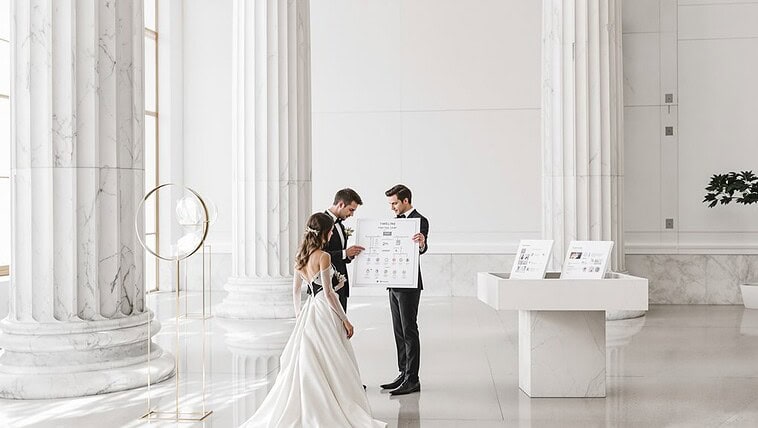
Museum architecture demands radical precision in your photographs—angular elegance that separates amateur snapshots from images worthy of your clients’ walls. You’re not merely documenting; you’re translating three-dimensional grandeur into two-dimensional poetry. Vertical line maintenance becomes your obsession—keep those columns straight, those walls parallel to your frame. Position yourself at mid-height, tripod locked, spirit level consulted.
Your perspective techniques matter profoundly. Choose between one-point precision (frontal, formal) or two-point dynamism (corner views with converging horizontals). The museum’s clean lines create natural pathways for the eye—exploit them ruthlessly, yet thoughtfully. Use architecture’s structural elements as leading lines to direct viewer attention toward your wedding subjects.
Don’t fear post-processing correction. Even master photographers straighten in post, adjusting converging verticals that would otherwise suggest architectural collapse. But—and this matters desperately—maintain authenticity. Your goal isn’t architectural fantasy but uplifted reality: the building as its architect intended, the space as your wedding clients experienced it, only better. Before the ceremony, confirm with your clients that they’ve secured their California marriage license to ensure the legal foundation matches the architectural magnificence you’re capturing.
Art as Background Element
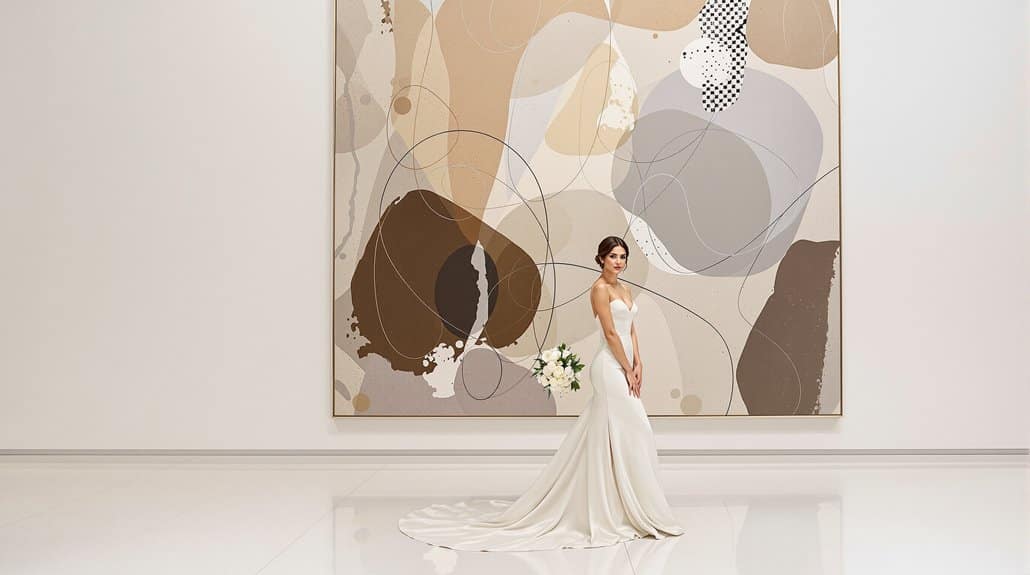
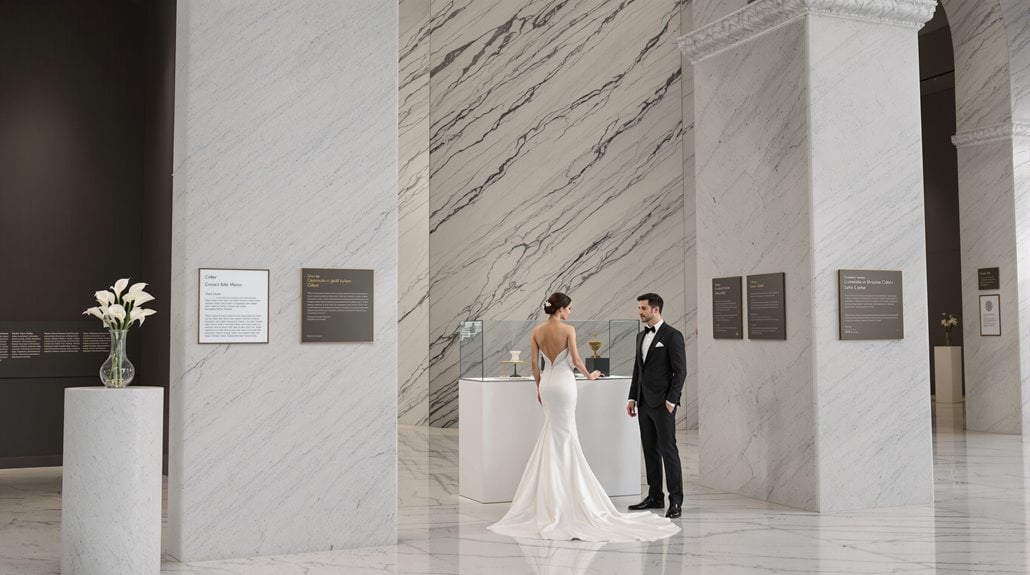
The greatest gift a museum offers wedding photographers lies in its ready-made artistic backdrops—masterworks that transform ordinary portraiture into visual conversations spanning centuries. You’re fundamentally shooting within a curated exhibition, where oil paintings provide inherent depth behind your couple, eliminating the need for supplementary décor. The museum wedding aesthetic thrives on these visual layers.
When capturing gallery wedding photography, you’ll navigate each institution’s preservation protocols—no tripods, limited flash, reliance on existing light. Yet these constraints force creative solutions that distinguish your work from typical venue shots. Your couples’ attire should harmonize with the collections, not compete with them; their jewelry and accessories become complementary artistic elements within the frame.
Museum wedding images tell sequential stories through multiple spaces—eight distinct environments at places like Carnegie Museum of Art—creating visual progressions from ceremony through reception that feel deliberately editorial rather than coincidental. Understanding that preservation takes precedence over event logistics means your shooting schedule must accommodate the museum’s environmental controls and security protocols, which ultimately protect the very collections that make your images extraordinary.
Institutional Lighting Challenges
Behind every striking museum wedding portrait lies a photographer’s battle with institutional lighting—arguably the most technically demanding aspect of this aesthetic. You’ll confront mixed lighting environments where tungsten fixtures clash with daylight streaming through windows, creating white balance nightmares your camera detects but guests never notice. And yet, this technical challenge becomes your creative signature when mastered.
Low ambient light conditions—particularly during evening ceremonies—introduce grain and noise while simultaneously limiting your shooting radius. You’ll find subjects disappearing into shadows as they step just three feet from available light sources.
Most frustratingly, you’ll navigate restricted lighting modification capabilities that separate professionals from amateurs. Museum policies protecting priceless collections often prohibit flash photography, external lighting equipment, or modifications to existing fixtures. Your solution? Snooted off-camera lights positioned strategically, timeline coordination emphasizing natural light windows, and advanced techniques that transform institutional limitations into distinctive aesthetic elements. These spatial constraints mirror how the physical environment acts as a silent facilitator—in this case, shaping both your technical approach and the resulting visual narrative.
Compositional Opportunities in Galleries

Unlike residential venues where backgrounds compete for attention, galleries offer painstakingly curated compositional canvases waiting for your visual exploitation. When you photograph museum weddings, the clean lines and negative space allow your subjects to breathe—stand out, even—against art installations that frame rather than distract.
You’ll discover that institutional space photography thrives on architectural geometry. The 90-degree angles of exhibition walls create natural leading lines, directing viewers’ eyes precisely where you intend. And yet, these same structures demand compositional discipline; sloppy framing becomes glaringly obvious against gallery precision.
Your museum wedding aesthetic benefits from intentional juxtaposition—modern couples against classical paintings, intimate moments beneath towering sculptures. Position subjects at intersections where wall colors change, or exploit the dramatic sight lines created by sequential gallery doorways (typically spaced 15-20 feet apart). These *passages* offer ready-made framing opportunities that residential venues simply cannot replicate. Before scheduling your shoot, coordinate with the Event Manager to secure recommended photography locations that showcase the museum’s most distinctive architectural and curatorial elements.
Spatial Drama Photography
Within museum environments, spatial drama emerges as your most persuasive storytelling tool—when you understand how to capture it. You’ll master museum wedding photography by manipulating depth perception, not passively recording it. Deploy textural diffusion—increasing detail proximity to your lens while reducing background clarity—to establish immediate visual hierarchy.
When photographing museum weddings, long focal lengths (85mm-200mm) compress elements against those striking architectural planes, creating density without chaos. Yet consider this contradiction: the most compelling spatial images often eliminate perspective lines entirely, positioning subjects against clean horizontals. You’re not documenting architecture; you’re wielding it.
The museum wedding aesthetic thrives on contrast manipulation—high contrast enhances depth separation between compositional layers, while strategic negative space provides narrative context. Frame subjects against negative space that complements their gaze direction, subtly returning viewers to your primary subject. It’s calculated storytelling, not accidental composition. This intentional approach mirrors how seasonal flower selection transforms design from rule-following into purposeful artistic expression—understanding foundational principles thoroughly before making deliberate choices that distinguish your work.
Briefing Photographer for Museum Spaces

Before signing your museum wedding contract, you’ll need to prepare your photographer for a minefield of restrictions that most professionals aren’t accustomed to steering. Equipment constraints alone will require careful planning—no tripods, no external lighting, no reflectors—forcing your photographer to master existing light conditions that are often troublesome in galleries.
Museum weddings require photographers who can navigate strict equipment bans while mastering challenging gallery lighting conditions.
Your photographer must maintain arm’s length distance from every artwork while simultaneously avoiding backing into priceless pieces. And yet, within these constraints lies the challenge of creating editorial-worthy compositions.
Request written permission for any specialty equipment at least two weeks ahead; some institutions simply won’t budge regardless. Flash photography? Absolutely prohibited indoors—though outdoor sculpture gardens typically permit it.
The most successful museum wedding photographers arrive having studied the space’s architectural elements and lighting patterns beforehand, preparing mental compositions that work within institutional constraints rather than fighting against them. When selecting your bridal gown, consider how designers like Monique Lhuillier create elegant silhouettes that photograph beautifully in gallery spaces with challenging ambient lighting conditions.
Conclusion
Through all the architectural grandeur and artistic splendor, the museum wedding finally delivers something no other venue can—intellectual romance married to visual drama. You’re not just choosing a beautiful space; you’re curating an experience that transforms both the meaning of the art surrounding you and your personal narrative within it. The photographer becomes your accomplice in this high-wire act of visual storytelling.
The museum wedding photography experience distills to:
- Architectural dialogue – Your bodies in conversation with designed space, creating geometric harmony unique to institutional settings
- Artistic contextualization – The way your emotional moments gain gravitas when framed by significant works
- Light manipulation – Working with, against, and through challenging institutional lighting systems
- Temporal significance – The permanent/ephemeral tension of fleeting celebration in spaces built for posterity
This approach requires technical mastery and emotional intelligence—demanding, yes, but yielding images impossible elsewhere. Whether you choose contemporary museums with their expansive open-floor plans and natural light or classical venues with ornate detailing and coffered ceilings, the architectural style fundamentally shapes your visual narrative and the emotional tone captured in every frame.