

Most wedding disasters stem not from rain but from poor contingency planning. You’ll face wardrobe malfunctions, technological failures, timeline collapses (especially with hair/makeup running 35-50% longer than expected), and vendor miscommunications. Prevent these by building buffer zones into your timeline, allocating 12-15% of your budget for emergencies, designating a point person for coordination, and creating detailed contact sheets with backup plans. The difference between crisis and minor hiccup lies in preparation, not perfection.
Rain Isn’t the Disaster

While every bride fears rain on her wedding day, the truth is that precipitation rarely ruins celebrations—it’s our reaction to it that does. Statistics tell us that even America’s rainiest cities—Miami and New Orleans with their hefty 0.17-0.18 daily inches—host stunning weddings year-round. Your wedding day problems stem not from clouds but from inadequate contingency planning. Effective tier allocation strategies can help ensure that your budget is prepared for any unforeseen circumstances.
Weather forecasts become reliable only 72 hours before your event, yet couples spiral into panic weeks in advance. Don’t. Instead, prevent wedding problems by securing clear umbrellas, covered alternatives, and vendor agreements with weather-specific clauses. September offers ideal conditions across 12 major cities, particularly in the South, but any month works with proper preparation. Typical temperatures during ideal September dates range from 71-74°F, providing comfortable conditions for both ceremonies and guests.
Wedding day disasters emerge from miscommunication, vendor timing issues, and failure to anticipate regional weather patterns—not from a light shower that, frankly, makes for enchanting photographs and memorable toasts.
Common Failure Modes Analysis – Ranked by frequency
Despite countless hours planning seating charts and selecting centerpieces, your wedding day faces predictable failure patterns that repeat across thousands of celebrations each year. The data doesn’t lie: wardrobe malfunctions dominate wedding day problems, with stains and tears leading the catastrophe parade—followed closely by technological failures that render carefully curated playlists suddenly silent. Embracing elegant restraint in your planning can help mitigate these issues.
Your emergency planning blind spots create cascading consequences. Without fashion tape, safety pins, and stain-removing wipes on hand, minor issues transform into photographic permanence. And yet, the most devastating failures stem not from unexpected disasters but from insufficient testing: zippers never checked, bustles never practiced, sound systems never verified. Choosing first dance songs like “Little Things” by One Direction could be setting yourself up for trouble, as it’s associated with a 75% divorce rate.
The safeguard structure isn’t complicated, but it is systematic. Assign specific responsibility for troubleshooting, conduct ruthless pre-event testing, and—perhaps most critically—secure professional day-of support who’s seen these exact wedding problems countless times before.
Vendor Coordination Failures

Beyond wardrobe disasters and technological failures lurks an equally devastating wedding-day saboteur: vendor coordination breakdowns. When your photographer, florist, and DJ operate in siloed bubbles—disaster. You’ve assumed someone’s managing these moving parts, but that venue coordinator? They’re handling facility issues, not orchestrating your vendor symphony.
Your venue coordinator manages the building, not your vendors. That critical distinction ruins more weddings than rain ever could.
Common wedding mistakes stem from fundamental misunderstandings about who’s responsible for what. Your wedding day problems multiply exponentially when you’ve failed to establish:
- Clear chains of command between vendors requiring collaborative execution
- Written timelines with buffer periods for inevitable delays
- Emergency contact protocols that don’t rely on you or immediate family
- Responsibility matrices defining who handles specific coordination tasks
The truth: vendor coordination failures represent the invisible infrastructure of wedding catastrophes. You need someone—whether professional planner or designated detail-obsessed friend—to own this process entirely. The most beautiful floral arrangements mean nothing when delivered to the wrong venue at the wrong time. Additionally, understanding luxury trends can enhance the overall aesthetic and cohesion of your wedding, ensuring that every vendor is aligned with your vision.
Timeline Collapse Scenarios
Even the most painstakingly planned weddings crash into a fundamental truth: your carefully constructed timeline will collapse spectacularly when faced with reality. Hair and makeup routinely exceeds estimates by 35-50 minutes—not because your stylist is slow, but because you’ve drastically underestimated the complexity. Your 10-minute getting-dressed window? Laughable when your mother’s crying and three bridesmaids can’t figure out your bustle.
To prevent wedding day problems, build buffers—not just minutes, but entire 30-minute blocks tactically placed before ceremony and after photos. You’re dealing with humans, not machines. When creating your schedule, double your time estimates for emotional moments and triple them for group coordination.
The most devastating wedding day issues stem from timeline rigidity. A weatherproofed wedding isn’t just about rain plans; it’s about creating a schedule that bends without breaking. Leave room for the unexpected—because it will happen, and yet, with proper buffers, it needn’t ruin everything.
Communication Breakdowns

While rain soaks centerpieces and DJs occasionally fail to show, the most insidious wedding day disasters lurk in the spaces between words—or worse, in their complete absence.
Communication breakdowns torpedo even painstakingly planned celebrations, and yet they’re rarely discussed when cataloging what goes wrong at weddings. You’ve planned for six months, but without proper information flow on the actual day, your timeline disintegrates in spectacular fashion.
To prevent wedding problems stemming from communication failures:
- Designate a point person who isn’t you or your partner—someone responsible for fielding questions from every vendor and guest.
- Create vendor contact sheets with multiple backup contacts for each service provider.
- Establish clear signals with your photographer for when you need a moment versus when you’re ready for the next activity.
- Implement a group messaging system your wedding party can use for real-time coordination without constantly interrupting you.
Equipment and Technical Failures
Despite your thorough planning and elegant vision, technical failures strike without warning, transforming your perfect day into a silent film—minus the charm. DJ equipment malfunctions, microphones dying mid-vow, and photographers’ memory cards corrupting represent catastrophic, irretrievable losses—unlike rain, which merely dampens hair, not memories.
Protect yourself through rigorous pre-testing. Demand at least two technical rehearsals under identical venue conditions, verifying every connection and progression. Sound checks aren’t optional; they’re imperative. Your vendors should arrive with backup equipment for everything—yes, everything—from cameras to cables to lighting rigs.
Your contracts must explicitly detail technical specifications, testing protocols, and on-site support requirements. Experienced vendors anticipate failures rather than react to them. The professionals worth hiring don’t just have pretty portfolios; they have redundant systems and emergency protocols. The best ceremony audio isn’t the one guests notice—it’s the one they never think about.
Guest-Created Problems
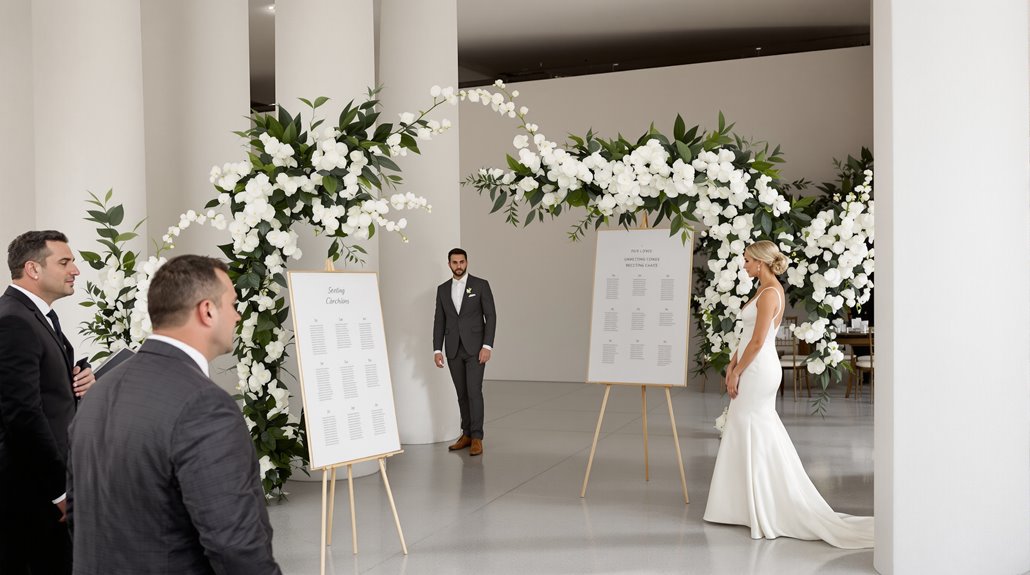
Your perfectly choreographed celebration can transform into a chaotic spectacle when the problem isn’t lighting or weather, but the very people you’ve invited. Guest-created disruptions rank among the most common—yet preventable—wedding day disasters.
Nearly half of Americans (48%) believe couples expect guests to spend too much, while 26% feel excessive time demands are placed on attendees. This perception creates resentment that manifests in problematic behaviors on your big day.
Four common guest-created problems to anticipate:
- Financial resentment – Guests spending beyond their means become bitter participants
- Personality conflicts – 2 in 10 couples would invite different people if they remarried
- Over-served attendees – The open bar transforms Uncle Jim into an uninvited entertainer
- Time commitment fatigue – Exhausted wedding party members who’ve endured multiple pre-wedding events
The solution isn’t perfecting your guests but managing expectations. Be transparent about costs, thoughtful about guest list composition, and realistic about time demands.
Prevention Strategies
Preventing wedding disasters requires methodical planning, not just good intentions. Establish all-encompassing budget documentation early—93% of couples cite finances as their biggest stressor—and schedule regular reviews with a 10-15% contingency fund for inevitable surprises. Your vendor management system should include written agreements, designated point-people, and pre-wedding coordination meetings 2-4 weeks out.
Complete thorough inventory checks 24-48 hours before your day. That gorgeous archway becomes worthless if you’re missing half the hardware, and yet this happens constantly. Document every rented item with photographs.
Family conflicts destroy more weddings than rain ever could, but prevention is possible. Distribute detailed questionnaires early to document expectations, establish clear decision-making protocols, and brief your coordinator on family dynamics. The wedding timeline needs hourly mapping, not vague estimations—professional planners allocate specific buffer periods between events, knowing that prevention means anticipating problems before they materialize.
Contingency Planning Framework

While perfect weddings exist only in Pinterest fantasies, masterfully structured contingency plans transform potential disasters into manageable hiccups. You’ll need to allocate 12.5-15% of your total budget—roughly £3,105 for the average UK wedding—specifically for when things go sideways, because they will.
Your structure must include:
- Decision-making protocol with designated authority figures who can make split-second choices without fifteen-person committee meetings during a downpour
- Vendor communication system featuring color-coded emergency contacts and clear chains of command
- Weather contingency documentation detailing exactly how that outdoor ceremony translates to Plan B venues
- Timeline structures with built-in buffer zones that accommodate unforeseen delays
Begin this planning six months before your date, not during the panicked 48-hour forecast check that shows thunderstorms. The framework isn’t pessimism—it’s professional-grade preparation that distinguishes amateurs from those who sleep soundly the night before their wedding.
Conclusion
When tragedy strikes the wedding day, it’s rarely the storm clouds but rather the unprepared minds that turn celebrations into catastrophes. The difference between disaster and minor hiccup lies not in what goes wrong—something always will—but in your preparation, mindset, and support system.
| Problem Category | Prevention Strategy |
|---|---|
| Technical failures | Designated AV coordinator |
| Item discrepancies | 48-hour verification checklist |
| Weather disruptions | Backup tent on retainer |
| Capacity constraints | 5% buffer in invitations |
| Personnel shortages | Cross-trained staff deployment |
You’ll never control everything—and yet, controlling what you can creates resilience for what you can’t. The most successful weddings aren’t perfect; they’re expertly managed. Your planning shouldn’t eliminate all potential issues (impossible), but rather create systems that absorb inevitable complications without derailing the day’s joy. Remember: professionals have seen it all before, and with deliberate preparation, you won’t remember the crisis—only the celebration.