
Wedding rituals carry meanings far deeper than their surface appearances. You’re not just tossing a bouquet—you’re participating in Victorian fertility magic. That unity candle? A 1970s invention, not ancient wisdom. Your ring exchange symbolizes eternity, while veils once protected against jealous spirits, not modesty. Many traditions originated as protection from evil or infertility, yet now represent personal commitment and love. Their evolution reveals how ritual significance transforms while maintaining cultural power.
Understanding Before Deciding
When you’re planning your wedding, it’s easy to get caught up in Pinterest boards and family expectations without stopping to contemplate what these traditions actually mean. That wedding tradition explanation you’ve been craving? It matters—deeply. Consider this: 48% of ceremonies include religious readings, yet many couples adopting them couldn’t explain their significance.
Before incorporating any ritual background into your day, ask yourself: What message are we broadcasting to our 150 witnesses? That unity candle you’re considering wasn’t even around before the 1970s. The “something blue” you’re stressing over? Victorian fertility magic, pure and simple. And that first dance? Court dance tradition democratized. Interestingly, about 21% of weddings include cultural or religious customs that reflect couples’ heritage and beliefs.
Every ceremony ritual meaning falls into five core categories: gender roles, wealth display, kinship involvement, superstition, and fertility. Your choices communicate values. They transmit social expectations across generations. If you find yourself with questions about how to honor traditions meaningfully, don’t hesitate to seek personalized assistance from experts who can guide you through the process. They’re cultural DNA—and yet, they’re also yours to reimagine with intention.
Something Borrowed Something Blue: Victorian Origins
Though we toss around the phrase “something borrowed, something blue” at nearly every wedding shower, few realize they’re participating in Victorian-era fertility magic. This wedding tradition history traces back specifically to 1870s Lancashire, England, where brides collected five protective talismans—not just four—to ward off the “evil eye” curse believed to cause infertility.
The full ritual background? “Something old, something new, something borrowed, something blue, and a silver sixpence in her shoe.” Each element served a distinct purpose: old items connected you to family heritage, new symbolized optimism, borrowed transferred luck from successfully married women, and blue represented purity and fidelity (the Virgin Mary’s signature color). The tradition emphasizes small, meaningful objects during the wedding ceremony, offering personal touches to formalized proceedings.
What rituals mean often gets lost through centuries of repetition. These weren’t random accessories but a tactical defense system against malicious fertility curses—a checklist for ensuring your reproductive future remained intact, blessed by female relatives who’d successfully navigated marriage before you. Today, brides continue this tradition with exceptional diamond engagement rings and other carefully selected bridal jewelry that hold deep personal significance.
Unity Candle: 1970s Invention
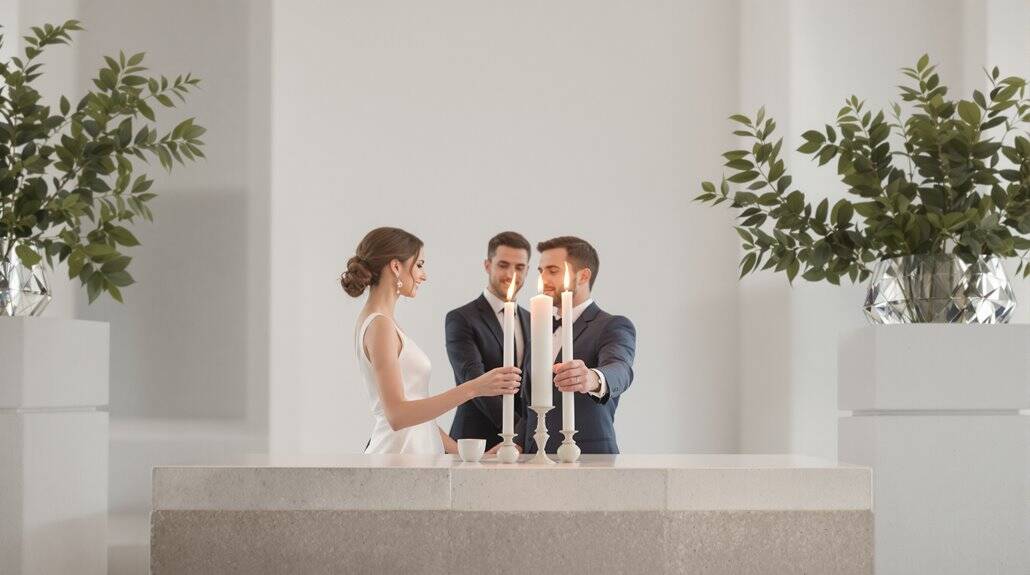
Unlike ancient wedding customs steeped in centuries of tradition, the unity candle ceremony you’ve witnessed at countless modern weddings emerged surprisingly recently—a 1970s American invention with murky origins. This wedding ritual meaning crystallized rapidly after Luke and Laura’s 1981 “General Hospital” nuptials showcased the practice, though evidence confirms its existence years earlier.
| Element | Symbolism | Origin | Religious Context |
|---|---|---|---|
| Taper Candles | Individual lives | 1970s America | Genesis 2:24 |
| Center Pillar | United marriage | TV popularization | Holy Spirit presence |
| Lighting Process | Family joining | Commercial invention | Divine witness |
| Flame Merging | Two becoming one | Marketing strategy | Sacred union |
You’re participating in ritual background that’s both deeply meaningful and suspiciously commercial. The tradition origins wedding historians trace reflect our modern tension—a $50 wax marketing ploy that nonetheless captures profound spiritual truth. Catholic parishes remain divided, some banning it entirely from ceremonial proceedings, others embracing its symbolism. Understanding the commercial influences behind such rituals helps couples apply structured boundaries to their ceremonial choices, turning emotionally-charged decisions about which traditions to include into clear, tactical selections aligned with their authentic values rather than industry pressure.
First Dance: Court Dance Democratized
As your newlywed couple takes center stage for their seemingly intimate first dance, you’re actually witnessing the democratization of a ritual once reserved exclusively for royalty. In 16th-century European courts, the highest-ranking guest—never the commoners—would lead the opening dance, establishing a clear social hierarchy through choreographed movement.
You’re watching centuries of transformation unfold in three minutes. The rigid minuets and polonaises that once signaled aristocratic refinement have given way to personalized expressions—sometimes awkward, often touching. What began as political theater now serves as romantic declaration. And yet, the spectacle aspect remains; you’re still audience to a performance, albeit one that’s shed its elitist origins.
The waltz transformed everything in the 19th century, its scandalous close embrace democratizing intimacy on the dance floor. Today’s couples choose songs reflecting their relationship rather than social position—the final triumph of personal meaning over prescribed protocol. Modern brides often complete their haute couture looks with carefully curated beauty choices that extend the personal expression from dance floor to makeup palette.
Bouquet Toss: Medieval Fertility Tradition
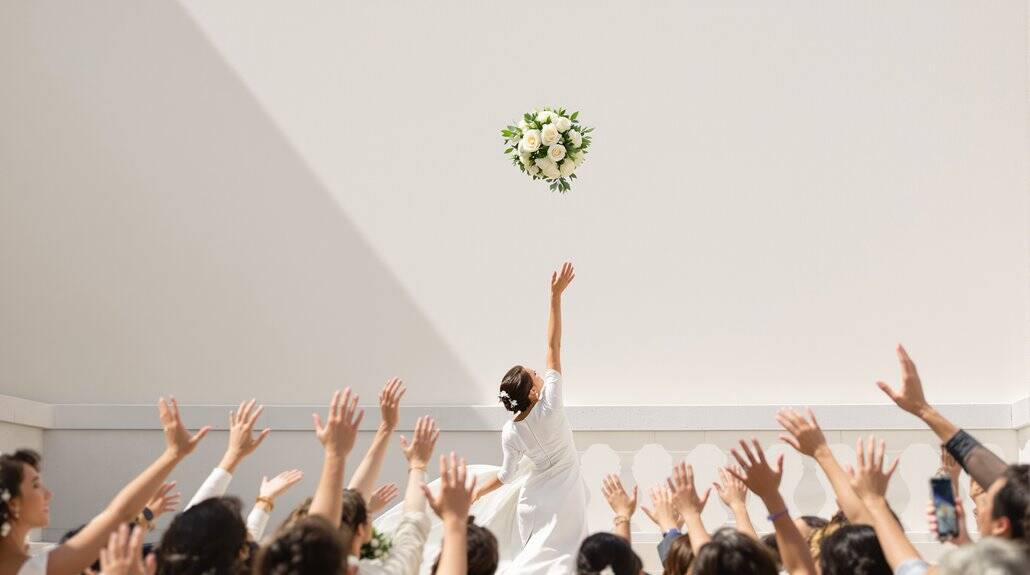
When the bride turns her back to a crowd of enthusiastic single women and launches her bouquet overhead, you’re witnessing more than just a lighthearted reception game. This ritual dates to 14th-century England, evolving as a clever distraction from a truly bizarre custom—wedding guests literally chasing brides to tear pieces of their dresses for good luck.
The bouquet became the perfect decoy. Why? Medieval Europeans believed the bride possessed powerful fertility magic on her wedding day, and anything she touched—especially her flowers—transferred those blessings. Single women desperately sought these charms as marriage represented their primary path to economic security.
You’ll notice the ritual follows a precise choreography: the DJ announcement, the awkward gathering of singles, the theatrical countdown, and the over-the-shoulder toss. And yet, many modern couples are reimagining this tradition—creating anniversary dances or maternal dedications—maintaining the communal spirit while shedding its dated implications. Cultural historians at the Smithsonian Magazine have documented how such wedding customs reveal broader shifts in social values and gender expectations across centuries.
Ring Exchange: Ancient Symbolism
The simple gold band slipped onto your finger during a wedding ceremony carries with it over 3,000 years of symbolic weight. Ancient Egyptians first documented this practice, crafting rings from braided reeds that evolved into more durable materials. They placed them specifically on the fourth finger of the left hand—believing a “vena amoris” directly connected this finger to the heart. Science has since disproven this connection, and yet the tradition endures.
When you exchange rings today, you’re participating in symbolism that spans civilizations:
- The circle represents eternity—no beginning or end
- The center opening signifies a “door to the future”
- The metal evolution (from reeds to iron to gold) reflects the permanence of commitment
- The fourth finger placement continues an unbroken tradition established millennia ago
What began as Egyptian fertility tokens transformed through Roman formalization and Christian adoption into today’s universal symbol of matrimonial commitment. Modern brides can enhance this timeless tradition with luxury skincare and makeup that ensures they look radiant as they exchange these meaningful symbols.
Cultural Evolution of Ritual Meanings
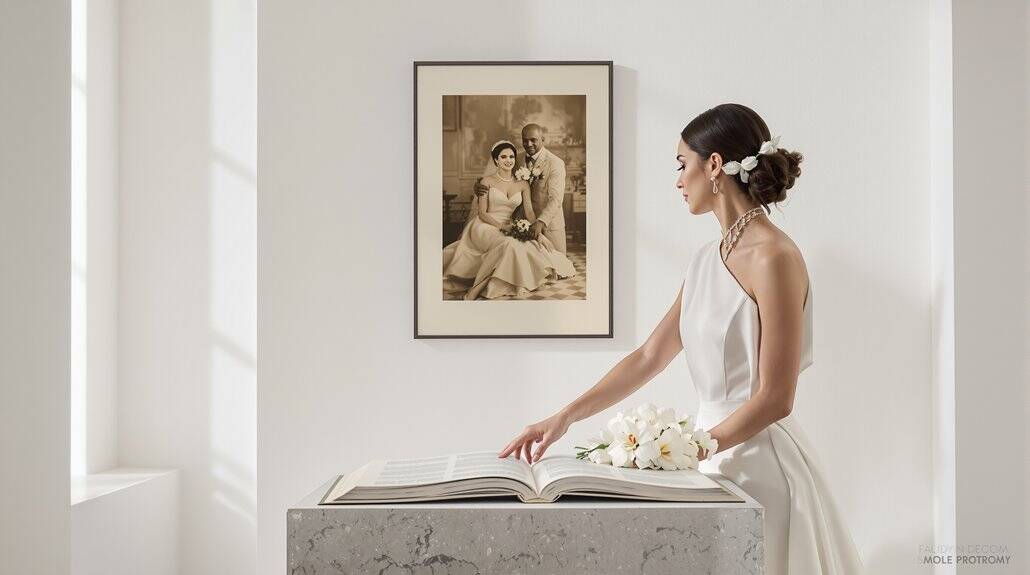
Ring exchanges reveal the physical symbolism of matrimony—but it’s the meaning behind every wedding custom that’s transformed dramatically across centuries. What once protected you from evil spirits now simply photographs beautifully.
Your veil? Romans used it to shield brides from jealous entities, not to signify virtue or complete a designer look. That unity candle you’re considering? Pure 1970s invention, not ancient tradition. Even your “something blue” stems from Victorian fertility magic, not color coordination. And when rice showers down? You’re participating in one of humanity’s oldest conception rituals—though you probably see it as just a celebratory gesture.
Wedding traditions evolve constantly, with spiritual protections becoming symbolic representations. The matron of honor once brandished torches against malevolent forces; now she holds your bouquet. Your “first dance” descends from court traditions ultimately democratized for common couples—wedding customs rarely maintain their original intent. Modern couples can preserve these evolving moments through photo editing and organizing tools that work seamlessly across desktop, web, and mobile platforms.
Whether Historical Context Matters Now
As you plan your perfect ceremony, you might wonder if knowing the peculiar origins of wedding traditions actually matters—and yet this question reveals the enthralling tension between ritual preservation and personal reinvention that defines modern matrimony. Today’s couples increasingly prioritize personal expression over historical adherence, transforming ancient fertility symbols into celebrations of partnership.
Consider these conflicting truths about wedding tradition origins:
- Diamond rings emerged from a 1947 marketing campaign, not ancient romance
- Unity candles appeared only 30-40 years ago, proving “tradition” can be surprisingly recent
- White dresses symbolized wealth before purity—Queen Victoria set the trend
- Sand ceremonies lack historical roots but create profound personal meaning
The historical accuracy matters less than what you infuse with significance. The diamond’s commercial origins don’t diminish its sparkle, just as ancient fertility rites now represent commitment rather than procreation. Your interpretation transforms symbols into something authentically yours. Platforms like Pinterest help couples discover and organize visual inspiration for their ceremonies, creating collages of ideas that blend traditional elements with personal touches.
Conclusion
Throughout humanity’s long history with matrimony, wedding rituals have evolved from superstitious protection against evil spirits to meaningful expressions of personal commitment—and yet their power remains undimmed across centuries of adaptation.
When you exchange rings, light unity candles (despite their recent 1970s origin), or perform your first dance, you’re connecting to something far larger than yourself. These aren’t empty performances but intentional acts binding you to millennia of human experience—35-40 generations worth. The “something borrowed, something blue” you carefully selected? Victorian fertility magic repackaged for modern sensibilities.
Whether blending multicultural traditions from Jewish blessings with Catholic customs or honoring Black heritage through jumping the broom, your choices matter. In Jewish weddings, the breaking of the glass serves as a poignant reminder of the destruction of the Temple in Jerusalem, adding layers of historical meaning to the celebration. The significance lies not in perfect historical accuracy—many “ancient” traditions are surprisingly recent inventions—but in your deliberate participation in rituals that transform two separate individuals into something new: a united partnership witnessed by community.