
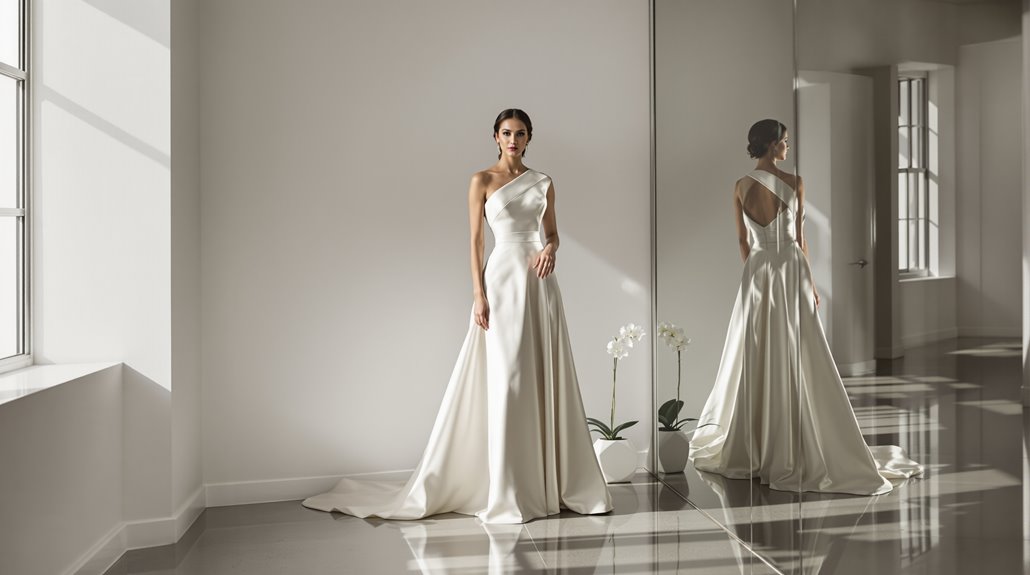
Column gowns consistently deliver breathtaking results across all settings, their sleek lines translating flawlessly from 3D to 2D. A-line silhouettes photograph reliably but lack dramatic impact, while ball gowns offer princess fantasy—yet require expert handling to avoid overwhelming shadows. Fit-and-flare styles? Often disappointing due to fit issues and movement restrictions. Beware heavily embellished designs; they risk appearing costume-like in photos, creating distracting “hot spots.” The dress that stuns in person might betray you through the lens.
Why Photographic Success Matters
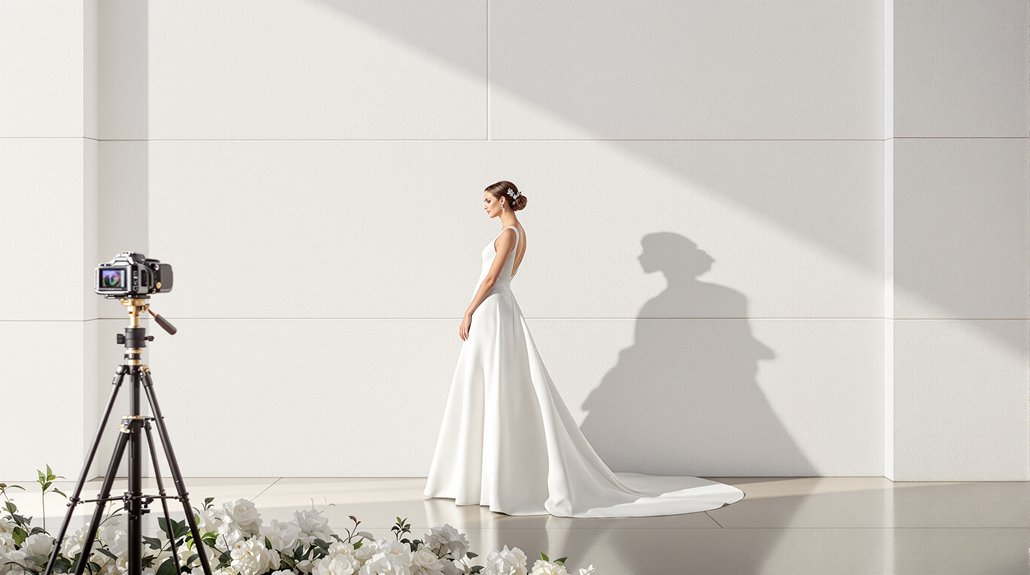
While your wedding day lasts mere hours, the photographs endure for generations—and not all beautiful dresses translate effectively to images. The truth? An astonishing 78% of brides rank dress detail shots among their top five favorite wedding photos—yet many discover too late their chosen silhouette falls flat on camera.
Your dress silhouette photos become your visual legacy, the centerpiece of an aesthetic that ripples through your entire album. Consider this: Instagram has transformed wedding dress photography into curated art, with detail shots jumping 45% in the past year alone. You’re not just choosing a dress; you’re selecting the protagonist in a visual narrative that will be shared, studied, and preserved. Photographers often use natural lighting to enhance the intricate details and textures that make each wedding dress unique. Selecting a dress that embodies quiet luxury may elevate not just the look but also the feel of your images, ensuring they resonate with timeless elegance.
The statistics are unforgiving but illuminating: photographers using techniques suited to specific gown photograph tips report 65% higher client satisfaction. Your silhouette must not just stand beautifully in person but translate into two-dimensional poetry—a distinction that matters immensely.
Silhouettes Ranked by Camera-Friendliness
Not all wedding dresses perform equally through a camera lens, despite how breathtaking they might appear in person. The harsh reality? Your camera-friendly gown selection could make the difference between wedding photos you treasure forever or ones you quietly hide away.
Column gowns consistently rank highest for photogenic wedding dress appeal—elegant and timeless in virtually any setting. A-line silhouettes follow closely, creating that coveted hourglass effect while flattering literally every body type. Additionally, the psychology of luxury weddings suggests that brides value designs that enhance their overall experience, contributing to their satisfaction with the day. Mermaid styles, with their dramatic flare at the knee, deliver striking visual impact but demand perfect posture for *ideal* dress silhouette photos.
Trumpet styles offer a more forgiving alternative to mermaids—hugging curves while permitting movement for those candid dancing shots. Ballgown silhouettes provide show-stopping appearance while maintaining comfort for brides seeking dramatic volume in their photographs. And yet, the heavily beaded bodice you’re eyeing? It might photograph as costumey rather than couture. Fit-and-flare, though universally flattering in person, often reads as generic through the photographer’s lens—beautiful, yes, but forgettable.
Column Gowns: Always Elegant in Images
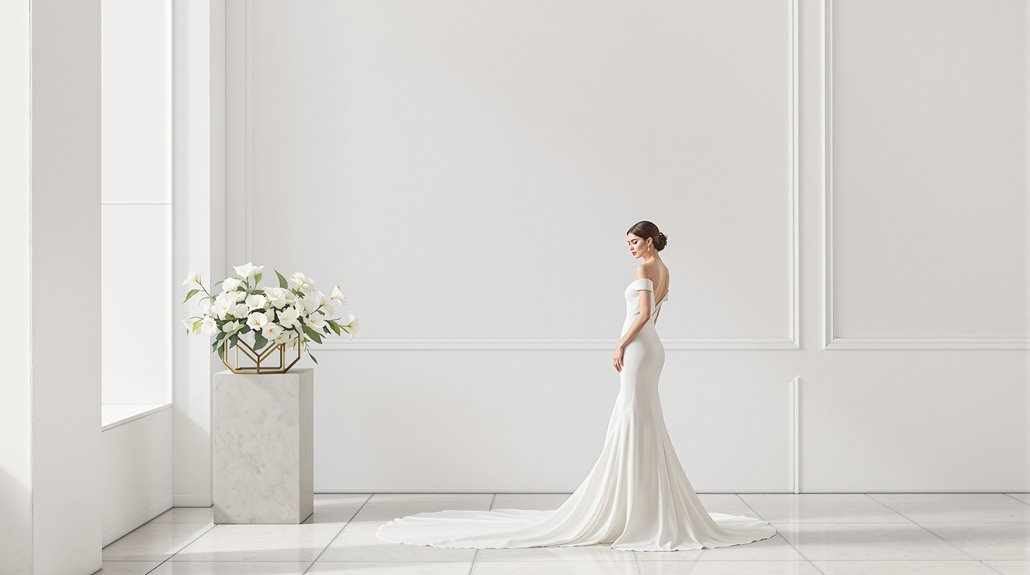
Among all wedding dress silhouettes, column gowns stand as the unquestionable champions of photography—delivering consistently breathtaking images across every venue, lighting condition, and body type. Your photogenic wedding dress choice matters enormously, and the sleek architectural lines of column silhouettes translate perfectly from three-dimensional reality to two-dimensional photographs.
| Setting | Why Column Gowns Photograph Well |
|---|---|
| Urban | Clean lines pop against architectural backdrops |
| Beach | Movement captures beautifully without overwhelming |
| Cathedral | Elongates your frame in vertical spaces |
| Evening | Satin reflects candlelight with luminous warmth |
The column dress that photographs magnificently does so because it follows your body’s natural shape without distracting excess. You’ll move freely—creating those lively, storytelling images photographers chase—while maintaining elegance from every angle. And yes, they’re universally flattering; the vertical silhouette visually adds height for petite brides while defining curves without excess volume for hourglass figures. Additionally, investing in effective tier allocation can significantly enhance your budget for selecting the perfect gown.
A-Line: Versatile but Unremarkable
A-line wedding dresses embody the quintessential bridal silhouette—fitted at the bodice, cinched at the waist, and gracefully flaring outward like the letter they’re named for. They’re the Switzerland of photogenic wedding dress options: universally flattering, never offensive, but rarely breathtaking in photographs.
Your A-line delivers consistent results across venues—beach, garden, chapel—without appearing misplaced. The silhouette creates clear waistline definition that photographs distinctly while offering fabric versatility (silk reads luxurious; chiffon, ethereal). And yet, this very adaptability renders it somewhat forgettable in your wedding album.
While it balances proportions beautifully—elongating petite frames, creating hourglass illusions, flattering pear shapes—the dress silhouette photos lack the dramatic impact of ballgowns or the sleek sophistication of columns. It’s the reliable beige sedan of bridal fashion: practical, accommodating various embellishments from minimal to ornate, but ultimately, the safe choice rather than the showstopper.
Ball Gown: Dramatic but Challenging
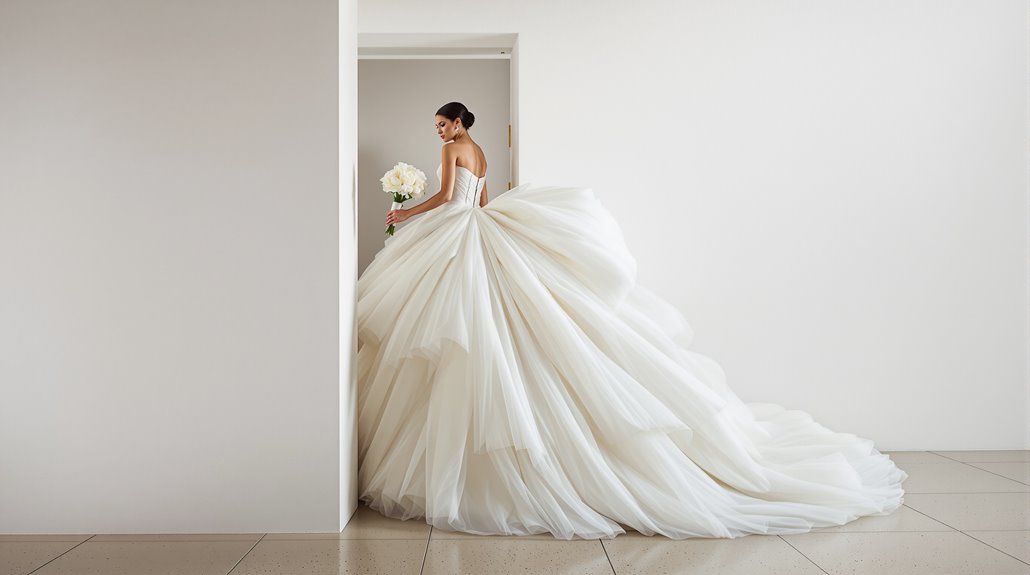
Ball gowns embody the princess fantasy that many brides chase—voluminous, dramatic, and utterly unmistakable in photographs. Their sweeping silhouettes command attention in grand venues, but their photographic reality often proves more complex than the fairytale promises. Unlike column gowns that photograph elegantly across settings, ball gowns demand deliberate planning and expert handling.
- Voluminous skirts that capture light differently across their circumference, creating shadows you’ll need to counteract with precise positioning
- Dramatic proportions that can overwhelm petite frames or smaller spaces, requiring wide-angle composition techniques
- Movement-restricting structures that limit your ability to capture those coveted candid moments of natural joy
You’ll need photographers who understand how to manage expansive fabric without letting it swallow the frame. The right professional will choreograph your movements, capitalize on staircases and balconies, and ensure your princess moment translates from three dimensions to two without losing its magic.
Fit-and-Flare: Generic in Photos
Despite its popularity in bridal boutiques, the fit-and-flare silhouette suffers a peculiar curse: what dazzles in the mirror often disappoints in the album. Those sample dresses—typically several sizes smaller than standard orders—create unrealistic expectations about how they’ll photograph on your actual body.
You’ll discover movement restrictions around your thighs and legs that translate into awkward walking patterns captured by your photographer. And yet, the true villain might be the fabric itself: satin and silk wrinkle aggressively, requiring extensive post-production editing to appear polished in photos.
The waistline definition—supposedly the star feature of this silhouette—frequently disappears when the bodice doesn’t align precisely with your natural curves. Alterations can remedy this through seam adjustments, but many brides don’t allow sufficient time for multiple fittings.
Consider your venue carefully; heavily beaded versions create visual dissonance in casual settings, while simpler iterations risk looking utterly forgettable.
Heavy Embellishment: Costume Risk
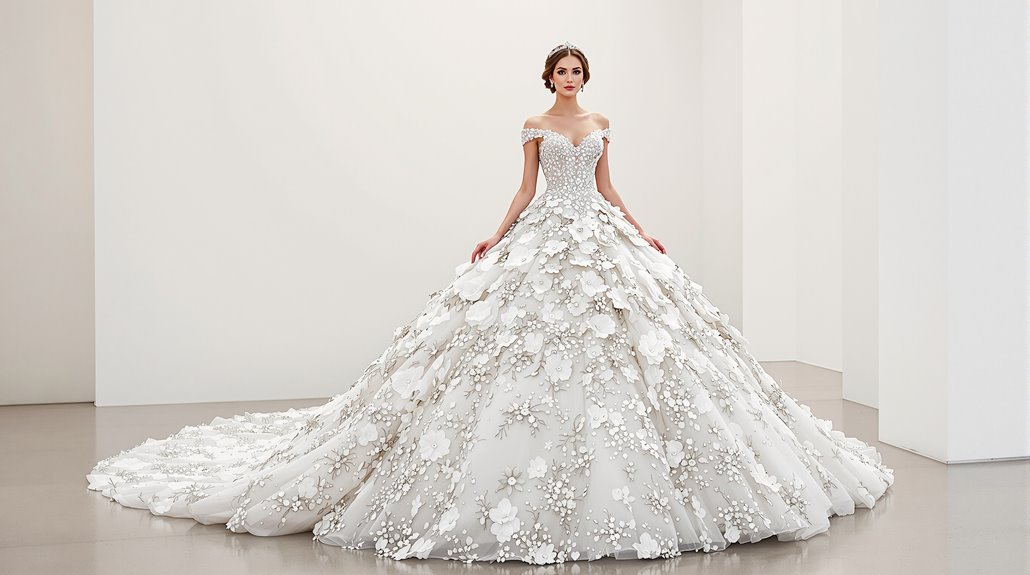
While fit-and-flare silhouettes risk photographic mediocrity, heavily embellished wedding gowns present an entirely different hazard: the costume effect. That dazzling bodice with 3,000 hand-sewn crystals you adore up close? In photographs, it often reads as theatrical—even garish—flattening intricate dimensionality into a chaotic sparkle that screams “costume department.” And yet, the right photographer can harness this complexity through strategic lighting.
Heavily embellished gowns transform from intricate masterpieces to theatrical costumes through the unforgiving lens of wedding photography.
Your beaded masterpiece also demands exceptional care—preservation specialists identify an average of 17 vulnerable points on heavily embellished gowns, each requiring individual assessment before cleaning. You’ll face triple the alteration costs of simpler designs, with embellishments requiring surgical precision during fitting.
- Crystal-encrusted bodices catching light from every angle, creating “hot spots” that overexpose in photos
- Densely beaded panels appearing as solid blocks of texture rather than intricate handwork
- Embellishment patterns that visually compete with natural settings, drawing eyes away from your face
How to Test Your Dress in Photos
After choosing your gown, you’ll need to test its photogenic qualities before committing—and trust me, what dazzles in the boutique mirror often disappoints in digital perpetuity. Capture your dress from at least five angles: front, back, both sides, and an elevated perspective that reveals the train’s architecture. That column gown? Magnificent from every vantage. Your beaded bodice? Perhaps costume-like when flash hits those crystals.
Experiment with light ruthlessly—natural window diffusion for texture revelation, backlighting for silhouette drama, golden hour warmth for romantic ambiance. And yet timing changes everything; what photographs ethereally at 7PM becomes flat by noon.
Movement testing separates pretenders from contenders. Twirl once, walk three steps, adjust the skirt—does the fabric flow elegantly or collapse awkwardly? Document close-ups of lacework against uncluttered backgrounds. Remember: your photos will outlive your memory of wearing it—they deserve precise choreography.
Photographer Perspectives
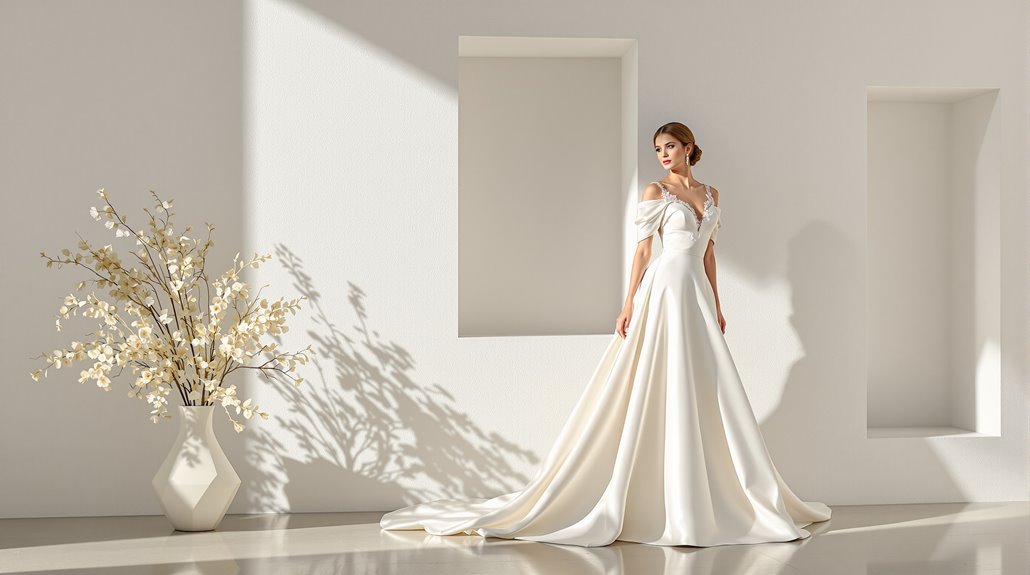
Professional photographers evaluate dress silhouettes through an entirely different lens than bridal consultants—literally. They’re hunting for shapes that translate two-dimensional magic into tangible memories. Column gowns photograph elegantly across venues—their clean lines create that editorial quality you’ve ripped from magazines for years. And yet, even the most photogenic silhouettes require calculated consideration.
- A heavily beaded bodice that dazzles in person often reads as costume-like through the camera’s unforgiving eye
- Fit-and-flare silhouettes—despite their popularity—frequently photograph as generic, lacking the distinctive character your investment deserves
- Mermaid gowns capture magnificently from all angles, particularly with dramatic elements like plunging necklines or cathedral trains
What’s captivating? The gown that makes you weep in the boutique mirror might translate poorly to print. That’s why photographers consistently recommend movement tests—walking, dancing, twirling—during fittings. The static dress becomes lively art when properly matched to both body and medium.
Conclusion
Throughout your wedding dress journey, finding the perfect silhouette transcends mere aesthetics—it’s about capturing eternity in frames you’ll revisit for decades. The camera sees differently than the naked eye, transforming what seems flawless in the boutique mirror into something potentially underwhelming—or unexpectedly magnificent—in photographs.
While research specifically addressing photographic performance of different silhouettes remains limited, your decision deserves careful consideration beyond basic body-type compatibility. Column gowns typically photograph with timeless elegance, creating clean lines that translate beautifully to two dimensions. Heavily embellished styles risk appearing costumey or dated, and yet, in the right lighting, they capture light in ways plain fabrics cannot.
Remember: your silhouette choice isn’t just about the 8-hour wedding day experience—it’s about the 50-year visual record. Schedule a pre-wedding photoshoot in your chosen dress. Test it in various lighting conditions. Analyze those images critically. Your future self will thank you.