
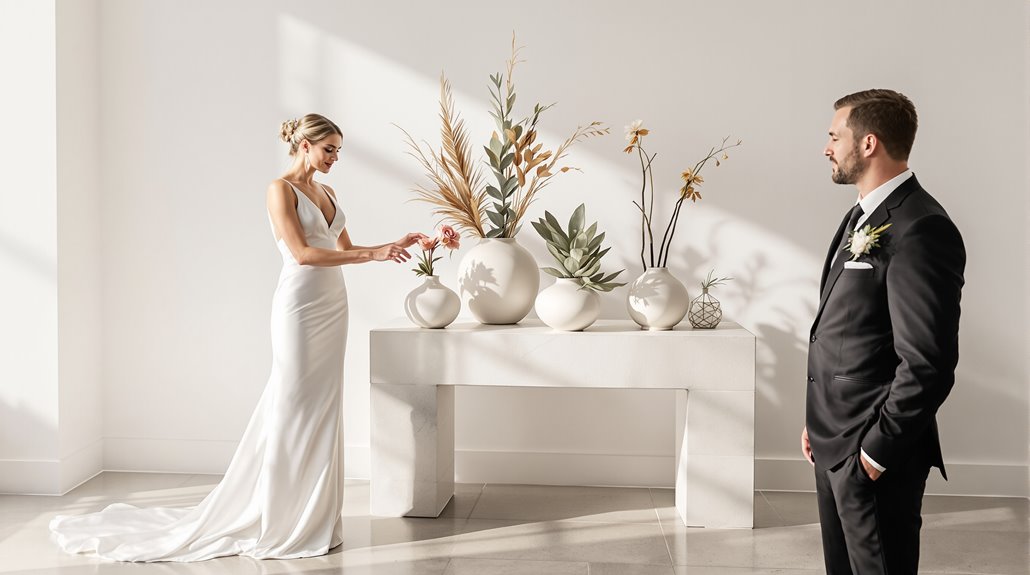
For summer weddings, choose heat-resistant blooms like protea (lasting 14+ days), calla lilies, amaranth, and succulents instead of vulnerable hydrangeas or roses. You’ll want morning delivery (before 8AM) and deliberate placement away from sun and AC vents. Create a preservative mixture (1 tsp sugar, 1 tsp bleach, 2 tsp lemon juice per quart) and consider anti-transpirant sprays. Cut stems at 45° angles every other day. The physics of wilting remains inevitable, but the right choices buy precious hours of perfection.
The Summer Heat Challenge
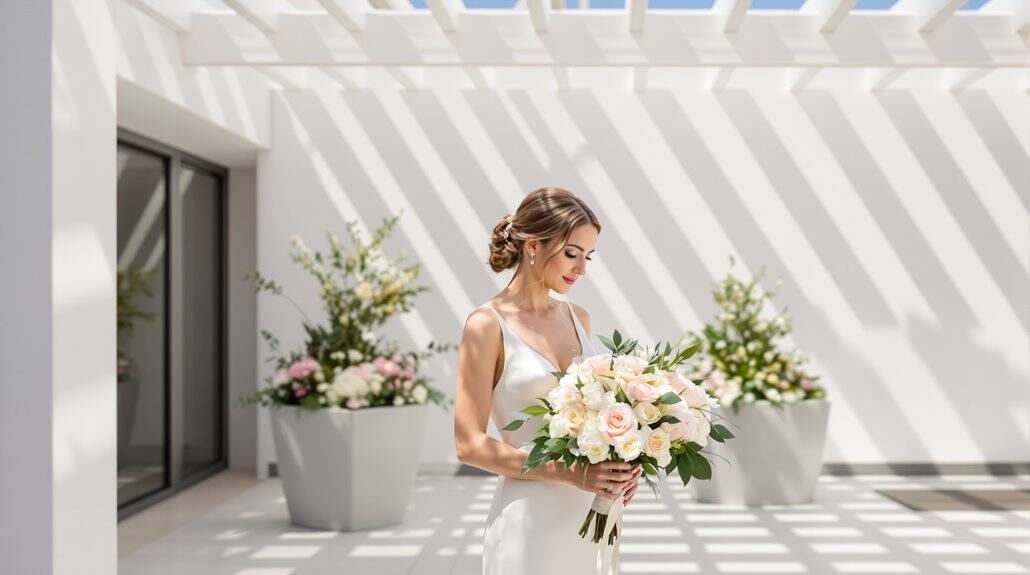
While summer brings lively sunshine to gardens, it also presents the supreme test for your flowering plants. You’ve seen it—those gorgeous hydrangeas collapsing by 3pm, peonies drooping before the first toast. Finding summer wedding flowers that withstand heat isn’t just advisable; it’s essential for preventing floral catastrophe when temperatures climb above 85°F.
Heat tolerant wedding flowers exist in abundance, though, contrary to what anxious florists might suggest. Zinnias, marigolds, and salvias laugh in the face of sweltering conditions, maintaining vivid color through 90-degree afternoons. Coneflowers and verbena cultivars demonstrate extraordinary resilience—surviving, even thriving, when properly established with consistent early watering. If you’re experiencing access issues while browsing floral arrangements, remember that BloomNation protects customers through security measures that may sometimes block connections.
Your summer florals won’t wilt if you embrace specimens from desert-adapted families: protea with their structural integrity, calla lilies maintaining elegance through heat spikes, or succulents like aeonium and sedum that store moisture in thick, waxy leaves. For an elevated aesthetic, consider incorporating luxury French skincare principles to your beauty routine while your heat-resistant blooms hold their structure throughout the celebration. The key? Matching plant genetics to environmental demands.
Flowers That Wilt Immediately in Heat
Despite your best planning efforts, certain flowers simply can’t withstand summer’s thermal assault—and hydrangeas top this wilting list. Their large surface areas and rapid transpiration rates make them botanical fainting spells waiting to happen, requiring full submersion in cool water for revival—hardly practical mid-ceremony.
Roses, surprisingly, aren’t your heat tolerant wedding flowers either. They “blow open” prematurely when temperatures climb, their cellular structure collapsing while bacteria colonize cut stems, creating biofilms that block water uptake like clogged pipes. And peonies? Gorgeous, yes, but temperamental divas in July. Cut stems should be placed underwater immediately to prevent vascular blockage from air bubbles that accelerate wilting in hot conditions.
Morning-cut flowers fare better than afternoon harvests, when stem moisture has already migrated downward. Your container choices matter too—dark pots absorb heat while unglazed terra-cotta hastens moisture loss. For flowers that withstand heat, you’ll need to reconsider your summer floral choices entirely, looking beyond traditional favorites toward resilient alternatives.
Heat-Tolerant Varieties: Succulents Protea Calla Amaranth
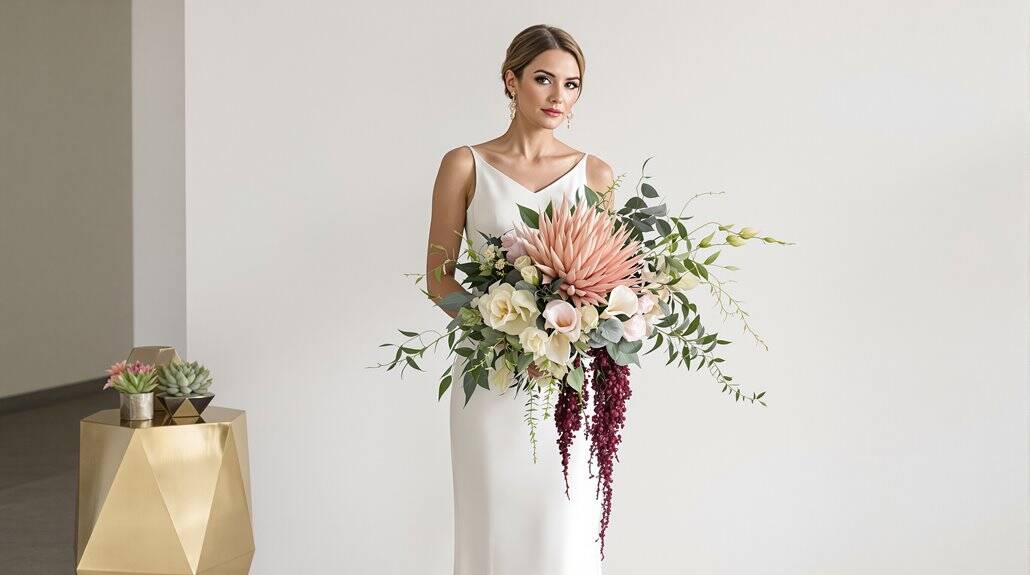
Unlike their wilting counterparts, summer’s most resilient blooms embrace the heat with botanical fortitude. You’ll find these heat-resistant blooms standing tall when temperatures soar, making them invaluable for summer wedding flowers that won’t surrender before your first dance.
| Variety | Heat Tolerance | Water Needs | Longevity | Visual Impact |
|---|---|---|---|---|
| Succulents | Outstanding | Minimal | 7+ days | Architectural |
| Protea | High | Low-moderate | 14+ days | Dramatic |
| Calla Lilies | Strong | Moderate | 5-7 days | Elegant |
| Amaranth | Superb | Moderate | 7+ days | Textural |
| Portulaca | Superior | Minimal | 3-5 days | Lively |
These heat-tolerant flowers don’t just survive—they thrive when mercury rises. Succulents store water in fleshy leaves, while protea’s leathery petals evolved in South Africa’s harsh climate. Callas stand dignified with waxy protection, and amaranth’s cascading tassels remain unfazed by scorching temperatures. Your bouquet deserves this staying power.
Care Techniques for Summer Florals
When summer heat threatens to sabotage your floral displays, proper care techniques become your most powerful defense against wilting disappointment. You’ll need a tactical approach—starting with water management that’s practically scientific. Mix 1 teaspoon sugar, 1 teaspoon bleach, and 2 teaspoons lemon juice per quart of water, changing this solution every 2-3 days (more frequently when temperatures soar).
Position your heat tolerant wedding flowers away from direct sunlight and heat sources—a seemingly obvious step that countless couples overlook. Wax-based anti-transpirant sprays create invisible moisture barriers that keep flowers withstand heat during outdoor ceremonies. Apply until dripping wet, then allow to dry completely.
Trim stems at 45-degree angles every other day to optimize absorption. Summer wedding flowers heat resistance depends equally on preparation and placement—the most striking calla lilies will surrender to heat if left in direct sun, while even delicate hydrangeas might survive in properly conditioned water and clever shade. Just as determining the fair market value of inherited property requires professional assessment, consulting a professional florist about your venue’s specific climate conditions can provide invaluable guidance for selecting arrangements that will endure throughout your celebration.
Timing Strategies: Latest Possible Delivery
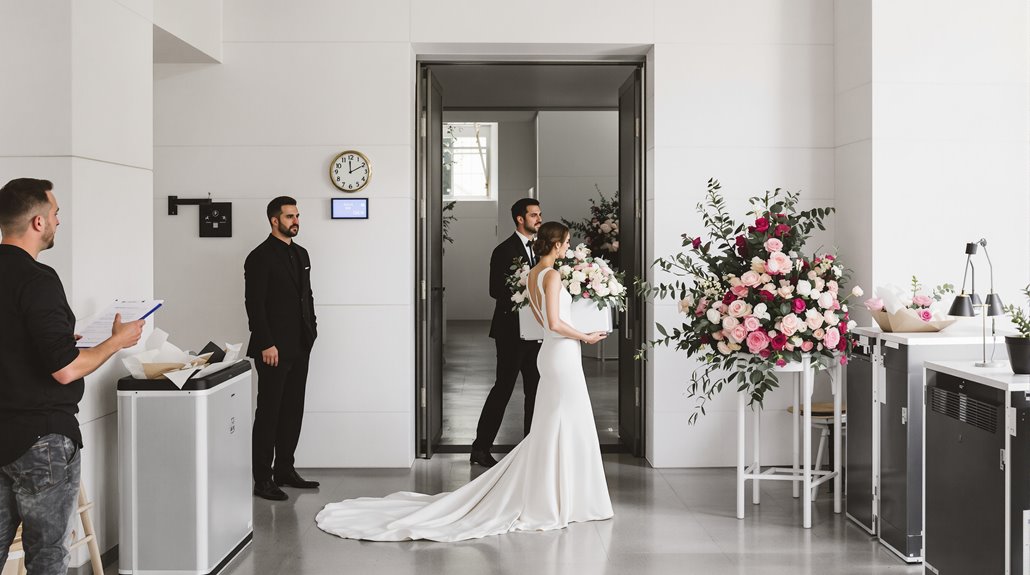
The delicate dance of summer floral delivery requires precision timing that can make or break your entire aesthetic vision. When working with heat tolerant wedding flowers, you’re gambling against the merciless summer sun—a gamble you can tactically win with proper scheduling tactics.
Unlike spring blooms that forgive timing missteps, summer wedding flowers need calculated precision, especially when temperatures climb above 85°F.
- Morning delivery window (6:00-8:00 AM) — Even flowers that withstand heat need morning processing time; schedule delivery at least 7 hours before cocktail hour
- Staggered arrival approach — Have statement pieces (30%) delivered early, accent arrangements (70%) arrive 3-4 hours pre-event
- On-site assembly strategy — Request components in water tubes for final assembly in air-conditioned spaces just 90 minutes before guests arrive
Immediate hydration stations with floral preservatives buy precious hours—and yet, nothing replaces proper timing fundamentals when battling summer’s assault on your blooms. Coordinate these delivery schedules with your venue coordinator well in advance, ideally during the same planning phase when you’re securing your California marriage license and finalizing other legal requirements.
Realistic Expectations for Floral Lifespan
Setting proper expectations about floral longevity might save your sanity—and your relationships—during summer celebrations. Those dreamy Pinterest arrangements? They’ve got a biological clock ticking. Anthuriums and laceleaf varieties are marathon runners, lasting 3-4 weeks and up to 42 days respectively—and yet they’re rarely featured in traditional wedding aesthetics. Your heat tolerant wedding flowers like zinnias and leucadendron offer impressive 26-day lifespans but demand fastidious care.
Standard roses wilt after 7-10 days; those gorgeous hydrangeas you’ve pinned? Practically melting by reception’s end. Summer wedding flowers face brutal environmental stress, with temperature spikes accelerating petal degradation dramatically. The flowers that withstand heat best—succulents, protea, calla lilies—often come with aesthetic trade-offs. Daily stem trimming (1 cm cuts), water changes, and foliage removal below waterline extend performance, but physics remains undefeated. Breathtaking arrangements require accepting impermanence—or investing in varieties specifically bred for durability rather than delicacy. Consider allocating part of your contingency fund (typically 10-15% of your wedding budget) specifically for last-minute floral replacements or backup arrangements when summer heat proves unforgiving.
Hydration and Cooling Tactics
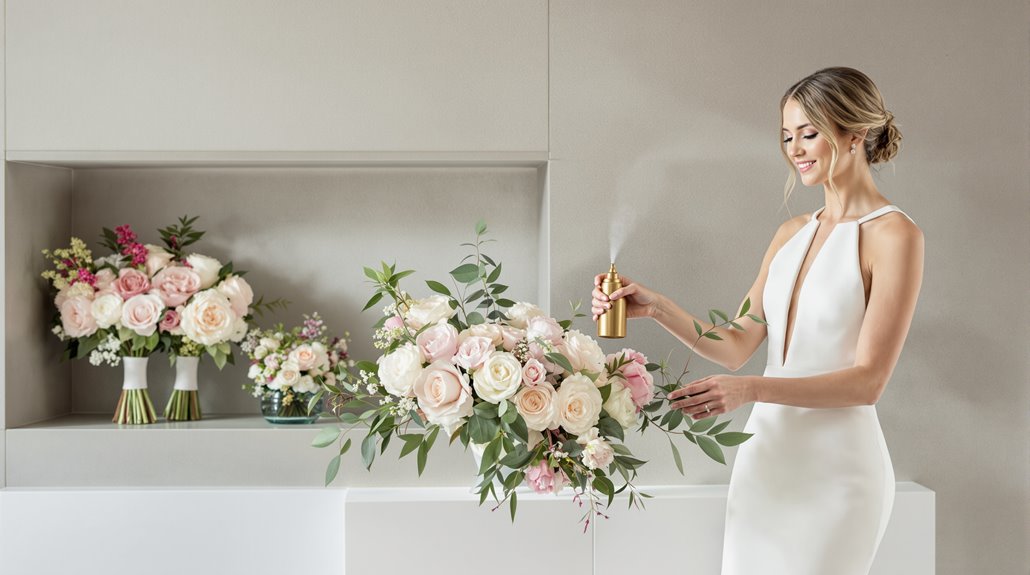
Maintaining hydration in summer blooms requires mastering the science of water quality—a battlefield most florists rarely discuss with clients. Your heat tolerant wedding flowers aren’t simply thirsty; they’re complex organisms requiring precise intervention. Lukewarm water, counterintuitively, encourages stems to drink more efficiently, mimicking natural rainfall that flowers evolved to absorb. Yet even the hardiest summer wedding flowers heat up quickly when temperatures climb past 85°F.
Summer florals demand scientific hydration—a secret language between water quality and botanical survival most clients never hear.
Three essential rescue tactics for wilting arrangements:
- Underwater re-cutting — Slice stems at a 45° angle while submerged to instantly reopen blocked vascular channels
- Cold water immersion bath — Submerge entire flowers for 30-60 minutes for shock rehydration
- Overnight refrigeration — Place arrangements in your refrigerator (not freezer) between 38-42°F to dramatically slow metabolic processes
Flowers that withstand heat aren’t invincible—they’re survivors requiring tactical support. Change water daily, remove submerged leaves, and position arrangements away from air conditioning vents.
Conclusion
While selecting perfect summer florals feels overwhelming amid rising temperatures, you’ll find that tactical choices create resilience in even the most challenging venues. The right heat tolerant wedding flowers make all the difference between droopy disappointments and fresh arrangements that last until the last dance.
| Flower Category | Heat-Resilience Strategy |
|---|---|
| Succulents | Naturally store water, requiring minimal hydration |
| Tropical varieties | Evolved to withstand intense sunshine and humidity |
| Protea family | Leathery petals resist wilting in warm weather flowers |
| Calla lilies | Structural integrity maintains shape despite heat |
| Amaranth | Cascading blooms actually thrive in summer conditions |
You’ve invested too much to watch your floral vision collapse. And yet—the flowers withstand heat when you plan thoughtfully. The difference between wilted centerpieces and stunning arrangements isn’t luck—it’s intentional selection, proper hydration, and working with nature rather than against it. Just as contemporary museum venues with expansive glass facades require strategic floral choices to combat natural light and temperature variations, your summer celebration demands equally thoughtful planning.