
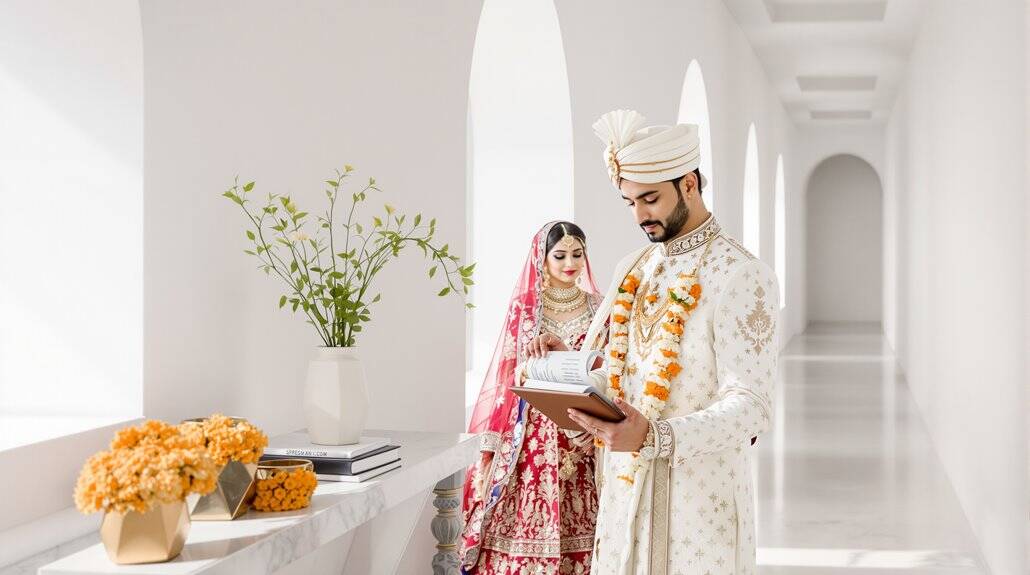
South Asian weddings span three signature days—Mehendi (henna application with storytelling), Sangeet (family dance performances), and the ceremony with reception. You’ll need separate vendor teams for each day, precise timelines, and diplomatic skills to navigate family expectations. Traditional rituals like Havan fire ceremonies and Saat Phere vows require reverence, yet they’re adaptable for personalization. The challenge? Balancing cultural authenticity with contemporary vision while keeping peace with opinionated relatives. Each thorough decision shapes your cultural legacy.
Three-Day Celebration Overview
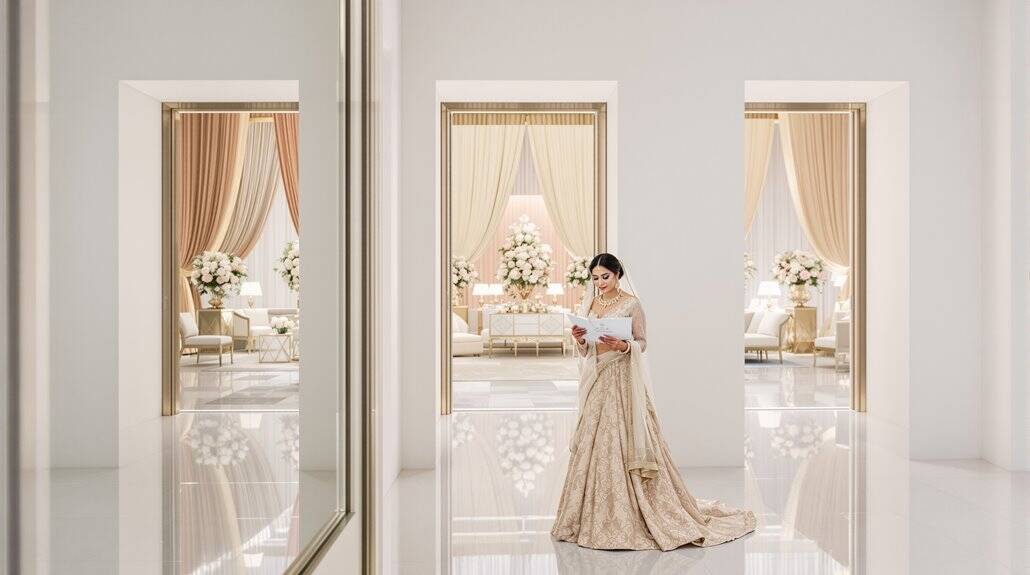
The traditional South Asian wedding unfolds over a breathtaking three-day panorama, each day layered with distinct rituals and emotional resonance that build toward the culminating ceremony. When planning your cultural Hindu wedding, you’ll typically structure events with one signature celebration per day—allowing guests to fully immerse without overwhelm.
Day 1 opens with evening welcome festivities (5-10pm) featuring Ganesh Pooja and Haldi ceremonies—intimate affairs for family and close friends. Day 2 elevates energy with the Sangeet (6-11pm), accommodating your entire guest list of potentially 1600+ attendees for performances and revelry. Day 3 delivers your ceremonial crescendo with morning Hindu rituals followed by reception festivities. These cultural ceremonies demand physical presence and communal participation, creating authentic connections that extend far beyond digital curation.
The south Asian wedding timeline remains remarkably adaptable, though. You can compress events for practicality, spread them across multiple weekends, or intersperse smaller rituals between major celebrations—honoring tradition while crafting an experience uniquely yours. Remember to incorporate time for mehndi application, a significant ritual where intricate henna designs are applied to the bride’s hands and feet.
Day 1: Mehendi Ceremony Henna and Tradition
What could be more enchanting than the elaborate storytelling of henna designs blooming across a bride’s palms? The mehndi ceremony—that vibrant, women-centered celebration—marks the official start of wedding festivities, traditionally held 2-4 days before the main event to assure the deepest amber stain possible. It’s a ritual thousands of years old, yet constantly evolving with contemporary aesthetics.
Mehndi transforms palms into sacred canvases where tradition and artistry dance across generations of bridal dreams.
During your mehendi, expect:
- A skilled artist applying intricate patterns that may take 3-6 hours for the bride’s full design
- The hidden incorporation of your partner’s name within the henna application—a charming treasure hunt for your wedding night
- Traditional songs and drumming that transform the practical application into a joyful performance
- Regional variations ranging from bold Arabic styles to intricate Indian florals featuring symbolic motifs
The ceremony embodies progression—cooling both your skin and nerves as you prepare to cross the threshold into married life. The dark amber color that develops on your skin is considered especially auspicious and fortunate, particularly if it darkens or lasts longer than expected. Many brides enhance their overall look with luxury beauty products that complement the rich henna tones and wedding glamour.
Day 2: Sangeet Musical Celebration
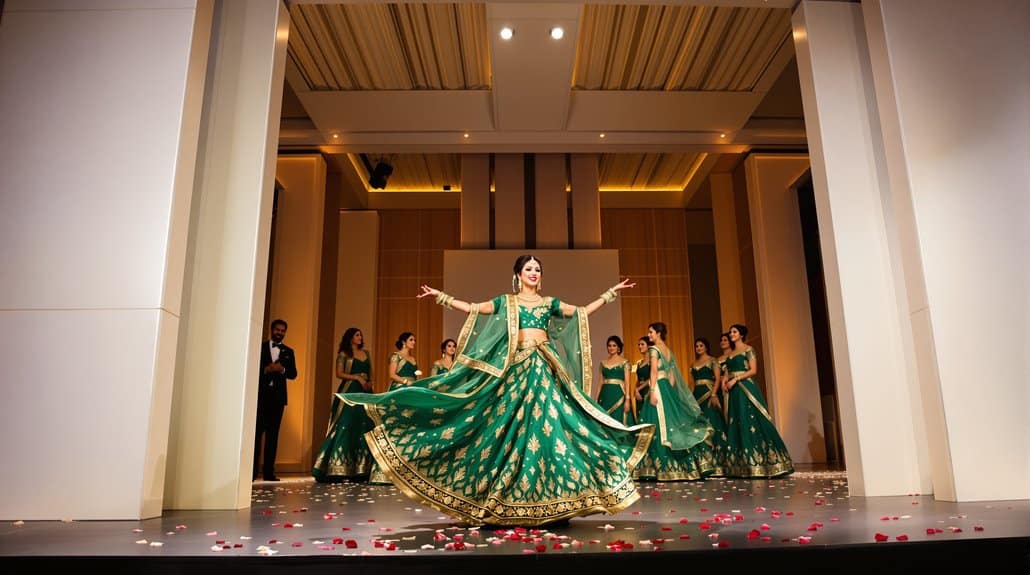
Following the intimate artistry of henna application comes a night where inhibitions dissolve and family bonds crystallize through movement and music. The sangeet—literally “music together”—transforms your wedding timeline into a boisterous performance showcase where aunties who’ve never met suddenly become co-conspirators in dance.
You’ll witness choreographed dance performances from both families, evolving dramatically from the sangeet’s Punjabi origins. What once stretched two weeks has condensed into a single exhilarating evening, yet sacrifices none of its emotional potency. Five to seven group numbers typically unfold, each lasting 3-4 minutes, punctuated by teary speeches and roast-style comedy.
Plan scrupulously: book a spacious venue, coordinate with your DJ about regional musical preferences, and allow three months for dance rehearsals. Your sangeet demands equal attention to your reception—it’s not supplementary but essential, the emotional backbone of your multi-day celebration. When designing invitations for this energetic event, incorporate bold geometric typography and vibrant color palettes that reflect the celebration’s dynamic, performance-focused atmosphere.
Day 3: Ceremony and Reception
As dawn breaks on your wedding day proper, every moment now crystallizes into the ceremonial apex of your three-day celebration—a precisely orchestrated sacred passage witnessed by hundreds.
Your multi-day wedding culminates here, beginning with the baraat—your groom’s grand entrance on horseback or modern vehicle—followed by the milni, where families formally unite. The ceremony itself unfolds through ancient rituals: the havan’s sacred flames, the binding saptapadi, and the exchange of symbolic adornments like sindoor and mangal necklace.
- Priests guide you through Sanskrit verses while relatives perform specific ceremonial duties
- Ganesh is invoked to remove obstacles before you take your seven sacred steps
- The kanyadaan represents parental blessing as hands are joined in marriage
- Rituals conclude with feet-touching respect gestures toward parents
Your reception transforms the solemnity into celebration—speeches, feasting, and dancing until dawn, the perfect finale to your three-day journey. With multiple vendors managing the ceremony, reception catering, and entertainment across this final day, establish a single point person to coordinate all vendor communication and prevent day-of chaos.
Coordinating Multi-Day Vendor Team

Behind every flawless South Asian wedding weekend lies an complex web of vendor relationships that you’ll need to orchestrate with military precision. Your vendor coordination strategy will make or break your celebration—no exaggeration. You’ll juggle multiple teams across separate venues, each requiring distinct instructions, timelines, and cultural knowledge.
| Event Day | Timeline | Key Vendor Priorities | Confirmation Window | Contingency Needs |
|---|---|---|---|---|
| Day 1: Mehndi | 4-6 hours | Henna artists, intimate décor | 2 weeks prior | Backup artists |
| Day 2: Sangeet | 6-8 hours | Entertainment, catering | 3 weeks prior | Sound equipment |
| Day 3: Ceremony | 3-5 hours | Priest, photographers | 1 week prior | Weather plan |
| Day 3: Reception | 5-7 hours | DJ, comprehensive catering | 1 week prior | Staff backups |
| All Days | Ongoing | Transportation, coordinator | 4 weeks prior | Emergency contacts |
Your multi-day events demand relentless vendor confirmation—don’t assume anything. Create detailed timelines for each professional, confirming not just dates but exact hours, locations, and cultural expectations. Building these positive vendor relationships through consistent communication and genuine appreciation encourages your teams to go beyond contractual obligations, especially critical when coordinating the complex choreography of multi-day celebrations.
Honoring Cultural Traditions
The heart of every authentic South Asian wedding pulses through its sacred traditions—rituals passed down through generations that you’ll need to honor with both reverence and creativity. Your hindu wedding traditions deserve scrupulous attention, balancing ancestral significance with personal expression. When planning a south asian wedding, understand that each ritual—from the lively Mehndi to the solemn Saptapadi—carries profound symbolic weight, yet can be thoughtfully adapted to reflect your unique journey.
Honoring sacred traditions while weaving your personal story creates the tapestry of an unforgettable South Asian wedding celebration.
- The sacred fire ceremonies (Havan) form your marriage’s spiritual foundation, with each of the seven vows during Saat Phere representing specific commitments
- Incorporate the Jaimala garland exchange as your first act of mutual acceptance—a perfect photo opportunity amid cheering families
- Honor adornment rituals like Sindoor and Mangalsutra, which transform bride to wife through powerful visual symbolism
- Consider regional variations (Tamil, Punjabi, Bangladeshi) that reflect your specific heritage, not just generic indian wedding planning templates
While South Asian ceremonies center around fire and circular vows, Jewish wedding customs feature their own distinct elements like the chuppah canopy and breaking of the glass, demonstrating how different cultures create meaningful matrimonial frameworks.
Blending South Asian and Western Elements
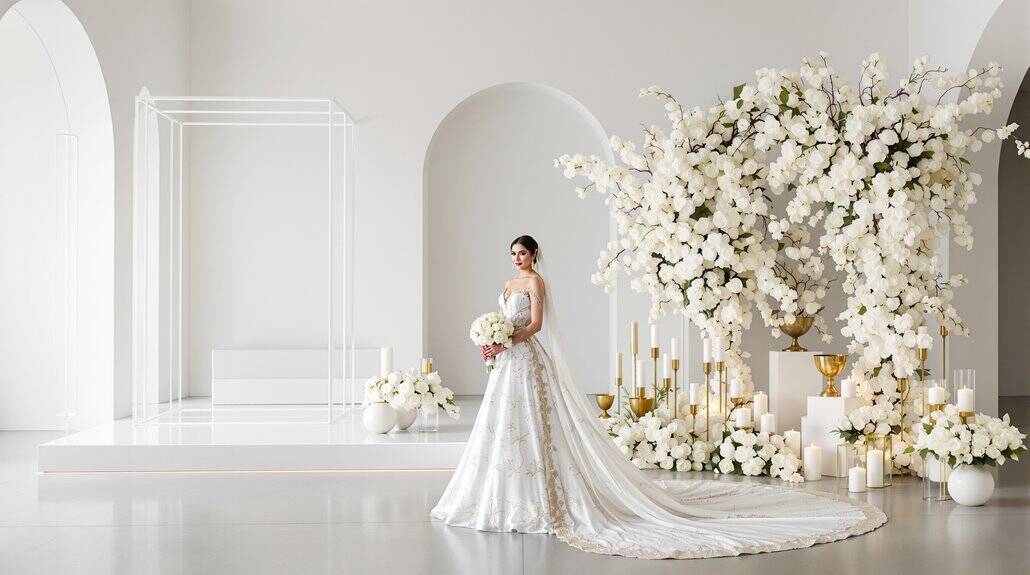
Beyond honoring ancestral rituals lies an equally meaningful challenge—creating harmonious fusion between two distinct cultural worlds. Your South Asian wedding can become a masterclass in cultural integration, not compromise. Consider fashion: pair contemporary blouses with traditional lehengas, or opt for saree gowns that marry classic draping with modern tailoring. Your multicultural attire choices speak volumes about your journey together.
The ceremony itself presents rich fusion opportunities. Multiple officiants conducting simultaneous rituals ensures both families feel represented—traditional saat pheras followed by Western ring exchanges creates meaningful continuity. And yet, the most successful blends often separate elements rather than diluting them. Indian wedding planning shines when culinary experiences embrace both worlds—buffets featuring distinct cultural dishes alongside fusion creations that tell your unique story. DJs mixing bhangra with pop maintain energy while honoring dual musical traditions—your celebration, perfectly balanced.
When briefing your florist for multi-day celebrations, visual references spanning 5-7 images help communicate how floral aesthetics should transition between events—from vibrant marigold-heavy mehndi designs to elegant reception arrangements that blend both cultural traditions.
Family Expectation Management
Guiding family expectations might be the single most challenging aspect of planning your South Asian wedding—arguably more complex than venue selection or outfit coordination. With 64% of young South Asian adults feeling overwhelmed by marriage expectations, you’re navigating emotional minefields fraught with centuries of cultural expectations and family involvement patterns.
Open communication is your lifeline here. Establish boundaries early—and firmly—while acknowledging your relatives’ perspectives. The pressure intensifies as you balance:
- Parents’ desire for traditional elements versus your contemporary vision
- Extended family’s input on guest lists (expect unsolicited opinions from aunties you’ve met twice)
- Financial contributions that come with implicit decision-making power
- Cultural expectations around ceremony length, religious components, and attire choices
You’ll need to compartmentalize feedback while maintaining family harmony. This isn’t simple people-pleasing—it’s diplomatic negotiation requiring tactical concessions and non-negotiable stands. If you’re considering an iconic venue like the Metropolitan Museum of Art, be prepared for extensive coordination with family members who may have strong opinions about such a prestigious location choice. Your wedding, your rules—and yet, family relationships endure beyond the celebration.
Conclusion
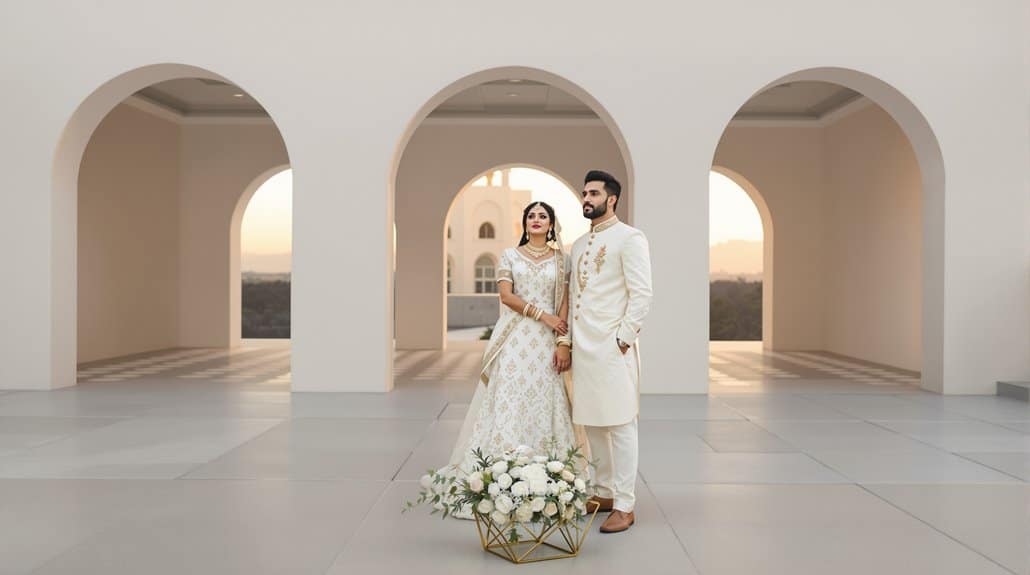
As family negotiations ultimately settle into their final form, your South Asian wedding journey transforms from planning into living memory. The three-day South Asian wedding—from the intimate mehendi where henna tells your love story, through the raucous sangeet that celebrates familial bonds, to the ceremony itself with its sacred fire and seven steps—represents not just a joining of two people, but entire communities.
You’ve navigated complex indian wedding planning waters: balancing tradition with personal touches, managing family expectations across generations, and honoring ceremonies that stretch back millennia. And yet, amidst the exhaustive checklists and family politics, something magical emerges—a celebration uniquely yours.
These wedding traditions carry forward the cultural history that connects generations, offering both continuity with the past and meaning for your future together.