
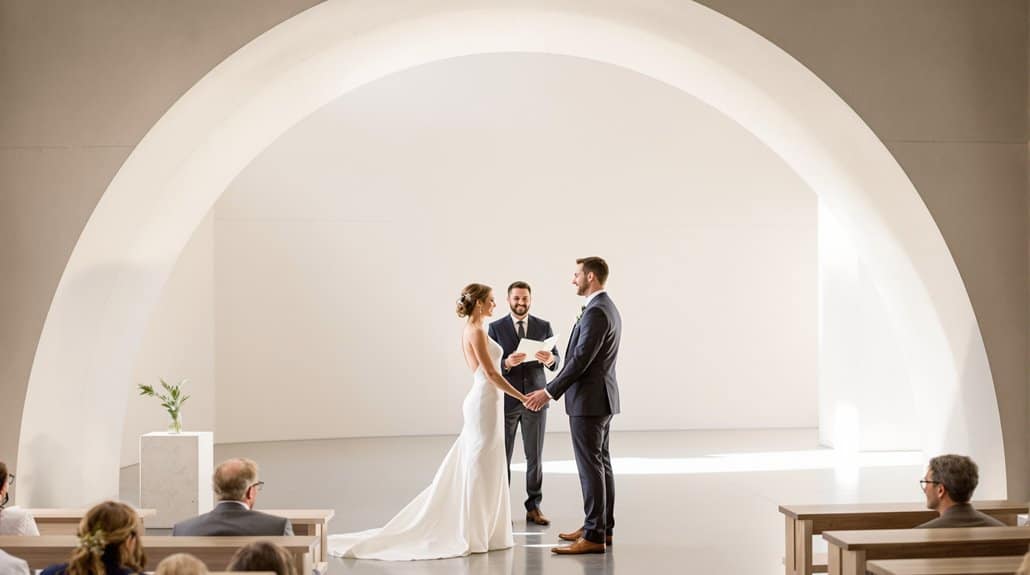
Sacredness doesn’t require religion—it demands intention. You’ll create profound gravity by selecting philosophical readings (Rumi, Shakespeare), crafting vows that function as verbal contracts, incorporating 5-15 second moments of silence, and implementing ring warming rituals where guests infuse jewelry with blessings. Neuroscience confirms these practices trigger the same brain responses as religious experiences, reducing anxiety by 26-31%. Your guests will perceive something transcendent despite the absence of doctrine, often moved to tears by the authentic weight you’ve created.
Creating Gravitas Without Religion
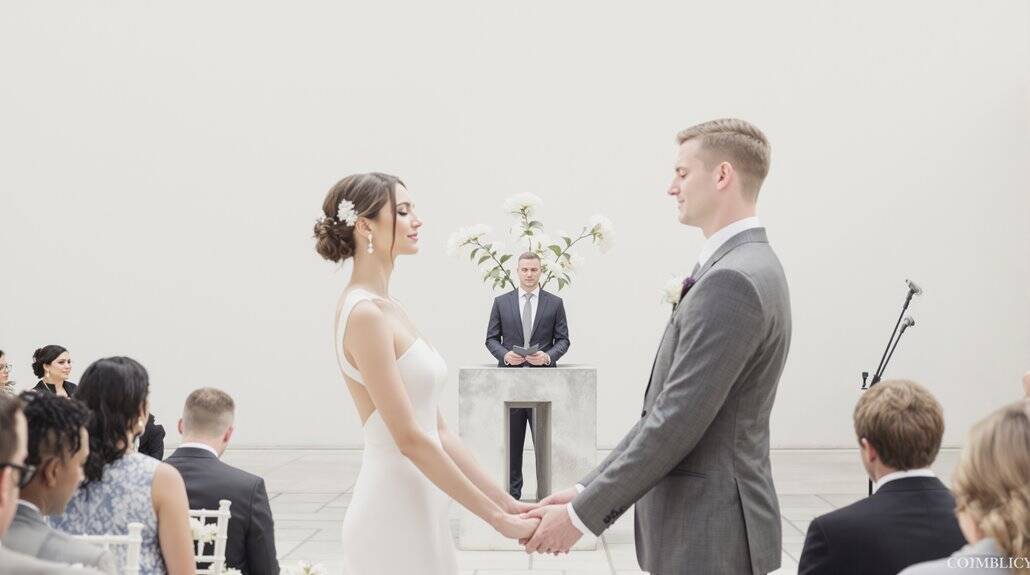
While religion has traditionally provided the ceremonial structure that lends weddings their weight and significance, couples without faith commitments needn’t settle for proceedings that feel administratively hollow. You’ve likely witnessed those perfunctory civil ceremonies—five minutes at city hall, mechanical recitation, done—and thought: is that all?
It isn’t. Your secular ceremony can possess profound ritual weight when deliberately crafted. Humanist and independent celebrant-led ceremonies now offer structured alternatives that maintain ceremonial significance without religious underpinnings. The statistics back this up: 76% of Canadians don’t view religious ceremonies as more legitimate than civil ones. This trend is evident in Ireland where non-religious marriages accounted for 43.3% of all marriages in 2021.
The secret to a non-religious ceremony that feels sacred? Intentional design. Consider carefully chosen readings from philosophy or poetry, personal vows with genuine emotional heft, moments of communal silence, or participatory elements like ring warming. These aren’t religious acts, and yet they create the same atmosphere of reverence—a collective acknowledgment that something momentous is occurring. The core importance lies in the ritual’s transformative power to unite individuals into a partnership witnessed by your community, a ceremonial function that transcends religious boundaries.
Carefully Chosen Readings: Poetry Philosophy
When carefully chosen readings become the backbone of your secular ceremony, they metamorphose what could be a procedural exchange of rings into a moment of philosophical weight and poetic resonance. You’re not just selecting pretty words—you’re curating a secular ceremony meaningful enough to rival any religious tradition.
Classical selections like Shakespeare’s “Sonnet 116” and Shelley’s “Love’s Philosophy” offer time-tested gravitas, while contemporary pieces from Safran Foer or E.E. Cummings provide fresh perspectives. The best readings—and you’ll find 75+ documented non-religious options—explore love as transfigurative rather than divinely ordained.
What makes poetry philosophy work in this context isn’t flowery language but conceptual heft. Rumi’s observation that “lovers don’t finally meet somewhere / They’re in each other all along” offers philosophical depth without doctrine. You’re not replacing religion with emptiness, but with carefully considered meaning that speaks to your actual beliefs. Many couples incorporate readings that portray love as an ongoing journey of discovery, emphasizing mutual growth and the evolution of connection over time. For those envisioning their ceremony against a backdrop of natural beauty, pink sand beaches and lush tropical gardens provide settings where poetic words resonate with the surrounding landscape’s own inherent romance.
Personal Vows With Weight

Despite their modern ubiquity, personal vows carry the heaviest burden in your secular ceremony—they’re the verbal contracts transforming two separate lives into a shared future. The Knot reports 47% of couples now write their own vows, yet many miss their profound purpose: commitment, not entertainment.
For a truly meaningful secular ceremony, structure your vows around the three pillars traditional ceremonies understood: permanence, fidelity, and love. Avoid the contemporary trap of reducing solemn promises to qualified “I’ll try” statements or amusing anecdotes about your Netflix preferences.
You can maintain emotional authenticity in your secular ceremony without sacrificing weight. Consider this approach: begin with your personal story, shift to substantive commitments, then conclude with specific promises that address how you’ll protect, respect, and nurture your partnership. The community witnessing these words matters—their presence transforms private sentiments into public covenant. Just as SFMOMA’s community engagement initiatives create meaningful connections between art and audience, your vow exchange creates a sacred bond witnessed and supported by those who matter most.
Moment of Silence Ritual
In the absence of religious framing, a well-placed moment of silence becomes the secular ceremony’s spiritual anchor. This intentional pause—5 to 15 seconds, no longer—creates the gravitas your non-religious ceremony needs without veering into awkwardness. You’ll find it works best positioned after your welcome but before your vows, creating a deliberate threshold between ordinary time and sacred space.
The silence functions brilliantly in two directions: honoring those absent (deceased parents, grandparents, mentors) while simultaneously grounding everyone present in the weight of what’s happening. Your secular wedding gains unmistakable depth when you allow words to breathe, promises to land, emotions to settle.
And yet, timing matters critically. Too brief, and the moment feels rushed; too long, and discomfort creeps in. Trust this: even five seconds of collective stillness will feel expansive, meaningful—a secular ritual with surprising spiritual power. Contemporary museum spaces, with their natural light and open-floor plans, particularly amplify this reflective moment, allowing the silence to resonate through minimalist architectural elements that foster a sense of calm without competing religious imagery.
Ring Warming Ceremony
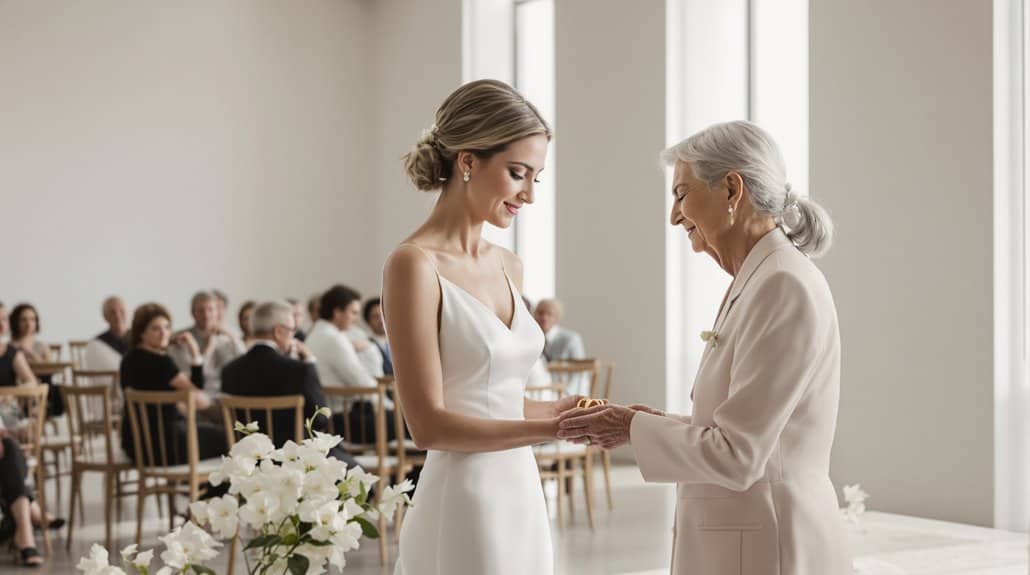
How might you involve every single guest in blessing your marriage? Consider the ring warming ceremony, an ancient Celtic ritual turned modern secular ceremony meaningful enough to feel profoundly sacred.
Your wedding bands—those small circles of metal—travel through the hands of everyone present. Each person holds them briefly, infusing the rings with their love, hopes, and energy for your union. It’s breathtakingly intimate, and yet completely accessible to guests of all beliefs. The rings literally warm from human touch while metaphorically collecting the community’s blessings.
The logistics are simple: designate a keeper to guide the rings’ journey (typically during prelude music or a reading), explain the significance to guests, then receive bands that have been transformed from mere jewelry into repositories of collective goodwill. Just as Chanel’s beauty collection transforms everyday makeup into expressions of elegance and glamour, this ceremony elevates simple metal bands into powerful symbols of community blessing. Non-religious ceremony elements rarely achieve such emotional resonance—but this ritual creates a tangible connection between your community and the symbols you’ll wear daily.
How Intention Created Sacred Feel
When couples deliberately infuse meaning into each ceremonial element, they transform ordinary moments into transcendent experiences. It’s not about religious doctrine, but intentionality—the conscious decision to elevate actions beyond routine into something profound. You’re not just exchanging rings; you’re participating in a somatic ritual that synchronizes heart rates and creates neural resonance between witnesses.
This intentional framing—through carefully selected readings, weighted personal vows, moments of silence—creates what neuroscientists might call “secular ecstasy,” indistinguishable from religious experience in brain scans. And yet, it’s entirely self-generated. Your body doesn’t distinguish between sacred and secular peak experiences; only your cultural context does.
The power lies in deliberate performance. When you assign significance to specific gestures, when you coordinate movement and breath with others present, you’re activating regulatory functions in your prefrontal cortex that literally change your perception of time, space, and connection. Research shows that meaningful rituals can reduce anxiety by 26-31%, demonstrating their tangible impact on emotional regulation. Sacred isn’t something you find—it’s something you create.
Guest Response: Described as Sacred
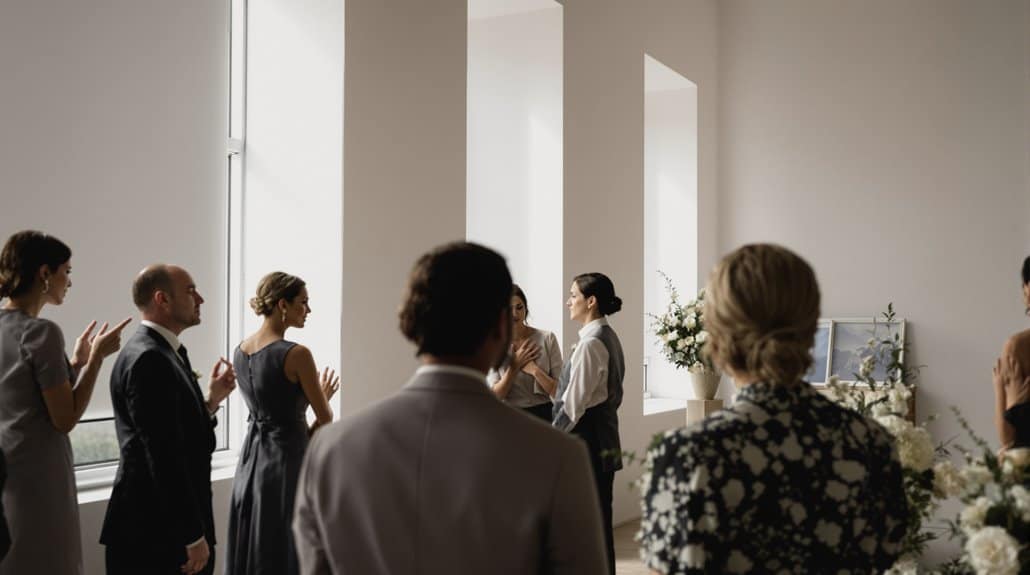
Surprisingly, what guests remember most about secular ceremonies isn’t the absence of religion—it’s the presence of something they can only describe as “sacred.” You’ll hear it in their hushed tones at the reception: “I’m not religious, but that ceremony moved me to tears.” The paradox emerges when guests who’ve attended countless traditional weddings find themselves unexpectedly touched by a ceremony explicitly designed without divine reference.
This phenomenon aligns with broader wedding trends—75% of couples prioritize guest experience, understanding that ceremony impact strike a chord far beyond the day itself. Your carefully crafted moments—that philosophy reading, the 44-second silence, the rings warmed by 87 hands—create collective emotional harmony that transcends theological boundaries. When couples personalize ceremonies (as 44% do with music alone), guests respond with genuine emotional connection.
The secular ceremony’s power lies precisely in its intentional authenticity. This emotional resonance requires careful ceremony timing and logistics—typically lasting 3-6 minutes but incorporating precisely allocated timeframes for readings, remarks, and meaningful pauses that create seamless emotional flow. You’ve created something true, and truth, it seems, feels sacred regardless of source.
Secular Ceremony Design Principles
Although designing a ceremony without religious structure might initially seem limiting, the absence of prescribed tradition actually opens expansive creative territory few couples fully explore. You’re facing a blank canvas—terrifying, yes, but infinitely customizable.
Start with three foundational pillars: introduction, personal narrative, and conclusion. Within this framework, you’ll weave carefully selected readings that carry philosophical weight, moments of deliberate silence, and rituals that create shared meaning. Your venue choice—whether beneath ancient trees or atop urban rooftops—becomes a physical manifestation of your values.
Every secular ceremony stands upon intention, not tradition—a choreographed journey through shared meaning that transforms space into statement.
Music timing transforms ordinary moments into profound ones, with strategically placed selections marking transitions between ceremonial phases. Every decorative element—from color palette to lighting design—should serve your narrative, not distract from it.
The most compelling secular ceremonies maintain gravitas through thoughtful curation, not imitation of religious practices. Many venues offer both indoor and outdoor ceremony areas, allowing you to select a setting that authentically reflects your relationship’s character. They feel sacred precisely because they’re authentically yours.
Conclusion
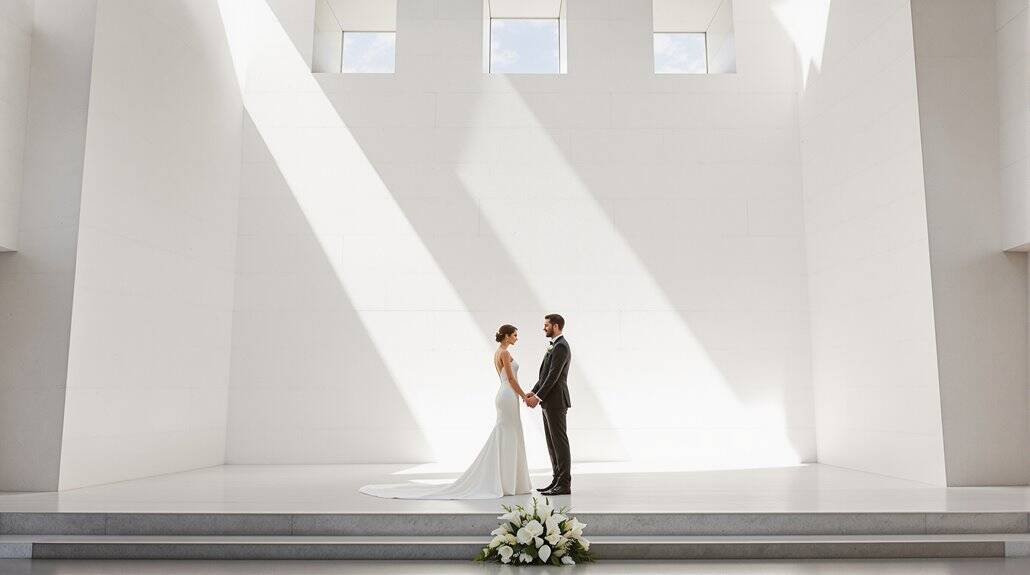
The most powerful moment of your secular ceremony arrives not when you first say “I do,” but during those final breaths when your chosen words still hang in the air—suspended between what was and what will be.
This conclusion demands gravitas without religion’s ready-made structure. You’ll need intentional elements—carefully chosen readings from poetry or philosophy that distill human connection to its essence. Your personal vows should carry weight, not platitudes, anchoring the ceremony in shared truth rather than tradition.
Consider incorporating a 60-second moment of silence, allowing guests to witness the gravity of what’s transpired. A ring warming—where your bands pass through loved ones’ hands before exchange—creates collective investment in your commitment.
The sacred exists in secular spaces when you honor the profound through deliberate choices. For couples seeking elevated settings that naturally command reverence, historic estate venues offer architectural grandeur and built-in elegance that can amplify ceremony significance without relying on religious symbolism. Your conclusion isn’t just an ending but a threshold, consciously crossed, between your separate histories and your joint becoming.