
Live music creates a three-dimensional emotional connection worth $800-2,000 that guests genuinely remember. Your violinist’s final note during vows will trigger neurological responses recordings simply can’t—live musicians adapt to room acoustics, respond to emotional moments, and establish eye contact that deepens the experience. Yes, recorded music offers predictability at zero cost, but live performance transforms your ceremony from an event into an experience. The atmospheric difference justifies the 5-8% budget investment for those seeking emotional resonance.
The Live vs Recorded Question
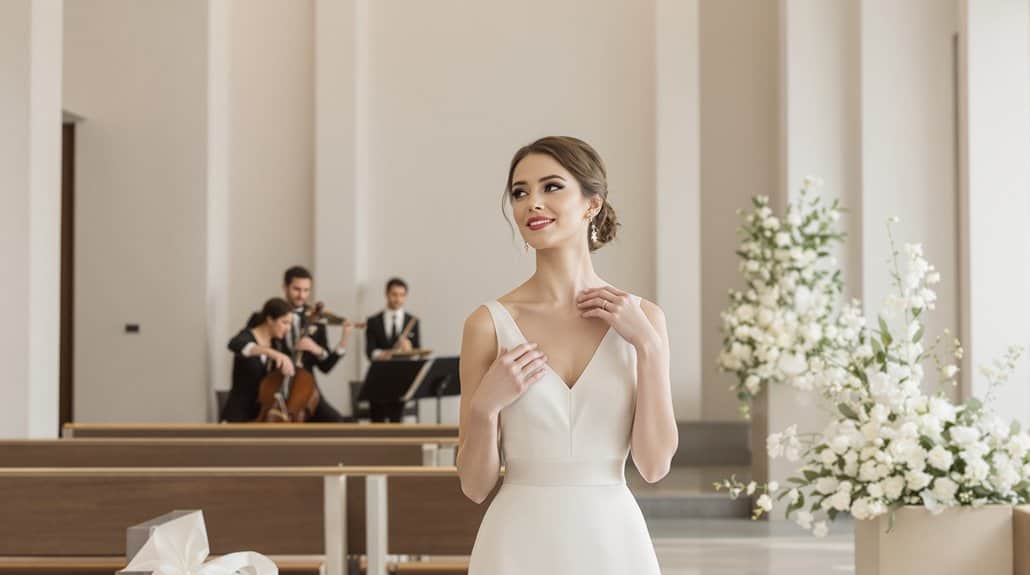
When choosing between live musicians and recorded tracks for your ceremony, you’re not just deciding between different price points—you’re selecting entirely different emotional experiences. That $800-2,000 investment in live performers translates into a profound, three-dimensional emotional connection that pre-recorded playlists simply cannot replicate.
Your guests will remember the cellist who held that final note during your vows, the guitarist who effortlessly extended the bride’s processional when she paused to embrace her father. Recorded ceremony music offers predictability, yes, and costs nothing beyond your existing playlist. And yet, it lacks that ineffable human quality—the subtle tempo shifts, the micro-adjustments to volume, the living breath behind each note.
Live bands tend to create a more sophisticated ambiance while adding excitement and energy that transforms your ceremony into a truly memorable experience. Guest perception is influenced by the cumulative effect of details like live music, which affects the overall atmosphere and emotional resonance of your celebration. Consider this: the soundtrack to your “I do” moment will echo in memory for decades. Will it be the flawless but fixed recording, or the imperfect yet intimately responsive performance of musicians who breathed the same air?
Live Musicians: Cost and Atmospheric Value
Despite what many couples initially fear, investing in live ceremony musicians doesn’t necessarily require mortgaging your future together. The atmospheric value often justifies the investment—live performers respond to your ceremony’s natural rhythm in ways recorded music simply cannot.
When weighing live musicians against recorded music ceremony options, consider these essential factors:
- Solo performers (violinists, pianists) range from $150-$1,000, offering elegance without breaking your budget
- Small ensembles like string quartets provide rich texture for $400-$1,200 per hour
- Professional wedding musicians typically represent 5-8% of your total wedding budget
- Regional variations matter profoundly—prices range from $2,997 in Western regions to $7,256 in Mid-Atlantic areas
You’re paying for more than notes—you’re investing in responsiveness and emotional resonance. If your wedding platform experiences server congestion, you’ll appreciate having live musicians who can adapt while technical issues are resolved. And yet, smaller weddings (under 50 guests) might find recorded options perfectly adequate, saving nearly $4,000 compared to larger celebrations.
Recorded Playlist: Predictability and Zero Cost
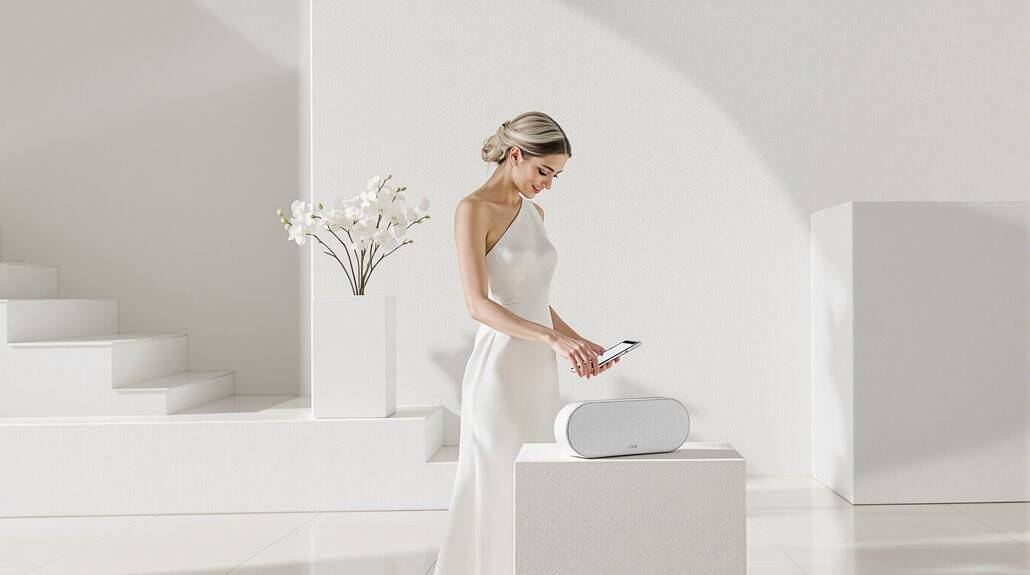
Although live musicians create irrefutable ambiance, recorded playlists stand as the budget champion in wedding music options—costing precisely nothing beyond equipment you might already own. The cost savings are substantial: no performer fees, no gratuities, no meals to provide—just pure musical control.
You’ll eliminate $800-$2,000 from your budget instantly. And yet, predictability becomes the double-edged sword of DIY audio. Analysis of 3,500 unique wedding songs reveals most couples default to the same tired classics—Pachelbel’s Canon, anyone?
Your playlist customization options remain virtually limitless, though. With 14.8 million wedding playlists on Spotify alone, you’ve got templates galore. Invite guests to submit their favorites, creating a personalized soundtrack that reflects your collective tastes rather than generic wedding expectations. The technical setup remains invigoratingly simple: speakers, designated button-pusher, done—with flexibility to pause, skip, or adjust volume throughout your celebration. If you’re planning a destination wedding in Canada, familiarize yourself with Canadian marriage rules to ensure your ceremony meets all legal requirements.
What Live Music Adds Atmospherically
The raw, unfiltered power of live musicians transforms wedding atmospheres in ways recorded playlists simply cannot touch. When musicians gauge the room’s energy, they’re not just performing—they’re crafting an evolving experience specifically for your guests. This real-time adaptability creates genuine magic.
Four ways live music enhances your ceremony atmosphere:
- Dynamic responsiveness – Musicians adjust tempo and intensity based on crowd reactions, creating 21% higher wellbeing among participants
- Emotional synchronization – 70% of attendees experience simultaneous emotional reactions, fostering profound connection
- Interactive energy exchange – Live performers coax even reserved guests into celebration, encouraging spontaneous participation
- Memory consolidation – Each live performance becomes an emotional anchor, embedding your ceremony in guests’ memories
You’re not just hiring performers; you’re investing in a communal experience that transforms strangers into community—expensive, yes, but impossible to replicate through speakers alone. Before finalizing your ceremony details, ensure you’ve secured your Massachusetts marriage license to make your celebration legally binding.
Whether Guests Notice Difference
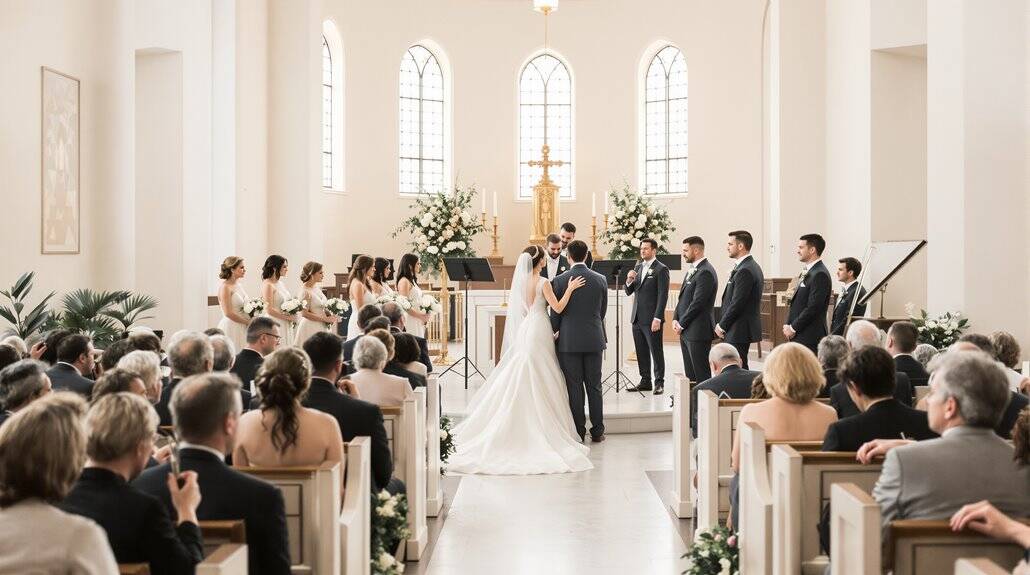
When your aunt leans over during the recessional and whispers, “My goodness, that cellist made me cry,” you’re witnessing the unmistakable impact of live performance. This isn’t coincidence—it’s neurological reality. Your guests detect the difference between recorded and live music with startling precision, even those who couldn’t identify a viola in a lineup.
The emotional response triggered by living, breathing musicians creates lasting impressions that recorded tracks simply cannot replicate. Post-ceremony feedback consistently reveals unprompted commentary about how “special” the atmosphere felt—a direct result of that irreplaceable human connection. Musicians responding to ceremonial pacing, the visual elegance of formally-dressed performers, the acoustic richness filling the space—these elements register in guest perception unconsciously yet profoundly.
Like accessories that become visual punctuation in wedding albums, live musicians transform into focal points that capture the ceremony’s emotional essence in ways that recorded music cannot achieve. You’re not just hiring musicians; you’re investing in the multi-sensory imprint your ceremony leaves on everyone present. That memory survives long after playlist tracks fade into digital oblivion.
Logistical Considerations Each Option
Behind every enchanting wedding melody lies a labyrinth of logistics that fundamentally shapes your celebration’s flow. Live ceremony music transforms atmospheres—and yet demands substantial planning. When selecting between musicians and recorded options, you’re choosing between radically different operational structures.
Consider these vital differences:
- Space requirements – Live bands need 8-10× more staging area than recorded setups, plus dedicated power sources your venue might struggle to provide.
- Setup timeline – Musicians require 90-120 minutes for load-in and sound checks, while recorded systems deploy in under 30 minutes.
- Technical complexity – Live performers need real-time audio management, multiple microphones, and amplification systems requiring professional oversight.
- Venue restrictions – Historic sites often prohibit certain equipment types, imposing sound limitations that might render your dream band impractical.
Your venue’s physical realities will fundamentally determine which musical approach aligns with your celebration’s practical constraints—beautiful aspirations notwithstanding. If you need further assistance navigating these logistical decisions, consider reaching out to registry essentials specialists who can help coordinate various aspects of your wedding planning.
When Investment Enhances vs Budget Better Elsewhere
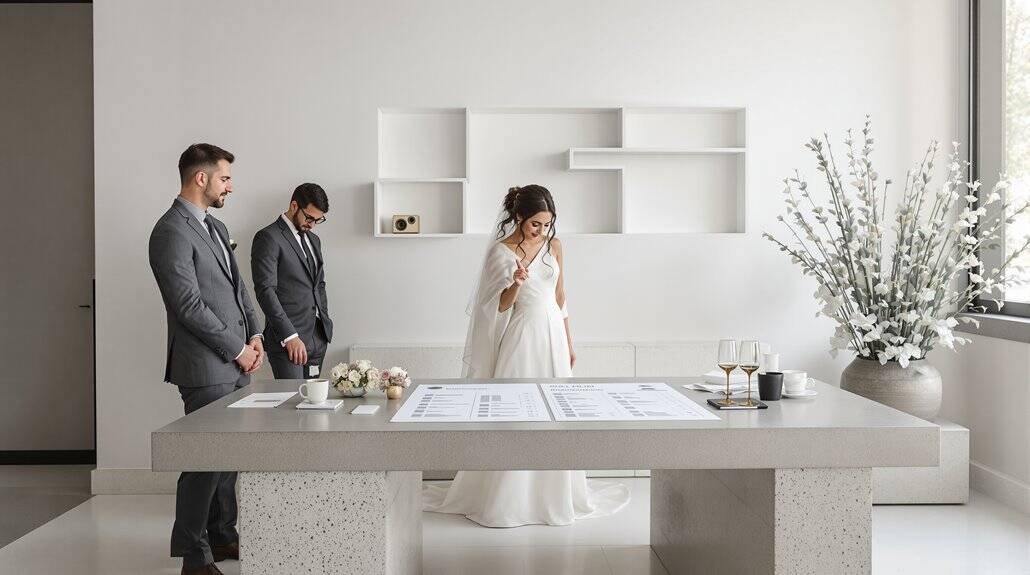
Financial decisions around wedding music carry weight far beyond simple dollars and cents—they’re artistic choices determining which moments your guests remember years later. Your musician investment ceremony-wise pays dividends through neurological reality: live music activates heightened brain engagement that recorded tracks simply cannot replicate.
When should you allocate $800-2,000 toward live musicians? Consider venues with challenging acoustics where pre-recorded music falls flat, ceremonies where emotional resonance matters more than budget spreadsheets, and gatherings where guests appreciate artistic spontaneity.
And yet, a meticulously curated playlist makes perfect sense for brief ceremonies under 15 minutes, intimate gatherings of close family, or when your venue offers extraordinary natural ambiance that needs no enhancement. The question isn’t merely financial—it’s whether your ceremony calls for the multi-sensory, improvisational magic that only human performers deliver, or if your priorities lie elsewhere in your celebration’s scenery. While you’re finalizing ceremony details, remember that obtaining your Washington State marriage certificate requires proper documentation from the Department of Health to make your union official.
Conclusion
Although science and emotion rarely align perfectly in wedding planning, the neurological superiority of live music over recorded alternatives represents that rare intersection where brain research confirms what your instincts already suggest. Your ceremony deserves that intangible electricity only musicians versus playlist wedding options can provide.
When debating live versus recorded wedding entertainment, remember these empirical realities:
- Your guests’ brains literally involve differently—with higher retention and cognitive function—during live performances
- Multi-sensory immersion creates emotional depth recordings simply cannot replicate
- Social cohesion emerges organically when communities experience live music together
- Spontaneous artistic authenticity guarantees your ceremony remains uniquely yours
The live music vs recorded ceremony debate ultimately resolves not through budget constraints, but through prioritization. You’re not merely booking entertainment—you’re crafting neurological imprints that persist in memory long after your vows. Your ceremony soundtrack deserves nothing less than human artistry responding to your once-in-a-lifetime moments.
Music & Sound
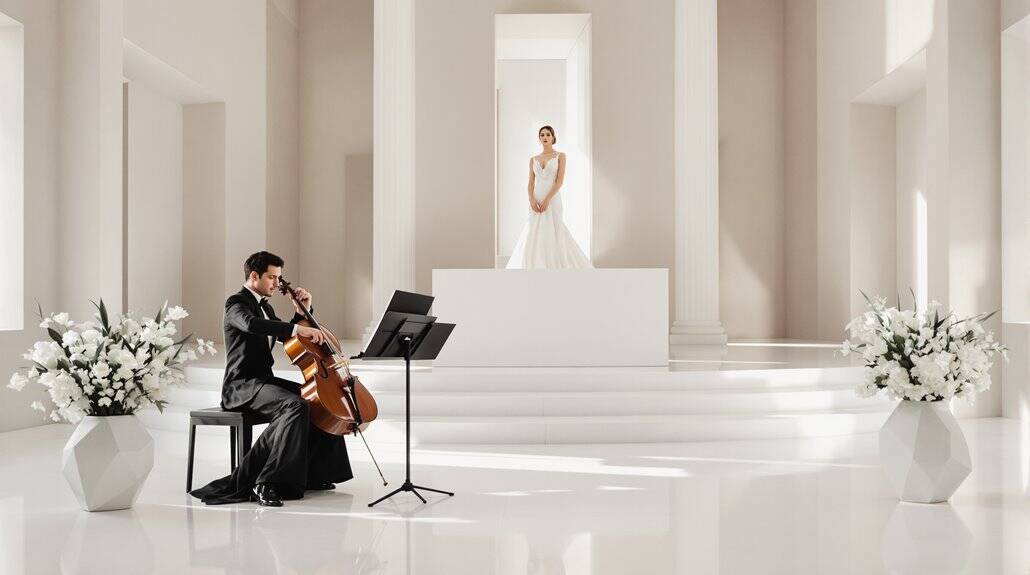
When scientific research meets wedding planning intuition, the results couldn’t be clearer about what happens in our bodies during live versus recorded musical experiences. Your physical being literally responds differently—heads bob faster, hearts synchronize with rhythms more completely, bodies relax more deeply—when musicians perform in real time. This isn’t subjective preference; it’s measurable biology.
You’re paying for acoustic nuance that recordings simply cannot replicate. The musician who instinctively softens during your vow exchange, who builds intensity as you process down the aisle, who responds to the reverberations of your specific venue—they’re creating unrepeatable sound architecture. And yet, the value extends beyond technical quality. The saxophonist who makes eye contact with your grandmother, the cellist whose vibrato makes your father tear up—these moments forge emotional connective tissue between ceremony elements. Music becomes not just soundtrack but active participant, responding to and magnify the collective emotional current of your gathering. Just as elegance and glamour define a carefully curated aesthetic experience, live musicians bring an elevated sophistication to your ceremony that recorded tracks cannot match.
Budget decisions
Staring down the stark contrast between a $4,475 live band and a $1,689 DJ forces even the most music-devoted couples to reckon with practical mathematics. Your emotional vision collides with fiscal reality—and yet, there’s nuance worth exploring beyond these headline figures.
Consider these budget-influencing factors:
- Guest count impact – Bands scale dramatically ($1,579 for intimate gatherings to $5,630 for larger affairs)
- Regional variations – Manhattan’s $630 per-guest average dwarfs Cleveland’s $156
- Seasonal opportunities – January-March offers DJ savings (averaging $1,635)
- Reception vs. ceremony – Ceremony music alone costs $350-$1,800 for mid-sized gatherings
You’ll find the starkest savings if you’re flexible about timing—winter weddings cost substantially less—and location. The mathematics feel brutal, yes, but tactical compromises (like live ceremony musicians with reception DJ) offer atmospheric richness without bankrupting your entire vision. Like lighting decisions that balance string lights and statement fixtures, music choices benefit from strategic layering that maximizes impact while respecting budget constraints.
Atmosphere investment
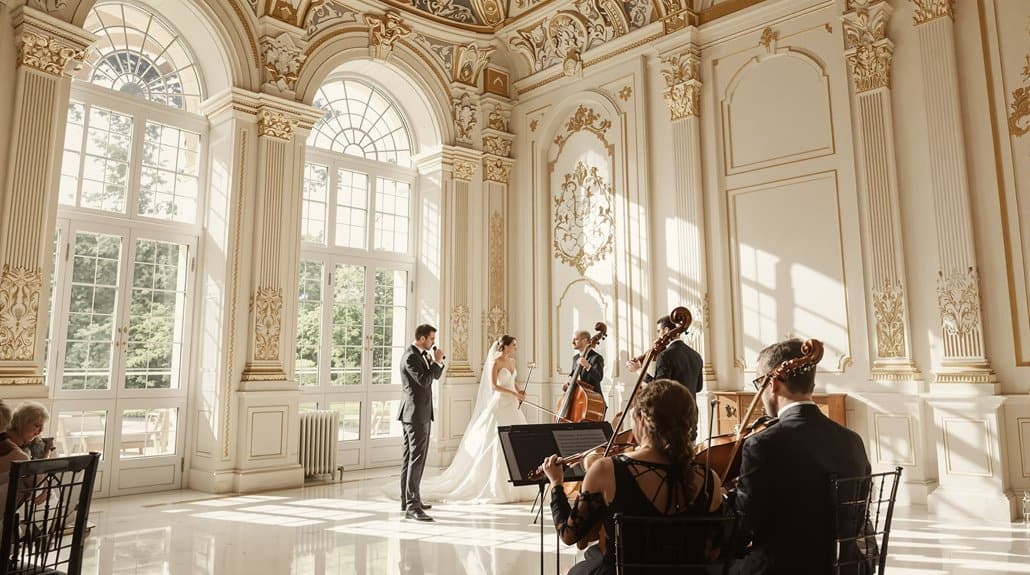
Beyond raw dollars lies the less quantifiable—yet perhaps more meaningful—assessment of atmospheric impact. Your choice between $800-$2,000 for live musicians versus $0 for a curated playlist represents more than budget allocation; it’s an investment in emotional texture.
Live musicians bring a certain atmospheric richness that recorded music simply cannot replicate. There’s something visceral—immediate—about string quartets adjusting tempo as your grandmother needs extra moments to reach her seat, or vocalists who can hold that final note while you complete your vows. And yet, recorded music offers predictability. No equipment failures, no musician showing up with food poisoning, no awkward transitions.
The calculation becomes: what premium do you place on atmospheric responsiveness? Many couples find that the ability of musicians to breathe with the ceremony’s natural rhythm—to swell or soften as moments demand—justifies their substantial cost. This mirrors how historic venues like Rosecliff’s Louis XVI ballroom have hosted performers from Louis Armstrong to modern string ensembles, proving that live music creates an irreplaceable atmosphere in spaces designed for acoustic excellence.