
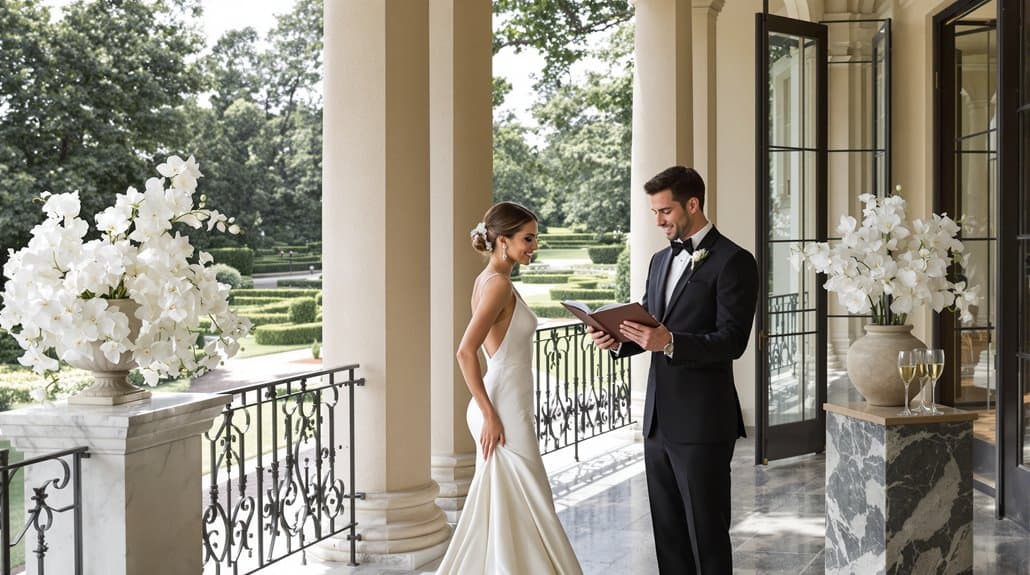
Estate weddings photograph like magazine editorials because they offer layered compositions through architectural variety—staircases, archways, weathered stone—that frame subjects with depth. You’ll capture that Vogue-worthy look through the interaction of heritage textures, natural patina, and “impossible light” filtering through antique windows. Estate settings provide both foreground and background interest, creating multi-dimensional images with built-in editorial quality. The right timing (2 hours before sunset) transforms these already-rich environments into visual poetry worth every penny.
Why Estates Photograph Distinctly
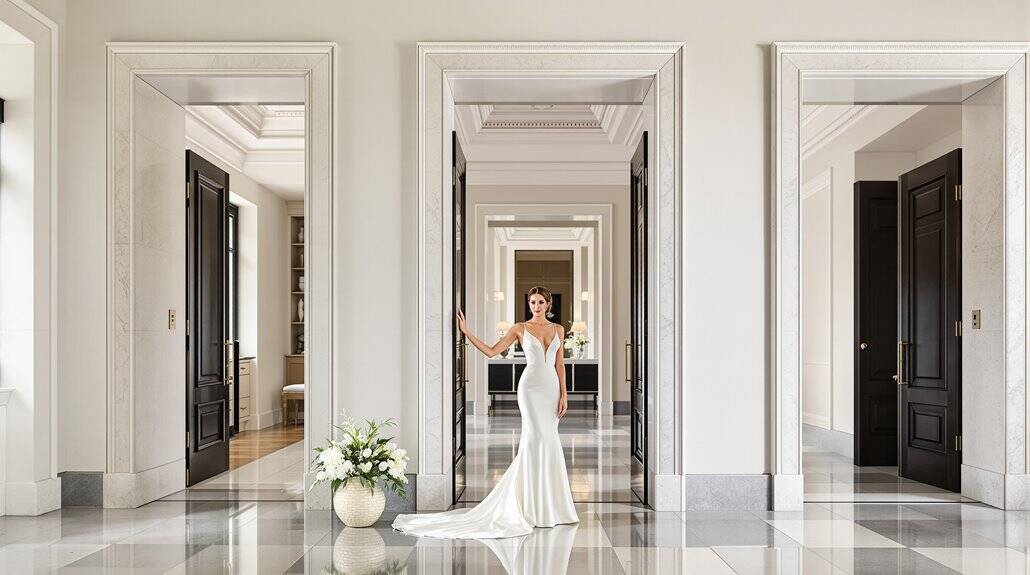
When you step into the world of estate wedding photography, you’re not just capturing a celebration—you’re orchestrating a visual narrative worthy of Vogue’s finest spreads. Estate wedding images possess an inherent editorial quality that standard venues simply cannot replicate.
Heritage venue photography benefits from multi-layered compositional elements—grand staircases juxtaposed against delicate bridal details, ornate fireplaces framing intimate moments, chandeliers casting theatrical light across carefully arranged scenes. You’re working with built-in photographic depth that transforms even simple portraits into statements. The centuries-old trees surrounding these properties create a naturally romantic atmosphere that elevates wedding imagery to timeless art. Just as luxury beauty products enhance natural features, estate venues amplify the inherent elegance of wedding moments.
Estate photographic opportunities extend beyond aesthetics into storytelling potential. The venue becomes a character itself—timeworn bricks and weathered wood telling stories alongside the couple’s fresh beginnings. And yet, this grandeur demands technical mastery; you’ll navigate dramatic lighting contrasts between sun-drenched gardens and shadowy mansion interiors, balancing the venue’s powerful presence without overwhelming your subjects. It’s this complexity that uplifts estate weddings from mere documentation to magazine-worthy art.
Landscape Depth and Integration
Though most photographers focus exclusively on their subjects, estate wedding photography thrives on the interaction between people and environment—creating an editorial aesthetic through deliberate scenery integration. Estate venue photos employ distinct foreground, middle ground, and background layers, transforming two-dimensional images into immersive experiences with genuine depth.
You’ll notice the best historic property photography utilizes the rule of thirds to position elements along intersectional points, creating visual pathways that draw viewers deeper into the frame. Estate wedding images leverage natural frames—archways, mature trees, weathered doorways—that contextualize intimate moments against architectural grandeur. It’s this juxtaposition that uplifts your photos from mere documentation to editorial art. Leading lines from garden paths, grand staircases, or estate driveways effectively guide the eye through these multilayered compositions.
The strategy shifts with changing light: wide apertures (f/2.8-f/4) for dreamy sunset portraits with background blur; narrow apertures (f/8-f/11) when you need both couple and view equally sharp. When planning your estate wedding photography, explore registry essentials and available resources to ensure every detail aligns with your vision. Thoughtful composition doesn’t just showcase your venue—it transforms ordinary wedding photography into visual storytelling.
Architectural Variety as Backdrop
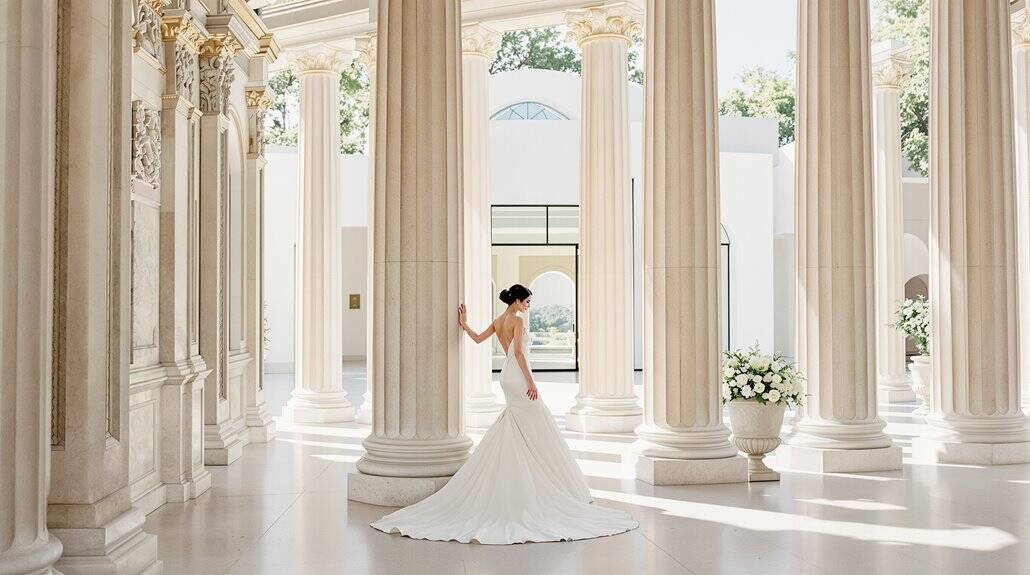
Four distinct architectural environments within a single estate venue transform ordinary wedding photography into editorial masterpieces. You’re not just capturing moments; you’re framing them against centuries of design evolution—weathered stone terraces juxtaposed with elegant ballrooms, rustic wooden fences against manicured gardens. Estate wedding photography thrives on these progressions: morning ceremony beneath a pergola’s diffused light, afternoon portraits against heritage stonework (those oak beams create incomparable textural contrast with white gowns), sunset cocktails on terraces where golden hour light streams through colonnades.
When you photograph estate weddings, you’re leveraging architectural composition that professional magazines spend thousands staging artificially. A single venue offers what traditional settings cannot—geometric patterns that guide visual focus, archways that frame intimate moments, and grand façades that lend gravitas to group portraits. Estate wedding images tell complex visual stories through built environments that shift dramatically with each turn of a corner, each passing hour of light. Like museum venues, estates require understanding environmental controls that protect historic elements while creating optimal conditions for photography throughout your event timeline.
Patina and Texture in Heritage Properties
Unlike contemporary venues with their pristine surfaces, heritage estates tell visual stories through centuries of weathered character. These physical narratives—impossible to replicate with filters or editing—create depth that transforms ordinary wedding documentation into editorial art.
When photographing these spaces, you’re capturing time itself: oxidized copper developing that distinctive blue-green patina over decades, limestone worn smooth by generations of footsteps, oak beams darkened by centuries of smoke and sunlight. And yet these imperfections aren’t flaws to hide but essential elements that ground images in authenticity.
The camera loves these textural contradictions—bride in pristine white against a wall where plaster reveals six layers of historical paint colors, or modern florals arranged before windows with wavy, hand-blown glass that distorts light in ways no modern building can match. These juxtapositions create visual tension that *raises* wedding photography from mere documentation to visual storytelling worthy of publication. Incorporating architectural elements like magnolia leaves or dried botanicals against these historic surfaces adds another layer of sophistication, where natural textures complement rather than compete with the estate’s inherent character.
Light Quality Through Old Windows
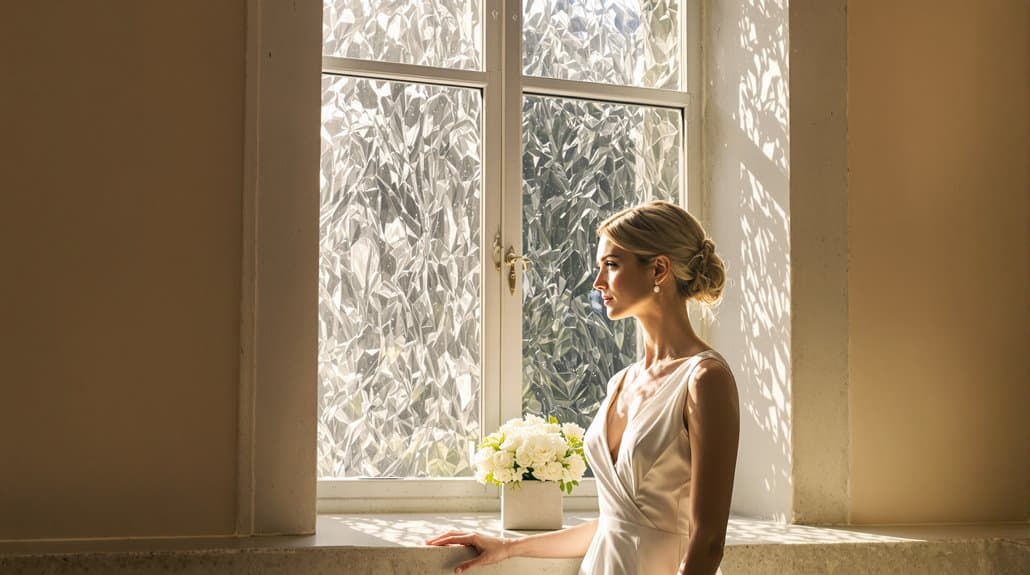
When master photographers seek that ethereal editorial quality in estate wedding images, they’re often chasing what I call “impossible light”—the kind that streams through centuries-old windows in ways modern architecture simply cannot replicate. Old windows filter sunlight through imperfections—waviness, bubbles, varied thickness—creating a luminosity that’s simultaneously diffused and directional.
You’ll notice this light behaves differently throughout the day. And yet, it’s this unpredictability that creates editorial-worthy moments.
| Time of Day | Light Character | Best Subjects | Technique |
|---|---|---|---|
| Morning | Soft, blue-tinted | Getting ready, details | Shoot parallel to windows |
| Midday | Concentrated beams | Architectural features | Use contrast deliberately |
| Late afternoon | Golden, textured | Portraits, vignettes | Position at 45° to glass |
| Evening | Fleeting, dramatic | First dance, intimate moments | Embrace shadows, higher ISO |
This phenomenon mirrors what transformed industrial venues like The Millwick achieve—where skylights and large windows provide natural illumination that cannot be replicated artificially, creating that same quality of light photographers treasure in historic estates. Understanding these vintage light patterns transforms ordinary estate moments into magazine-worthy narratives—frames where time itself seems suspended in crystalline brilliance.
What Photographers Love About Estates
Professional photographers flock to estates for reasons that transcend mere aesthetic preference—they’re chasing the ineffable quality that separates mundane wedding documentation from true editorial artistry. When you book an estate venue, you’re essentially purchasing a photographer’s playground, a canvas of limitless compositional potential.
- Exclusivity reigns supreme – No sharing the property with three other wedding parties means your photographer captures genuine moments, not rushed portraits between venue-mandated time slots
- Light becomes a tangible medium – Natural illumination filtering through century-old windows creates dimension impossible to replicate with flash units
- Architectural structures serve as ready-made compositions – Stone archways, weathered wooden doors, and dramatic staircases create instant editorial-worthy framing
- Spatial depth creates visual narratives – Rolling landscapes allow photographers to layer elements—foreground, subject, background—creating images with refined dimensionality
The estate advantage isn’t merely aesthetic; it’s mathematical—more space, more time, more creative freedom. Estates share this quality with museums, where architectural character and historical significance provide pre-loaded visual interest that reduces dependence on extensive décor while elevating the artistic merit of every frame.
Timing for Best Light
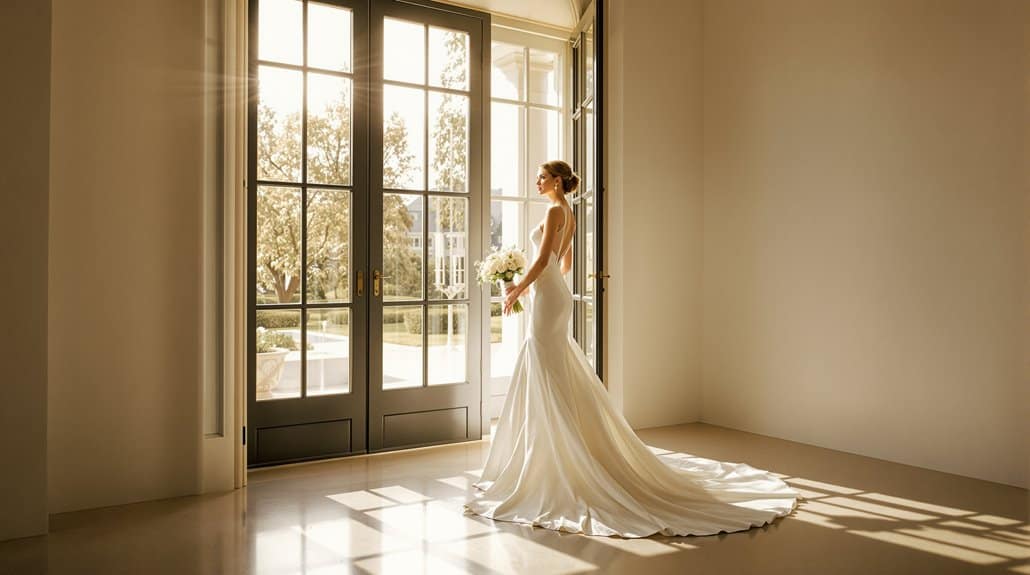
The dramatic difference between mediocre wedding photos and editorial masterpieces often boils down to a single factor: light. Estate venues enhance this element, but you’ll need precise timing to utilize their architectural beauty. The golden hour—that magical window just before sunset—transforms ordinary settings into painterly backdrops worthy of Vogue spreads.
| Season | Golden Hour Begins | Ideal Ceremony Start | Key Consideration |
|---|---|---|---|
| Spring | 6-8pm | 4-6pm | Lengthening days offer flexibility |
| Summer | ~8pm | 6pm | 16+ hours of daylight is forgiving |
| Fall | 5-6pm | 3pm | Light fades quickly after ceremony |
| Winter | 2:30-3:30pm | 12:30pm | Immediate post-ceremony portraits essential |
You’ll want ceremonies scheduled at least two hours before sunset. And yet, even harsh midday light can work with proper positioning—placing subjects in open shade transforms potentially unflattering conditions into crisp, editorial-worthy imagery that showcases your estate’s character. With premium photography and videography typically consuming 8-15% of a wedding budget, strategic timing ensures you maximize the value of this significant investment.
Maximizing Photographic Opportunities
Estate weddings offer unparalleled opportunities for capturing images that transcend typical wedding photography—if you know how to exploit them. You’re dealing with venues that provide architectural depth, historical patina, and quality of light that simply can’t be replicated elsewhere. The challenge isn’t finding beautiful moments but rather choosing which possibilities to prioritize in your limited timeline.
The artistry of estate photography lies not in capturing beauty, but in choosing which beauty to prioritize.
- Scout the property thoroughly at different times of day—that forgotten courtyard with dappled light might deliver your most striking portraits
- Plan compositional anchor points where architectural elements frame subjects naturally
- Allocate time blocks tactically—15 minutes in the right location trumps 45 in a mediocre one
- Create shot lists with backup locations for each key moment, accounting for weather contingencies
The estate itself becomes your silent creative partner, but it’s also an overwhelming canvas of possibilities. Your editorial eye must ruthlessly curate what deserves attention and what doesn’t. When working with couples who want that luxury cosmetics editorial aesthetic, coordinate with makeup artists beforehand to ensure beauty looks photograph as dramatically in natural estate lighting as they would in a fashion spread.
Conclusion
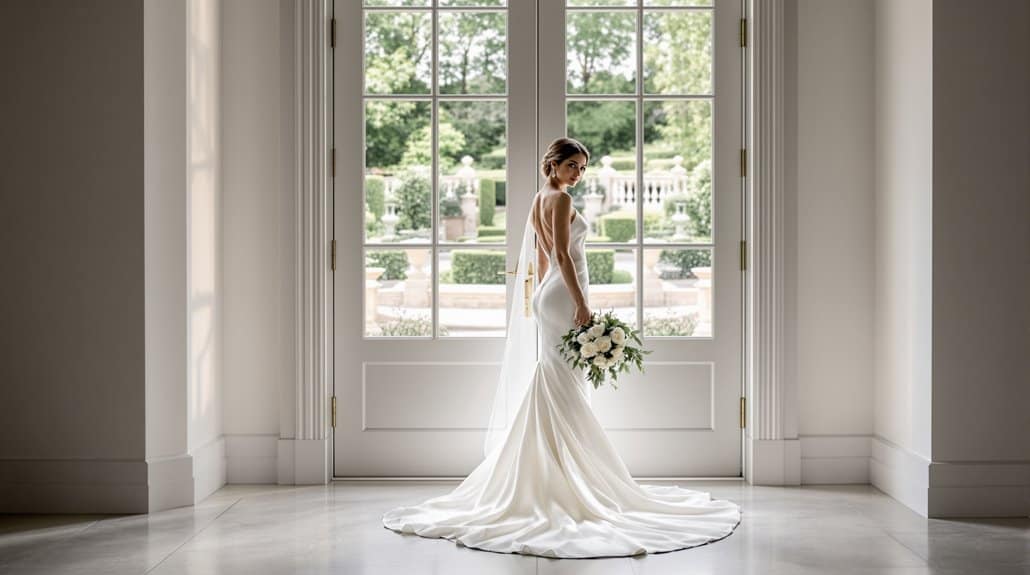
When you’ve mastered the art of estate wedding photography, you’ve opened a creative sphere where reality and fantasy merge—where weathered stone walls, centuries-old gardens, and grand architectural details transform ordinary moments into visual poetry. You’re not just documenting; you’re elevating—crafting imagery that belongs between glossy magazine covers.
| Element | Editorial Potential | Client Value | Technical Challenge |
|---|---|---|---|
| Architecture | Heritage storytelling | Timeless elegance | Perspective control |
| Light Quality | Dramatic contrasts | Emotional depth | Dynamic range mastery |
| Landscape | Contextual grandeur | Setting as character | Composition depth |
| Textures | Visual complexity | Tactile memories | Focus precision |
Your mastery of these elements separates weekday photographers from weekend artists. And yet, the true magic lies in invisibility—your technical obsessions dissolve behind apparent effortlessness. The estate becomes your studio, history your backdrop, and architecture your compositional structure. This marriage between venerable spaces and momentary joy creates images that transcend documentation and approach art. While estate weddings require significant investment—including vendor travel fees that can range from $1,500 to $3,000 for photographers—the editorial-worthy results justify the premium for couples seeking magazine-quality imagery.