
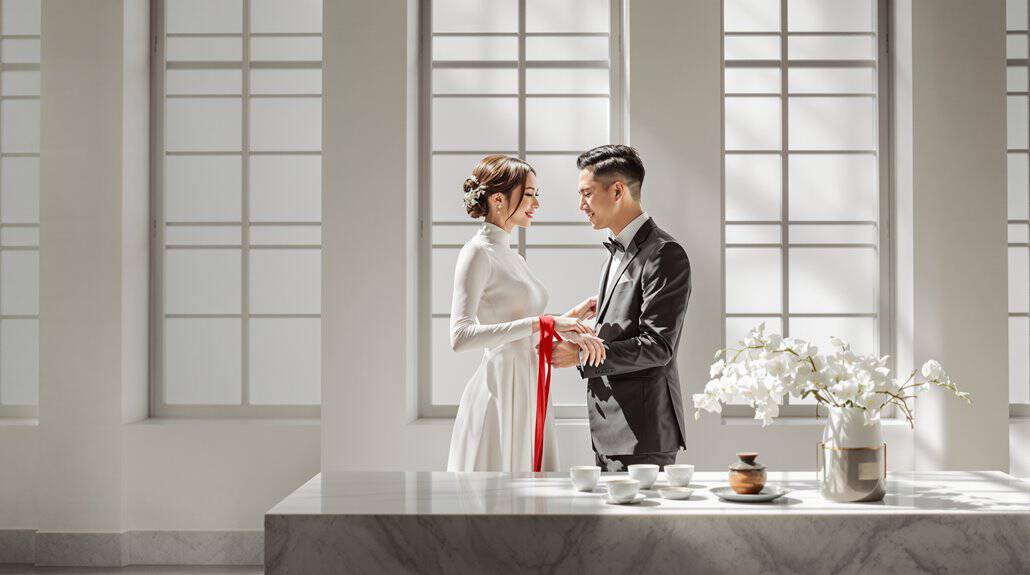
Cultural wedding traditions deserve intention, not obligation. You can honor your heritage fully through significant rituals (like Hindu Saptapadi), adapt meaningfully (simplified mehendi designs), or confidently skip elements that feel performative (elaborate sangeet). This isn’t cherry-picking—it’s mindful curation. A wedding’s cultural authenticity isn’t measured by exhaustive performance but by genuine connection to each practice. Consult elders, understand symbolic importance, then create celebrations that feel authentic rather than burdensome. The most meaningful ceremonies reflect what truly matters.
Not Every Tradition Served Them

While most wedding media showcases couples embracing every ancestral tradition with open arms, the information uncovers a starkly different reality—one where selective adoption has become the norm rather than the exception.
Your cultural tradition selection isn’t universal. Religious ceremonies appear in 79% of Colombian weddings but just 22% in the UK. You’re part of a global shift toward meaningful cultural ritual personalization. Gen Z couples in particular—now representing 62% of Indian weddings, up 49 percentage points—are reimagining which elements deserve preservation.
Choose cultural traditions that resonate, not those that burden. The data confirms you’re not alone: 25% of UK couples prioritize eco-friendly celebrations over material-heavy traditions, while dessert tables have supplanted cake-cutting across Latin America. The multi-day wedding format favored by over half of Italian couples demonstrates how modern couples honor heritage through thoughtful adaptation rather than wholesale replication. Understanding that many traditions originated as protection from evil spirits or infertility helps couples distinguish between meaningful heritage and outdated superstition. Couples increasingly view their wedding as a reflection of their partnership, with 80% prioritizing authenticity over obligation. Your selective approach? Perfectly valid.
Traditions Honored: Hindu Ceremony Elements
The Hindu wedding ceremony unfolds as a carefully choreographed sacred performance—not merely a legal transaction but a spiritual transformation. Within the mandap’s sacred space, cultural ritual choice becomes profoundly personal. You’ll witness the Vivaha Homa, where couples light Agni—the divine witness—transforming individual flames into shared purpose.
Your cultural tradition selection might include Saptapadi—seven steps representing nourishment, prosperity, and harmony—with each step grounding your union in ancient wisdom, yet personalized for your journey. The Mangalsutra binding, where the groom adorns the bride’s neck with this symbol of protection, remains non-negotiable for many couples making intentional cultural wedding decisions. Before this solemn moment, the joyous Barat procession welcomes the groom with festive dancing and singing as he arrives at the venue.
The beauty lies in selective preservation: maintaining Kanyadan (the giving away of the daughter) while perhaps *streamlining* the four-circle procession around sacred fire. You’re not obligated to perform every ritual, but those you choose—they’ll carry the weight of centuries, transformed through your intention. Consider allocating specific timeframes for each ritual element to ensure your ceremony flows seamlessly while honoring its sacred nature.
Traditions Adapted: Simplified Mehendi

Modern couples adapting mehendi traditions find freedom in simplification without sacrificing cultural significance. You’re making selective cultural traditions work for your contemporary lifestyle—and rightfully so. The five trending minimalist designs—geometric patterns, leafy wristlets, personalized elements, negative space techniques, and outline-only flowers—slash application time from six hours to under two.
Your cultural tradition selection might include DIY henna stations where guests apply simple designs themselves, or finger-dot patterns replacing full-arm coverage that once seemed obligatory. And yet, intention matters more than scale. You’re not abandoning tradition; you’re refining it. Single flower backhand designs and Indo-Arabic fusion motifs honor heritage while acknowledging your modern sensibilities.
This intentional adaptation—creating comfortable seating with adequate ventilation, selecting finger-friendly foods, streamlining gift obligations—transforms mehendi from exhausting performance into meaningful celebration. The same philosophy applies to floral choices: mono-floral arrangements convey confidence through repetition while mixed bouquets celebrate diversity, both serving different aesthetic purposes without inherent superiority. Cultural traditions observed with intention, not obligation, retain their soul while shedding unnecessary complications.
Traditions Skipped: Elaborate Sangeet
Many couples consciously skip the elaborate sangeet—once a ten-day celebration now compressed into a single evening—without feeling cultural guilt. You’re navigating authenticity, not betraying heritage. The sangeet’s evolution from intimate, female-only gathering to Bollywood-inspired extravaganza represents precisely why some couples opt out.
Consider the logistics: 2-3 days before your wedding, coordinating multiple dance performances requiring weeks of rehearsals, securing venues large enough for both families plus extended relatives, and managing the expectation of professionally choreographed routines. Exhausting, isn’t it?
The sangeet’s original purpose—a rite of passage with advice songs for the bride—has morphed into something sometimes unrecognizable. And yet, its core function of inter-family bonding remains valuable. Many couples preserve this essence through smaller gatherings or casual dinners where families connect authentically, without the pressure of performance—honoring the tradition’s spirit rather than its spectacle. Similar to how museums like SFMOMA foster community engagement initiatives through curated experiences, weddings can create meaningful connections through intentionally designed, intimate gatherings rather than elaborate productions.
Permission for Selective Observation
When couples approach cultural wedding rituals, they’re not confronting an all-or-nothing proposition but rather maneuvering a nuanced terrain of personal choice and cultural respect. The binary of tradition versus rejection misses the point entirely—what matters is intentionality.
You’re permitted, encouraged even, to observe selectively. This isn’t cultural appropriation but thoughtful navigation. Some couples honor specific Hindu ceremony elements while simplifying mehendi designs, a 4,000-year-old tradition condensed to its meaningful essence. Others skip the elaborate sangeet entirely—that night-before celebration with its choreographed dances and 3-hour runtime—without diminishing their cultural connection.
What distinguishes respectful adaptation from erasure? Context, communication, and consciousness. Speak with elders, understand meanings, then decide. Authentic rituals originate from ancestral wisdom and communal necessity, not from obligation to perform every ceremonial element. Cultural traditions exist to serve meaningful connection, not to burden you with performative obligation. The question isn’t which traditions you’ll keep intact, but which serve the relationship you’re actually building.
Honoring Culture Without Obligation
Honoring your heritage needn’t become a performance of obligation that overshadows your authentic connection. You’re allowed—encouraged, even—to incorporate elements that resonate while respectfully declining those that don’t. Many couples find themselves orienting this complex terrain, selecting traditions that feel authentic rather than performative.
| Approach | Example | Outcome |
|---|---|---|
| Honor fully | Traditional Hindu ceremony | Deep cultural connection |
| Adapt mindfully | Simplified mehendi designs | Modern personal touch |
| Blend creatively | Fusion cuisine menu | Represents both backgrounds |
| Skip confidently | Elaborate sangeet | Reduces stress and expense |
When you cherry-pick cultural elements with intention, you transform obligation into celebration. But remember—authentic selection requires genuine understanding of each tradition’s significance. Understanding the cultural history behind wedding traditions helps couples make informed decisions about which elements to preserve and which to reimagine. Your wedding becomes a statement of identity—shaped by heritage yet unburdened by its weight. The most meaningful ceremonies occur when couples honor culture through conscious choice rather than familial pressure.
Meaningful vs Comprehensive Cultural Performance
Though couples often feel pressured to incorporate every traditional element from their heritage, the depth of cultural expression isn’t measured by the quantity of rituals performed but by their personal significance. You’re navigating a profound distinction—comprehensive performance versus meaningful engagement. Some traditions deserve your deepest reverence; others might not resonate with your shared values or story.
Consider these approaches that successful multicultural couples have embraced:
- Honoring select Hindu ceremony elements while omitting others that felt performative rather than authentic
- Adapting traditional practices like mehendi into simplified forms that retain symbolic power without the 7-hour commitment
- Skipping elaborate sangeets when the performance aspect felt forced—yet preserving intimate family gatherings
- Creating hybrid ceremonies where each element has personal significance, refusing the checklist mentality that treats culture as a consumption exercise
Your authenticity matters more than your comprehensiveness. Full stop.
Regardless of which cultural traditions you choose to include, remember that in California, the legal requirements for marriage remain straightforward and separate from ceremonial choices.
Conclusion
As your wedding day approaches, the tapestry of cultural traditions available to you remains both breathtakingly expansive and intensely personal. You’ll face 371 possible cultural variations from Nigeria alone—yet what matters isn’t quantity but meaning. Select traditions that resonate with your shared values, not those that merely satisfy ancestral expectations.
| Approach | What You Gain | What You Release | What Remains |
|---|---|---|---|
| Selective Practice | Authenticity | Obligation | Connection |
| Personalized Expression | Relevance | Rigidity | Identity |
| Economic Consideration | Sustainability | Excess | Core Value |
| Symbolic Understanding | Meaning | Empty Gestures | Legacy |
The $50 billion American wedding industry sells perfection, but your celebration needn’t include everything. Some couples honor Hindu ceremonies fully, others adapt simplified mehendi, many skip elaborate sangeets altogether—and that’s perfectly valid. Just as advanced skincare requires selecting products that work for your specific needs rather than following every trend, your wedding traditions should be chosen with similar discernment. Your wedding isn’t a performance of cultural exhaustiveness; it’s a declaration of what matters most to you both.