
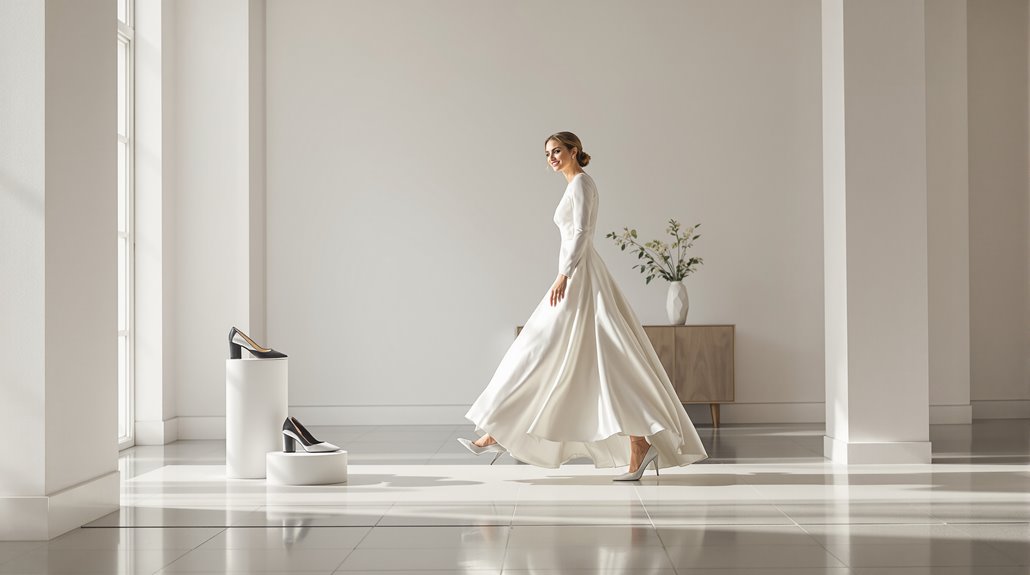
Choose wedding shoes based on real comfort, not just looks. Opt for heel heights under 3 inches, cushioned insoles, and materials that minimize friction—butter-soft leather breathes, while rigid synthetics torture. Break them in 2-3 weeks beforehand with leather conditioner and thick socks. Test-drive for 4+ hours on multiple surfaces, and plan tactical changes about 3 hours into your celebration. The perfect wedding shoe balances aesthetic desires with physical reality—your dancing feet will thank you.
The Eight-Hour Footwear Challenge
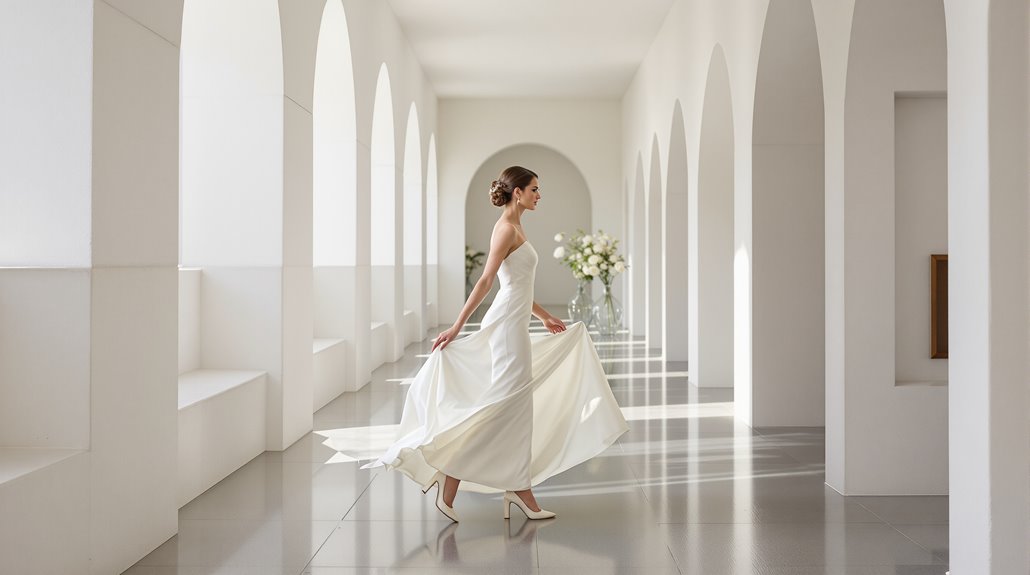
While other brides obsess over table arrangements and bridesmaid dresses, you’re facing the supreme wedding paradox—finding shoes that photograph like couture treasures yet support your feet through what amounts to an eight-hour athletic event.
Let’s be brutally honest: those delicate satin stilettos with crystal embellishments? Exquisite in photos, excruciating by hour three. And yet, comfortable wedding shoes needn’t resemble orthopedic contraptions. The secret lies in material composition—butter-soft leathers that minimize friction, breathable silk construction that prevents moisture buildup, and tactical embellishment placement that avoids pressure points entirely.
The foundation of bridal shoes you can actually walk in starts with thoughtful architecture: block heels distribute weight more effectively than their spindly counterparts, square toe silhouettes reduce strain during extended standing, and multiple strap configurations prevent the heel slippage that inevitably occurs during your first dance, fourth champagne toast, and seventh spontaneous conga line. For 2025 brides, consider investing in styles featuring padded insoles that blend luxury with practical comfort features. If you’re planning a destination wedding, research venues with accessibility statements to ensure your footwear choices work harmoniously with the ceremony and reception spaces.
Heel Height Reality: What You Can Sustain
Because your wedding day transforms into a marathon of standing, posing, and dancing, the height of your bridal heels becomes a decision of tactical importance rather than mere aesthetics. Those exquisite 5-inch stilettos? Divine in photos—potentially disastrous by hour six.
Your comfortable wedding shoes should match your heel-wearing experience. Novices, stick to 3 inches or less; your metatarsals will thank you. The sweet spot—that elusive 3-4 inch range—delivers both elegance and endurance for most brides seeking wedding shoes they can walk in without wincing. Many brides find that ankle strap heels provide essential stability throughout their wedding day festivities. And yet, wedding shoe height isn’t just about inches; it’s about construction and venue. Block heels offer stability on uneven surfaces, while platforms distribute pressure more evenly.
Consider your terrain ruthlessly: indoor marble welcomes delicate stilettos, but garden ceremonies demand sturdier profiles. Just as timing leverage points affect wedding costs, the timing of your shoe shopping matters—purchasing 4-6 months ahead ensures current pricing before seasonal increases. Remember, the most photogenic shoe becomes worthless when pain forces you barefoot before your first dance—prioritize sustainability over spectacle.
Sole Flexibility and Arch Support
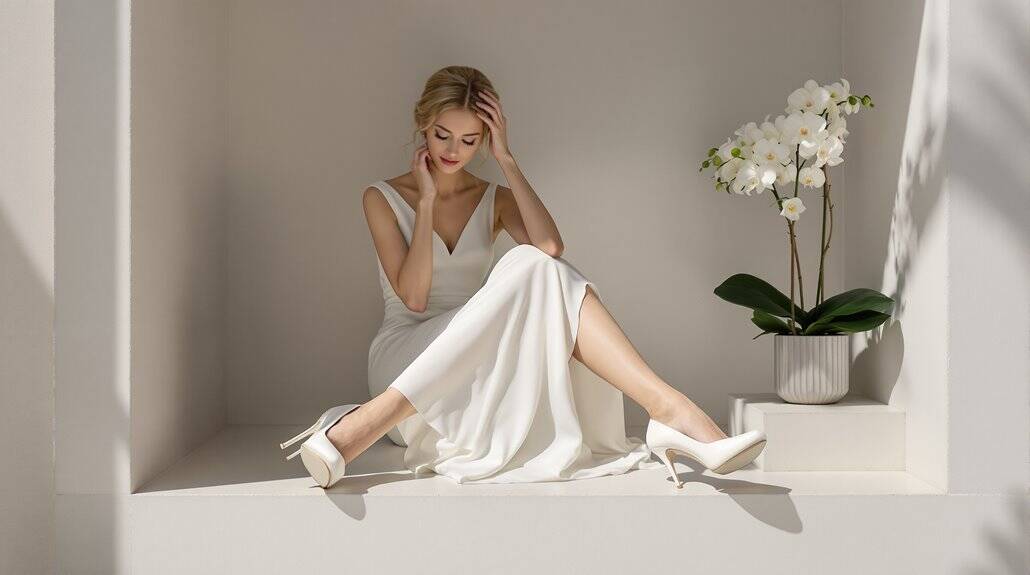
As your feet navigate the gauntlet of wedding-day activities, sole flexibility and arch support form the unseen infrastructure of bridal comfort—the architectural underpinnings of shoes that won’t betray you mid-reception.
You need comfortable wedding shoes with properly balanced sole flexibility requirements—rigid enough for structure, yet pliable enough for natural movement. Stiff constructions are your enemy, particularly with conditions like plantar fasciitis or arthritis. Look for block heels with flexible materials and mesh uppers that mold to your foot shape.
Arch support benefits cannot be overstated: proper weight distribution across eight hours prevents the burning sensation that turns your celebratory shuffle into a grimace. Your specific foot condition dictates your needs—flat feet require structured support; high arches demand extra cushioning. The right support system works invisibly, distributing pressure evenly while proprietary cushioning technologies absorb impact. Your wedding shoes should whisper, not scream.
Break-In Strategies Without Damage
The dreaded period between purchasing perfect wedding shoes and actually wearing them comfortably demands a methodical approach—one that transforms potentially agonizing footwear into blissful extensions of your feet without sacrificing their pristine appearance.
Start your wearable wedding heels journey 2-3 weeks before the big day—not the week of, when panic compounds discomfort. Apply leather conditioner to stiff areas, then wear them with thick socks for 30-60 minute sessions daily, gradually increasing your time. You’ll need patience, but your bridal footwear comfort depends on it.
Manual techniques matter tremendously: flex natural crease points, massage tight spots with your thumbs, and consider shoe stretchers for 24-48 hours—but don’t overstretch. Create friction barriers with moleskin at pressure points while alternating gel inserts for maximum relief. Comfortable wedding shoes aren’t mythical creatures—they’re the result of deliberate preparation that respects both your feet and your investment.
Remember that wardrobe malfunctions rank among the most frequent wedding-day issues, so keeping fashion tape, safety pins, and backup heel tips in your emergency kit can save you from unnecessary stress when footwear challenges arise.
Beautiful Flats That Don’t Read Casual
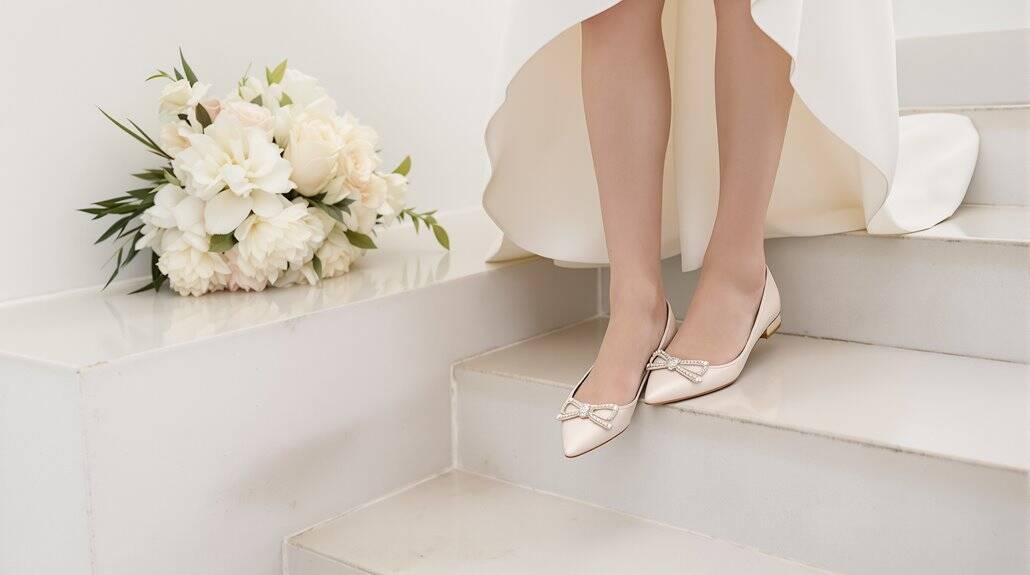
Contrary to outdated wedding conventions, refined flats have rightfully claimed their place in bridal fashion—without sacrificing an ounce of formality or photogenic appeal. You’ll find triple-padded ballet flats with hand-sewn details that photograph beautifully while providing eight solid hours of comfort—and yet, they maintain that ethereal quality your wedding album demands.
Consider satin uppers from Bella Belle with their triple-padded insoles, or Loeffler Randall’s minimalist silk constructions that elongate rather than truncate your silhouette. Pearl-embellished mules by Dolce Vita deliver the same visual impact as three-inch heels but with infinitely more wearability.
The secret to comfortable wedding shoes that don’t scream “practical choice”? strategic embellishments—crystal buckles, floral lace overlays, delicate ankle straps—combined with sophisticated materials like polished leather or soft suede. Complete your polished bridal look with luxury French skincare from Lancôme to ensure your complexion radiates as beautifully as your carefully chosen footwear. These comfortable elegant shoes prove that wedding-day comfort doesn’t require sacrificing that bridal mystique you’ve dreamed about since childhood.
Strategic Shoe Changes
Many wedding photography albums reveal a delightful secret—brides wearing distinctly different shoes at assorted points throughout their celebration. This isn’t accident; it’s strategy. The ceremony-to-reception shift represents your footwear’s crucial moment—when those photogenic heels surrender to reception-ready alternatives.
Consider this change as intentional evolution, not desperation. Your reception shoes aren’t emergency backups but planned co-stars in your wedding narrative. The best transitions happen around 2-3 hours in, after key photos but before serious dancing begins. Position those pearl-adorned sneakers or block-heeled sandals as luxury accommodations for your celebration marathon.
You’ll want distinctive options: statement colors that progress from ivory to vibrant hues, comfort-forward designs like elevated Birkenstocks, or something blue that honors tradition while solving practical problems. Practice the shift beforehand—a full dress rehearsal with comparable skirt length ensures your gown and footwear play nicely together. Plan storage locations at your venue for seamless switches. If you’re celebrating at MoMA’s private spaces, coordinate with venue staff about designated areas for your shoe changes throughout the event.
Platform vs Stiletto Stability
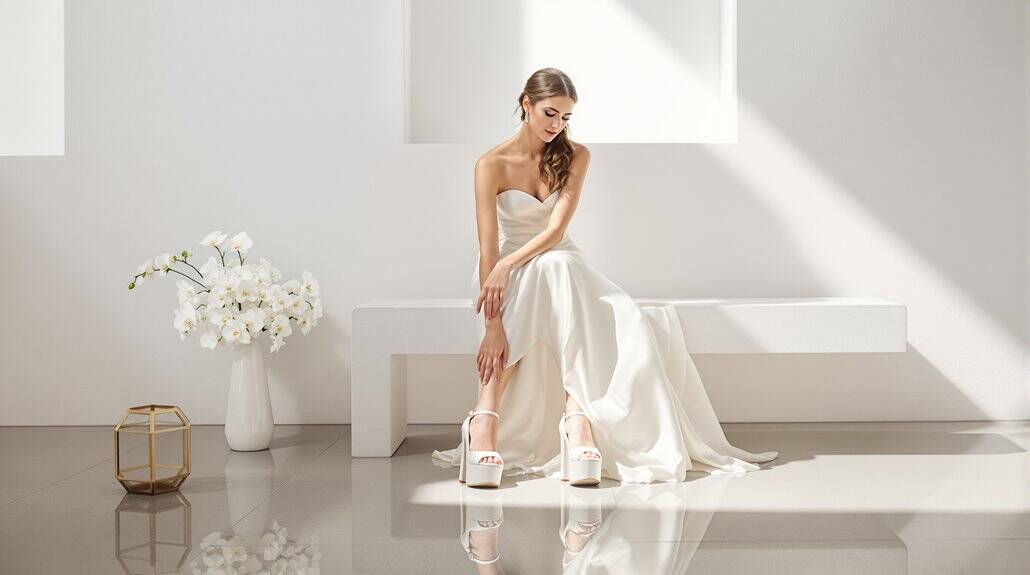
While brides often fixate on heel height when selecting wedding footwear, the fundamental structural difference between platforms and stilettos deserves far more attention. It’s not simply aesthetics—it’s physics. Platforms dramatically reduce foot pitch by distributing height differently, allowing your feet to remain at a more natural anatomical angle instead of that precarious forward tilt stilettos create.
The stability difference is profound: platforms distribute weight across the entire foot surface, while stilettos concentrate pressure on specific points—essentially forcing you to balance on toothpicks for hours. Block heels and platforms serve as MVPs for all-day wear, supporting eight hours of standing and dancing without compromise. Stilettos, gorgeous as they are, should be reserved for shorter durations or photo-specific moments.
Well-designed platforms with ankle support prevent foot sliding and offer stability that thin heels can’t match—the difference between confidently gliding across the dance floor versus calculating each careful step. For additional guidance on selecting the perfect pair, explore wedding tutorials on YouTube that demonstrate how different shoe styles perform during real ceremony and reception scenarios.
How to Test Shoes for Wedding Viability
After selecting potential contenders for your wedding footwear, rigorous testing becomes non-negotiable—pretty shoes that torture your feet create memories for all the wrong reasons. You’ll need to commit to a multi-surface marathon: wear candidates for at least 4 hours on tile, carpet, concrete, and—critically—grass if you’re planning an outdoor ceremony.
Test during evening hours when feet naturally swell, and always with the exact hosiery you’ll don on your day. Size up slightly rather than down; you can add insoles but can’t create space where none exists. Pay obsessive attention to pressure points—that minor pinch at minute 15 becomes excruciating by hour 6. And yet, comfort alone isn’t sufficient; scrutinize heel stability during dance moves, not just standing.
Materials matter tremendously. Breathable leather prevents the swamp-foot phenomenon, while memory foam insoles distribute weight across your entire foot, preventing the ball-of-foot burning sensation that ruins receptions. For inspiration on elegant footwear styles throughout history, explore photographs and artworks from leading museums and archives that document fashion evolution across cultures.
Conclusion
Beyond the breathtaking dress and venue selection, your wedding footwear stands as the unsung hero determining whether your celebration flows with grace or devolves into a pain-management exercise. This isn’t hyperbole—it’s physics and physiology colliding with social expectations.
You’ve now got your roadmap: memory foam cushioning, proper width selection, venue-appropriate heel heights, and personal comfort assessments that don’t lie. Trust your feet’s history. If you’ve never lasted four hours in stilettos, your wedding day won’t magically grant you supernatural endurance.
The final paradox resolves itself when you prioritize function alongside form. Beautiful wedding shoes exist at every comfort level—from block heels distributing weight evenly to elegantly embellished flats that photograph magnificently. Just as flickering candlelight triggers a calming physiological response that enhances your reception atmosphere, the right footwear creates an invisible foundation for authentic comfort throughout your celebration. And yet, the most eye-catching wedding portraits capture authentic joy, not forced smiles masking foot agony. Choose wisely; your dancing feet will thank you while creating memories that last infinitely longer than temporary blisters.