

When portfolios all look polished, go beyond the highlight reel—request full wedding galleries. Curated portfolios show only the top 2.5% of photos, masking consistency issues. You need a photographer who maintains quality across varied lighting conditions and timeline constraints, not just in perfect scenarios. Evaluate their backup systems (multiple cameras, storage redundancy), communication style, and how they handle receptions. Meet in person; chemistry matters as much as technical prowess. The details beneath the surface reveal your perfect match.
The Portfolio Problem
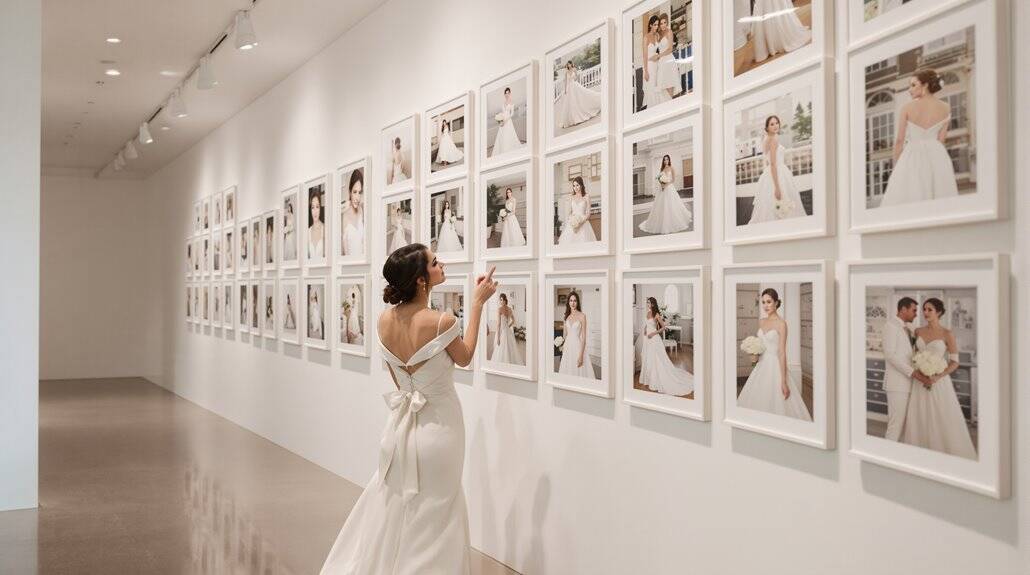
While browsing a photographer’s dazzlingly curated portfolio might leave you breathless, those fifty perfect images represent just 2.5% of the 2,000 photos you’re actually paying for. That radiant sunset shot? One of dozens they attempted. The tearful father-daughter dance? Perhaps their single emotional capture that day.
Effective portfolio evaluation demands skepticism. Examine those blacks and whites—are they consistently rich across all images, or wildly inconsistent? Look for storytelling in wedding photos that transcends mere prettiness; does the photographer capture meaningful glances between staged moments? A truly professional photographer should demonstrate technical mastery through their use of light, composition, and depth of field in various settings.
Request complete galleries, not just highlights. A photographer delivering extraordinary consistency in photography throughout eight exhausting hours—that’s your unicorn. And yet, even technically flawless portfolios can lack emotional authenticity. The portfolio showing imperfect-but-genuine emotion often trumps the technically perfect but sterile collection. Many professionals now use photo editing and organizing tools to manage and enhance their complete wedding deliveries, ensuring quality across all images. Trust your instincts here: will this person document your day or merely illustrate it?
Beyond Curated Portfolios: Request Full Galleries
Because that dazzling portfolio only reveals the tip of a photographer’s creative iceberg, you absolutely must request full wedding galleries before making your decision. Those 50 portfolio stunners? They’re cherry-picked from thousands of images across dozens of weddings—a highlight reel that obscures the complete picture. Many wedding photographers use Pixieset Inc. to deliver these comprehensive galleries to potential clients.
| What Full Galleries Reveal | Portfolio Limitations | Why This Matters |
|---|---|---|
| Candid moments throughout entire day | Only posed perfection | Shows ability to capture fleeting emotions |
| Consistency across changing light | Always ideal conditions | Proves technical adaptability |
| Complete reception coverage | Few party snapshots | Demonstrates stamina and attention |
| Detail documentation thoroughness | Selected decorative elements | Reveals eye for meaningful minutiae |
| Unposed guest interactions | Limited wedding party focus | Showcases storytelling ability |
Request three complete galleries from recent weddings. Look for emotional documentation that feels authentic, consistency across challenging lighting situations, and that ineffable ability to be everywhere yet nowhere—capturing moments you didn’t even realize were happening. If you’re considering unique venues like the MCA’s Sculpture Garden, ensure your photographer has experience shooting in spaces where art installations and natural elements create complex lighting scenarios.
Evaluating Consistency Not Just Best Work
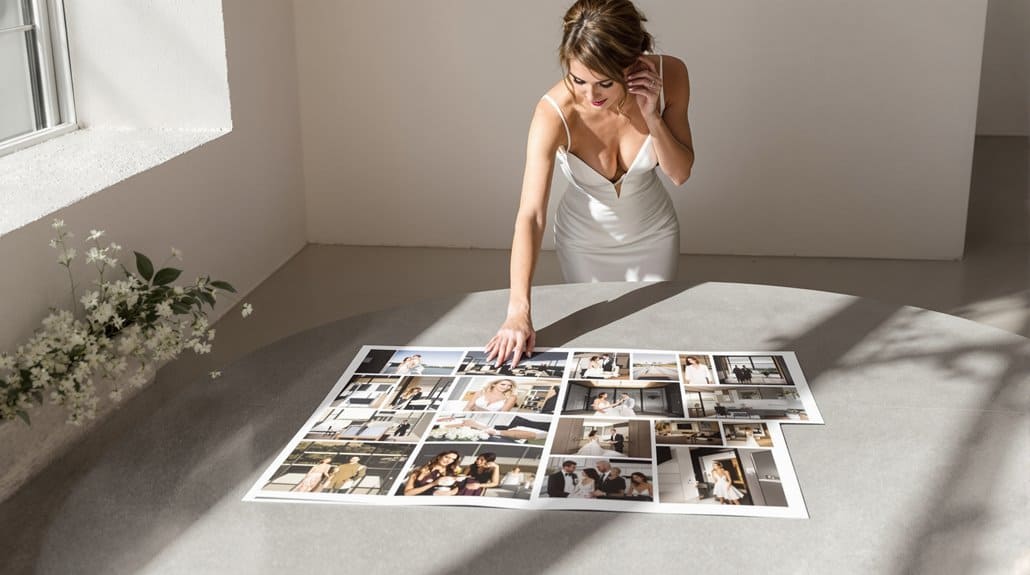
Once you’ve examined full wedding galleries, you’ll need to scrutinize them for something deceptively simple yet profoundly revealing—consistency. Every photographer can produce 50 stunning images for their portfolio, but can they maintain that quality across all 2,000 shots from your 8-hour celebration?
Look beyond isolated moments of brilliance. Portfolio consistency demands unwavering quality across varying conditions—dim churches, sun-drenched gardens, candlelit receptions. The true professional delivers remarkable results in all scenarios, not just ideal ones. Examine editing and tone throughout complete galleries; skin tones should remain natural, color palettes cohesive. Beware photographers who mask technical deficiencies with dramatic filters.
Professional standards extend beyond images. Are contracts clear? Communication prompt? Do they have backup equipment? If you’re planning a destination wedding or your photographer will be working across provinces, verify they understand Canadian marriage documentation requirements that may affect timeline planning. References will reveal these crucial details. The photographer who impresses with consistency—not just occasional brilliance—is the one who’ll transform your wedding day into an enduring visual narrative.
Technical Skill in Challenging Light
The mastery of difficult lighting scenarios separates exceptional wedding photographers from merely adequate ones. When you evaluate wedding photographer portfolios, look beyond perfect sunsets—ask specifically about reception shots, where consumer cameras falter but professional-grade lighting equipment thrives. Notice how they handle backlighting: amateurs create silhouettes, professionals illuminate faces while maintaining that golden rim effect.
True professionals invest tens of thousands in gear that transforms impossible lighting situations into breathtaking images. They’ll position remote flashes throughout your venue, bouncing light off surfaces rather than blasting harsh direct beams. They’ll gel their flashes to match mixed lighting temperatures—solving problems you didn’t know existed.
Their low-light performance comes from more than expensive cameras; it’s their technical knowledge of manual settings. While Uncle Bob’s camera defaults to the brightest object (creating dark, grainy guests), professionals meter specifically for faces, preserving emotion in every shadowy corner of your celebration. Before finalizing your photographer choice, ensure they understand the timeline constraints of your event day, including how long you’ll need for portraits between obtaining your marriage license and the ceremony.
Backup Systems and Equipment
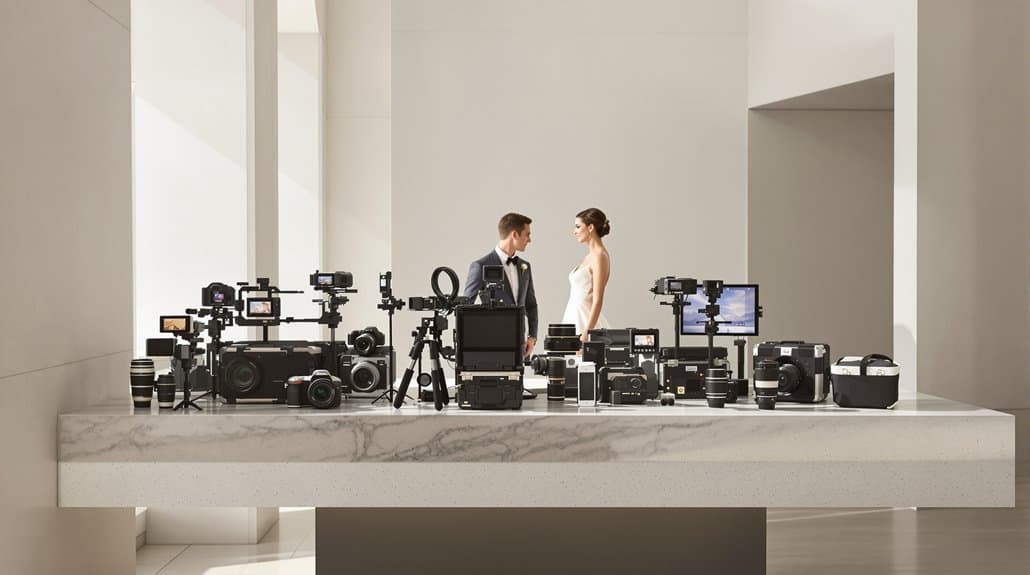
While gorgeous photos form the visible foundation of a photographer’s portfolio, their invisible backup systems reveal their true professionalism. Don’t hesitate to ask about their physical backup strategy—professionals maintain at least four copies of your images until delivery, including original cards sealed in marked envelopes, dual external drives, and cloud storage.
The most reliable photographers implement RAID configurations or NAS setups with IP65-rated drives that survive champagne spills and dusty venues, yet many still underestimate the importance of geographic redundancy. You’re paying for 2,000 irreplaceable moments, but backup systems determine whether they survive card corruption or accidental deletion.
Equipment redundancy matters equally—pros carry two camera bodies with different lens ranges, ensuring continuous coverage if one fails. The best photographers might seem obsessive about their backup protocols, but this thorough attention protects your memories when disaster strikes, which it inevitably will, usually at the worst possible moment. Before finalizing your photographer choice, verify they understand Ontario marriage requirements to ensure all official documentation is properly captured.
Personality Fit Assessment
Beyond protective equipment protocols lies perhaps the most overlooked decision factor: how you actually feel around your photographer. You’ll spend 8+ hours with this person on your most emotionally charged day—more time than with almost anyone except your partner. This isn’t trivial.
Your comfort level directly influences photo quality; tension shows in images, particularly in candid moments. Schedule a video chat or coffee meeting to assess personality fit beyond email exchanges. Notice their communication style: Do they listen actively when you describe your vision? Ask thoughtful questions? Explain their approach clearly?
Consider alignment between personalities—laid-back couples often clash with high-strung photographers, and vice versa. The best photographer-client relationships develop when your natural communication patterns resonate. And yet, compatibility isn’t just about being friends; it’s about finding someone whose professional boundaries, stress management approach, and working philosophy complement your expectations for the day. Following wedding etiquette guidelines can also help ensure clear expectations are set during initial conversations with potential photographers.
Questions That Reveal Competence vs Marketing

How effectively can you distinguish between a photographer’s polished marketing facade and their genuine professional competence? When you evaluate wedding photographer candidates, remember: every portfolio showcases their best 50 images—but you’re hiring them for 8 hours and 2,000 shots.
Begin your photographer vetting by demanding specific numbers: “How many full weddings have you shot?” (Look for 50+ or 4+ years). Request proof of liability insurance—professionals carry $1 million minimum. Ask about their backup equipment strategy and second shooter contingency plans. These aren’t casual inquiries; they’re litmus tests separating professionals from amateurs with nice cameras.
The most revealing question when you select wedding photographer services: “May I see complete galleries from recent weddings?” Their willingness to share unfiltered work—not just Instagram highlights—reveals their true consistency. Styled shoots look magnificent, and yet they tell you nothing about a photographer’s ability to handle your actual wedding day challenges. Consider that wedding planning requires approximately 66 workdays of effort, so investing proper time in photographer selection ensures your substantial planning investment is captured professionally.
Red Flags in Photographer Selection
Savvy couples recognize warning signs long before disappointing wedding photos arrive six months too late. Your photographer selection guide should include vigilance for pricing opacity—professionals state their ranges upfront, while amateurs deflect with vague answers or suspiciously low quotes coupled with high-pressure booking tactics.
Don’t wait for regret—professionals discuss pricing openly while amateurs hide behind vague numbers and rushed commitments.
When you evaluate wedding photographer portfolios, watch for stylistic inconsistency, an overreliance on styled shoots rather than actual weddings, or resistance to showing complete galleries. These red flags signal potential heartbreak.
Communication patterns reveal everything—delayed responses spanning weeks, dismissive consultation styles, or refusal to meet in person should send you running. Since email is preferred by 77.7% of vendors for client communication, pay attention to how photographers handle correspondence and whether they establish clear, consistent communication channels from the start. And yet, the most dangerous red flags often hide in plain sight: missing contracts, no liability insurance, absence of backup equipment, and nonexistent emergency plans.
Trust your instincts when a photographer’s online presence feels thin—zero verified reviews, complaints about delivery timelines, or willingness to provide RAW files often confirm what your gut already knows.
Conclusion
Selecting your wedding photographer represents the single most consequential vendor decision you’ll make. When you evaluate wedding photographer options, remember that portfolios only reveal their best 50 images—not the 2,000 you’ll actually receive. Service quality manifests in their communication patterns, their willingness to understand your values beyond price points, and their investment in pre-wedding relationship building.
Choose photographer wisely by appraising the complete package: portfolio consistency, editing coherence, genuine client testimonials, and—most critically—interpersonal compatibility. The photographer who makes you comfortable will capture more authentic moments than one with marginally better technical skills but poor rapport. And yet, technical excellence matters tremendously; your memories deserve both artistry and competence.
Trust your instincts when meeting candidates. Someone might tick every box on paper but feel wrong in person. The right photographer becomes an invisible presence on your wedding day—professionally assertive when needed, gracefully unobtrusive otherwise. Beyond personality fit, ensure your photographer understands critical timeline moments like golden hour photos and ceremony coordination, since these non-negotiable windows directly impact the quality of your final images.