
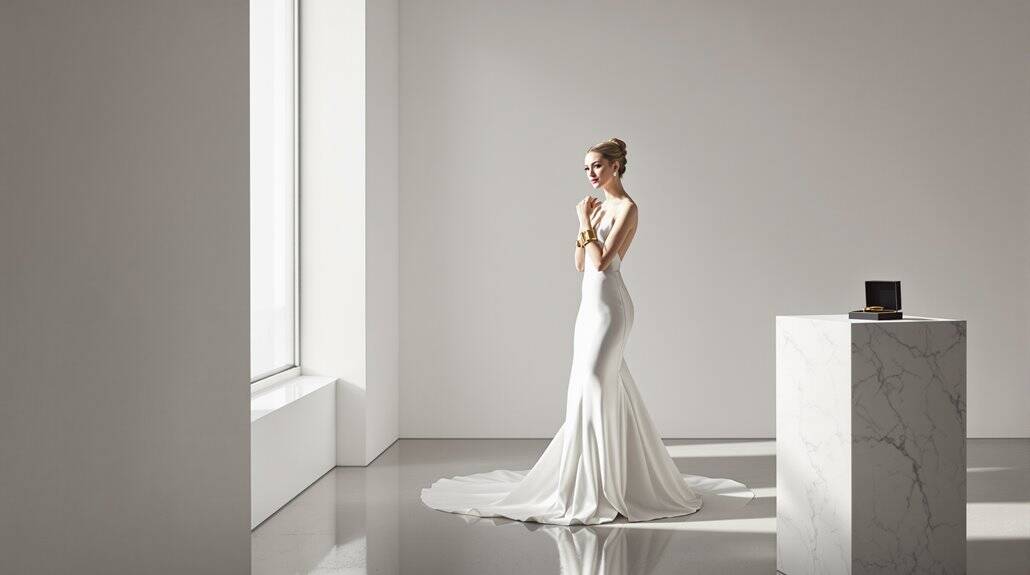
The one-piece rule transforms your accessory approach from random assemblage to deliberate architecture. You’ll create instant visual hierarchy by selecting a single statement piece—earrings, necklace, belt—while letting everything else recede. Multiple focal points fracture attention, turning your look into visual chaos. Think of accessories as load-bearing components in your aesthetic infrastructure: one magnificent chandelier deserves minimal surrounding decoration. This disciplined editing uplift your style from merely coordinated to genuinely narrative. The difference? Unmistakable elegance that whispers rather than shouts.
The Architectural Accessory Argument – Essay opening
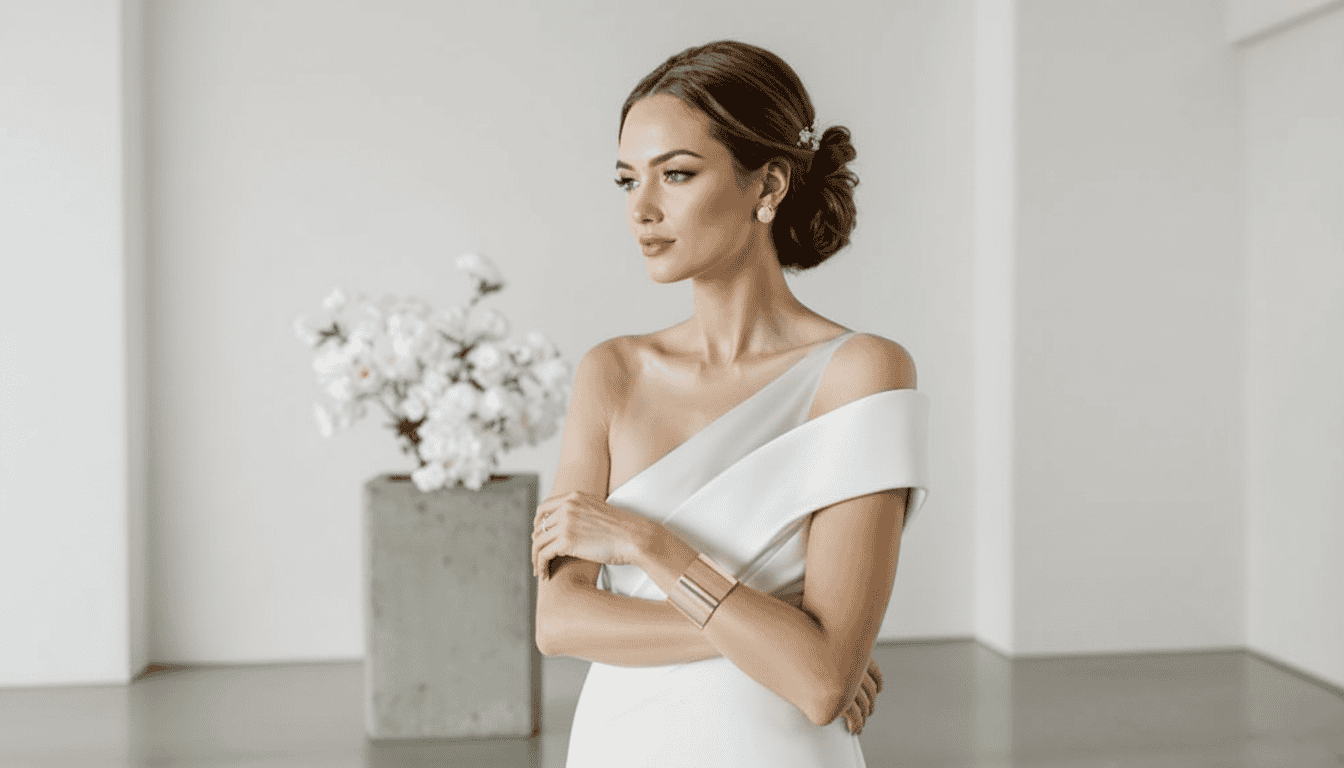
While most consider accessories mere afterthoughts to an outfit, they actually function as load-bearing elements within your personal aesthetic infrastructure. That wedding accessory rule you’ve heard—one statement piece only—isn’t arbitrary fashion dogma but architectural wisdom. Your bridal jewelry restraint creates visual stability through deliberate distribution of weight, establishing hierarchical importance among competing elements.
You’re not just decorating; you’re constructing. A dramatic headpiece demands simpler earrings, not because of some abstract style rule, but because emphasis requires balance—one focal point supported by complementary components. Consider wedding styling tips your structural blueprints. Triple grouping combines different heights and textures into balanced arrangements, while asymmetrical approaches pair different elements with similar visual weight. Just as lighting designers understand that proper fixture placement transforms spaces by directing attention and establishing visual hierarchy, your accessory choices guide observers through your bridal aesthetic with intentional focus points. Proper jewelry design anticipates vulnerable areas like unusual angles or thin supports that could fail under the stresses of movement during your celebration.
The accessories you choose finalize your bridal environment, adding character through deliberate design choices. They’re not frivolous additions but critical components that, when thoughtfully selected, augment the quality and professional feel of your entire aesthetic structure.
Why One Statement Piece
Since accessories truly speak when given their own spotlight, the singular statement piece emerges as both aesthetic principle and psychological tactic. Your bold earrings don’t just decorate—they broadcast your creative vision with undiluted visual impact. One architectural element communicates more effectively than three competing for attention, creating a memorable impression rather than visual chaos.
The psychological power of a statement piece transforms your relationship with personal expression:
- You’ll experience genuine confidence when one focal point resonates with your authentic identity
- Your investment justifies itself through repeated styling across multiple outfits
- Your distinctive choice creates ripple effects, challenging fashion norms beyond your personal wardrobe
The singular statement approach isn’t minimalism—it’s maximalism done right. You’re not wearing less; you’re communicating more. When you select just one piece to carry your story, you’re practicing both tactical restraint and bold self-expression, turning accessories into powerful architecture rather than mere decoration. This principle extends beyond everyday styling to special occasions, where luxury French beauty traditions emphasize the importance of curated elegance over excessive ornamentation. Selecting items that truly reflect individual personality ensures your statement pieces authentically represent who you are.
How Multiple Focal Points Create Chaos
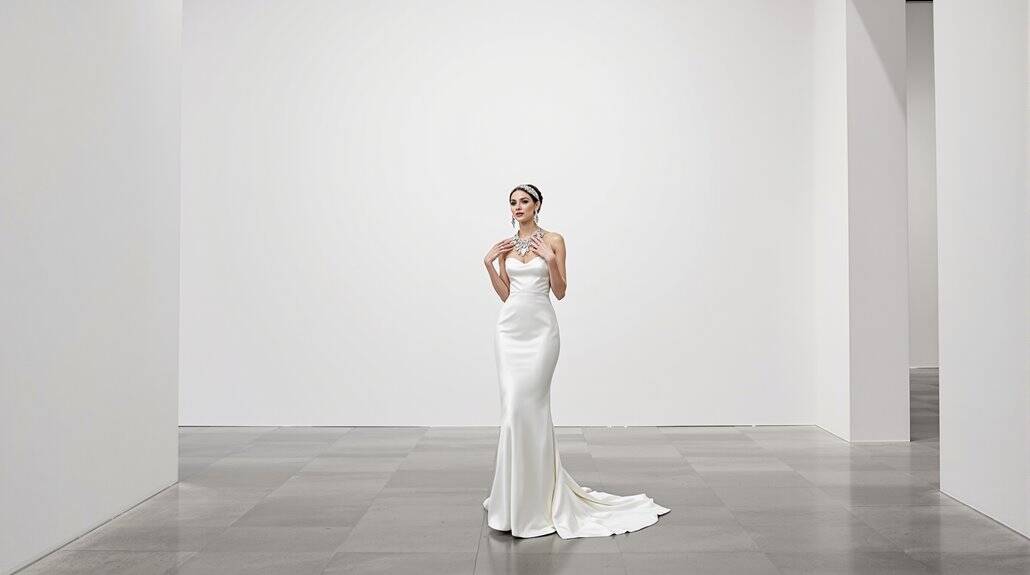
Just as the eye seeks a north star, your accessory choices demand visual orientation. When you stack competing statement pieces—those chandelier earrings with that embellished headband and that chunky necklace—you’re creating multiple focal points that fracture attention rather than direct it. Your face becomes a battleground of visual stimuli.
Without clear visual hierarchy, your brain can’t establish a comfortable resting point, triggering that subtle-but-real discomfort you feel when looking at someone who’s “overdone.” It’s not mere fashion snobbery—it’s neurological.
And yet, the true cost extends beyond aesthetics. Multiple focal points destroy design cohesion, forcing constant visual redirection rather than natural flow. Your outfit suddenly feels disjointed despite quality individual pieces. The result? An ensemble that reads as chaotic rather than curated, busy rather than bold. Think of it like Canadian citizenship requirements—there are specific eligibility criteria that must be met before elements can be formally united, and the same principle applies to combining accessories into a cohesive whole. Remember: a statement piece works precisely because it stands alone—your north star in a constellation of supporting elements.
The Editing Discipline
Fashion’s most transformative skill remains its most undervalued: ruthless elimination. Your accessories aren’t decoration—they’re architectural elements that define your silhouette’s integrity. Minimalist styling isn’t about owning less; it’s about showing less simultaneously, creating focused impact rather than scattered noise.
When approaching accessory curation, remember three cardinal principles:
- Identify your statement piece first, then build everything else in subordination to it
- Remove the last thing you put on—always, without exception
- Question each addition: “Does this strengthen or dilute my visual thesis?”
The discipline lies not in what you select, but in what you’re willing to abandon. You’ve likely felt it—that moment when removing an extra bracelet suddenly makes everything click. And yet, the hardest part isn’t knowing what to eliminate, but actually following through. Statement pieces demand space to breathe. Like successful negotiations that focus on scope rather than rate, accessory editing is about optimizing value through strategic subtraction, not simply reducing for reduction’s sake. Give them that dignity.
Examples: One Piece vs Jewelry Pileup
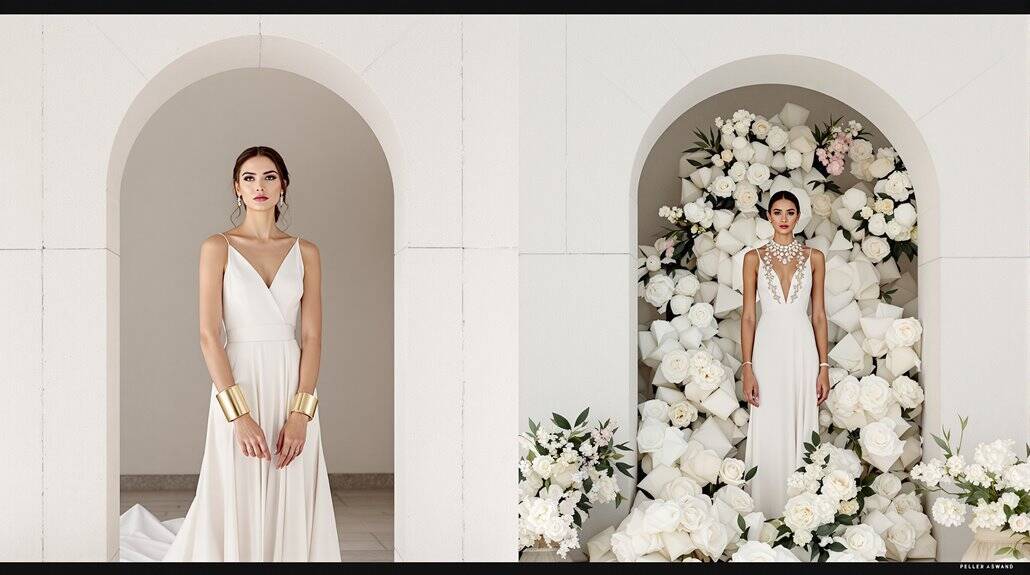
Theory demands application. You’ve mastered the concept—now visualize the execution. A statement necklace in solid gold against a crisp button-down creates architectural balance, while that same necklace paired with chandelier earrings and a headpiece resembles a jewelry store explosion. Restraint bridal style isn’t just tradition—it’s visual mathematics. One dramatic pearl pendant uplifts a simple silhouette; three competing pieces create visual chaos.
Consider accessory editing wedding fundamentals: those diamond drop earrings deserve spotlight status, not competition from a competing bib necklace. And yet, tactical stacking within a single category—multiple gold bangles, layered delicate chains—creates cohesion rather than clutter. Professional settings demand particular discipline: stick to a delicate pendant and subtle studs. The bohemian spirit allows more freedom, but even here, unity through a common metal prevents your carefully chosen statement jewelry from devolving into a confusing jumble of competing focal points. The same precision that defines luxury menswear tailoring—where every element serves a deliberate purpose—applies equally to accessorizing, proving that architectural elegance transcends gender.
Choosing Your Focal Point
How do you create visual impact without visual chaos? Start by selecting one statement accessory that deserves the spotlight. This isn’t just arbitrary fashion advice—it’s visual architecture that builds a refined ensemble around a single compelling focal point. The one statement accessory rule works because it creates intentional hierarchy rather than accidental competition.
When selecting your focal point, consider:
- For weddings: Which elegant bridal accessory best complements your face shape and dress neckline?
- For everyday: Which piece sparks the most immediate emotional reaction when you try it on?
- For investment: Which statement will retain both visual power and personal significance over time?
Your focal point deserves breathing room—and yet, it needs context. The supporting players in your accessory lineup shouldn’t compete but complement. This accessory editing creates balance, allowing your statement piece to command attention without shouting for it. If you’re planning a wedding in Massachusetts, understanding marriage license requirements ensures you can focus on the beautiful details like your chosen statement piece rather than last-minute legal logistics. The result? Effortless sophistication that appears thoughtfully curated, not frantically assembled.
Letting Everything Else Recede
Once you’ve established your statement piece, everything else must learn its place in the visual hierarchy. The one statement accessory rule isn’t just fashion dogma—it’s visual mathematics. When your chandelier earrings command attention, your necklace, bracelet, and rings must whisper, not shout. It’s brutal editing, and yet it’s precisely this restraint that uplifts the entire composition.
Wedding accessory editing follows this same principle religiously. Choose your battle, then surrender everywhere else.
| Statement Piece | What Recedes | Why It Works |
|---|---|---|
| Dramatic earrings | Necklace, hair pieces | Frames face without competition |
| Bold necklace | Earrings, bracelets | Creates single vertical focal point |
| Statement headpiece | Earrings, necklace | Draws eye upward, elongates |
| Embellished belt | Jewelry, shoes | Defines waistline without distraction |
| Ornate shoes | Jewelry, other accessories | Grounds the look, creates bookend effect |
The best accessory editing happens when you’re ruthless—remove anything that doesn’t actively support your star player. This approach mirrors effective contingency planning—identifying your priority and building everything else around it to prevent visual chaos on your wedding day.
Conclusion
When you master the architectural principle of the one statement piece, your entire ensemble ascends from merely coordinated to genuinely composed. It’s the difference between someone who’s put together an outfit and someone who’s orchestrated a visual narrative—and that narrative speaks volumes before you’ve uttered a single word. This rule isn’t about limitation; it’s about liberation through disciplined choice.
Your style arsenal should include:
- One knockout statement piece that commands attention
- Supporting elements that complement rather than compete
- Tactical negative space—the visual breathing room that makes impact possible
And yet, mastering this principle requires brutal honesty about your personal style metabolism. Some can carry dramatic earrings with unflinching confidence; others shine with an unexpected belt. The architecture of adornment isn’t universal—it’s autobiographical. Your signature statement piece reveals not just what you love, but who you are. Much like Amtrak’s approach to passenger comfort with no middle seats, the one-piece rule creates intentional space that elevates the entire experience.