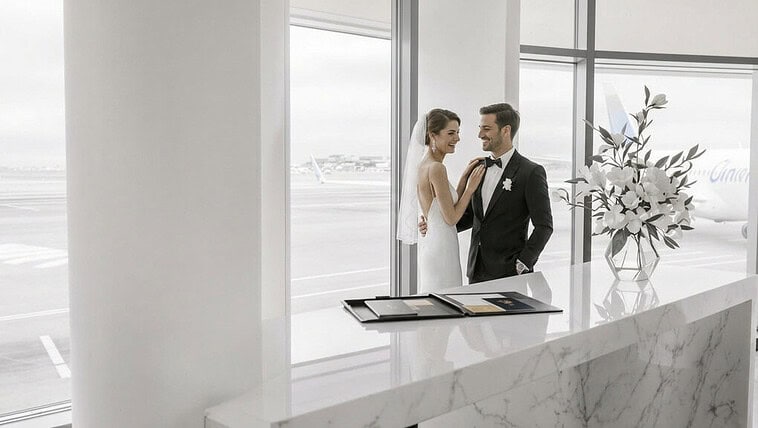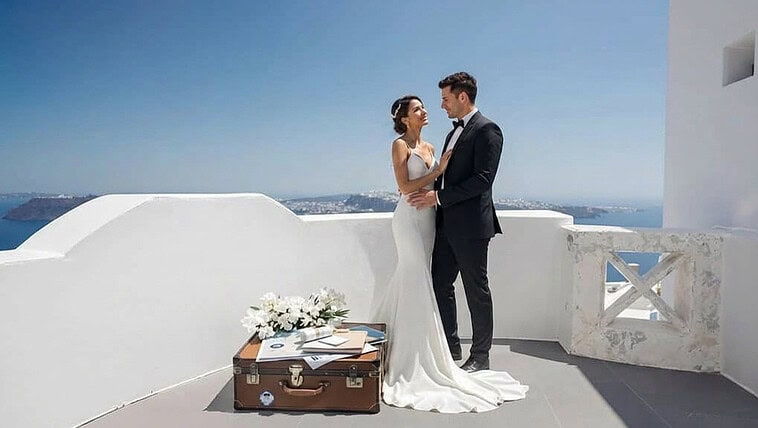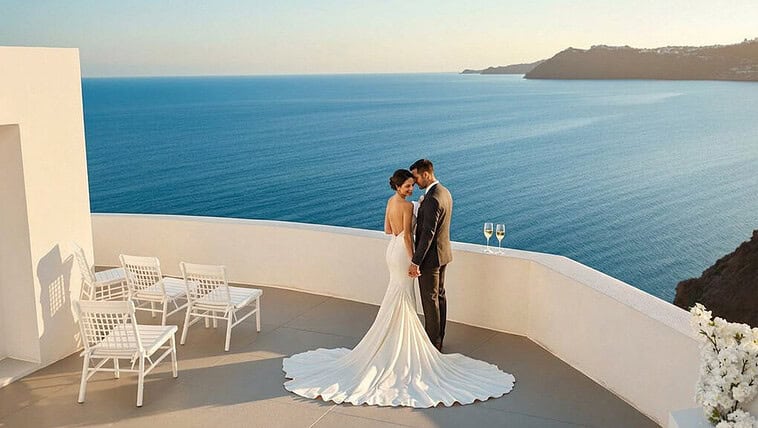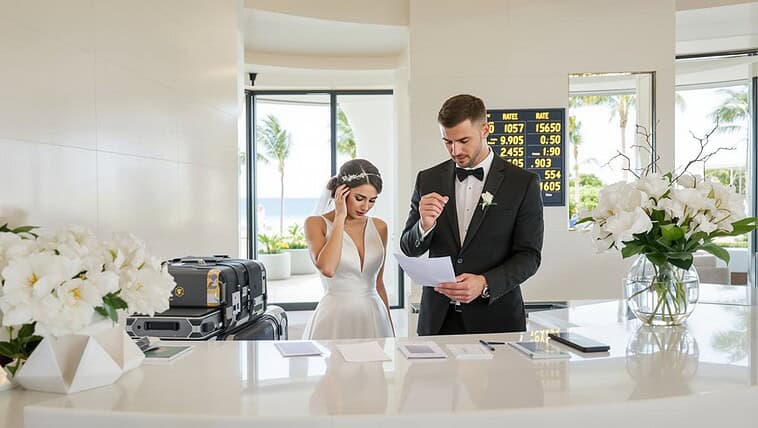

To choose a destination that works for your guest list, analyze who’s actually coming. Consider accessibility for elderly relatives (40% struggle with cobblestones), child-friendliness if families attend, and travel costs (only 55% of out-of-town guests typically attend). Balance your vision with practical needs—dream venues work better with under 70 guests, while larger lists favor hometown options with 75% attendance rates. The perfect spot marries your aesthetic with your guests’ real-world constraints. The magic happens where compromise meets celebration.
Dream Destination vs Guest Reality

While your Pinterest board might be filled with images of you exchanging vows against the backdrop of Positano’s sun-drenched cliffs or Bali’s pristine beaches, the sobering reality of Grandma Jean’s hip replacement, your college roommate’s twin toddlers, and your grad school friends’ mountain of student debt demands a more pragmatic approach. Embracing quiet luxury in your choice of destination can lead to a more meaningful experience for all.
Your dream destination might embody everything you’ve imagined—and yet, what good is perfection if half your guests can’t make it? Location selection requires brutal honesty about who actually matters on your guest list versus who you’re willing to lose. Consider 75% attendance your absolute ceiling for destinations requiring flights; 60% if international visas enter the equation. Guest accessibility isn’t just about physical limitations—it’s financial and logistical too. Sending save-the-dates 9-12 months before your wedding can significantly improve attendance rates for distant locations. The perfect compromise? Find somewhere that captures elements of your fantasy while remaining within reasonable reach of your core guests—those without whom your day would feel incomplete.
Guest Demographics Assessment
Before selecting that picturesque destination, you’ll need to dissect your guest list with surgical precision—because demographic realities will make or break your attendance numbers. Your dream Positano wedding sounds divine, but your guest list composition tells a different story.
| Guest Demographic | Travel Willingness | Accommodation Needs |
|---|---|---|
| Elderly Relatives | Low (55% decline) | Accessibility essential |
| Friends with Children | Medium (70% accept) | Family-friendly facilities |
| Budget-Conscious Peers | Variable (depends on cost) | Affordable options vital |
Consider that Gen Z hosts 131 guests on average versus Gen X’s 88—a stark indication of generational attendance expectations. Distance diminishes attendance; local guests show up at 85% rates while out-of-town drops to 55%. The current distribution shows that most weddings fall between 100-150 guests, representing 31-34% of all celebrations. Understanding luxury wedding spending habits can help you gauge which guests are likely to attend, as financial capacity varies dramatically across your invite list. Your grad school friends spending $580 average per wedding might balk at international airfare, yet your celebration-focused relatives might stretch budgets for meaningful milestones—but only if accommodation options exist for their specific needs.
Accessibility for Elderly and Mobility-Limited
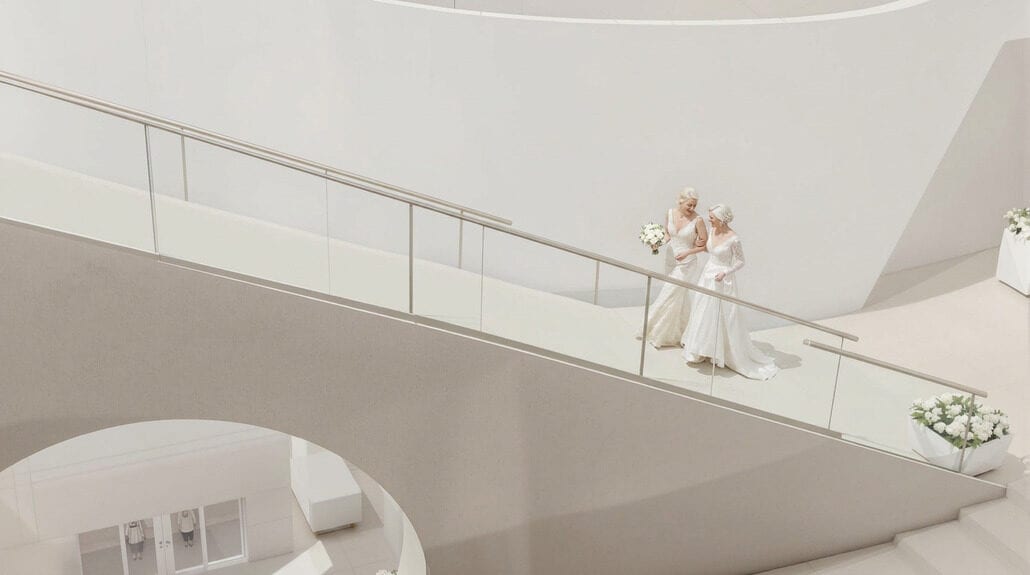
As you envision that breathtaking Positano vista for your vows, the steep Italian cliffside paths present a sobering reality for nearly 40% of your guest list. Your dream destination demands brutal honesty—those charming cobblestones become treacherous terrain for grandparents, and picturesque hillside venues transform into exclusionary barriers.
Prioritize entry and structural accessibility with ruthless precision. Venues need 48-inch-wide aisles, ramps at entryways, and clear pathways throughout—non-negotiable requirements, not charming “nice-to-haves.” Proper destination wedding accessibility increases overall satisfaction by 25%, but requires exhaustive venue interrogation. Can wheelchairs navigate every meaningful space? Are restrooms truly accessible, not merely labeled as such?
The most guest-friendly destination balances your aesthetic vision with pragmatic concessions. Consider shuttle systems for distant parking, strategically positioned seating areas to minimize walking distances, and ADA-compliant lodging nearby. Your perfect venue accommodates everyone’s reality, not just your Instagram fantasy. Moreover, understanding complexity management in planning can significantly enhance your ability to address accessibility challenges effectively.
Child-Friendliness Evaluation
Those cobblestone pathways creating barriers for grandparents present equally formidable challenges for parents managing strollers and chasing toddlers. Your venue selection must prioritize flat terrain layouts and fenced perimeters—non-negotiable venue safety features that prevent your best friend’s curious three-year-old from wandering off a scenic cliff during cocktail hour.
When evaluating properties, demand all-encompassing child-friendly amenities: designated play zones, splash pads, and supervised kids’ clubs that operate during critical wedding events (yes, including your ceremony). Mediterranean destinations like Greece offer the perfect balance—dreamy aesthetics with family-centered cultures—and yet the Caribbean might better serve your American guests with direct flights reducing travel time by 4-6 hours. The best accommodation services include family suites with separate sleeping quarters, on-site cribs, and housekeeping services that don’t blink at juice spills. Remember: your friends won’t fully celebrate your joy if they’re constantly calculating risk factors for their children.
Budget Tier Analysis of Guest List

Segmenting your guest list into budget tiers reveals the brutal mathematical reality you’re facing: your dream Positano clifftop ceremony will cost dramatically more per guest than you’ve anticipated. With elderly grandparents, friends with toddlers, and grad school buddies on tight budgets, you’re looking at a complex calculus of per-guest spending—approximately $300-$800 per attendee for intimate weddings under 50 people.
And yet, consider this: while your total wedding costs might average $36,000 nationally, your median lies closer to $10,000. This isn’t abstract economics; it’s your actual friends’ wallets. Those fixed costs—photography ($2,500+), venue rental ($8,573 average), coordination—don’t budge whether you invite 50 or 150 guests. Meanwhile, variable expenses like catering ($10-$150 per plate) scale ruthlessly with each RSVP. Your attendees represent dramatically different financial realities; acknowledge this by tiering your guest list accordingly—then choose a destination that accommodates all tiers, not just the wealthiest.
Climate and Timing for Vulnerable Guests
Beyond the budget reality lives another unforgiving truth: your wedding climate might literally kill Grandma. Those Chicago winters hovering at 35°F aren’t just uncomfortable—they’re genuinely dangerous for elderly guests with circulatory issues. And yet, July’s 85°F Central Illinois humidity creates equally treacherous conditions for anyone with respiratory concerns.
Guest accessibility demands brutal honesty about seasonal weather patterns. Your dream October clifftop ceremony sounds magical until you consider it’s the windiest month, potentially terrifying for anxious guests or those with mobility issues traversing unstable terrain. December through February introduces snow-related travel barriers that elderly relatives simply can’t traverse.
Climate considerations extend beyond comfort into survival territory. Spring brings 44-71°F temperatures but demands contingency planning for April’s notorious rainfall. Summer requires mandatory shade structures and cooling stations. Fall offers compromise—58-75°F temperatures with lower precipitation risks—but necessitates indoor backup options for unpredictable weather shifts.
The Compromise Destination: Beauty Plus Accessibility

While your vision board screams Amalfi Coast precipice with 360-degree Mediterranean views, your actual guest list demands pragmatic venue calculus. When you choose destination wedding location options, architectural beauty and accessibility aren’t mutually exclusive—they’re non-negotiable partners.
Consider Tuscan-style venues with no-step entrances that deliver European aesthetic without forcing Grandma to navigate ancient staircases. Waterfront settings with smooth walkways offer panoramic vistas while accommodating wheelchair users. Rustic barn venues—with their climate control and paved pathways—marry countryside charm with elderly-guest practicality.
Destination wedding planning guests with diverse needs means prioritizing venues near major airports (90 minutes maximum), with sister properties nearby for budget-conscious friends, and on-site coordinators familiar with accessibility requirements. The ideal destination wedding accessibility formula combines beauty with pragmatism: ADA-compliant restrooms, inclusive catering options, and transportation infrastructure that works for everyone—from toddlers to octogenarians—without sacrificing your dream aesthetic.
When to Prioritize Vision vs When to Prioritize Guests
If you’ve dreamed of exchanging vows against a dramatic Santorini sunset, you’ll inevitably face the tension between your ideal wedding tableau and your guest list’s practical limitations. The numbers don’t lie: destination weddings see just 35% attendance compared to hometown events’ 75-85% rate—a brutal reality check for your clifftop fantasy.
Prioritize vision when your core “must-have” guests (typically 20-30 people) can feasibly attend, you’re comfortable with a smaller celebration under 70 guests, and venue capacity aligns with your aesthetic requirements. Your vision deserves precedence when you’ve identified non-negotiable elements that define your celebration.
Conversely, guest list prioritization should win when accessibility concerns affect elderly relatives, budget constraints impact attendance (as reported by 63% of couples), or when your celebration fundamentally revolves around community presence rather than location. The Midwest’s 141-guest average versus international destinations’ 70-person reality represents a stark choice—stunning backdrop or fuller seats.
Conclusion
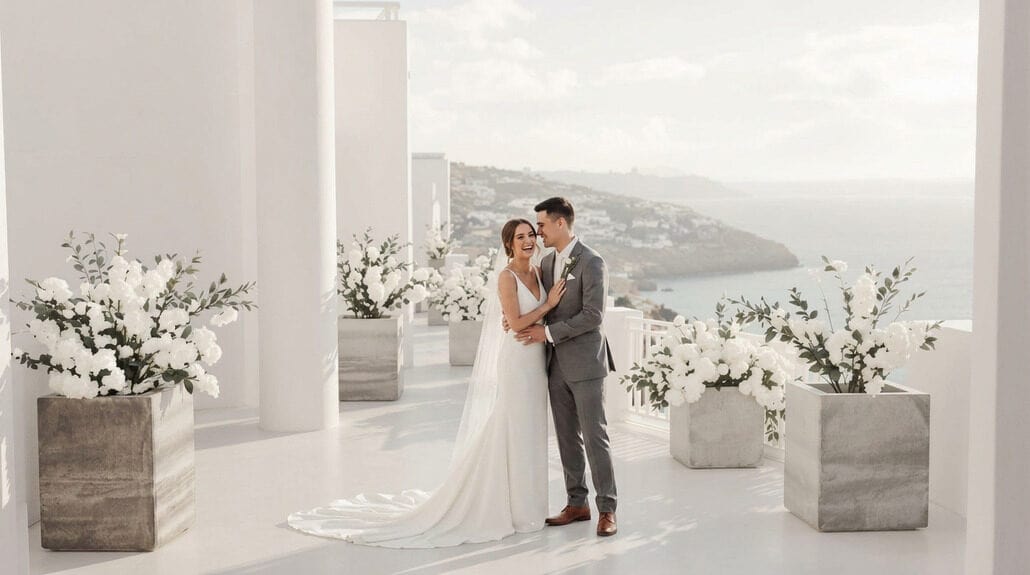
As your destination wedding vision crystallizes, you’ll need to reckon with the mathematical realities that shape your celebration. Those Positano cliffs won’t materialize in Minnesota, and yet your grandmother’s mobility challenges won’t disappear with wishful thinking. Destination wedding accessibility isn’t just about wheelchair ramps—it’s about emotional, financial, and logistical reach.
Your location selection for a destination wedding should balance aspiration against attendance patterns that are stubbornly predictable: 35% show-rate for international locations, 55% for domestic destinations, 85% for local venues. These aren’t just statistics; they’re the difference between a half-empty reception and the critical mass of joy you’re seeking.