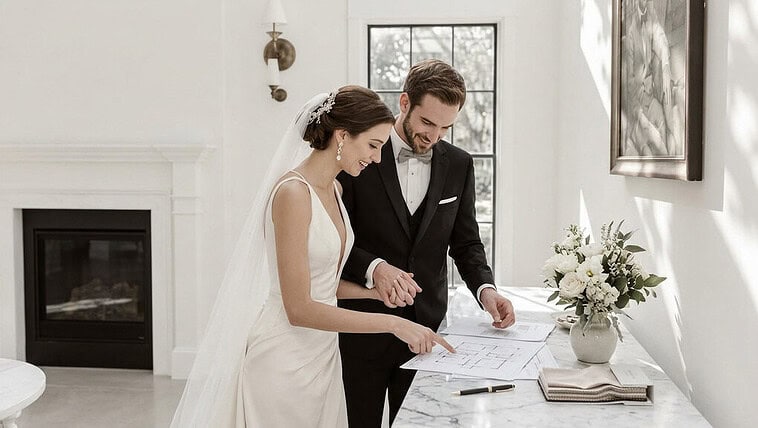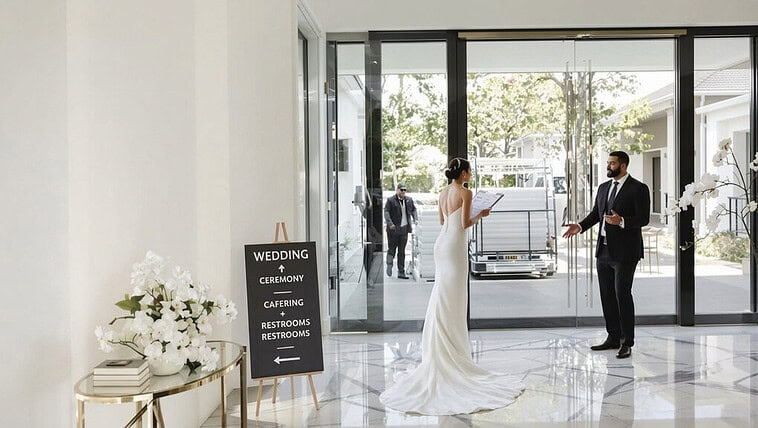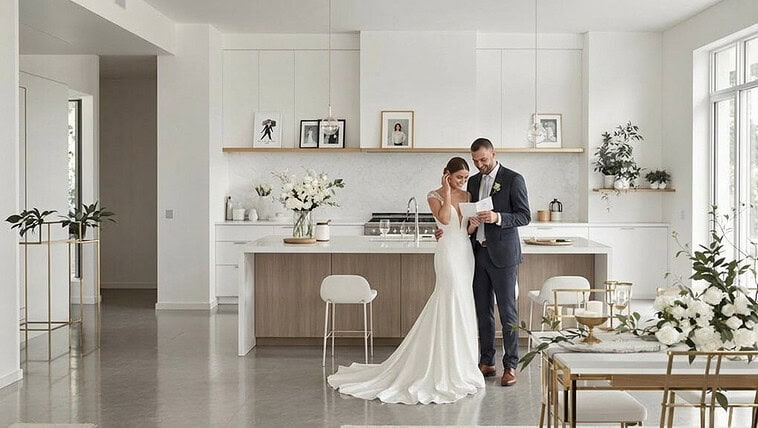
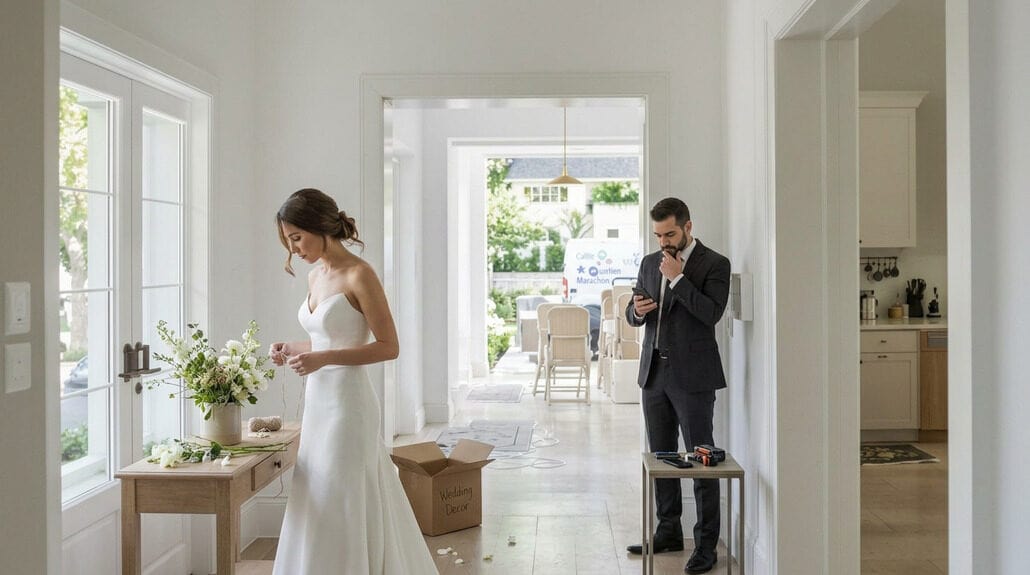
Hosting your wedding at home seems deceptively simple—until you’re juggling 15 vendors instead of 7, spending $3,500 on backup tents, and transforming your bathroom situation for 100 guests. Private residences lack the built-in infrastructure of commercial venues (professional kitchens, reliable power) while requiring the same regulatory compliance, often with steeper learning curves. And yet, the unparalleled personalization and emotional resonance of celebrating where your story lives creates a paradox worth charting—if you understand what you’re truly signing up for.
The Smaller Equals Easier Assumption – Essay opening

Despite what intuition might suggest, the “smaller is simpler” premise that pervades property management thinking represents perhaps the most persistent and costly misconception in the industry. You’ve heard it before—”a home wedding will be easier than booking a venue,” or “managing a small apartment complex must be simpler than a large one.” Dead wrong.
Consider the backyard wedding effort: no economies of scale, no established systems, and certainly no operational expertise included. The residence wedding harder truth reveals itself in the details—you’re handling everything professionals typically manage, just with fewer resources and zero infrastructure. Small properties face identical regulatory requirements as larger ones but lack the financial margins (3-6% compared to larger properties’ healthier returns) to absorb costs effectively. This reality reflects the lease intensity challenges identified in recent research on multifamily housing. In many ways, the management of small properties can mirror the old money aesthetic of historical luxury, where tradition and attention to detail are paramount yet can be incredibly demanding.
Like that ill-fated home wedding, smaller properties demand the same management bandwidth—tenant conflicts, maintenance emergencies, compliance issues—without the operational advantages that make larger properties financially sustainable. Smaller rarely means easier; it often means harder.
What Traditional Venues Provide That Homes Don’t
While home weddings seem charmingly intimate on Pinterest boards, traditional venues offer an infrastructure arsenal you simply can’t replicate with residential resources. Consider the built-in infrastructure: commercial kitchens, reliable electrical systems that won’t blow circuits during essential moments, weather contingency options, and dressing suites designed for wedding parties—not hastily rearranged bedrooms with personal items stashed in closets. Additionally, the ability to host a large gathering seamlessly in a luxury wedding environment can enhance the overall experience for you and your guests.
You’re also paying for professional event management—staff who’ve orchestrated hundreds of weddings, who know exactly when to refill champagne flutes and how to discreetly handle that one overly enthusiastic uncle. These aren’t skills your well-meaning friends possess, no matter their intentions.
The inclusive packages most venues offer eliminate dozens of separate vendor contracts and coordination headaches. Tables, chairs, linens, china—all effortlessly provided without you tracking down rentals. However, this convenience typically comes with significant cost implications, as traditional venue packages often exceed $25,000 compared to more flexible estate options. And yet, these tangible amenities pale compared to what you’re truly buying: the luxury of not transforming your personal space into a logistical war room.
Building Wedding Venue From Scratch

Anyone claiming home weddings are simpler has never calculated what creating a proper venue entails—an endeavor requiring investment levels that would make most mortgage holders blanch. The private residence wedding complexity extends far beyond hanging fairy lights and renting chairs. You’re fundamentally building a commercial enterprise from scratch, but without the revenue stream of a full-time venue to offset those costs.
Home weddings aren’t simple—they’re unsanctioned commercial venues built at mortgage-breaking costs without the revenue to justify them.
Consider the staggering financial reality:
- Basic venue construction costs $400,000 minimum—and that’s with budget constraints and DIY elements
- “Hidden” infrastructure requirements like $200,000 water line extensions and commercial fire suppression systems
- Parking for 150 cars requires 1.5 acres of paved surface at $4 per square foot
- Regulatory hurdles including traffic generation fees and potential legal disputes with neighbors
Home wedding challenges multiply exponentially when you realize even refurbishing an existing barn—the “economical option”—starts at $250,000. Your backyard wedding difficult equation suddenly makes traditional venues seem downright affordable. Additionally, effective tier allocation strategies can help optimize spending, but the reality is that the initial investment remains significant.
Operational Complexity at Private Residences
Behind the seemingly straightforward façade of hosting your wedding at home lurks an operational labyrinth that would challenge seasoned venue managers, let alone couples planning their special day. You’ll suddenly find yourself juggling multiple revenue streams—accommodations for out-of-town guests, food service coordination, entertainment logistics—each requiring distinct financial models and performance tracking.
Your backyard wedding isn’t just difficult; it’s a crash course in multi-faceted business management. You’re fundamentally building a temporary venue from scratch without established systems or vendor relationships that traditional venues utilize effortlessly. And yet, the private residence wedding complexity extends further into staffing challenges—you’ll need to recruit, coordinate and manage various service providers without the institutional knowledge of regular venues.
The home wedding is not easy precisely because you’re reinventing operational wheels that professional venues have long since perfected, all while attempting to enjoy what should be your most memorable day.
Why Home Weddings Are Worth It
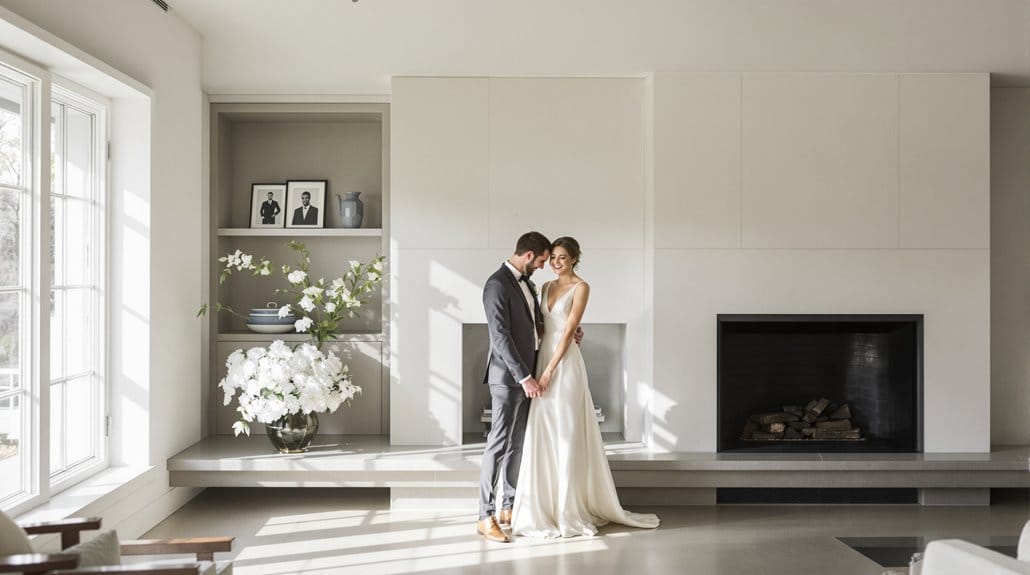
Despite the operational challenges detailed above, home weddings offer persuasive rewards that traditional venues simply cannot replicate. Your private residence wedding creates an intimate backdrop steeped in personal significance—spaces where you’ve built memories now transformed into the canvas for your most significant commitment.
- Unparalleled personalization – Unlike cookie-cutter venue packages, every design choice reflects your exact vision without institutional constraints.
- Emotional resonance – The backyard wedding difficult path yields deeper connection; guests experience your love story within the context of your actual life.
- Timeline flexibility – Home weddings permit extended setup and teardown impossible at commercial venues with back-to-back bookings.
- Financial reallocation – Though not necessarily cheaper, your investment shifts from facility fees to tangible improvements and experiences.
The home wedding not easy reality contradicts the simplicity myth, and yet the complexity itself creates something commercially unattainable: an authenticity venues can mimic but never duplicate.
But Never Choose Them for Simplicity
The most dangerous wedding myth you’ll encounter is that “hosting at home will be simpler.” It won’t be. Your private residence wedding requires exponentially more work than a traditional venue, where infrastructure already exists. You’re essentially building a venue from scratch—a formidable 120+ hour undertaking that transforms your property into an event space.
| Home Wedding Component | Traditional Venue | Private Residence Reality |
|---|---|---|
| Restroom Access | Included | $1,200+ for portable units |
| Weather Backup | Built-in | $3,500+ for tent rentals |
| Power Supply | Established | $800+ for generators |
| Staff Coordination | Venue-provided | Self-managed or $2,000+ |
| Permit Requirements | Handled | Your responsibility |
The backyard wedding difficult truth? Every amenity requires individual sourcing, coordination, and troubleshooting. You’ll manage 12-15 vendors instead of 5-7. And the promised intimacy often dissolves amid logistical firefighting—leaving you managing a complex operation when you should be celebrating. Home weddings aren’t easy; they’re labors of love requiring remarkable commitment.
The Right Reasons for Home Weddings

While steering through the undeniable complexity of residential weddings requires substantial effort, choosing your home as a venue should stem from deeply meaningful motivations rather than misconceived notions of simplicity. The private property wedding work isn’t easier—it’s different, demanding, and deeply personal.
Your decision to host a home wedding not easy but potentially transformative when based on:
- Authentic self-expression – Your space naturally reflects who you are, allowing wedding elements that genuinely represent your identity
- Creative autonomy – Freedom from venue restrictions means reimagining traditions without institutional constraints
- Meaningful photography – Familiar settings create images with emotional resonance beyond aesthetic appeal
- Budget reallocation – Venue savings enable investment in experiences that matter most to you
Your residence becomes more than convenience—it’s the canvas for a celebration that couldn’t exist elsewhere, despite (and sometimes because of) the logistical challenges it presents.
Conclusion
As you’ve journeyed through this exploration of residential weddings, you’ve encountered both romantic ideals and sobering realities—a roadmap for steering what may be the most logistically challenging and emotionally rewarding venue choice possible.
The private residence wedding complexity shouldn’t be underestimated. That backyard wedding? Difficult—not because you lack vision, but because established venues offer operational infrastructure you’ll need to build from scratch. And yet, thousands navigate these challenges yearly, armed with proper expectations and planning.
Home weddings aren’t easy, contrary to what Pinterest suggests. They demand more coordination, not less. But they offer something uniquely personal: a celebration within walls that already hold your stories.
Your decision needn’t be either/or. Consider hybrid approaches—ceremony at home, reception elsewhere. Or embrace the challenge with professional support. Whatever you choose, do so with eyes wide open to both the complexities and the incomparable rewards.