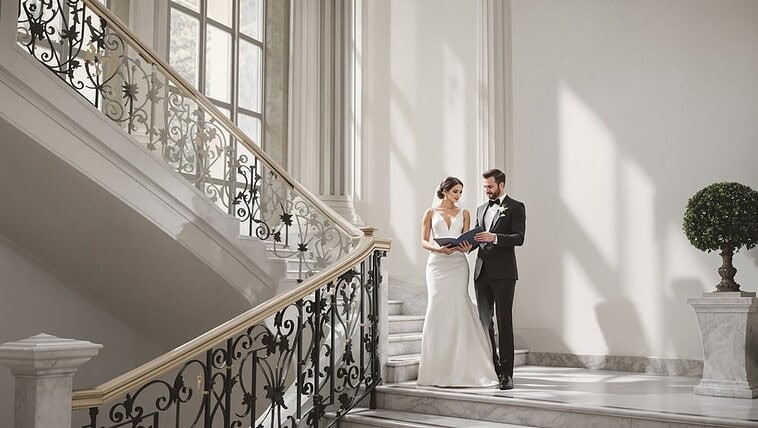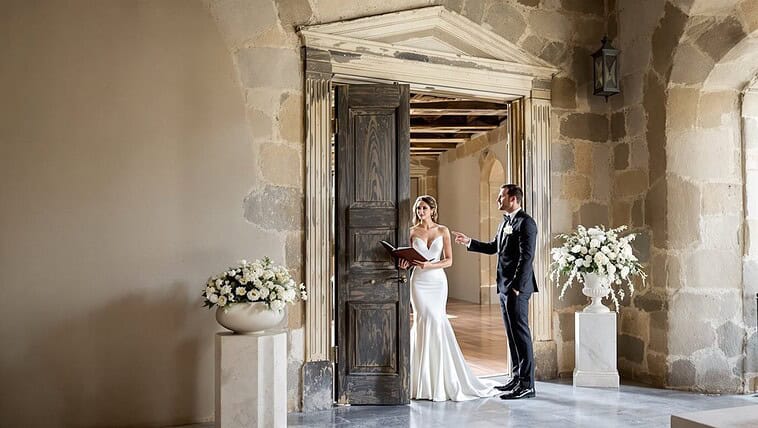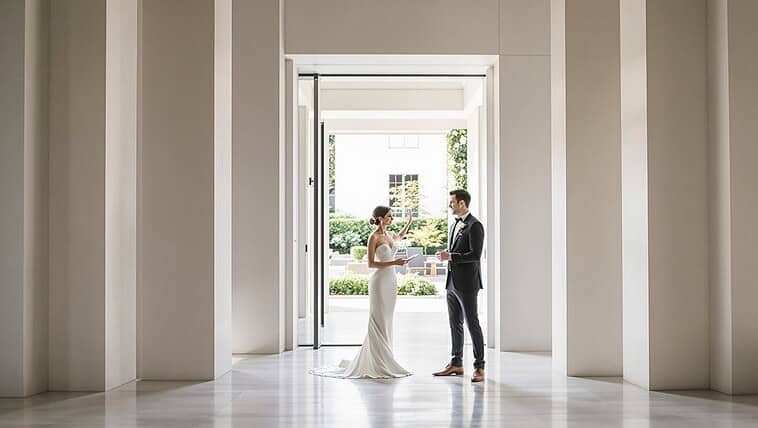

Estate venue restrictions aren’t arbitrary roadblocks—they’re preservation guardrails that can actually boost your wedding’s aesthetic. View décor limitations, vendor requirements, and sound ordinances as creative challenges that’ll steer you toward timeless choices. You’ll avoid costly aesthetic missteps while preserving historic integrity. Work with restrictions by understanding their purpose, adapting tactically, and partnering with vendors who navigate these boundaries effortlessly. The most memorable celebrations often emerge from these seemingly rigid structures.
Understanding Restriction Origins
While you might initially bristle at the seemingly arbitrary rules estate venues impose, these restrictions emerge from legitimate historical and practical concerns—not mere power plays by venue owners. Heritage property limitations exist primarily to preserve architectural integrity and historical authenticity—structures built centuries ago weren’t designed to withstand 300 guests with sparklers and open flames. Additionally, affluent couples often value decision-making quality when selecting venues, influencing how restrictions are communicated and understood.
Estate venue restrictions often reflect insurance mandates, preservation requirements, and zoning ordinances dating back decades. That required vendor list? It’s typically curated from professionals who’ve demonstrated respect for the property’s specific needs, not a revenue scheme. And those 9pm noise curfews stem from community agreements forged through years of negotiation. Similar to how the Statute of Uses clarified technical questions about land conveyance in 1536, today’s venue regulations provide necessary frameworks for responsible property use.
Historic venue limitations aren’t negotiable precisely because they’re preservation commitments, not suggestions. Understanding this context transforms frustration into appreciation—you’re not just hosting an event, you’re becoming part of a living historical continuum, and yet, adaptation remains possible with the right approach.
Common Estate Venue Restrictions
Estate venues reveal their true character through their rulebooks—those thick packets outlining what you can and cannot do within their hallowed halls. Mansion venue rules aren’t arbitrary obstacles—they’re preservation protocols that have kept these architectural treasures standing for generations. And yes, they will impact your celebration.
When navigating historic venue limitations, anticipate these non-negotiables:
- Decor constraints – No wall-mounting, no free-standing candles, no moving that 18th-century sideboard that’s blocking your cake table
- Exit item prohibitions – Forget confetti, rice, or colored petals on those immaculate grounds
- Sound restrictions – Decibel monitors cutting your band at precisely 9pm, not 9:01
- Traffic protocols – Limited parking requiring shuttle coordination and timing precision
Estate venue restrictions demand creativity, not combat. The venues offering the most breathtaking backdrops often impose the strictest limitations—and yet, these parameters can ignite innovations you’d never discover with a blank-slate venue. Understanding zoning classifications for your estate venue can help you anticipate restrictions before you even tour the property.
Required Vendor Lists: How to Work Within

Although you’ve fallen in love with an estate’s soaring architecture and impeccable gardens, you’ll soon discover that your dream venue comes with a substantial asterisk—the infamous “approved vendor list.” These curated directories aren’t merely helpful suggestions; they’re often ironclad mandates determining exactly who can and cannot participate in your celebration.
To navigate venue restrictions effectively, scrutinize contract language before signing. Words like “exclusive” and “required” signal non-negotiable terms, while “preferred” may offer wiggle room.
| List Type | Flexibility | Negotiation Potential |
|---|---|---|
| Approved | None to minimal | Exception fees possible |
| Preferred | Moderate | Often negotiable |
| Exclusive | None | Rarely waived |
Ask pointed questions: How were vendors selected? Are there fees for outside professionals? Get exceptions in writing. Working with estate venue restrictions doesn’t mean surrendering your vision—it means tactical adaptation, determining which battles are worth fighting and which compromises preserve the estate’s integrity while honoring your aesthetic. Embracing quiet luxury can help you find creative solutions that align with both your vision and the estate’s requirements.
Décor and Installation Limitations
Beyond vendor restrictions lies another complex territory to navigate: the physical limitations of the space itself. Those breathtaking wedding photos that inspired your Pinterest board might crash against the reality of estate venue restrictions—68% of historic venues limit open flames, hanging installations, and wall attachments. You’ll save yourself $500+ in wasted décor by verifying limitations early.
Navigate venue restrictions by understanding these essential realities:
- Historic venue limitations often prohibit wall and ceiling attachments—meaning 70% of DIY projects face immediate rejection.
- Open flames are typically banned, but electric alternatives create identical ambiance without violating preservation mandates.
- That trending floral installation? 41% of couples had to abandon similar plans after booking.
- Lighting quality impacts guest perception more than florals, setting 80% of the mood.
The restrictions feel limiting, and yet, they’ve pushed couples toward more intimate, minimalist décor that paradoxically photographs better anyway. This shift toward simplicity reflects the design principles of the old money aesthetic, emphasizing timeless elegance over excess.
Noise Ordinances and Timeline Constraints
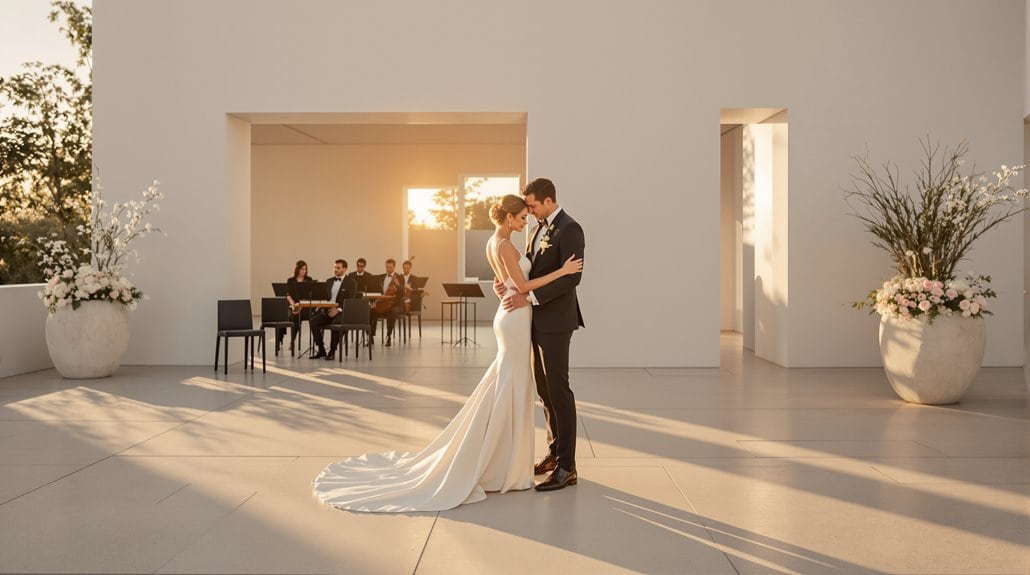
When that perfect wedding playlist gets cut short at 9:30 PM, you’ll understand why researching sound restrictions should have happened before booking your venue. Estate venue restrictions aren’t suggestions—they’re non-negotiable mandates governed by complex noise ordinances that vary dramatically by jurisdiction.
You’re dealing with duration-based restrictions that tighten after 10:00 PM in most locations, dropping permissible decibel levels from 70–85 dB to a conversation-level 45–55 dB. And yet, these thresholds differ wildly between counties; Las Vegas proper measures excessive noise at 50 feet while Clark County extends this to 75 feet.
Smart couples secure noise permits when planning amplified entertainment, particularly for evening receptions. The alternative? Fines starting at $50 and escalating to $250 for repeat offenses—plus the unquantifiable cost of a prematurely ended celebration. Time constraints exist for preservation, not persecution. Work with them, not against them.
Maximizing Allowed Interventions
Navigating time restrictions becomes tolerable when you’ve mastered the subtle art of working within venue-approved parameters. The primary estate venue restrictions—attachment limitations, lighting constraints, and decorative boundaries—aren’t death sentences for creativity but frameworks demanding innovative responses. You’ll find freedom within these boundaries when you understand their purpose: preservation, not punishment.
To steer through venue restrictions effectively:
- Replace prohibited tape with venue-approved push-pins and drafting tape that won’t damage historical surfaces
- Substitute real candles with battery-operated LEDs that achieve identical ambiance while meeting fire codes
- Document all approvals in writing, preventing day-of conflicts with staff who may interpret rules differently
- Coordinate vendor compliance early, ensuring bands, caterers, and decorators understand estate venue constraints
The most successful couples don’t waste energy fighting immovable restrictions but instead channel creativity into maximizing what’s permitted—and yet, they’re relentless about seeking clarification where gray areas exist.
When Restrictions Align with Vision

The most extraordinary aspect of estate venue restrictions lies not in their limitations but in their unexpected capacity to elevate your wedding vision. When you’re clear-eyed about historic venue limitations, you’ll discover they often serve as guardrails that prevent aesthetic missteps—not roadblocks. That 9pm ceremony cutoff? It creates magical golden-hour photography opportunities while eliminating late-night fatigue. The no-candle policy inspires dramatic LED installations that wouldn’t have occurred to you otherwise.
You’ll navigate venue restrictions most successfully when you recognize their underlying purpose: preservation of architectural integrity, guest comfort enhancement, and flow optimization. Estate venues with built-in progression between spaces—garden ceremony transitioning to ballroom reception—create natural rhythms impossible to replicate in blank-slate venues. And yet, it’s the couples who embrace these frameworks rather than fight them who consistently report the most satisfaction with their celebrations, precisely because limitations sparked innovations they hadn’t imagined.
When to Choose Different Venue
Despite the undeniable charm of estate properties, recognizing when these venues fundamentally conflict with your celebration priorities represents one of the most essential wedding planning decisions you’ll face. Your venue choice impacts every aspect of your wedding experience—from atmosphere to logistics—and forcing your vision into an incompatible space creates unnecessary stress.
Consider walking away when:
- Catering restrictions clash with cultural necessities — 70% of couples prioritize authentic food experiences, and many estate venues won’t accommodate specialized culinary traditions
- Time constraints undermine your celebration rhythm — that 9pm curfew devastates the dance-focused reception you’ve envisioned
- Décor limitations neutralize your aesthetic vision — when candlelight and personal installations define your dream
- Sustainability credentials fall short — 23% of couples select venues specifically for environmental commitments
Remember: compromise strengthens planning, but compromising core priorities creates regret. Comprehensive resorts or specialized venues might better serve your authentic celebration.
Conclusion

While working with estate venue restrictions can feel like steering through a labyrinth of “no’s,” you’ll finally find that boundaries often inspire the most memorable celebrations. Limitations force creativity—when you can’t light 200 candles, you’ll discover string lights casting more enchanting shadows. And yet, this isn’t about settling; it’s about elevating within parameters.
Remember: venues restricting outside caterers often partner with culinary artists who’ve mastered that specific space’s quirks. The 9pm ceremony cutoff? It creates a natural rhythm to your celebration, preventing the dreaded energy slump at hour six.
These non-negotiable preservation mandates protect the very aesthetic that drew you to the estate initially—those centuries-old wooden beams can’t withstand open flames, that historic garden wasn’t designed for amplified bass.
Your wedding isn’t compromised by these restrictions; rather, it’s *heightened* through intentionality, forcing decisions that *ultimately* distill your vision to its most powerful essence.