
You’re witnessing the sunset of wedding hashtags—and it’s liberating. After peaking at 55% adoption by 2014, today only 21% of couples prioritize social-specific content. The shift reflects deeper values: genuine connection over curated posts, intimate moments over performative documentation. Your wedding deserves authentic presence, not algorithmic approval. Unplugged ceremonies (now chosen by 75% of couples) replace digital archives with handwritten notes and uninterrupted vows. Freedom awaits in this post-hashtag era, where memories belong to you, not your followers.
The Wedding Hashtag Era: 2015-2022
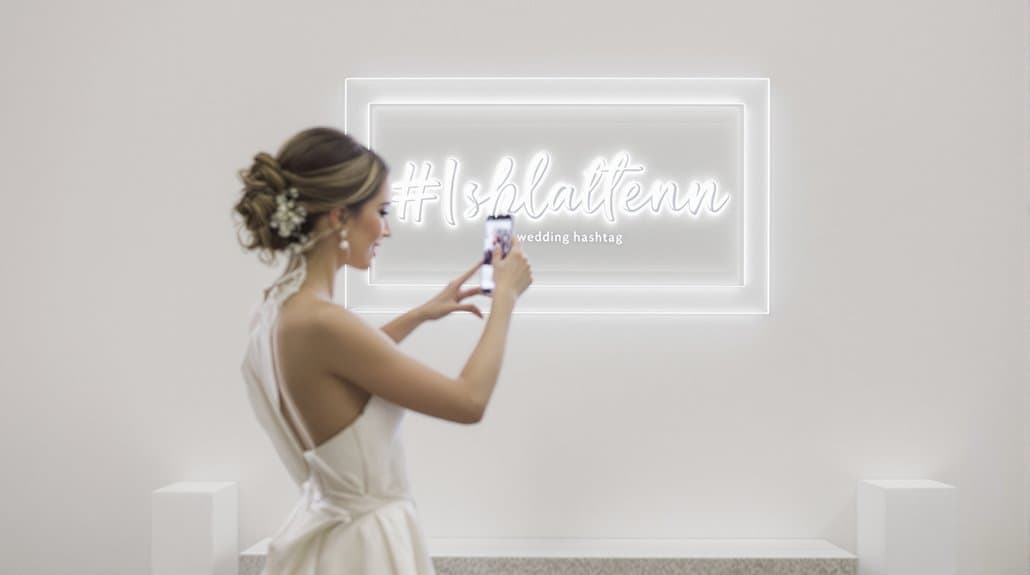
While social media had already taken over most aspects of our daily lives by 2015, it was during this seven-year stretch that wedding hashtags transformed from novelty to necessity. You couldn’t escape them—rising from just 9% of couples in 2012 to a staggering 55% by 2014, with trajectory suggesting near-universal adoption thereafter.
The industry seized the opportunity. TheWeddingHashtag.com launched in 2015, offering personalized hashtag consultations, while WeddingWire’s generator churned out 26 million possibilities. Companies monetized the trend through $399 photo-streaming packages and hashtag walls. Yet what made this phenomenon captivating wasn’t just its ubiquity but its integration into traditional wedding infrastructure—planners began offering hashtag brainstorming as standard services, photographers marketed Instagram expertise, and “wedding day social media coordinators” became legitimate job titles. The trend allowed couples to create digital albums that captured spontaneous moments from guests’ perspectives throughout their special day. Like many wedding traditions throughout history, this digital practice reflected the technology and values of its era.
The wedding hashtag trend dead? Not quite yet—it was simply becoming the expected norm rather than an groundbreaking choice.
Trend Exhaustion in 2025
After dominating wedding culture for nearly a decade, the wedding hashtag has officially flatlined in 2025—and not because of some splashy new alternative. You’re witnessing the natural death of a trend that simply exhausted itself.
Only 21% of today’s couples plan social-specific content for their celebrations, down from the 55% who once crafted personalized hashtags. The numbers tell a ruthless story:
| Trend Indicator | 2015-2022 | 2025 |
|---|---|---|
| Hashtag Priority | Essential | Just 21% |
| Content Creation | exhaustive | Selective |
| Social Purpose | Documentation | Authenticity |
What’s happened isn’t complicated—hashtags became victims of their own success. With #wedding generating 559,400 posts weekly, your carefully crafted #SmithToBeWife disappears into a digital void. And yet, this shift reflects something deeper: your generation’s growing desire for presence over performance, intimacy over internet approval, and genuine moments over manufactured perfection. Instead, couples are channeling their energy toward creating experiences that prioritize elegance and glamour over digital validation. Data shows that about 10% of past couples reported wishing they had created a custom hashtag for their special day, highlighting the FOMO that once drove this trend.
Return to Privacy and Intimacy

Today’s most profound wedding shift isn’t about what couples are adding—it’s about what they’re taking away: the pressure to perform for social media.
You’re witnessing a revolution in privacy wedding culture. Couples aren’t just skipping hashtags—they’re redesigning celebrations around authentic connection rather than documentation. Intimate gatherings of 50 replace Saturday extravaganzas for 300. Private first looks and reception reveals allow couples to absorb moments without an audience. And yet, the intimacy paradox emerges: 21% of couples still create social content themselves, but it’s raw, unfiltered—iPhone captures over posed perfection.
The most forward-thinking celebrations protect guest privacy while deepening connection—handwritten notes at place settings, Polaroid stations creating physical mementos rather than digital archives. Multi-day weekend celebrations slow the pace, prioritizing quality time over quantity of posts. This return to intimacy aligns perfectly with the rise of home weddings, where emotional significance often outweighs traditional venue grandeur. What matters isn’t visibility but presence—a radical notion in our hyperconnected era.
Unplugged Ceremonies Rising
Since 2014, ceremony spaces have transformed from forests of raised smartphones to oceans of attentive faces—a revolution in presence that’s reshaping the wedding scenery. The numbers tell the story: 75% of couples now plan unplugged ceremonies, rendering the wedding hashtag unnecessary and, frankly, outdated.
You’ll notice the shift most dramatically at larger gatherings, where previously fifty-plus guests meant fifty-plus amateur photographers. Now? Professional photographers report unobstructed sightlines and genuinely present witnesses. Gen Z couples, digital natives themselves, paradoxically lead this analog revolution—and yet, the smallest ceremonies (under 50 guests) often maintain a relaxed approach to technology.
The driving force? Control and intimacy. Couples invest thousands in professional documentation while craving authentic moments unmediated by screens. They’re reclaiming the first-share rights to their milestone images and, perhaps more profoundly, the undiluted attention of everyone who matters enough to be invited. For Canadian couples, understanding marriage requirements before the big day ensures that technology choices remain the most challenging decision.
Freedom from Documentation Performance
While wedding celebrations once mandated scrupulous photo documentation for social validation, couples now discover profound relief in abandoning the performance aspect altogether. You’ve spent your entire relationship being authentic with each other—why orchestrate a parade of perfectly posed moments on your wedding day?
Your authentic love deserves a celebration free from performative documentation—a day lived fully rather than meticulously staged.
When you skip wedding hashtag culture, you reclaim something essential: presence. No more interrupting intimate moments to ensure they’re properly framed for Instagram. No more scanning the crowd for potential content creators rather than connecting with loved ones who traveled to witness your commitment.
The freedom feels visceral, unquantifiable—and yet utterly revolutionary. Your shoulders physically relax when you realize nobody expects you to curate a social media narrative of your celebration. The mental bandwidth previously allocated to documentation anxiety becomes available for actual joy, for absorbing the fleeting moments that matter.
Your memories belong to you first, not your followers. The core importance of wedding rituals lies in transforming individuals into a united partnership witnessed by community—not in creating content for an audience that wasn’t there.
Weddings Experienced vs Performed for Instagram
The greatest modern wedding performance isn’t the ceremony—it’s the social media spectacle surrounding it. You’re orchestrating two events simultaneously: the wedding itself and its digital representation. With 54% of Gen Z feeling pressure for “social media-worthy” celebrations (compared to 45% of Millennials), your special day transforms into content optimization.
| Experienced Wedding | Instagram-Performed Wedding |
|---|---|
| Present in moments | Posing for perfect shots |
| Natural interactions | Staged encounters |
| Personal memories | Public consumption |
| Emotional authenticity | Aesthetic perfection |
| Unplugged intimacy | Constant documentation |
Consider this: an unplugged wedding eliminates the forest of phone screens during your vows. It’s counterintuitive and yet profoundly liberating—34% of couples already recognize social media makes weddings feel too performative. You’re not just celebrating love; you’re reclaiming it from the algorithm’s grasp. The question isn’t whether to document but whether documentation becomes the primary purpose. This shift toward authentic, experienced celebrations mirrors the growing recognition among couples that genuine connection matters more than curated perfection, a mindset that extends to how they approach every aspect of wedding planning.
Conclusion
After years of wedding hashtag dominance, we’re witnessing a mesmerizing pendulum swing—not toward total extinction, but toward intentional choice.
The wedding hashtag isn’t unnecessary, per se, but rather repositioned. What once felt obligatory—55% of couples deploying them by 2014—now represents just one option in your celebration toolkit. You’re reclaiming agency. Perhaps your unplugged ceremony coexists with a reception-only hashtag, or you’ve embraced a private photo-sharing app instead. The $300+ professional hashtag creators will survive, but they’re no longer gatekeepers to wedding photo bliss.
Consider this: while WeddingWire has generated 26 million potential hashtags since 2015, you’re increasingly asking, “But do I need one?” This isn’t rejection—it’s evolution. You’re discerning which traditions serve your authentic celebration versus which ones you’re maintaining from digital FOMO. Just as modern couples research California marriage license requirements to understand what’s legally essential versus customary, you’re now applying that same intentionality to social media traditions. The choice—to tag or not to tag—is gloriously, finally yours.