
You’re witnessing a wedding revolution: only 44% of couples now choose traditional receptions. The medieval-rooted garter toss (with its uncomfortable undergarment removal), the singles-spotlighting bouquet toss, transactional money dances, and wasteful cake smashing deserve retirement. These performative spectacles often create stress without enhancing celebration quality. Instead, prioritize authenticity over obligation, creating an environment reflecting your unique relationship. The most meaningful celebrations happen when you honor only traditions that genuinely resonate with your shared values.
Traditions Deserving Retirement – Essay opening

While white dresses and exchanged vows remain wedding staples, a growing revolution against outdated customs is reshaping modern nuptials—and it’s about time. The data doesn’t lie: only 44% of couples now opt for traditional receptions, the steepest decline since 2022. You’re witnessing a seismic shift where rigid protocols—those anxiety-producing receiving lines and uptight dress codes—are being jettisoned for authenticity.
It’s time to retire wedding rituals that create unnecessary stress without enhancing celebration quality. Gen Z couples, despite tighter budgets than their millennial counterparts, are boldly redesigning ceremonies that reject gender-traditional roles. Dad walking daughter down the aisle? Increasingly optional. Formal seating charts with byzantine rules? Vanishing. Modern brides are also reconsidering restrictive dress conventions in favor of designers who emphasize bridal couture that reflects individual style over rigid formality.
The most successful modern weddings prioritize guest comfort over convention, personal values over pageantry. The increasing popularity of unplugged ceremonies requested by 62% of Gen Z couples shows a desire to create more present, meaningful experiences rather than social media showcases. And yet, this revolution isn’t about abandoning tradition wholesale—it’s about interrogating which customs actually serve the celebration and which merely perform outdated social expectations.
Garter Toss: Uncomfortable Performance
Despite its sanitized modern presentation, the garter toss remains perhaps the most awkward wedding reception performance you’ll endure—a staged ritual with disturbing historical DNA.
You’re watching a man dive under his new wife’s dress while your cousin whoops encouragingly. The whole spectacle emerged not from romance but practicality: medieval guests literally attacked brides for “lucky” clothing scraps, and the controlled toss developed as damage control. The tradition evolved from the original custom where guests would escort the couple to their chambers, attempting to steal the bride’s stockings as proof of marriage consummation.
| Era | Original Purpose | Uncomfortable Reality |
|---|---|---|
| Medieval | “Proof” of consummation | Guests demanded voyeuristic evidence |
| 1800s | Luck distribution | Bride tackled by superstitious guests |
| WWII | Entertainment | Burlesque performers flinging garters |
| Modern | “Tradition” | Man removes undergarment with teeth |
These wedding traditions should end precisely because they’re not ancient wisdom but relatively recent inventions. What seems like harmless fun carries the uncomfortable echo of treating women’s bodies as public property—a performance nobody actually requested. Modern couples are increasingly prioritizing intentional celebration elements that reflect their authentic values rather than recycling uncomfortable rituals that serve no meaningful purpose.
Bouquet Toss: Singling Out Unmarried Women
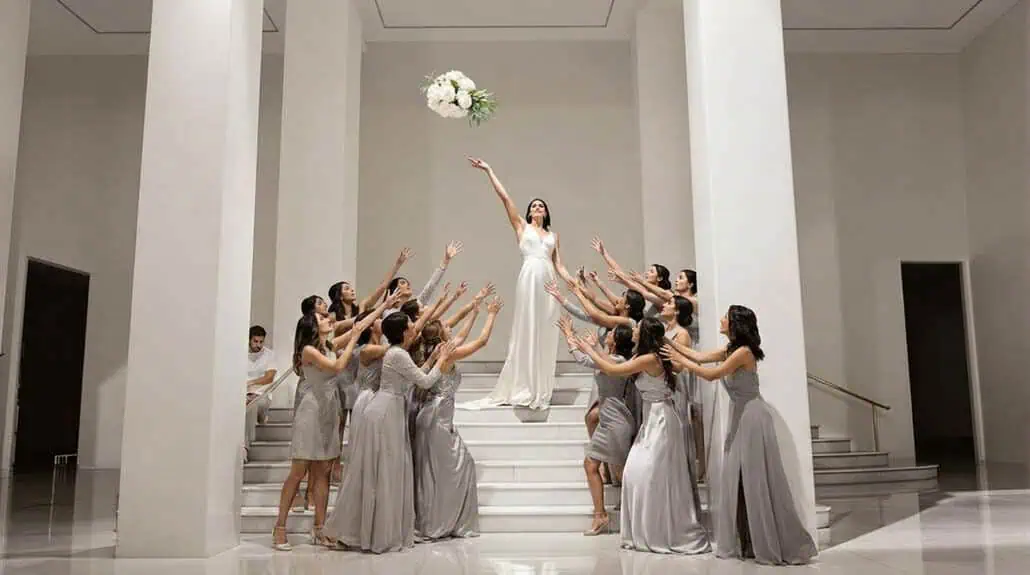
The garter toss isn’t alone in its uncomfortable spotlight on women’s bodies—its close cousin, the bouquet toss, presents equally thorny issues. What began in medieval Europe as a protective ritual—brides literally throwing objects to distract guests from ripping their clothes for “good luck”—has morphed into a spectacle that publicly categorizes women by relationship status.
You’ve seen it: the reluctant huddle of unmarried women, some enthusiastic, others dragged to the floor while coupled friends point and laugh. The tradition reinforces the outdated notion that marriage represents the pinnacle of female achievement—a troubling message in our era of diverse relationship models.
Many couples now skip wedding traditions like this entirely, opting instead for meaningful alternatives: gifting the bouquet to someone special, creating multiple toss bouquets, or preserving the original as a keepsake. For those seeking elegant bridal gowns and sophisticated celebrations, the focus has shifted toward creating inclusive experiences that honor all guests equally. After all, your celebration shouldn’t make a quarter of your guests feel singled out for their perfectly valid life choices.
Money Dances: Transaction as Performance
As wedding receptions reach their peak, another uncomfortable tradition emerges from the choreographed festivities: the money dance. Whether it’s bills pinned to the bride’s dress in Filipino customs, naira notes “sprayed” at Nigerian couples, or guests lining up to dance with newlyweds for a price, this 10-20 minute spectacle transforms intimacy into commerce.
You’ve seen it—the awkward queue forming, safety pins readied, wallets reluctantly opened. What began as genuine community support (offsetting honeymoon costs, building financial foundations) has morphed into an obligatory performance where guests become ATMs and couples become entertainers. The transaction itself becomes the entertainment.
And yet, cultural significance runs deep here. For some families, money dances represent generations of tradition—Polish lineages passing aprons, Cajun communities pinning bills to veils. These customs reflect broader patterns in how wedding traditions evolve across different societies and time periods. But wedding traditions should end when they prioritize financial display over authentic celebration. Your marriage deserves better than monetized moments.
Cake Smashing: Food Waste as Comedy
From monetized moments to messy mishaps, wedding rituals often raise eyebrows—and cake smashing might take the, well, cake. This tradition’s roots stretch back to ancient Rome, where fertility symbolism justified crumbling barley cake over a bride’s head. Today’s frosting-in-face version lacks that meaning, delivering instead a perfect storm of potential problems.
Consider the real costs beyond the laughs:
- Significant food waste as couples grab excessive cake for dramatic effect
- Relationship tension when one partner unexpectedly goes overboard
- Genuine discomfort that transforms a joyful moment into a cleaning emergency
You’re witnessing the tradition’s decline among younger couples, and rightfully so. The practice represents conspicuous food waste as performance—a peculiar choice in an era of sustainability consciousness. When couples invest $15,000 in crafting immersive floral environments that shape their celebration’s atmosphere, deliberately creating mess and waste with cake smashing feels increasingly out of step with the intentional design of modern weddings. And yet, some couples find middle ground with a gentle frosting dollop, preserving playfulness without the wasteful spectacle. Your wedding deserves traditions that reflect your values, not just inherited pageantry.
Permission to Skip Traditions That Don’t Serve
While generations of couples have dutifully marched through prescribed wedding rituals, you’re entering an era where permission to customize your celebration isn’t just granted—it’s expected. The data confirms this liberation: traditional reception formats have plummeted 44% since 2022, with 30% of Millennials embracing festival-style celebrations instead.
You can stop wedding traditions that drain your budget or authenticity. Those generic favors gathering dust? Replace them with local honey or charitable donations. Rigid dress codes and formal seating charts? Unnecessary constraints on genuine connection. Even ceremony length is being reconsidered as couples prioritize quality over performative duration.
The numbers tell a complex story—Gen Z hosts larger weddings (131 guests average) but embraces specific traditions selectively (77% keep cake-cutting, just 43% do grand exits). Your celebration can honor what resonates while discarding empty rituals. This intentional approach extends to venue selection, where couples increasingly choose spaces that serve as modern blank canvases rather than traditionally ornate settings that dictate aesthetic choices. In 2026’s wedding landscape, intentionality trumps obligation.
Conclusion
The wedding industry’s stubborn attachment to outdated traditions reveals our collective hesitation to challenge social performance—even when it costs us authentically meaningful celebrations. Your ceremony deserves better than the performance anxiety of garter tosses, bouquet competitions, and money dances—traditions that need ending immediately. The data confirms what you’ve sensed: formality is fading, with only 44% of couples now hosting traditional receptions.
You’re empowered to create celebrations that reflect your actual values, not pageantry from another era. Consider which elements truly deserve your precious budget and emotional energy:
- Rigid protocols that create stress rather than joy
- Transactions masquerading as meaningful moments
- Traditions that single out guests based on marital status
The economics alone justify tradition-shedding—four in ten couples are modifying plans due to financial pressures. And yet, the most compelling reason remains this: your wedding should celebrate your authentic connection, not satisfy outdated social expectations. Whether you’re working with a 12-month timeline or extended planning window, use that time to curate experiences that genuinely represent your relationship rather than defaulting to inherited rituals.