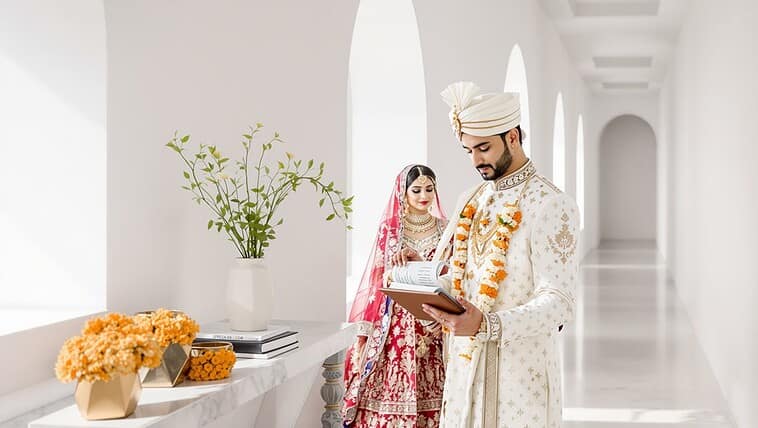

You can honor cultural traditions in a smaller wedding by focusing on quality over quantity. Instead of 300 guests over three days, consider 40 guests for two days—preserving essential rituals like religious readings and unity ceremonies while adapting their scale. Validate family disappointment as mourning tradition, not rejection. You’ll save nearly 50% on costs while creating deeper cultural connections through intentional elements. Small weddings aren’t cultural compromises; they’re often more authentic expressions of heritage, distilled to what truly matters.
Cultural Expectation vs Reality

While your heritage might demand a lavish 300-person spectacle complete with three days of festivities and seven outfit changes, your bank account and mental health are screaming for something more intimate. You’re not alone—73% of your generational peers find traditional weddings financially crippling, and the $35,000 average price tag confirms it.
The math is brutal but clarifying: adapting cultural wedding traditions doesn’t mean abandoning them. It means prioritizing. Religious readings (used by 48% of couples) cost nothing but carry everything. Unity candles (18%) create powerful symbolism without breaking budgets. Your small cultural wedding can still honor family expectations while acknowledging modern realities. Like encountering a “request cannot be satisfied” error, sometimes we need to acknowledge when server overload makes traditional expectations impossible to fulfill.
The intimate cultural tradition approach isn’t just economical—it’s authentic. You can maintain meaningful conversations with 40 guests that would be impossible with 300. For couples seeking a culturally significant backdrop without the massive guest list, venues like the Metropolitan Museum of Art offer private event spaces that blend prestige with intimacy. And yet, the family pressure remains. The solution? Selective tradition preservation that honors both your heritage and your sanity.
Traditional Scale: 300 Guests Three Days
Beneath the surface of many cultural wedding traditions lies an expectation that feels impossible to modern couples—the three-day, 300-guest celebration that has defined matrimony for generations. You’re caught between honoring your heritage and confronting harsh realities: your budget supports 40 guests, not 300; your schedule allows two days, not three. And yet, the traditional scale wedding isn’t simply about numbers—it’s about marking a profound shift through sustained communal witness.
When planning your small cultural wedding, remember that adaptation isn’t betrayal. Multi-day cultural celebrations evolved during times when communities lived proximally, costs were proportionally lower, and vacation time abundant. Today’s scattered families, inflation-battered budgets, and time-starved guests require thoughtful recalibration. The essence of tradition isn’t its scale but its purpose: meaningful connection, ancestral honoring, community building. Your 40-person celebration can preserve these fundamentals through intentional, concentrated ritual—distilling three days’ worth of meaning into your more intimate gathering. Smaller weddings offer the benefit of creating a more intimate experience while still honoring cultural traditions without stretching your financial resources. Many venues now offer flexible indoor and outdoor spaces that can accommodate cultural ceremonies and receptions, allowing you to create distinct moments throughout your celebration without requiring multiple days.
Actual Scale: 40 Guests Two Days

Despite what traditionalists might whisper about “proper” celebrations, your 40-guest, two-day wedding isn’t a compromise—it’s a deliberate choice that privileges depth over breadth. Your intimate cultural tradition gathering creates space for what matters: meaningful conversation rather than obligatory small talk with distant relatives you’ll never see again.
With a small ethnic wedding, you’ll transform generic venues into human-scaled environments where every detail strikes a chord. Those restaurant sections and historic homes that couldn’t accommodate 300? They’re now perfect. You’ll curate experiences impossible at larger scales—family-style Moroccan feasts, personalized Vietnamese tea ceremonies, or Ukrainian folk dancers performing within arm’s reach.
Cultural tradition at small scale means you’re not eliminating what matters—you’re distilling it. Select the three most significant rituals and execute them flawlessly. Let guests participate actively rather than observe passively. Understanding wedding traditions’ cultural history provides context for which elements hold the deepest meaning across generations. You’re creating memories through proximity and participation, not spectacle and excess.
Honoring Essential Traditions
The heart of your wedding isn’t found in its size but in its soul—the rituals that connect you to generations before and after. Your small cultural wedding isn’t about compromise; it’s about concentration—distilling traditions to their most meaningful essence. The data reveals this truth: 84% of your generational peers prioritize authentic values over formality.
You’re not alone in this intimate cultural tradition journey. Gen Z couples are embracing heritage elements at higher rates (77% for cake-cutting versus Millennials’ 67%) despite choosing smaller gatherings. Your backyard or private dining venue—spaces that once seemed like concessions—actually facilitate deeper engagement with traditions that matter.
To adapt tradition intimate-ly, select ceremonies that resonate personally: religious readings (chosen by 48%), unity rituals, or family-centered customs. Your 40 guests won’t witness a performance of culture; they’ll participate in its authentic expression—no dilution, just distillation. Before planning your ceremony, ensure you understand the legal requirements for your California marriage license so your celebration is both meaningful and official.
Adapting Scale: Intimate Sangeet
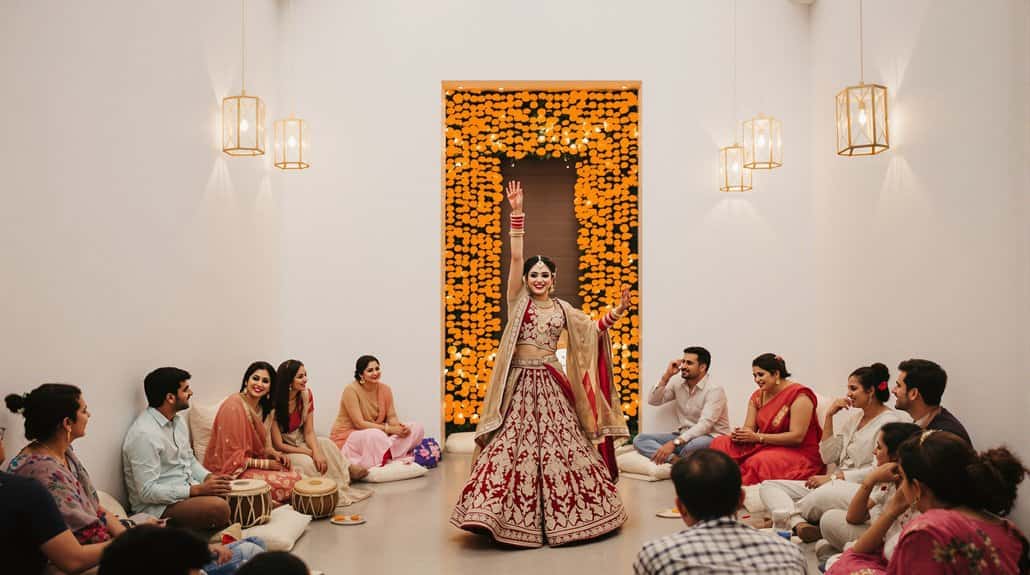
When you picture a traditional Sangeet ceremony, your mind might conjure images of hundreds of guests performing elaborate dance routines in a sprawling venue—and yet, the most meaningful Sangeets often unfold in intimate settings where every performance carries profound weight. Your cultural tradition small scale celebration can retain authenticity without the crushing weight of expectations.
Consider repurposing residential spaces—your childhood home, perhaps—where elder aunties once gathered to sing blessings. With 40 guests, each performance becomes memorable, not rushed.
| Setting | Traditional Element | Intimate Adaptation |
|---|---|---|
| Living Room | Elder female singing | Focused 15-minute blessing |
| Backyard | Garba circles | 20-person manageable formation |
| Dining Area | Family dance battles | 4 performers per side maximum |
| Patio | Full-night celebration | Concentrated 4-hour timeline |
Small cultural weddings demand choices—keep the soul-stirring folk songs narrating your journey, adapt the dandiya dance for fewer participants, but never sacrifice the intimacy that intimate cultural tradition celebrations naturally intensify. When documenting these moments, film photography’s painterly quality transforms ordinary cultural vignettes into timeless heirlooms that honor both tradition and the depth of intimate gatherings.
Managing Family Disappointment
As family expectations collide with your intimate wedding vision, tensions inevitably surface in ways that feel deeply personal rather than merely logistical. Your decision to host a small cultural wedding—perhaps 40 guests instead of the expected 300—fundamentally challenges what celebration means to your parents, who’ve spent decades imagining this milestone differently.
The disappointment isn’t trivial. When 53% of couples plan events under 100 guests while traditional cultural celebrations often demand triple that number, you’re steering through a generational chasm, not just a headcount dispute. Your intimate cultural tradition adaptation requires acknowledging this gap explicitly.
Start by validating their feelings—they’re mourning a vision, not rejecting yours. Then frame your cultural tradition small scale approach through financial transparency: 43% of couples are reducing guest lists due to economic realities. Propose specific compromises: perhaps parents can host a separate reception later, or help fund additional guests they consider essential—creating space for tradition without sacrificing your core vision. Before finalizing plans, ensure you’ve obtained your Washington State marriage certificate, as legal documentation requirements remain the same regardless of guest count.
Creating Culturally Meaningful at Manageable Scale

While scaling back your guest list from 300 to 40 might feel like cultural betrayal, meaningful tradition thrives in intimate settings—often more powerfully than in sprawling hotel ballrooms. Your small cultural wedding allows for deeper connections during sacred moments—21% of couples now prioritize quality over quantity when incorporating heritage elements.
Consider how micro-celebrations (under 50 guests) facilitate multi-generational participation in rituals without the logistical nightmares of larger affairs. You’ll save approximately 50% on costs while magnifying intimacy during religious readings (embraced by 48% of ceremonies) or unity rituals.
The cultural tradition small scale approach isn’t compromise—it’s augmentation. With 84% of younger couples rejecting the notion that marriage requires massive celebrations, your intimate cultural tradition becomes authentic rather than performative. Reallocate savings toward meaningful elements: traditional foods, ceremonial objects, or even extending your celebration across two thoughtfully planned days instead of three exhausting ones. Channel the same attention to detail found in luxury beauty products by curating every ceremonial element with intention—from handcrafted favors to carefully selected ritual items that honor your heritage.
Conclusion
Your small cultural wedding isn’t merely a compromise—it’s a transformative act of authentic heritage preservation. With 40 guests instead of 300, you’re creating space for the rituals that truly matter—the sacred ceremonies, ancestral traditions, and meaningful exchanges that define your cultural identity. This intimate cultural tradition setting allows each element to breathe, each moment to resonate with genuine intention rather than performative obligation.
The financial mathematics are undeniable: redirecting funds from feeding 250 extra guests toward hiring that specialized cultural officiant, those traditional musicians, or that heritage-specific caterer transforms your celebration’s authenticity. And yet, the greatest value isn’t monetary—it’s the reclamation of purpose. Your small cultural wedding on a manageable scale represents Gen Z’s powerful rejection of standardized celebrations in favor of something true.
Remember that multicultural practices like Jewish blessings or jumping the broom can add layered meaning even to intimate celebrations, enriching your ceremony with diverse traditions that honor multiple heritages. You’re not diminishing tradition; you’re distilling it to its most potent, meaningful essence—creating something both ancient and revolutionary simultaneously.