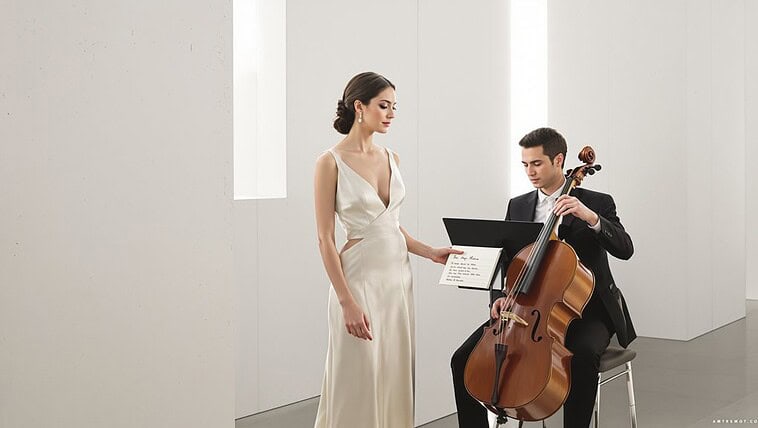

To truly work with musicians, you’ll need to shift from purchaser to partner. Treat them as creative partners—discussing emotional goals rather than demanding specific songs, coordinating precise timing for nine critical ceremony cues, consulting on acoustic needs, and maintaining responsive communication (texts under 30 minutes, emails within 2 hours). This relationship transformation yields inspired performances that raise your ceremony from pleasant to profound. The difference between transactional booking and artistic partnership lies in those seemingly small cooperative moments.
Beyond Booking Transaction
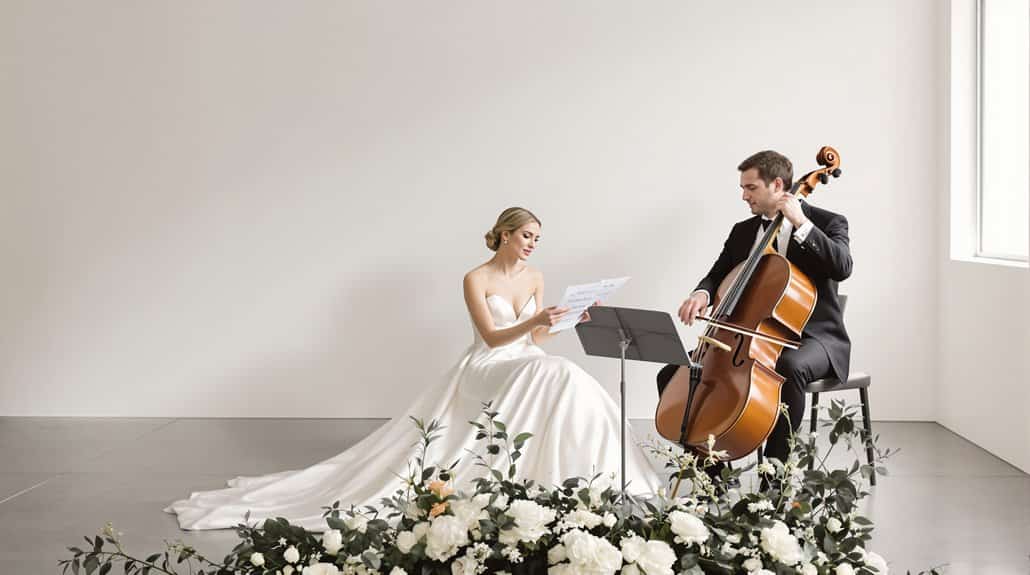
While booking a musician might seem like a straightforward transaction—money exchanged for performance—the reality runs far deeper into territory resembling true cooperation. You’re not merely hiring vendors; you’re partnering with artists who can transform your ceremony through authentic musician collaboration.
When you work with wedding musicians, you’re building relationships that demand mutual trust and understanding. These professionals aren’t just playing notes; they’re interpreting your vision through their craft. Ceremony musician planning involves tactical coordination across multiple contact points—at least five detailed conversations about timing, emotional arcs, and audience engagement. Effective musicians, like successful managers, must often serve as mentors and therapists throughout the planning process, helping to navigate the emotional complexity of your event.
The most successful partnerships transcend the transactional. You’ll need to share personal stories, articulate aesthetic preferences, and collaborate on a musical narrative that supports your event’s emotional journey. The difference is stark: transactional relationships yield competent performances, and yet cooperative ones produce memorable, personalized experiences that resonate with guests long after the final note. This cooperative partnership approach encourages musicians to go beyond contractual obligations, delivering performances shaped by genuine connection rather than mere professional duty.
Repertoire Discussion: Not Just Requesting Songs
Beyond simply submitting a playlist, repertoire discussions represent the first essential opportunity to transform your musical partnership into something exceptional. When approaching wedding music planning, don’t arrive with rigid demands—come with themes, emotions, and moments you’re hoping to create. Musicians aren’t human jukeboxes; they’re interpretive artists with unique strengths.
Effective musician communication means asking questions rather than dictating terms: “What pieces best capture this feeling?” or “How might you transition between these two moments?” Their expertise often reveals perfect selections you’d never have discovered independently. Remember that professional musicians typically maintain extensive repertoires they can perform on short notice, giving them remarkable flexibility for your event.
A repertoire discussion should be collaborative, not transactional. Share your vision, certainly, but then listen—truly listen—to their artistic perspective. Just as venue architecture shapes the entire wedding experience, musical choices create the emotional atmosphere that defines each moment of your celebration. The most memorable ceremonies emerge when clients articulate their hopes while respecting musicians’ professional judgment. This delicate dance between your desires and their expertise creates something neither could achieve alone: a soundscape tailored precisely to your celebration, yet elevated by professional artistry.
Timing Coordination: Prelude Processional Pacing

Timing coordination represents perhaps the most overlooked yet essential element of your entire ceremony. You’ve selected perfect music, but without precise execution, your wedding becomes a disjointed collection of beautiful moments rather than a seamless experience. Effective musician relationship wedding development requires detailed timeline documentation—start prelude music 30-45 minutes pre-ceremony, position wedding party 10 minutes before processional, and build in buffer time for inevitable delays.
Coordinate with musicians through a written timeline that maps exact moments: when the officiant appears, when you’ll walk, when signatures happen. Share this 6-7 hour structure early in your planning process, and insist on a venue rehearsal to test acoustics. Wedding musician communication isn’t merely about song selection but creating a synchronized dance between visual and auditory elements. Your guests perceive this harmony subconsciously—they’ll feel the difference between musicians who simply play and those who’ve been properly incorporated into your ceremonial architecture. Just as photographers maintain backup batteries and redundant equipment for ceremony continuity, musicians should arrive with contingency plans for technical failures or unexpected venue challenges.
Acoustic Consultation: Amplification Needs
Despite what many couples assume about acoustic performances, proper amplification represents the invisible foundation upon which your ceremony’s sonic architecture rests—not a technical afterthought. When you truly work with wedding musicians instead of merely booking them, you’ll understand that even the most “unplugged” performance likely requires sound reinforcement.
Your venue dictates everything. Concert halls? Still need PA systems—85-91dB represents ideal listening experience. Outdoor garden ceremony? You’ll need elevated speakers on poles to minimize feedback while maximizing coverage. That intimate coffeehouse vibe you’re envisioning? Requires microphone positioning that prevents the dreaded feedback screech.
Coordinate with musicians about their equipment preferences—magnetic sound hole pickups versus under-saddle piezos dramatically change tone quality. The best wedding musician communication happens weeks before your date, not day-of when discovering your “acoustic” guitarist actually needs two mixer channels and power access. Trust them—they’ve performed in dozens of spaces with acoustics you’ve never considered. Keep speaker-listener distances under 1 meter whenever possible to ensure conversation clarity during cocktail hour or dinner service when musicians transition to background ambiance.
Collaborative Communication

Sound equipment represents just one dimension of the musician-client relationship—the actual backbone is how you communicate. When you’re working with musicians—not merely booking them—you’ve shifted from transaction to collaboration, and the quality of your communication will determine the caliber of your ceremony.
Fast response times, clear expectations, and adaptive communication methods aren’t just niceties; they’re competitive advantages. Your response speed often determines whether you secure the talent or lose them to another client.
| Communication Mode | When to Use | Response Time Goal |
|---|---|---|
| Text Messages | Initial contact, quick updates | Under 30 minutes |
| Contract details, formal documentation | Within 2 hours | |
| Video Calls | Creative planning, relationship building | Schedule within 24 hours |
| Phone | Urgent matters, complex discussions | Immediate if possible |
Don’t force your preferred communication method onto musicians—adapt to theirs. They’re artists, not vendors, and your flexibility demonstrates respect for their creative process. Just as authentic estates prioritize genuine experience over superficial aesthetics, working with musicians requires valuing their artistic integrity over rigid, transactional expectations.
Ceremony Pacing and Musical Transitions
The heartbeat of your ceremony lives in its pacing—where each musical moment, shift, and pause creates the emotional architecture guests will remember long after the vows. You need music for every single moment, not just highlights, to prevent the dead air that feels eternally longer than its actual seconds.
Work with your musicians to plan precise timing for at least nine critical cues: processional, bride’s reset, entrance, unity ritual, rings, reader transitions, kiss, recessional (2-3 minutes), and postlude (3-5 minutes). The five-minute start signal—accomplished through subtle tempo reduction—communicates timing without jarring announcements.
Songs in matching keys create seamless progressions regardless of genre, while instrumental versions of meaningful songs work beautifully for moments requiring improvement without overwhelming. Your most powerful tool? Those brief musical phrases during shifts that maintain energy flow while preventing the awkward silence that can deflate even the most beautiful ceremony. Clear contracts that specify communication expectations and musical deliverables allow musicians to focus on technical excellence rather than managing ambiguous relationship dynamics.
Creating Better Musical Experience

What transforms a simple music booking into a rich cooperative experience that heightens your ceremony? It’s the shift from transaction to collaboration—where musicians become creative partners rather than hired help. You’ll need complementary skills, open communication, and mutual respect to forge this alliance. Professional musicians bring expertise you don’t have, and yet they need your vision to align their talents with your ceremony’s emotional arc.
- Establish clear roles and decision-making processes upfront—document everything, even in casual email exchanges
- Schedule regular check-ins (weekly for long projects, daily during crunch periods) to maintain momentum
- Create psychological safety where both parties can experiment freely without judgment
- Balance critique with flexibility—focus feedback on the work not the person, using language that invites exploration
This partnership requires ego management from both sides. You’re building something together that neither could create alone—a carefully orchestrated emotional journey, not just background noise. When seeking inspiration for how collaboration elevates artistry, look at how Badgley Mischka’s wedding collection demonstrates the power of creative partnership in crafting elegant, cohesive experiences.
Conclusion
As you’ve journeyed through the intricacies of musical collaboration, recognizing the profound difference between mere transactions and true partnerships becomes essential to your ceremony’s success. Musicians aren’t vendors—they’re artists bringing irreplaceable expertise to your event’s emotional terrain.
| Approach | Results | Long-term Impact |
|---|---|---|
| Transactional | Competent performance | Forgettable experience |
| Collaborative | Inspired interpretation | Memorable moments |
| Directive | Mechanical execution | Creative frustration |
| Respectful | Artistic ownership | Enhanced commitment |
| Partnership | Creative investment | Future availability |
Remember this: the difference between adequate and extraordinary music isn’t just talent—it’s how you cultivate it. Trust their expertise, respect their boundaries, value their time, and you’ll unlock performances that transcend what’s written on the page. This artist mindset versus employee mentality distinction determines whether musicians deliver mechanical documentation or create something emotionally resonant that elevates your entire celebration. The most successful ceremonies happen when musicians feel like valued collaborators rather than hired hands. Your approach determines whether you’re simply filling a slot or creating magic together.