
Menu cards offer intimacy and brand reinforcement at $300-$800, perfect for smaller venues under 75 guests. Display boards, costing $200-$400, deliver adaptable content and operational efficiency—boosting conversions 15-30% for high-volume establishments. Your choice hinges on priorities: tradition versus innovation, personal connection versus expandable efficiency. Cards require reprinting; digital displays eliminate ongoing costs. Consider your operational model, demographics, and long-term brand strategy. The details reveal which presentation format truly serves your bottom line.
Two Menu Presentation Approaches

When it comes to displaying your culinary offerings, you’re fundamentally facing a fork in the road: traditional printed menu cards or digital display boards. The choice isn’t merely aesthetic—it’s operational, financial, and experiential.
Individual menu cards offer a tactile experience, something guests physically interact with, turning pages and scanning descriptions. They’re intimate, traditionally elegant. And yet, they’re static, frozen in time until your next printing run—a limitation that becomes painfully apparent when prices shift or ingredients change.
Physical menus create a sensory dialogue with diners—elegant yet imprisoned by their permanence when market fluctuations demand flexibility.
Display technology, meanwhile, transforms menu presentation options into energetic storytelling opportunities. High-definition screens (minimum 500 nits brightness) showcase your dishes in mouthwatering detail, rotating effortlessly between dayparts without staff intervention. They’re modern, impressive, attention-grabbing. But they’re also impersonal—lacking that physical connection, that weight in the customer’s hands that somehow communicates value and permanence. Consider too that electrical systems in older establishments may struggle to support multiple high-powered displays, requiring infrastructure assessments before installation.
The distinction matters. Your choice telegraphs your brand’s relationship with tradition versus innovation. Digital menu boards consistently demonstrate higher conversion rates compared to traditional printed menus, especially when leveraging dynamic content capabilities.
Individual Menu Cards: Cost and Experience
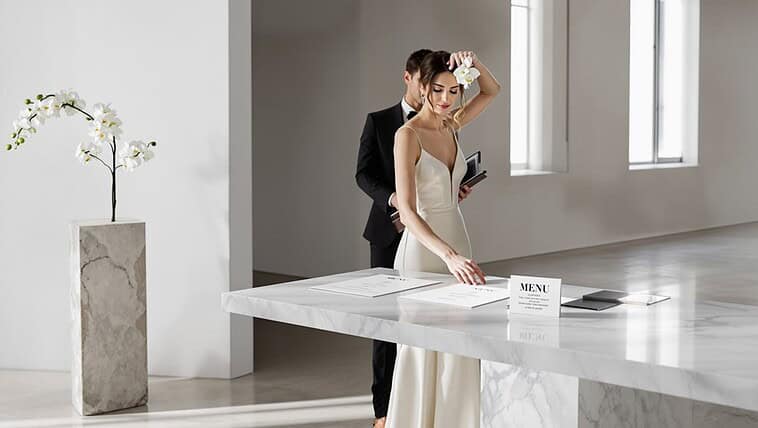
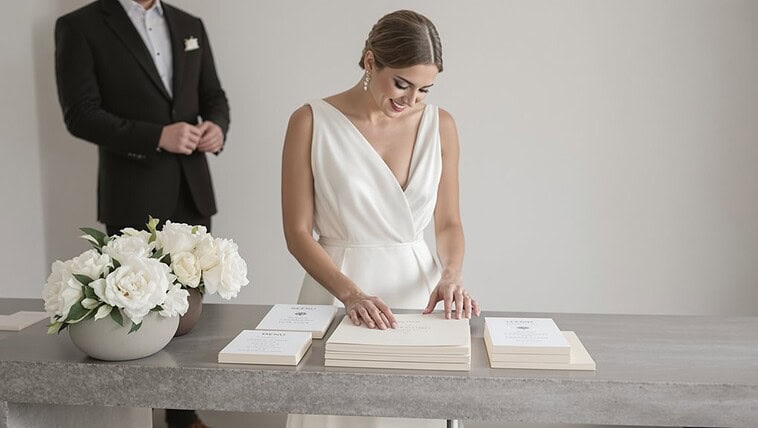
Although often considered traditional, individual menu cards command a significant investment spanning $300-$800 for a complete service setup—a price point reflecting their enduring importance in restaurant presentation. You’re paying for more than paper, and yet the value extends beyond mere functionality. The personal menus versus boards debate hinges on tactile experience—that moment when guests receive something crafted specifically for their hands. Menu cards can be strategically designed to highlight high profit items through placement and formatting choices.
Are menu cards worth it? Consider these advantages:
- Creates intimate connection between diner and establishment
- Offers physical keepsake potential, extending brand experience beyond meal
- Provides flexible format for seasonal or daily specials without redoing entire display
- Allows for discreet pricing adjustments targeted to specific items
The menu presentation options you choose telegraph your restaurant’s values. Cards whisper exclusivity and attention to detail, but they demand replacement when worn—a recurring cost that builds brand consistency through physical interaction rather than distant observation. Much like certified wedding professionals who understand that personalized details create memorable experiences, restaurateurs recognize that individual menu cards communicate a commitment to personalized service that resonates long after the dining experience concludes.
Display Boards: Design Impact and Efficiency

Despite their lower investment threshold of $200-$400 for complete installation, display boards deliver outsized impact through visual dominance that transforms your menu from mere information into environmental design. With 93% of consumers citing visual content as decisive in purchasing choices, your board becomes a silent salesperson—driving decisions and boosting profits.
You’ll slash operational efficiency costs immediately. No more printing expenses, no more staff hours wasted on menu updates. Everything happens digitally, instantly. Real-time updates mean your special items appear the moment they’re available and disappear when sold out—powerful psychological triggers that create urgency.
The data confirms what intuition suggests: establishments using digital displays report sales increases up to 33%, with premium items seeing 52% jumps in selection rate. And yet, these boards do more than sell—they educate, entertain, and amplify your brand identity through consistent visual language that menu cards simply cannot match. Just as wedding planners understand that detailed planning creates smooth, cohesive flow through hour-by-hour breakdowns, your display board orchestrates the guest experience through strategic information architecture that guides decisions without friction.
When Personal Menus Add Value
Individual menu cards shine in environments where personalization creates tangible value—not merely as decorative elements but as tactical assets in your customer experience arsenal. Your menu presentation options should align with your business model—and sometimes, a menu card investment of $300-800 pays dividends beyond what you’d imagine. Data reveals personalized menu experiences drive higher average orders and strengthen emotional connections with guests.
Consider individual menu cards when:
- Your loyalty program identifies distinct customer preferences that warrant tailored recommendations
- You’re cultivating a high-end experience where physical menus become keepsakes
- Tight margins demand sophisticated cross-selling opportunities through personalized suggestions
- Your customer data reveals multiple ordering patterns from the same guests (weekday health-conscious vs. weekend indulgent)
The tactile experience of a well-designed menu card creates belonging—and yet, the investment only makes sense when your analytics infrastructure can capitalize on the personalization opportunity it presents. Much like how glamorous wedding dresses transform into cherished keepsakes, elegantly designed menu cards can serve as memorable tokens of a dining experience that guests want to preserve.
When Displays Suffice
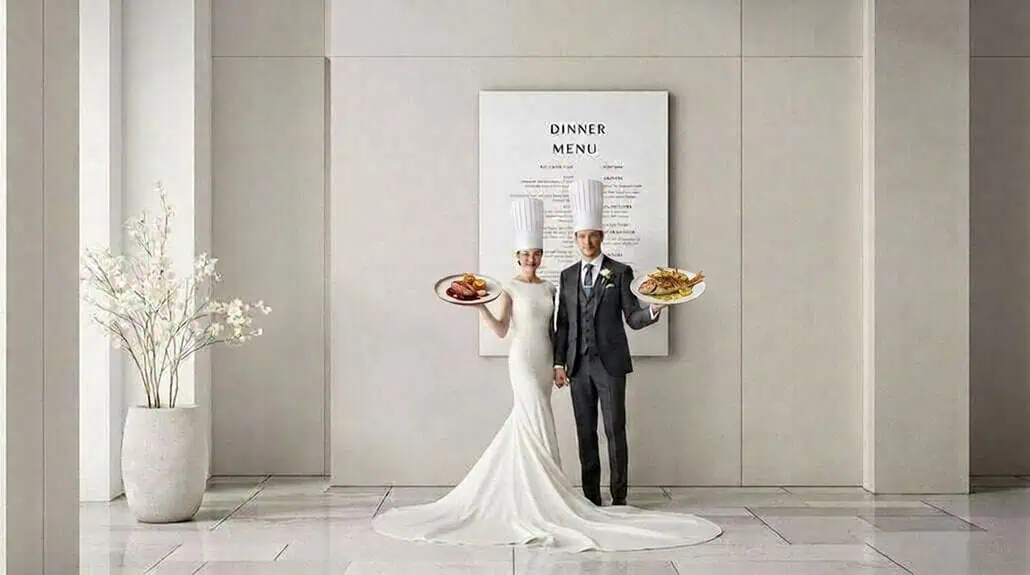
While individual menus create personalized intimacy, display boards deliver measurably superior ROI for most operations—driving impressive behavioral changes backed by hard data. You’ll find digital signage particularly effective when your menu presentation options need to influence point-of-purchase decisions, where 70% of buying choices happen at the register itself.
Consider this: 8 out of 10 customers make unplanned purchases after viewing displays, and animated content can drive staggering results—like that Old Fashioned cocktail with 800% sales increase. And yet, the impact extends beyond immediate sales. Digital boards reduce perceived wait times by over 15%, transforming potential frustration into engagement opportunity. They’re remarkably powerful for drive-thrus, where 65% of restaurants report increased sales and 75% note stronger customer satisfaction. The numbers don’t lie—digital menu implementations boost margins 2.5-3% per transaction while enhancing customer engagement through personalized touches that 90% of restaurants credit with lifting sales. Just as organizations provide customizable ceremony planning tools that allow couples to select specific rituals for personalized experiences, display boards enable businesses to tailor content that resonates with diverse customer preferences and creates meaningful connections at the point of decision.
Cost-Benefit by Guest Count
Understanding the true differentiating benefit between menu cards and display boards demands a hard look at your specific guest count. When evaluating menu presentation options against your guest volume, the math becomes startlingly clear—and yet, the calculus isn’t purely financial.
For smaller venues, individual menu cards ($300-$800 total) create personal connections with guests, becoming tactile extensions of your brand experience. Display boards ($200-$400 total) make mathematical sense as volume increases, dramatically reducing per-guest costs while creating design impact.
Consider these cost analysis factors:
- Individual cards become prohibitively expensive beyond 50-75 guests
- Display boards achieve cost-efficiency around 100+ guests per service
- Menu cards offer keepsake potential—an intangible but measurable benefit
- Digital displays eliminate ongoing printing costs, breaking even faster with higher turnover
Your decision ultimately hinges on whether the intimate, physical connection of cards justifies their premium as your volume scales. Like choosing between ceremony-in-the-round and traditional aisle layouts, your menu presentation reflects underlying priorities—whether emphasizing individual guest experience or collective visual impact.
Design Integration Considerations

Beyond merely displaying food options, your menu design functions as the visual heartbeat of your brand identity—and yet, many establishments treat it as an afterthought rather than a tactical asset. Your menu presentation options must maintain consistent brand personality across every touchpoint—colors, fonts, imagery—whether it’s individual cards or centralized display boards.
When evaluating different formats, examine how each supports visual hierarchy. Display boards offer commanding presence for strategic item placement within the golden triangle, while individual cards provide intimate opportunities to guide the eye through high-margin offerings. The cohesion between your physical space and menu presentation creates a seamless experience that reinforces brand recognition.
Consider how each format accommodates your layout organization needs. Display boards demand ruthless editing and categorical precision, whereas individual cards permit more breathing room—and yet, both require thoughtful structure that guides customers logically from appetizers through desserts, strategically positioning your stars where they’ll shine brightest. Like the conscious evaluation of aesthetic priorities in ceremonial decisions, deliberate menu format choices foster ownership and create more authentic connections with your customers rather than defaulting to industry conventions.
Conclusion
As your menu presentation choice crystallizes into a final decision, the factors outlined throughout this analysis converge toward one indisputable truth: context reigns supreme in determining whether menu cards or display boards will deliver ideal results for your establishment. Your specific operational model, customer demographics, and long-term financial analysis should drive this essential decision—not fleeting trends.
- Digital boards offer 15-30% higher conversion rates with substantially reduced long-term costs
- Individual menu cards create tactile keepsake experiences that digital simply cannot replicate
- Quick-service establishments see maximum ROI through digital implementation
- Boutique cafés often benefit more from the aesthetic charm of traditional presentations
Just as historic estates justify premium pricing through built-in elegance that minimizes decoration costs, your menu presentation should leverage inherent design strengths to reduce operational expenses while enhancing customer experience. You’re not just selecting a menu presentation option—you’re crafting the cornerstone of your customer experience. The right choice aligns with your brand identity while maximizing operational efficiency. Trust your understanding of your unique business context, and you’ll land on the presentation method that truly serves your establishment’s specific needs.