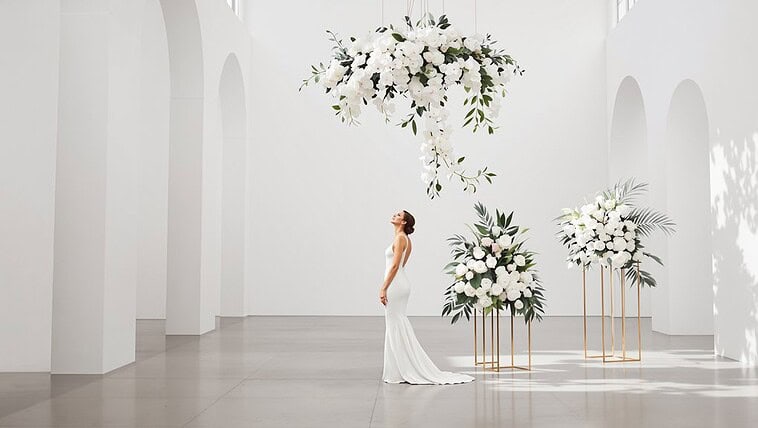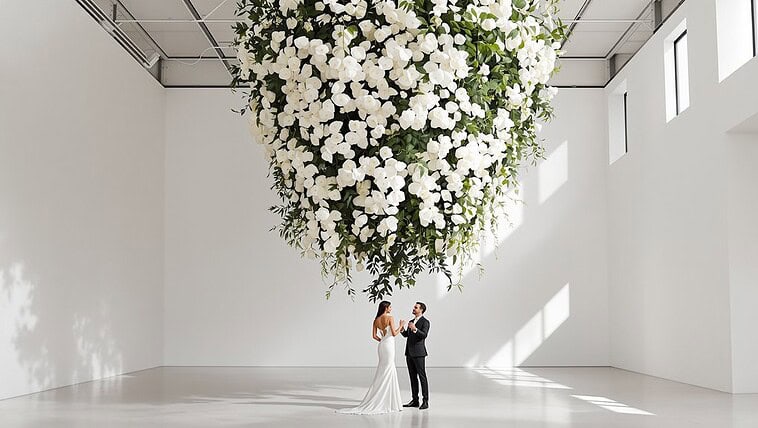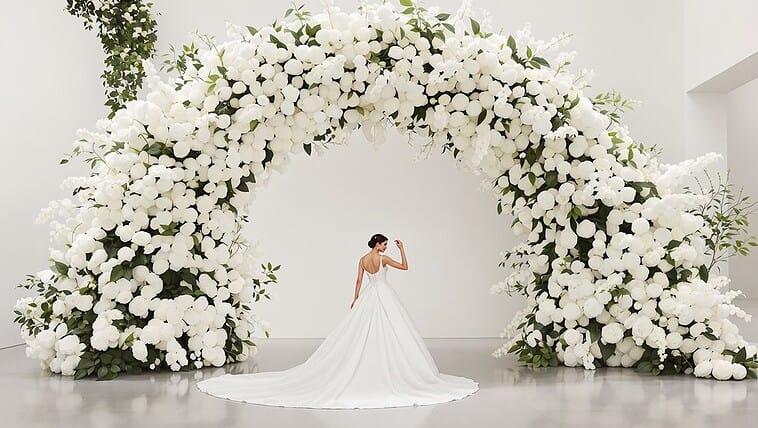
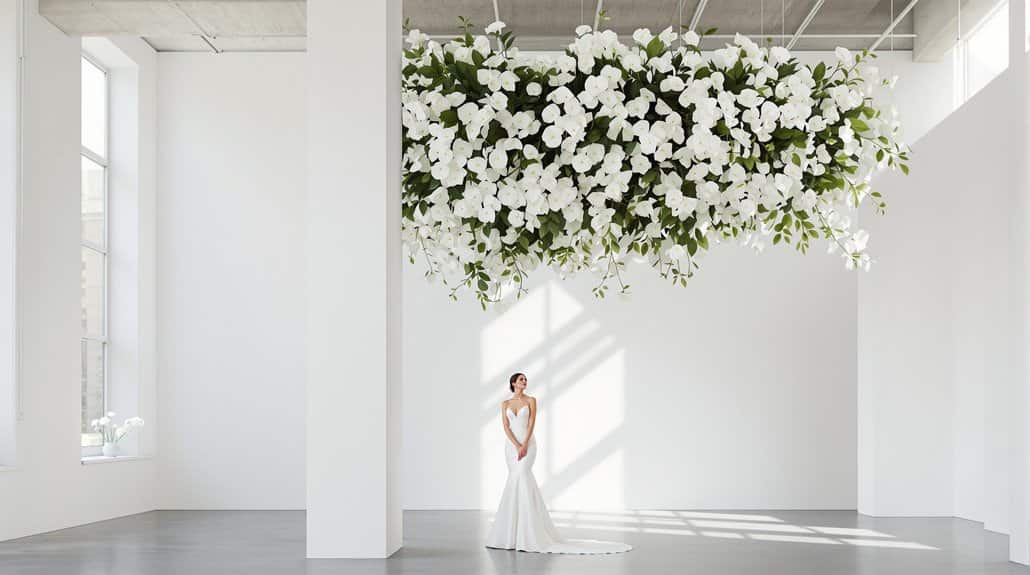
Successful floral installations read the architectural language first, then respond with botanical poetry. You’ll want to analyze whether the space demands improvement or restraint—soaring ceilings invite suspended elements, but must never compete with ornate moldings. Aim for seamless integration where it’s hard to distinguish where architecture ends and florals begin. Industrial venues benefit from soft florals against hard lines, while historic spaces require respectful enhancement. The magic happens when your installation feels inevitable rather than imposed upon the space.
Architecture-Responsive Floral Design
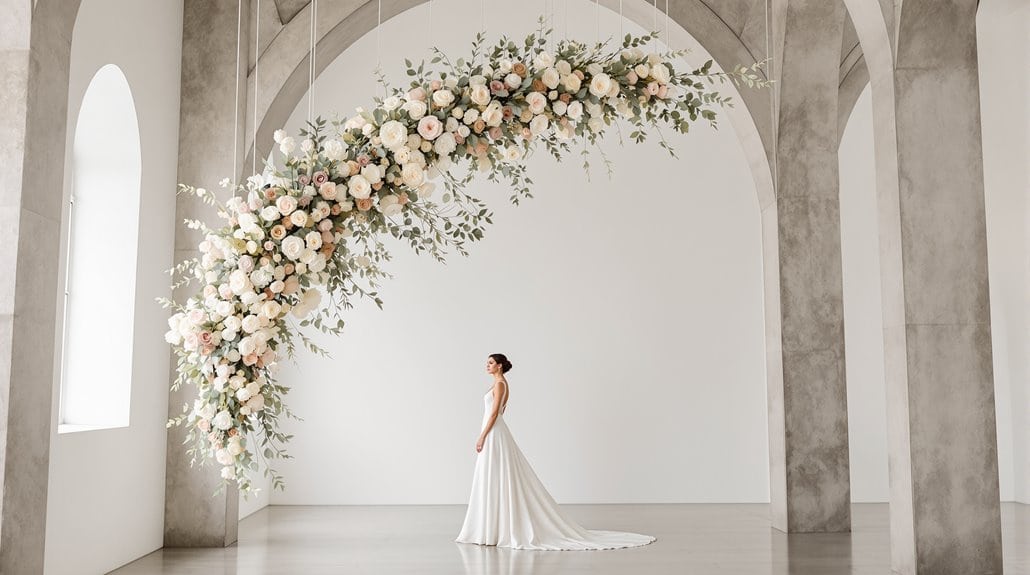
While most designers approach floral installations as mere decorative additions, truly noteworthy work begins with acknowledging the primacy of architectural context. You’re not just hanging flowers; you’re engaging in a spatial dialogue where every stem must honor the building’s fundamental character. Ceiling flower installations work brilliantly when they mirror the Fibonacci spirals found in nature—creating organic counterpoints to linear architecture without visual competition. This approach aligns with florism principles that harmonize aesthetic appeal with environmental performance in urban environments.
Your architectural floral design should employ biomimetic principles: branching systems that follow, not fight, existing sight lines; tensile structures that appear weightless against concrete masses; root-inspired foundations that ground the piece within the space. Consider materiality obsessively—ultra-lightweight composites reduce visual weight in constrained spaces, hydrophobic surfaces minimize maintenance demands, modular components adapt to architectural quirks without requiring structural modifications. In contemporary venues with expansive glass facades, natural light becomes an active design partner that shifts the appearance of your installation throughout the day.
The most successful floral installation design transforms mediocre spaces but knows when to yield. Sometimes the boldest statement is subtle integration, not spectacle.
Ceiling Installation Techniques
Mastering ceiling installation techniques requires a methodical approach to both engineering and aesthetics, since every suspended floral piece fundamentally succeeds or fails based on its invisible infrastructure. You’ll need to identify anchor points before sketching a single design concept—these determine your entire creative possibility range for large scale florals.
Your structural choice matters immensely: custom 1″×2″ lumber frames with chicken wire offer versatility for rectangular installations, while hoops create dramatic circular statements. Chain systems, unlike wire or rope, permit essential post-mounting adjustments when your ceiling installation inevitably shifts during assembly.
Pre-assemble artificial elements onto aluminum pipes (never wood—it warps) while at ground level, then lift the entire structure. You’ll appreciate this approach when you’re balancing on a scissor lift 20 feet up. Access methods should always be determined by considering both ceiling height and safety requirements before beginning installation. When installing in venues with architectural features, ensure your suspension points don’t compromise preservation policies or damage historic elements like marble accents or glass canopies. And yet, the most successful floral installation design paradoxically conceals these technical underpinnings completely, creating the magical illusion of blooms suspended in mid-air.
Entryway Impact Statements

The impact of your entryway floral statement begins the moment someone approaches your property—long before they’ve reached your suspended ceiling masterpieces inside. Your floral installation design should improve architectural features, never compete with them.
Your entryway floral design creates first impressions that enhance—rather than overwhelm—the architectural canvas of your home.
Consider neutral containers—terra-cotta or galvanized vessels—that let flowers become the focal point while complementing existing door frames. White blooms provide tonal balance with hardware, yet bold reds create dramatic contrast against dark doors. Wedding floral installation principles apply here: multi-level displays using wrought iron stands or crate systems draw eyes upward while maintaining critical sight lines.
Bookend your ceremony floral backdrop approach with symmetrical elements—lanterns flanking consistent pot heights, single-specimen configurations allowing architecture to breathe between containers. Your wreath remains primary, but supplemental planters should echo its palette.
The most successful entryways layer at three distinct heights, maintain 60/30/10 color distribution, and—this is vital—leave negative space that frames rather than crowds your architectural statement. For those seeking sophisticated elegance in their floral arrangements, luxury French beauty principles of restraint and refinement translate beautifully to entryway design.
Ceremony Backdrop Considerations
Ceremony backdrops serve as both visual anchor and symbolic threshold, framing not just photographs but the emotional resonance of your vows. When planning your wedding floral installation, proportion becomes non-negotiable—a 6-foot backdrop disappears in a cathedral but overwhelms an intimate garden setting.
Your architectural floral design must harmonize with venue scale while reflecting your aesthetic DNA. Consider the backdrop’s placement relative to guest sightlines; no one should crane necks around structural elements to witness your “I dos.” And yet, safety trumps aesthetics every time—outdoor installations require 40-pound weighted bases minimum, especially for structures exceeding 8 feet.
Timing dictates impact—afternoon ceremonies need lively, high-contrast elements while evening exchanges benefit from tactical uplighting that transforms simple greenery into dramatic shadowplay. The most successful floral installation designs acknowledge the space’s inherent character, enhancing without competing, transforming without obscuring—architecture and florals in perfect conversation. For vertical installations, maintain heights under 60 inches when positioned near architectural focal points to preserve clear sightlines and prevent visual competition with the venue’s existing design elements.
When to Install vs When to Restrain
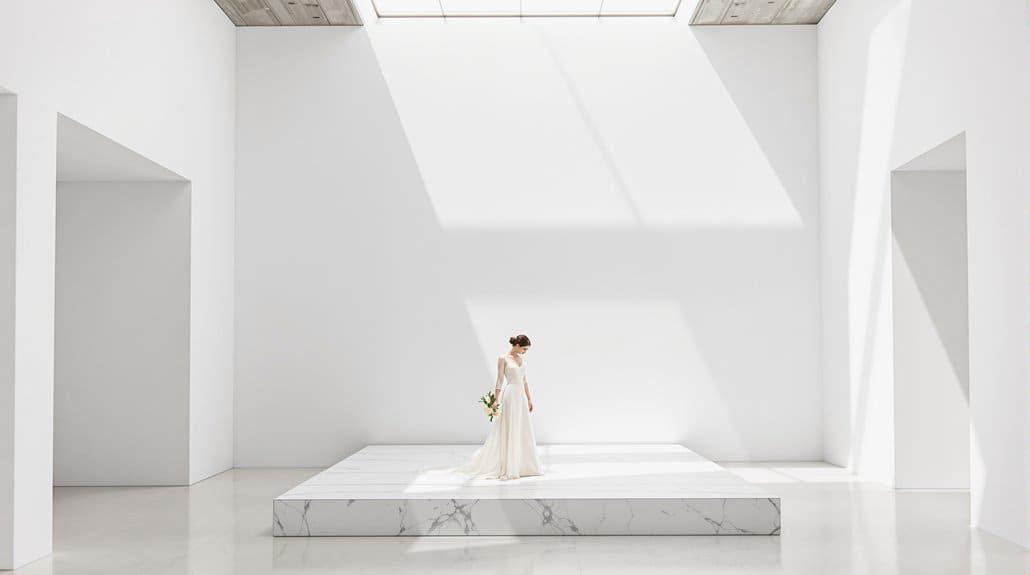
Deciding when to execute grand floral statements—and when to exercise restraint—separates merely competent designers from true installation masters. Your architectural floral design approach must respond to the venue’s inherent character, not fight against it. Timing becomes vital: prepare mechanics 1-2 days before the event when your mind is fresh, not during the frenzied installation day when split-second decisions determine success.
The dance between grand expression and thoughtful restraint elevates ordinary florists into architectural floral masters.
- Enhance mediocre spaces with statement floral design when venue features lack distinction—transforming ordinary pillars or blank walls into focal points
- Complement, don’t compete with remarkable architectural elements—sometimes a minimalist approach honors the space better
- Assess ceiling height and scale 10-25 weeks before the event to determine appropriate installation size
- Develop Plan A, B, and C during your planning phase, not while standing on a ladder with flowers wilting and clients arriving
- Verify structural restrictions early in planning, as historic venues often prohibit nails, tape, and drilling into original ceiling beams, requiring alternative mounting solutions like free-standing installations
Working With vs Against Venue Architecture
Mastering architectural harmony represents your paramount challenge as a floral designer—not merely decorating spaces, but elevating, transforming, or sometimes deliberately understating them. Your floral installation design must read the room’s inherent language first—then respond with complementary botanical poetry.
When planning wedding floral installations, analyze whether your venue demands improvement or restraint. Those soaring cathedral ceilings? They’re begging for suspended garden elements—and yet, competing with ornate moldings would be disastrous.
| Venue Type | Design Approach | Architectural Integration |
|---|---|---|
| Industrial | Raw + Polished | Contrast softness against hard lines |
| Ballroom | Structured Elegance | Echo ceiling heights with tall compositions |
| Garden | Organic Extension | Blur boundaries between natural/designed |
| Historic | Respectful enhancement | Complement period-appropriate elements |
| Modern | Clean Geometry | Mirror architectural lines in arrangements |
Architectural floral design succeeds when viewers can’t distinguish where building ends and botanicals begin—creating spaces that feel inevitable rather than imposed. For couples seeking venues that naturally accommodate these design principles, exploring unique venue rentals specifically curated for intimate weddings can provide the perfect architectural canvas for your floral vision.
Installation Logistics and Vendor Coordination
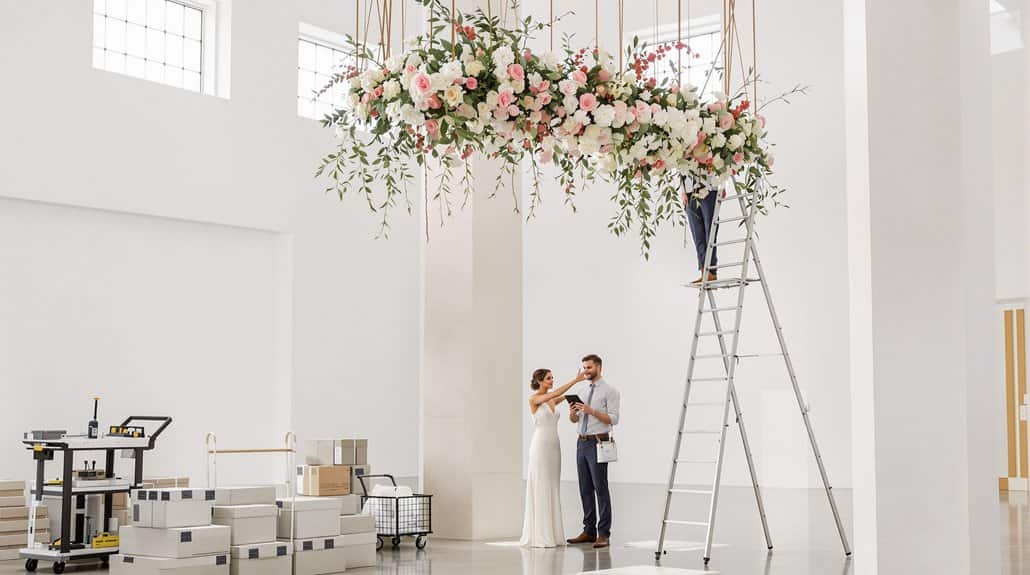
Behind every ethereal suspended garden or towering floral statement lies an intricate ballet of logistics—far less glamorous than the final product, and yet absolutely essential to its success. You’ll need to initiate planning months before execution, coordinating with venue managers who’ll determine your access windows—often ridiculously narrow, typically sandwiched between other vendors’ schedules.
- Source materials by early autumn for large-scale installations, ensuring adequate bloom inventory when competition is fierce
- Create detailed rigging maps identifying load-bearing points that won’t collapse under 75+ pounds of hydrated florals
- Pre-assemble components in your studio, reducing on-site installation time from 8 hours to 3
- Develop choreographed team roles with clear handoffs between mechanical specialists and design finishers
Your transportation strategy must account for fragility and temperature control—brilliant design means nothing when your peonies arrive brown-edged and wilting. For bridal events specifically, coordinate with wedding gown collections to ensure floral installations complement rather than overwhelm the bride’s attire, maintaining visual hierarchy throughout the ceremony space. And yet, with meticulous planning, these logistics transform from obstacles into the invisible scaffolding of your creative vision.
Conclusion
While the grandest floral installations can transform ordinary spaces into otherworldly environments, they remain fundamentally servants to architecture—never its master. You’ll find your most successful designs embrace this hierarchy, responding to spatial dynamics with humble confidence rather than competing for attention. Consider each installation a conversation, not a monologue.
The most effective designers build frameworks that enhance architectural strengths—using negative space deliberately, establishing rhythm through repetition, and selecting materials that echo structural elements already present. And yet, revolutionary installations require boldness; 60% structure, 40% surprise creates the perfect balance.
Remember: great spaces need enhancement, mediocre ones transformation, exceptional ones respect. Your installations should whisper rather than shout, create focal points without overwhelming, and guide the eye without demanding its exclusive attention. When you truly understand a venue’s architectural language, your floral response becomes not merely decoration, but translation—botanical architecture speaking in perfect harmony with its surroundings. Just as venues with distinctive architecture benefit from monochromatic color schemes that avoid competing with their inherent beauty, floral installations achieve their greatest impact when they honor rather than overshadow the spaces they inhabit.