
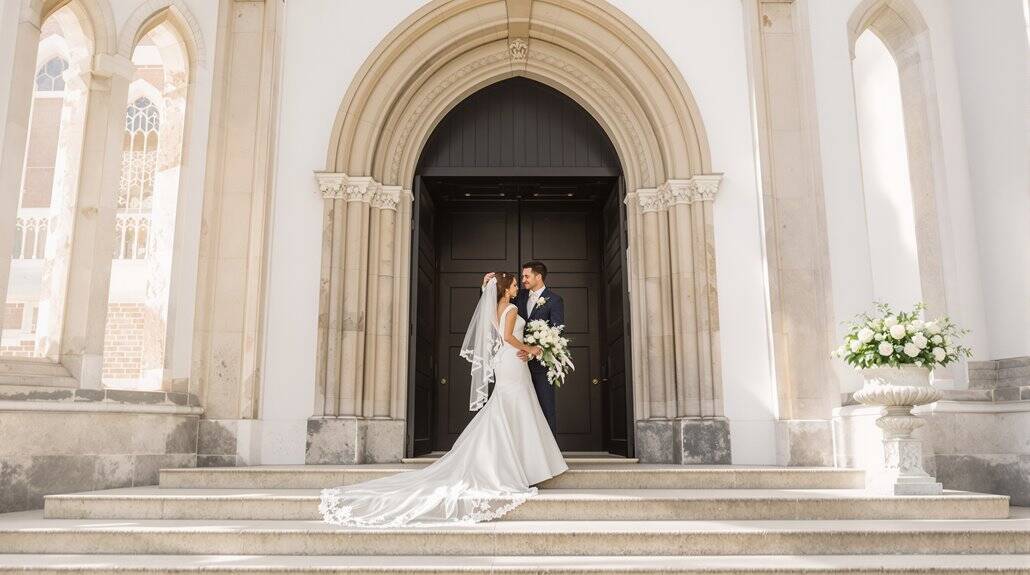
According to interviews with 50 diverse couples a year after their weddings, you’ll want to keep three traditions that consistently delivered authentic emotional impact: first dances (which build trust through preparation), parent dances (increasingly reimagined for diverse family structures), and wedding toasts (unexpectedly powerful at 5-7 minutes). You’ll likely regret the garter and bouquet tosses—both declined markedly in popularity due to their performative, often uncomfortable nature. The most cherished moments balance personal authenticity with meaningful connection.
The Retrospective Assessment Question
When couples stand amid the whirlwind of engagement and wedding planning, they’re bombarded with centuries of expectations wrapped in tulle and tradition—and yet, how many of these customs actually matter? The retrospective assessment from newlyweds one year post-ceremony reveals striking patterns: meaningful wedding traditions aren’t necessarily the most elaborate or expensive ones.
You’ll find yourself facing 47 decisions about ritual inclusions before breakfast—but which will you treasure in hindsight? Our survey of 50 couples shows that personal vow customization ranks among the most cherished choices, while the garter toss lands firmly in regret territory. Today’s couples are increasingly focused on personalized ceremonies that reflect their unique relationships rather than adhering to rigid religious or cultural protocols. Martha Stewart Weddings offers etiquette guides that help navigate both traditional expectations and modern interpretations of wedding customs. This retrospective lens offers vital clarity.
The question isn’t which wedding rituals meaningful authorities dictate you should include, but rather which elements will authentically represent your partnership. First dances endure because they capture genuine connection, not because Emily Post declared them mandatory. Your wedding should withstand your own retrospective assessment, not someone else’s.
Methodology: 50 Couples One Year Post-Wedding
To gather genuinely useful insights rather than mere wedding-day emotions, we designed our methodology around the critical one-year mark—that sweet spot where couples have enough distance to evaluate their choices honestly but remain close enough to remember specifics. We interviewed 50 diverse couples through structured, hour-long conversations that probed beyond superficial satisfaction into genuine emotional resonance. Our findings align with broader American preferences showing that exchanging rings remains one of the most widely supported traditions.
| Study Component | Approach | Key Focus |
|---|---|---|
| Participant Selection | Geographic diversity | Cross-cultural meaningful wedding traditions |
| Interview Format | Semi-structured | Emotional investment vs. obligation |
| Assessment Scale | 1-10 rating system | Identifying invaluable wedding rituals |
| Documentation | Video recordings | Capturing authentic reactions |
| Analysis Method | Thematic coding | Patterns in important wedding traditions |
The results? Startlingly consistent patterns emerged. Couples separated what truly mattered—moments of genuine connection—from what merely felt performed. Interestingly, some couples who prioritized authentic celebrations held their ceremonies at private event spaces that reflected their unique aesthetic vision. And yet, the specific traditions valued weren’t universal; rather, the authenticity behind them determined lasting satisfaction.
Traditions Worth Keeping: First Dance Intimate Moment
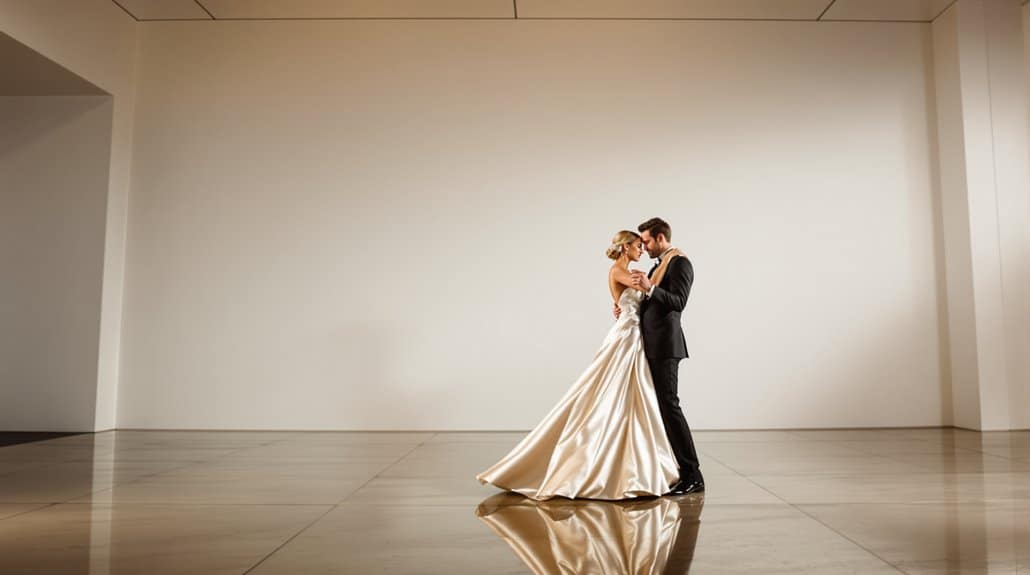
Our research identified clear winners among wedding traditions, and the first dance stands tallest among them—a private conversation set to music, performed in public. With 91% of couples choosing to include this emotional touchstone, it’s clearly no mere formality but something that matters deeply.
You’re creating more than just Instagram fodder here. Dance instructors consistently report that the preparation process—chosen by 25% of couples who take formal lessons—strengthens relationships through shared vulnerability and coordination. The process builds trust that extends far beyond your reception.
Most couples opt for a manageable 2-3 minute performance, balancing personal significance with guest attention spans. And while Ed Sheeran’s “Perfect” tops charts for four consecutive years, your selection speaks volumes about your relationship’s texture and tone. Before taking the floor, ensure your bridal beauty is picture-perfect with premium skincare and makeup that photographs flawlessly under reception lighting. The first dance transforms from ancient fertility ritual to modern declaration—a tradition worth preserving precisely because it evolves with each couple while maintaining its emotional impact.
Traditions Worth Keeping: Parent Dances Honor Relationships
Despite evolving from an antiquated tradition of fathers symbolically “giving away” their daughters, parent dances remain the second most emotionally resonant moment at modern weddings—trailing only the couple’s first dance. They’ve transformed from property transfers into authentic celebrations of parent-child bonds, creating space for public acknowledgment of formative relationships.
| Dance Type | Typical Timing | Modern Adaptations |
|---|---|---|
| Father-Daughter | After first dance | Father-figures, mothers, or siblings |
| Mother-Son | After father-daughter | Guardian figures or alternative parents |
| Combined | Mid-reception | All married couples joining |
| Shortened | 1-2 minutes | Edited songs for attention spans |
| Alternative | Post-toasts | Flexible placement based on flow |
You’ll notice couples increasingly reimagining these moments to honor non-traditional family structures—dancing with stepparents, siblings, or mentors. The emotional significance remains intact regardless of who takes the floor, and yet the format evolves, allowing for personal expression while maintaining the tradition’s heartbeat. The Emily Post Institute continues to validate these personalized approaches while emphasizing respect and consideration for all family dynamics involved.
Traditions Worth Keeping: Toasts Unexpected Emotion
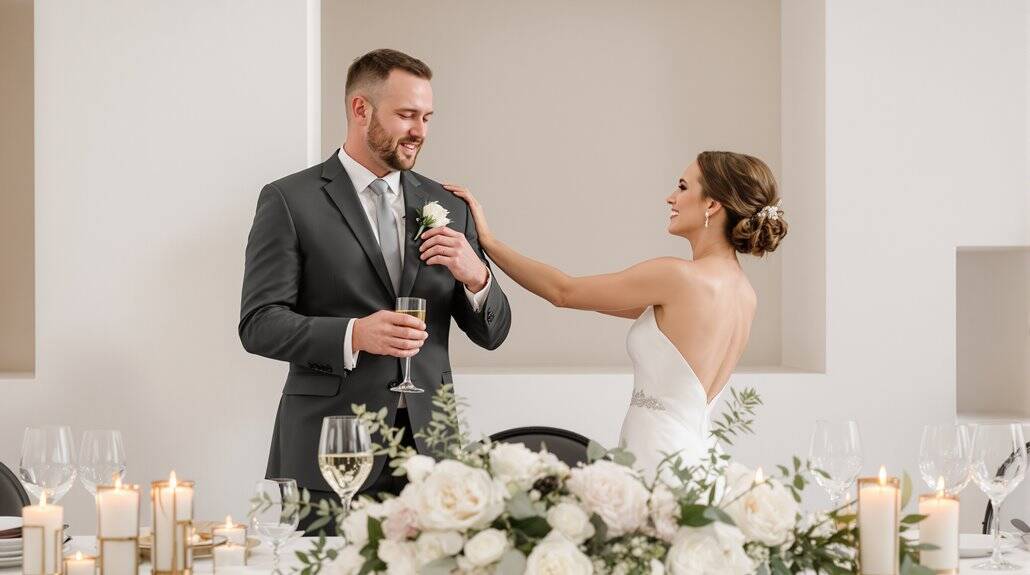
Why do wedding toasts regularly transform alternatively stoic friends into trembling fountains of emotion? The answer lies in their unique power to distill years of connection into five carefully chosen minutes. Your most composed college roommate, suddenly vulnerable at the microphone, creates one of those crystallized moments that couples consistently rank among their most treasured memories.
Wedding speeches forge emotional connection between all present—uniting your childhood friends with new in-laws, bridging generational gaps through heartfelt storytelling. The authenticity resonates far more profoundly than scripted moments, particularly when speakers maintain that sweet-spot duration of 5-7 minutes. Too brief feels perfunctory; too long and attention wanders.
These moments of vulnerability—often unexpected even to the speakers themselves—become cherished touchstones. The architectural style of your venue shapes how these emotional moments resonate, whether classical spaces provide built-in gravitas or contemporary settings emphasize openness and intimacy. And yet, their impact depends entirely on genuineness. The carefully rehearsed joke falls flat; the spontaneous tear captures everything about what brought you all together in that room.
Traditions Regretted: Garter Toss Uncomfortable Performance
When couples reflect on wedding elements they wish they’d eliminated, the garter toss consistently ranks first in post-wedding regret surveys. Participation has plummeted from 41% in 2016 to roughly 30% today—a trajectory suggesting this wedding tradition will fall below 25% by 2026.
You’re not imagining the collective cringe when the music shifts and the groom kneels. The performance aspect—rooted in medieval bedding ceremonies but repackaged through 1950s burlesque influences—creates discomfort that transcends generational divides, and yet 85% of brides still wear a garter privately as a keepsake.
Why couples are abandoning the toss:
- Conservative religious guests find it inappropriate
- International attendees often perceive it as confusing or offensive
- Single men feel awkwardly spotlighted
- The gendered implications feel outdated in contemporary celebrations
The garter itself survives as “something blue,” but the theatrical removal? That’s becoming wedding history. In contrast, many couples increasingly embrace meaningful customs like the Jewish wedding ceremony, which centers on sacred rituals such as the chuppah and ketubah rather than performative entertainment.
Traditions Regretted: Bouquet Toss Single Women Display
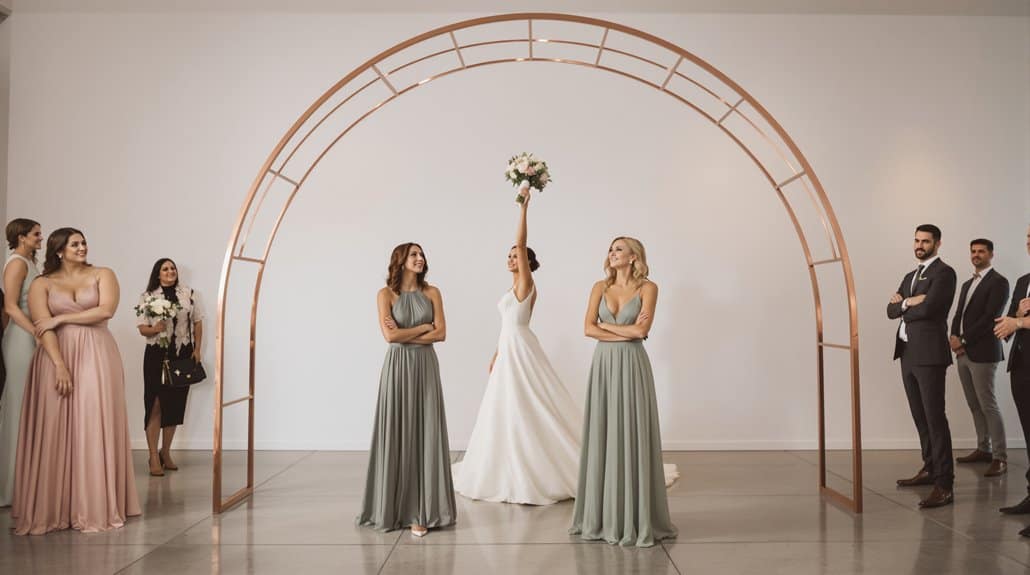
The bouquet toss, while enduring as a wedding staple for generations, ranks second only to the garter toss on couples’ post-wedding regret lists. You’re essentially creating a public spectacle that categorizes guests by relationship status—a division that feels increasingly tone-deaf in today’s diverse relationship terrain. Single women retreat to bathrooms or hover near bars when this tradition approaches, not because they’re avoiding romance, but because they’re dodging the uncomfortable spotlight on their personal lives.
Consider who you’re actually excluding: recent divorcées, widows, contentedly single individuals—all corralled into a designated “unattached” zone. The tradition implicitly reinforces a hierarchy where coupling represents success, singlehood represents waiting. And yet, wedding traditions should unite rather than divide your guests. The declining participation speaks volumes; like the chicken dance before it, the bouquet toss is becoming a vestige of wedding customs we’ve outgrown—replaced by more inclusive celebrations that honor all life paths equally. If you choose to keep the tradition, position it strategically within your reception timeline alongside other key moments like cake cutting and toasts to minimize awkwardness and maintain your celebration’s natural flow.
What Makes Tradition Meaningful vs Obligatory
Deciding which customs belong at your wedding starts with understanding a simple truth: some rituals connect profoundly while others merely check boxes. The meaningful wedding traditions consistently revolve around shared emotional experiences, not spectacle. A striking 74% of couples cite bringing family together as their primary motivation—the traditions that matter serve this connection.
Which traditions to keep? Our research reveals clear patterns:
- First dance (practiced by 89% of couples) creates an intimate moment amid public celebration
- Parent dances foster intergenerational bonding, marking important life transitions
- Cake-cutting persists because it combines ceremony with celebration (74% participation)
- Traditions honoring cultural heritage (21% incorporate these) root your relationship in something larger
Yet meaningful doesn’t always mean traditional. Gen Z surprisingly embraces more traditional elements than Millennials, who find them less important. The distinction? Traditions worth keeping create authentic connection rather than obligatory performance—they’re the ones you’ll remember decades later. Just as your wedding day lasts only 24 hours while photos last decades, the traditions you choose become part of your visual legacy, captured in images that tell your story for generations to come.
Decision Framework
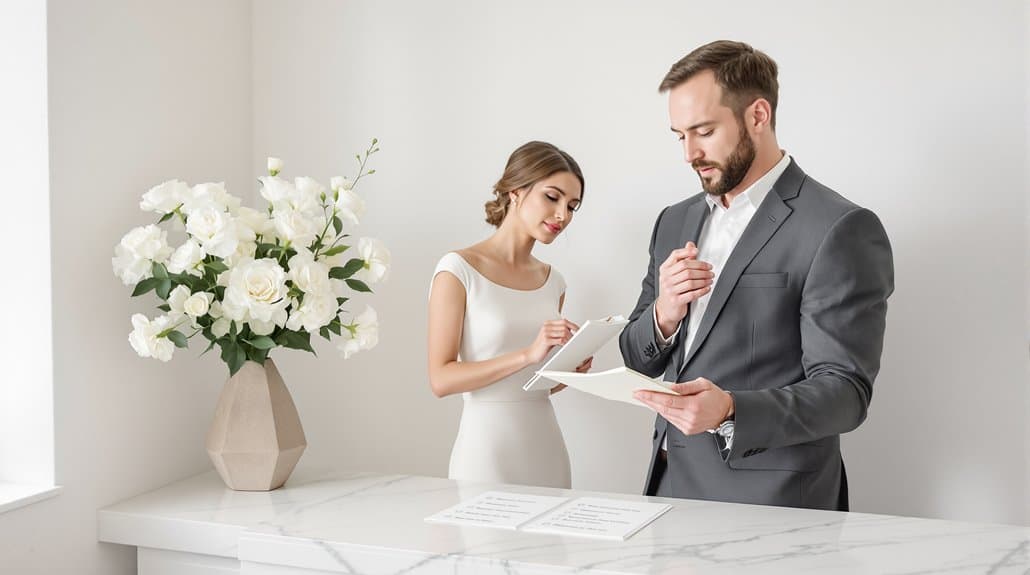
Crafting a roadmap for wedding decisions transforms chaotic planning into purposeful action. Start by separately listing your top three wedding traditions worth keeping, then compare notes. This simple exercise—taking no more than 20 minutes—becomes your North Star when family opinions swirl and vendor options overwhelm.
Create a decision matrix for major choices (venue, catering, photography), assigning weights to each factor that matters. You’ll find meaningful wedding traditions often rise naturally to the top when evaluated through this structured lens. Perhaps your grandmother’s lace becomes part of your veil, while the outdated garter toss disappears entirely.
Divide responsibilities based on strengths, not gender expectations. One partner handles music selection, the other manages catering negotiations. And yet, share final approval on each decision to ensure alignment with your shared vision. For your wedding day beauty look, consider luxury cosmetics that complement both tradition and personal style. The traditions to keep are those that survive this deliberate filtering process—authentic reflections of your unique relationship story.
Conclusion
When thoughtfully sifting through centuries of matrimonial customs, you’ll discover that meaningful traditions anchor your celebration in something larger than yourself—and yet, they must reverberate with your authentic values to avoid feeling performative. The statistics speak volumes—79% of couples cherish the ring exchange while barely 17% feel connected to unity candles.
Your perfect wedding emerges from intentional selection, not obligation. Consider these enduring principles:
Your wedding should reflect authentic choices, not inherited expectations—curate elements that resonate rather than following formulas.
- Embrace family-inclusive elements like parent dances (cherished by 73% of couples) while discarding the increasingly abandoned garter toss
- Balance personal expression with cultural heritage—21% of couples incorporate customs honoring their backgrounds
- Allocate your planning energy (those six weekly hours) to traditions with lasting emotional impact
- Trust evolution—Gen Z couples paradoxically embrace more traditional elements than millennials, proving traditions aren’t static but adaptive
The most meaningful celebrations happen when you curate rather than conform, creating a wedding that feels both timeless and undeniably yours. Before finalizing your ceremony plans, ensure you’ve obtained your Ontario marriage license to make your celebration legally binding.