
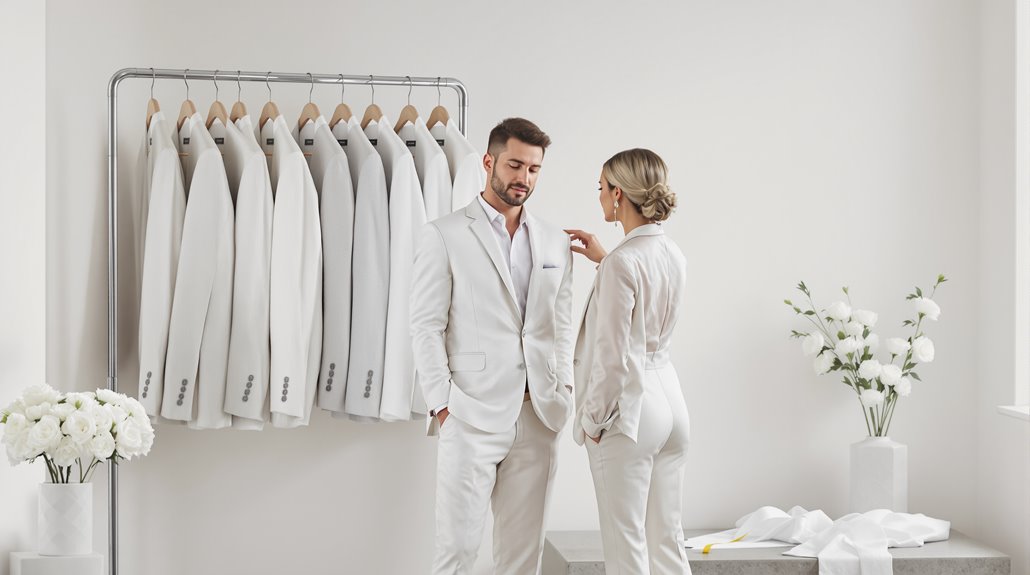
When you’re not a suit person, wedding attire becomes less about fashion rules and more about authentic self-expression. Choose a suit that feels like you—elevated, not disguised. Focus on psychological comfort: proper fit across shoulders and torso, breathable fabrics, and personal style touches through accessories. Skip rentals; buying becomes economical after just two wears and allows essential tailoring. The perfect wedding suit isn’t costume theater—it’s you at your best, remembered for how good you looked, not what you wore.
The Suit Person vs Not Problem
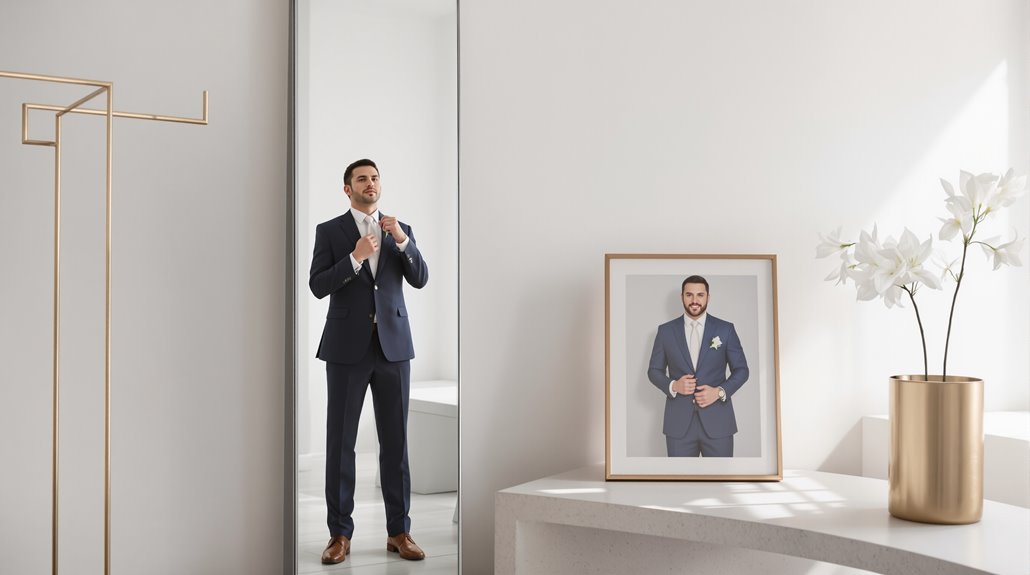
When you’re the rare breed who only slips into a suit three times a year—weddings, funerals, job interviews—the prospect of wedding suit shopping hits differently. Your relationship with tailored clothing isn’t comfortable; it’s ceremonial. And that’s the challenge.
First, suit buying becomes not just a transaction but a psychological hurdle. You’re steering unfamiliar territory where “regular fit” and “break length” sound like coded language. The goal: wedding suit comfort that feels natural, not performative. Embracing quiet luxury can help you select pieces that resonate with your personal style without overwhelming you.
Your suit style selection matters precisely because you don’t wear suits regularly. Regulars can experiment; you need something that works immediately. The irony? Those who wear suits least need the most thoughtful choices—something that won’t photograph like a teenager at prom or a banker at happy hour.
The difference is intention. Suit people wear suits; non-suit people wear costumes. And yet, with proper measurement and fabric selection, even the most suit-averse can look authentically themselves—just the wedding version. Consider booking an appointment at a shop like Astares Menswear where you can get expert advice on finding the perfect fit for your body type.
Style Selection for Infrequent Wearers
The right suit for occasional suit-wearers isn’t just about looking good—it’s about feeling authentic. When you choose a wedding suit as a casual groom, prioritize approachability over formality. Light grey acts as your blank canvas—infinitely versatile, neither too stuffy nor too casual, and endlessly accommodating to whatever accessories express your personality. The psychology of luxury weddings suggests that personal expression can significantly enhance comfort and confidence.
Navy delivers that Goldilocks effect—sophisticated enough for evening affairs, yet soft enough to avoid the “corporate automaton” vibe that makes non-suit people squirm. And yet, the magic often happens through accessories. A monochrome palette eliminates decision fatigue while pocket squares and neckwear variations let you incorporate wedding colors without committing to an entire colored suit. Casual wedding attire can incorporate unbuttoned shirts and relaxed footwear like loafers for comfort during long celebration days.
Three-piece options grant tactical advantages: shed the jacket post-ceremony without looking underdressed. Remember, wedding suit comfort comes from both physical fit and psychological ease—choose something you’d theoretically wear again, not just tolerate for six hours.
Fit Essentials: Comfort That Looks Good
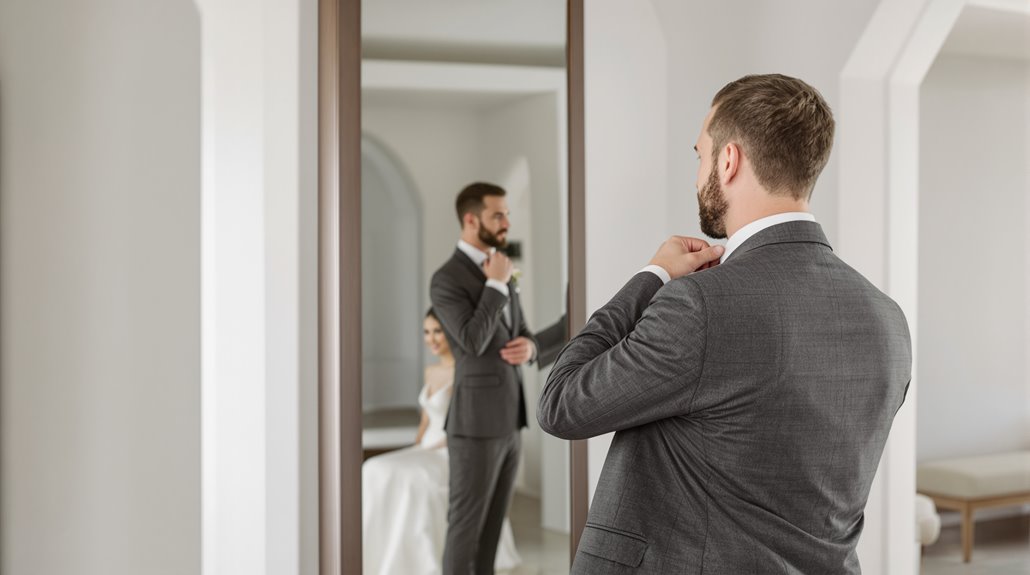
Despite what salespeople might tell you, perfect wedding suit fit isn’t subjective—it’s mathematical precision with a dash of personal preference. Your shoulders tell the truth immediately: seams should land exactly where shoulder meets arm, with no fabric bunching. And yet, comfort remains paramount when you choose a wedding suit—you’ll wear this for 8+ hours straight.
Your jacket should skim your hips (not sag below them), showing ¼-½ inch of shirt cuff when arms hang relaxed. The waist should define without strangling—you’re a suit-for-casual-groom candidate, not a stuffed mannequin.
For trousers, calculate your ideal inseam by measuring outer foot to waistband, then subtract ten inches. They should break slightly at the shoe without pooling fabric.
Remember: wedding suit comfort comes from precision tailoring, not size compromises. A $300 perfectly-fitted suit trumps an $800 off-the-rack disaster every time. Also, keep an eye on emerging luxury trends that may influence your choice in style and fabric for a modern touch.
Investment Level Decision: Rental vs Purchase
Now that your suit fits perfectly, you’ll face an unavoidable financial crossroads: rental versus purchase. The math is startlingly straightforward—rentals cost $100-$300, while decent purchases start at $300-$600. And yet, that rental represents up to 75% of buying outright, making purchase economically superior after just two wears.
For the occasional suit-wearer, this decision transcends mere dollars. Choose wedding suit comfort by considering how those shoulders actually feel when you’re steering through a dance floor at 11pm. Rental adjustments are frustratingly limited to length, while purchased pieces can be tailored precisely to your body’s quirks—that slightly lower right shoulder, those cyclist’s thighs.
The wedding suit for non suit wearer paradox: you’ll spend more upfront for something you’ll allegedly “never wear again,” but you’re actually investing in confidence. The suit that feels like yours—because it is—photographs better, dances freer, and outlasts rental anxiety.
Avoiding the Costume Effect
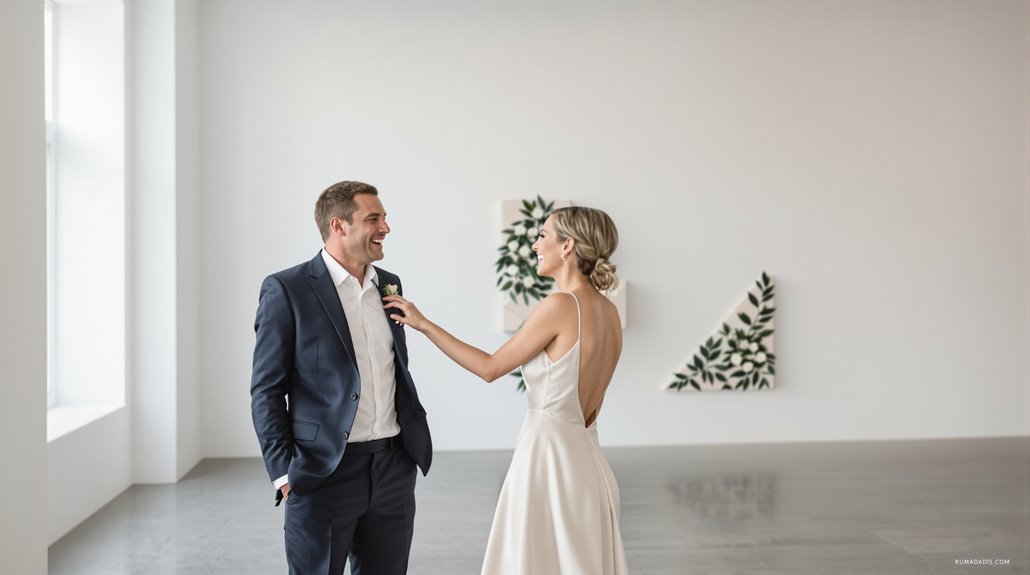
Many first-time suit wearers radiate discomfort at weddings, shifting awkwardly in their collars while projecting the unmistakable aura of someone playing dress-up. That costume effect—feeling like you’re in someone else’s skin—isn’t inevitable, but conquering it requires intention.
The solution isn’t mysterious: choose wedding suits that reflect fragments of your everyday aesthetic—color preferences, texture affinities, silhouette tendencies—rather than adopting a wholesale “formal uniform.” Your wedding suit discomfort stems primarily from psychological alienation, not physical restriction. Find a suit that’s recognizably you, just uplifted.
Proper fit eliminates 80% of the costume problem. When clothes drape correctly—shoulders aligned, sleeves showing precise quarter-inch of cuff, trousers breaking just so—they become extensions of yourself rather than external impositions. For non-suit wearers, consider this hierarchy: fit first, comfort second, trend adherence dead last. And yet, even perfect tailoring fails without ownership of your chosen style—wear the damn thing, don’t let it wear you.
Working with Tailor on Comfortable Fit
When exactly did finding a suit become an impersonal transaction rather than an intimate collaboration? For the occasional suit-wearer facing the wedding suit challenge, this partnership is essential. Your tailor should take upwards of 30 distinct measurements—not just the cursory chest-waist-inseam trio—to capture your unique physique.
Schedule that first consultation 6-8 weeks before you need the suit. You’ll discuss purpose and preferences, establishing whether you want modern lines or classic drape. And yet, the magic happens during the basted fitting, where you’ll try on a loosely constructed version with temporary stitches. This allows adjustments to shoulders (which should lie flat without divots), collar (which must hug without gaping), and trouser break.
For non-suit wearers, choose wedding suit comfort by insisting on wearing your intended shoes and shirt during fittings. Stand naturally—no chest-puffing or shoulder-squaring. The best tailors assess how you actually exist in the world, not how you perform it.
The Goal: You Elevated Not Disguised
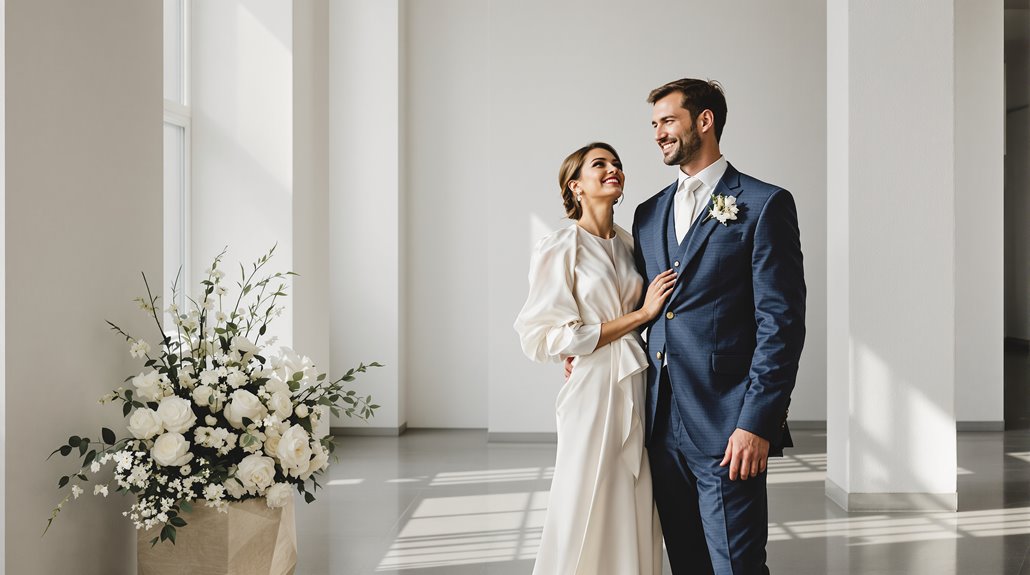
The best wedding suit transforms you into the most polished version of yourself rather than a stranger in rented formalwear. When you choose a wedding suit as a non-suit wearer, aim for elevated authenticity—not costume theater. Your reflection should reveal you, just substantially better dressed.
Consider this: wedding suit comfort stems from psychological fit as much as physical tailoring. A pale grey slim cut that follows your actual proportions will feel natural, while an ill-fitting tuxedo becomes an awkward disguise you’ll fidget with all day. And yet, the right accessories—perhaps a textured tie in the wedding palette or subtle cufflinks—create visual interest without screaming “dress-up.”
The most successful wedding suits for occasional formalwear adopters balance timelessness with personal style. Your goal? Everyone remembering how good you looked, not that you wore a suit—the pinnacle of the compliment for the reluctant suit-wearer.
Conclusion
Despite your best intentions, selecting a wedding suit often resembles a high-stakes chess match where every move feels consequential. You want authenticity—not to look like you’re playing dress-up in someone else’s clothes. The solution isn’t avoiding formality but embracing it on your terms.
To choose a wedding suit that works when you’re not a suit person, prioritize comfort alongside aesthetics. Find tailoring that respects your body rather than fighting it. Select fabrics that breathe and move with you. And yet, don’t sacrifice the gravitas the occasion demands—wedding suit selection requires balance between personal comfort and ceremonial respect.
Remember: this isn’t about becoming someone else for a day, but presenting the most polished version of yourself. The best wedding suits for non-suit wearers don’t feel like costumes but extensions of your identity—elevated without disguise, formal without falsity. The right suit doesn’t wear you; you wear it.