
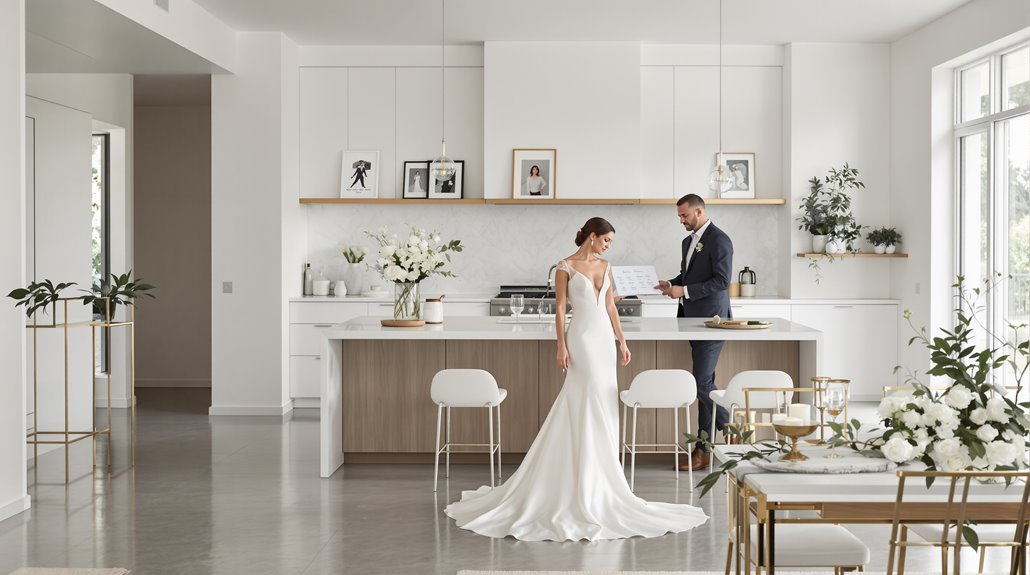
To host a wedding at your parents’ house without relationship catastrophe, establish clear financial boundaries upfront—who pays for alcohol, rentals, insurance—then document every decision in writing. You’ll need explicit conversations about creative control (their property, your wedding), scheduled weekly check-ins, and third-party buffers like planners to navigate conflicts. Implement formal contracts even with family, and recognize when practical limitations (capacity, safety, geography) signal it’s time to find another venue. The nuances between sentiment and logistics determine your final success.
The Family Property Opportunity and Risk
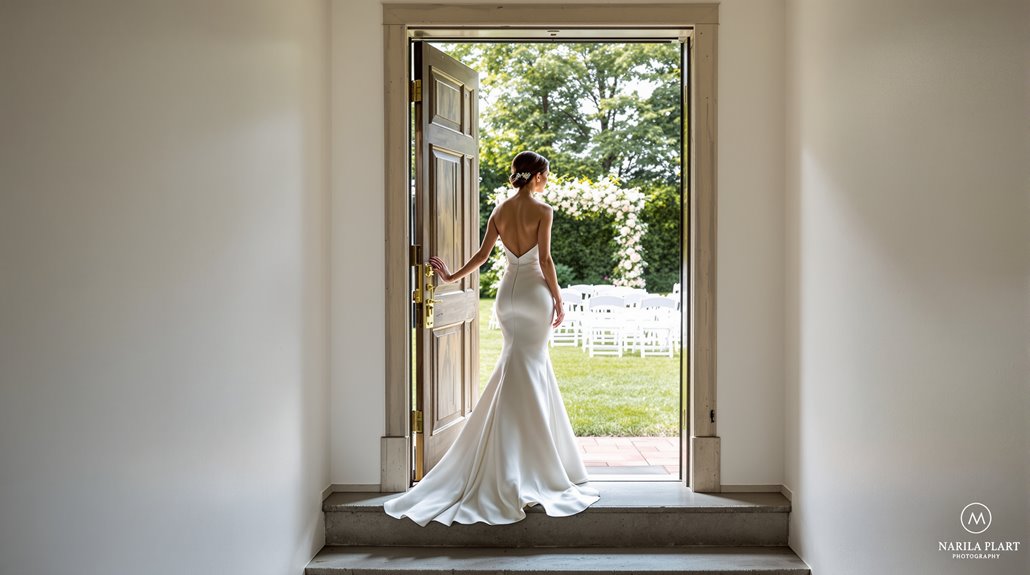
While transforming your childhood home into a wedding venue feels deeply meaningful—the oak tree where you built forts now framing your vows, the garden your mother tended becoming your ceremonial backdrop—this romantic vision conceals a labyrinth of liability exposures that can devastate family finances.
Your family property wedding creates a perfect storm of legal vulnerabilities. That $1 million lawsuit one family faced after a drunk-driving incident? Not covered by standard homeowners policies. You’ll need explicit host liquor liability coverage—and that’s just the beginning. Additionally, effective tier allocation strategies can help ensure that your budget is maximized while addressing these risks.
The dream family venue transforms overnight into a financial nightmare when liability outpaces insurance coverage.
Family home wedding etiquette demands clear boundaries family property wedding discussions often avoid: Who’s financially responsible when portable bathrooms flood the lawn? When gifts disappear from unattended tables? When local zoning ordinances reveal your parents’ property isn’t legally permitted for events? With wedding couples spending approximately $24,000 on average, protecting this investment becomes increasingly critical when hosting at a family home.
The emotional investment makes these conversations difficult, and yet avoidance creates greater risks. Document everything—from alcohol service parameters to vendor insurance requirements—before sentiment overrides sound judgment.
Financial Boundaries: Who Pays for What
Because your family home transforms into both venue and emotional crucible, establishing crystal-clear financial boundaries becomes non-negotiable—not merely suggested. When hosting a wedding at parents’ house, traditional responsibilities blur, requiring explicit conversations before the first centerpiece is purchased. Embracing quiet luxury can also inspire thoughtful decisions about decor and spending, ensuring that every choice reflects your family’s values.
Modern couples typically cover half (49%) of wedding costs, with groom’s family contributing 24%—but these percentages collapse when family property wedding dynamics enter. Your parents are already “paying” through venue provision, yet may still expect input on everything from floral arrangements to guest lists.
Negotiate family venue financials through scheduled video calls rather than impromptu kitchen conversations. Prepare itemized expense lists, clearly delineating who pays for what: alcohol service, catering staff, portable restrooms, tent rentals. Remember that whoever funds maintains decision rights, so define these boundaries carefully. The groom’s parents traditionally cover key expenses such as the rehearsal dinner and might expect to fulfill this duty even when the venue changes.
Can’t contribute financially? Consider alternative support: coordinating deliveries, assembling favors, or providing heirloom items that welcome without wallet strain.
Creative Control Negotiation

Financial clarity opens the next challenge: creative control over the wedding itself. The family home wedding context creates an inevitable tension—your vision collides with your parents’ sense of ownership over their space. This requires refined family venue negotiation skills most wedding planning books conveniently ignore. Acknowledging the psychology of luxury weddings can help bridge the gap between differing expectations and create a more harmonious planning process.
| Negotiation Area | Your Approach | Parent Perspective | Middle Ground | Deal-Breakers |
|---|---|---|---|---|
| Guest List | Your intimate vision | Their social obligations | +/- 10 guest buffer | Non-negotiable VIPs |
| Décor | Your Pinterest board | Their home’s existing aesthetic | Room-by-room compromises | Structural changes |
| Timeline | Your dream flow | Their practical concerns | Scheduled parent breaks | Ceremony timing |
| Vendors | Your researched picks | Their trusted connections | Mixed professional team | Safety standards |
| Traditions | Your modern take | Their meaningful customs | Reimagined heritage elements | Cultural essentials |
Your creative control requires acknowledging the psychological reality: parents offering their home aren’t merely providing a venue—they’re opening themselves to judgment. And yet, with clear boundaries and designated decision zones, you’ll preserve both your vision and relationship.
Declining Décor Suggestions Gracefully
Perhaps nowhere in the wedding planning process does the parent-couple tension escalate faster than when your mother presents her vision for floral centerpieces—complete with 1980s baby’s breath and dusty rose ribbons. Declining these well-intentioned suggestions requires diplomatic communication and careful boundary setting without igniting family conflict resolution nightmares.
When managing these delicate conversations, try:
- The appreciation-pivot method — “Mom, I love how thoughtful your suggestion is, and I can see why you love it. We’re envisioning something different that aligns with our overall aesthetic.”
- The collaborative compromise — Identify one element from their suggestion you can incorporate elsewhere.
- The selective battle strategy — Save your firm “no’s” for the décor elements most visible in photos.
- The distraction redirection — “What do you think about handling the guest book table instead? Your eye for detail would be perfect there.”
Family property weddings require emotional intelligence—knowing when to bend and when to stand firm.
Generational Aesthetic Differences
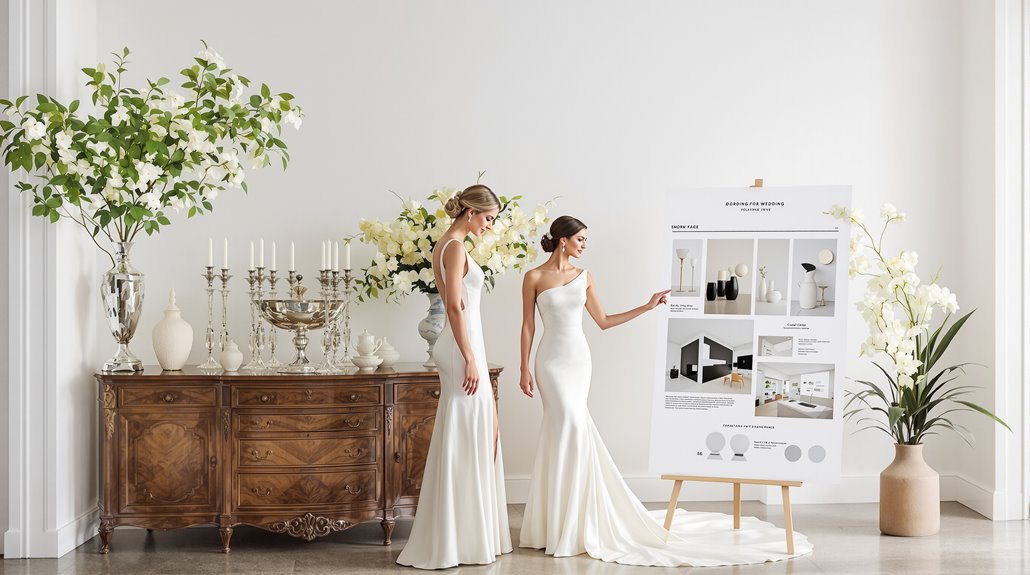
When your parents last planned a wedding, dusty rose was groundbreaking, not retro. Negotiating a family property wedding means charting a generational divide where your Instagram-worthy vision collides with your parents’ traditional sensibilities. These aren’t just different tastes—they represent fundamentally different philosophies about what ceremonies should embody.
| Generation | Aesthetic Preference | Budget Priority | Documentation Style |
|---|---|---|---|
| Boomers | Religious formality | Grand statements | Professional portraits |
| Gen X | Practical elegance | Cost efficiency | Traditional albums |
| Millennials | Curated intimacy | Experiences | Soft, editorial shots |
| Gen Z | Bold individualism | Meaningful moments | Social media snippets |
When planning your backyard wedding at your family home, acknowledge these differences directly. “Mom, I understand you envision formal floral arrangements, but we’re drawn to wildflower aesthetics.” This isn’t dismissive—it’s honest recognition that wedding traditions reflect generational values. Negotiate your family venue with mutual respect, finding compromise through specific examples rather than abstract principles.
Clear Contracts Even With Parents
Aesthetic conflicts may feel like the biggest hurdle in your parent-hosted wedding, but paperwork presents the true emotional minefield. When planning a family property wedding, the unspoken financial assumptions between you and your parents can detonate without warning. Even the most loving families need boundaries in black and white.
Despite limited formal templates for parent-house wedding planning, you can create your own agreement addressing:
- Financial responsibility breakdown – Itemize every expense with the responsible party clearly identified
- Decision-making authority – Establish who gets final say on vendors, décor, and guest count
- Timeline commitments – Set firm deadlines for payments, deliveries, and setup completion
- Contingency plans – Document weather alternatives, capacity limitations, and property restoration
When you negotiate family venue arrangements, uncomfortable conversations now prevent catastrophic misunderstandings later. And yet, approach this contract with cooperative spirit—it’s about clarification, not confrontation. These boundaries actually protect relationships, not damage them.
Protecting Relationships Through Process

How easily the emotional architecture of your family can collapse under wedding preparations—especially when those preparations happen beneath your parents’ own roof. A family property wedding transforms your childhood home into contested terrain where your mother’s vision, your father’s financial anxieties, and your own dreams collide at every turn.
Begin by establishing a communication cadence—weekly 30-minute meetings where decisions get documented, not rehashed. When you negotiate family venue dynamics, insist on separating conversations about aesthetics from those about money. Write everything down.
Acknowledge generational differences openly: “Dad, I understand $5,000 for flowers seems excessive, and yet these centerpieces represent something meaningful to us.” Create buffers when necessary—perhaps your wedding planner delivers certain decisions rather than you. Remember that preserving relationships requires intentional space for others’ feelings without abandoning your boundaries. Your wedding lasts one day; your family, decades more.
When to Choose Different Venue Instead
Despite your best efforts to safeguard relationships through careful planning, sometimes the structural realities of your parents’ property reveal the uncomfortable truth—this intimate family sanctuary simply cannot transform into your dream wedding venue. You’ll save immeasurable emotional capital by recognizing these dealbreakers early, before family configurations become entangled with logistics.
Consider alternative venues when:
- Capacity constraints create impossible guest list choices — forcing you to exclude meaningful connections while your mother insists her book club members deserve invitations
- Property limitations present insurmountable safety concerns — like insufficient electrical capacity, questionable septic systems, or zero emergency vehicle access
- Budget projections reveal renting infrastructure exceeds commercial venue costs — tents, portable restrooms, and generators often surpass $10,000 before decorative elements
- Geographic isolation creates genuine hardship for elderly relatives or critical participants
The right venue choice balances sentimentality with practicality. Parents’ property represents meaningful connection, yet practical constraints sometimes demand professional spaces designed explicitly for celebrations.
Conclusion
As you consider whether your childhood home should host the most significant celebration of your adult life, remember that the decision carries both profound sentiment and practical consequences. The photographs will frame those familiar trees, the weathered deck, the garden your mother cultivated—but they’ll also capture any unresolved tension that surfaces when familial property becomes wedding venue.
Success hinges on crystal-clear communication. Budget discussions feel transactional—and yet, avoiding them guarantees resentment. Your mother’s vision for her home deserves respect—and so does your wedding aesthetic. Setting boundaries feels cold—but their absence invites chaos. The emotional weight of place carries meaning—while simultaneously introducing complications standard venues never could.
Choose this path with eyes wide open. The backyard wedding remains one of life’s most authentic celebrations when executed with intention, patience, and relentless honesty. Your family relationships will outlast the wedding day—protect them accordingly.