

The wedding industry thrives on manufactured trends that keep vendor coffers full, not your happiness. You’re being sold “timeless” sage green and “innovative” micro-weddings without critical analysis of cost, feasibility, or longevity. Wedding media prioritizes advertisers over integrity—turning basic services into premium “must-haves” while ignoring LGBTQ+ couples and cultural variations. Your $35,000 wedding becomes outdated before your first anniversary, by design. True celebration requires rejecting this machinery altogether.
Trend Reporting Quality Problem – Essay opening
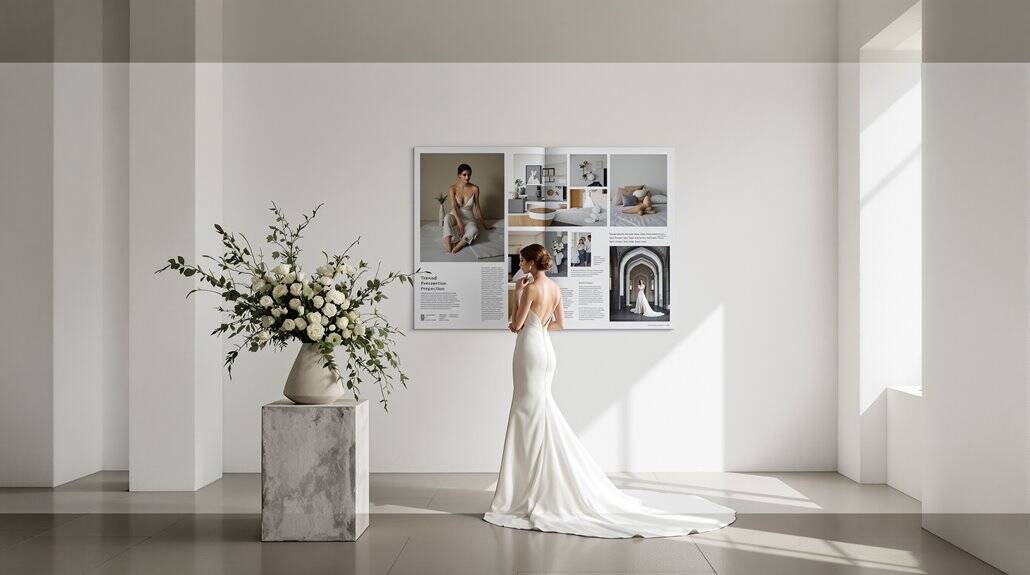
While breathless headlines proclaim “The 10 Biggest Wedding Trends of 2024” and glossy magazines showcase perfectly staged ceremonies with confident authority, the wedding industry harbors a troubling secret: its trend reporting lacks fundamental research integrity.
You’re being sold narratives masquerading as facts. Those “emerging trends” in wedding publications? Often just styled shoots crafted to push whatever advertisers need moved this quarter. The industry’s methodology—if you can call it that—relies on shamefully small sample sizes, biased user surveys, and the amplification of isolated regional quirks into supposed national movements.
What’s worse, this trend reporting systematically excludes expansive segments of couples—LGBTQ+ celebrations, cultural ceremonies, and budget-conscious events vanish from the data. And yet, these excluded demographics represent millions of annual weddings. The gap between aspirational Pinterest boards and practical implementation never appears in these analyses, leaving you chasing impossibilities rather than informed choices. Consider how trend reports showcase historic venues with stunning architectural features while conveniently omitting the operational challenges—limited electrical capacity, accessibility barriers, and restrictive preservation requirements—that make these spaces impractical for many couples. This selective reporting fails to acknowledge that lab-grown stones now represent over half of engagement rings, a significant shift in consumer values that many traditional publications conveniently overlook.
Uncritical Cheerleading vs Analysis
Despite what the glossy magazines suggest, the wedding industry’s so-called “trend analysis” functions more as uncritical cheerleading than genuine research. You’re bombarded with “timeless” sage green palettes (saturated for five years) and “innovative” micro-weddings (a pandemic necessity rebranded as choice)—each promoted without interrogating cost implications or practical feasibility.
What you’re not getting? Critical wedding trends assessment that distinguishes between authentic evolution and manufactured hype. The Knot’s “Swiftification of Weddings” projections rely on undisclosed “internal assumptions” while claiming $2.2 billion in spending impact. Their methodology lacks independent verification, selective data captures only their platform users, and the structures for evaluating viral content against your actual celebration goals simply don’t exist.
When vendors rebrand their services as “trendy,” prices mysteriously climb—transforming previously affordable options into premium offerings without corresponding value. The sudden 71% increase in engagement photographer searches following celebrity announcements illustrates how quickly industry professionals capitalize on viral moments rather than addressing couples’ authentic needs. Social media amplifies aesthetics without analyzing satisfaction outcomes, budget implications, or guest experience. Similarly, when letterpress begins around $1,200 and vendors market it as the latest “artisanal” trend, couples pay premiums for techniques that existed for decades without understanding whether the tactile difference justifies the cost.
Self-Serving Trend Promotion Examples
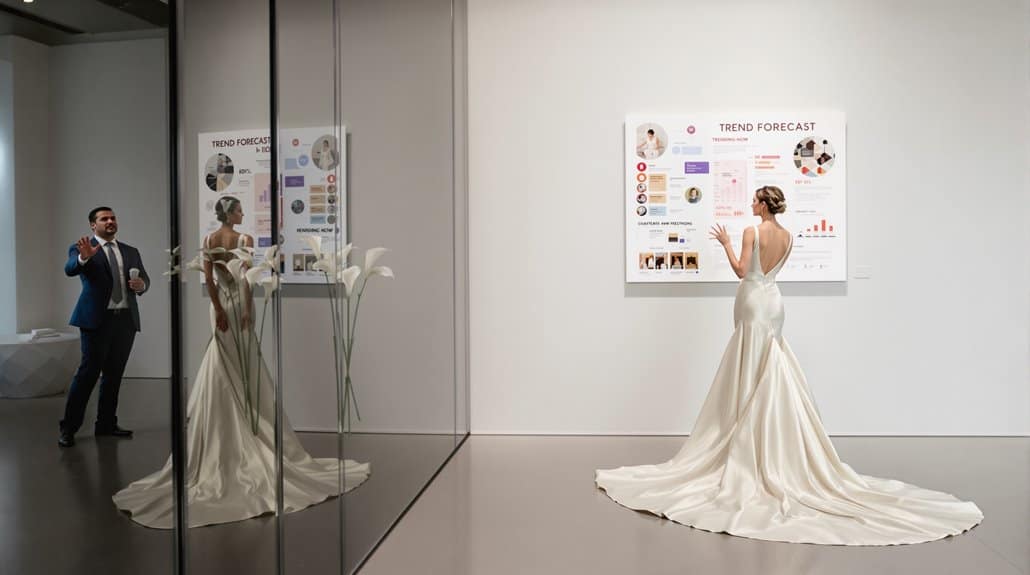
The wedding industry’s self-serving trend promotion operates as a finely-tuned machine, manufacturing “must-haves” that conveniently align with vendors’ profit margins. You’re witnessing a masterclass in reframing: basic meal service becomes “interactive food stations” commanding premium prices, while on-site favor engraving transforms ordinary keepsakes into “elevated guest experiences” worth hundreds more.
Notice how honest wedding trends would acknowledge TikTok’s algorithm converts single creative moments into global phenomena within days, yet vendors present these as timeless traditions you’d regret omitting. They’ve brilliantly repositioned smaller guest counts—initially a cost-saving measure—as opportunities for “premium customization services” that maintain their revenue despite fewer attendees.
Most insidious is the repackaging of basic elements as entertainment: choreographed dances, surprise performances, and elaborate entrances aren’t optional additions but “must-have reception elements.” These inflated tasks mirror the same tactics used in planning timelines, where decisions about cocktail flavors or welcome bags fill schedules without meaningfully contributing to what guests actually remember—the atmosphere and connection that define your celebration. The industry’s genius lies in convincing you these manufactured trends represent authentic personal expression, when they’re carefully designed profit vehicles.
Distinguishing Genuine Shifts from Industry Promotion
Separating authentic wedding trends from calculated industry marketing requires methodical analysis beyond curated Instagram grids and vendor press releases. You’re seeing hashtags generate self-reinforcing cycles where algorithms amplify specific aesthetics—sage green isn’t timeless, it’s five years deep in market saturation—creating artificial demand signals that vendors then capitalize on with premium pricing.
Consider this: Weighted Demand Averages from 18,611 actual couples tell a vastly different story than the vendor surveys dominating industry publications. True wedding trend criticism demands following the money. Who benefits from declaring “micro weddings” a trend rather than a pandemic necessity?
The geographical distribution requirements (1-3% from large markets, 0.5-1% from smaller ones) reveal whether a “trend” exists beyond New York and Los Angeles. What appears ubiquitous in your feed often reflects platform mechanics, not genuine couple preferences. And yet, authentic shifts do emerge—when you track actual spending rather than social visibility. Meanwhile, high-end jewelry houses like Graff Diamonds continue targeting the luxury bridal segment with rare diamond collections, demonstrating that traditional prestige markers remain commercially viable despite shifting social media aesthetics.
Trend Lifecycle: When Trends Peak Exhaust Die
While wedding trends appear organically sprung from cultural zeitgeist, they actually follow remarkably predictable lifecycle patterns that savvy industry insiders exploit for profit. Your “unique” sage green palette? It’s on a precise 18-24 month death march from discovery to saturation to industry abandonment.
Consider the evidence: trends catch fire during winter engagement season when 68% of couples begin planning, accelerate through TikTok-fueled discovery cycles, then collapse under their own weight as vendors deliberately pivot away—calling yesterday’s must-haves “overdone.” Wedding trend criticism remains largely absent because the ecosystem depends on this churn.
You’re entering a machine designed for obsolescence. Those venues requiring 18-24 month advance bookings aren’t just managing capacity—they’re ensuring each new cohort receives different aesthetic prescriptions than the last, guaranteeing perpetual trend refreshes that keep industry coffers full while convincing you it’s all about your personal expression. This manufactured turnover explains why transparent discussions about budget with vendors matter more than chasing trending aesthetics that will feel dated before your first anniversary arrives.
The Need for Critical Wedding Media
Why does a trillion-dollar industry with immense cultural influence operate with virtually no critical media presence? When wedding publications prioritize advertiser relationships over honest trend analysis, you’re left navigating a terrain where sage green is “timeless” (despite five years of market saturation) and micro-weddings are “innovative” (despite being pandemic necessities).
You deserve better than the 98% white heteronormative fantasy dominating mainstream platforms—especially when 1 in 5 millennial marriages are interracial. The algorithmic echo chambers of social media amplify unrealistic standards, creating a FOMO-driven planning experience that privileges viral potential over personal significance.
What’s desperately needed: critical wedding media that examines trends with journalistic integrity rather than promotional enthusiasm. Media that acknowledges the authenticity paradox—your desire for unique celebration colliding with mass-adopted trends. The wedding industry thrives on selling perfectionism, but you need honesty about what trends actually mean, who they serve, and when they’ll fade. Meanwhile, institutions like MoMA’s private spaces continue to offer alternatives to conventional venues, yet even these cultural settings get absorbed into the same promotional machinery that obscures meaningful venue selection.
Conclusion
How can you possibly make meaningful wedding decisions when the industry’s “trend analysis” amounts to little more than advertorial content masquerading as journalism? You deserve wedding trend criticism that sees beyond the sage green curtain.
Truth is, the industry thrives on your confusion—repackaging COVID necessities as “micro wedding trends,” selling you five-year-old color schemes as “timeless choices,” and convincing you that $35,000 is somehow standard. And yet, behind every manufactured trend lurks a consortium of vendors with inventory to move and packages to sell.
Your celebration deserves better than being reduced to a marketing opportunity. Demand transparency. Question whether that “must-have” trend is genuinely resonating with couples or merely filling someone’s quarterly sales quota. The most authentic wedding trend? Couples rejecting the very concept of trends altogether, crafting celebrations that reflect their actual lives—not the Instagram fantasy version manufactured by an industry desperate for your dollars. Even destination wedding marketing operates this way—from Hawaii’s tourism industry to Caribbean resorts, these markets rely on personalization and advertising cookies to serve you carefully curated “inspiration” that conveniently aligns with their inventory and package deals.