
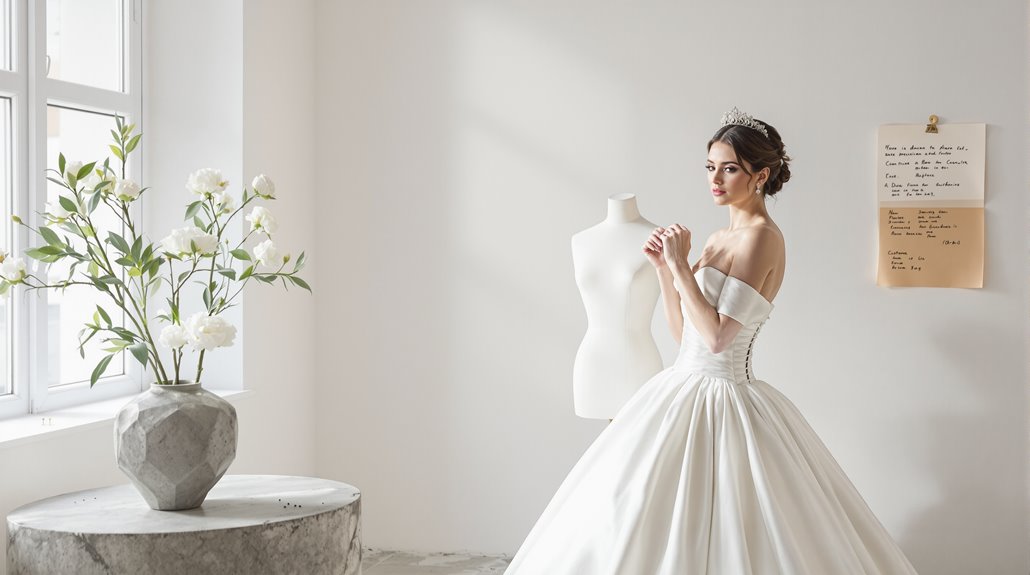
Your wedding dress isn’t just fashion—it’s costume design for your life’s crucial performance. As visual autobiography, it communicates identity through silhouette, color, and detail before you speak your vows. It frames how 75% of couples perceive themselves and how guests interpret your story. Each design choice—ball gown royalty or sleek modern confidence—reveals values, traditions embraced or rejected, and personal narrative. The dress ultimately becomes invisible, yet its character-building power transforms your ceremonial presence completely.
Fashion as Narrative Device – Essay opening
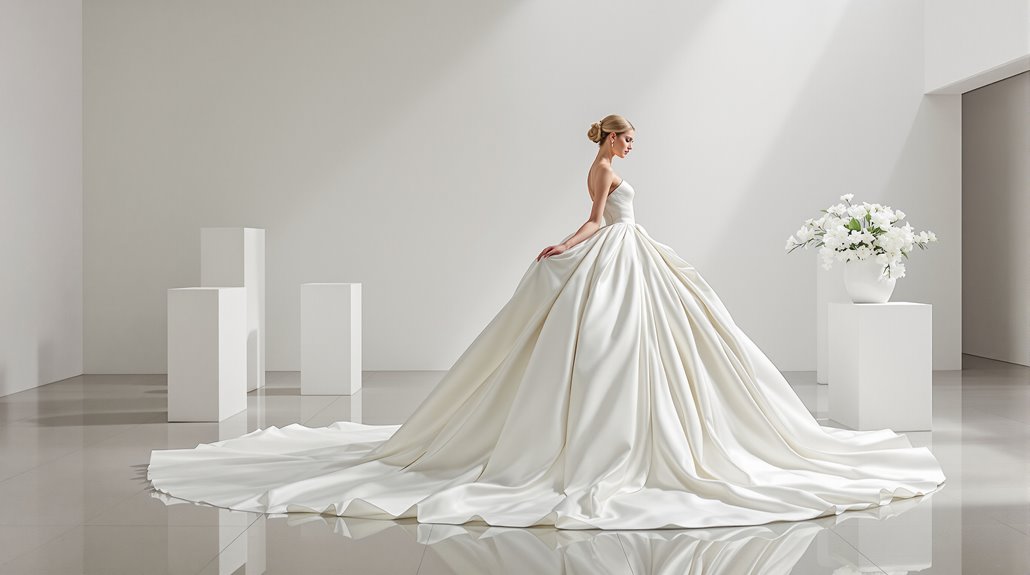
When you zip yourself into that wedding gown, you’re not merely getting dressed—you’re crafting the opening scene in a visual autobiography. Your wedding dress as costume speaks volumes before you utter a single vow. It’s 150 pairs of eyes reading the story you’ve chosen to tell about yourself, your partner, your values—all through fabric, silhouette, and detail.
That A-line silhouette? It’s declaring confidence. Those vintage lace sleeves? They’re connecting you to tradition. The dress tells story without dialogue, functioning exactly as costume designers intend in film—as psychological externalization made tangible. Your wedding gown narrative operates through visual cues that guests instinctively decode: the dramatic transformation from everyday self to ceremonial identity marks a plot advancement in your life’s story. You’re experiencing what every character in cinema undergoes at crucial moments—the wardrobe evolution that signals to everyone: something profound is happening here, and I’ve dressed for the occasion. The color you choose, whether traditional white or something unconventional, communicates your personality through color symbolism that guests unconsciously interpret. This entire process embodies the essence of quiet luxury, emphasizing quality over ostentation, which enhances the narrative you present.
Costume Design Principles Applied to Weddings
Your silhouette isn’t just flattering—it’s establishing character. A ball gown transforms you into royalty; a sleek sheath declares modernist confidence. The dress tells story through every element: necklines communicate values (sweetheart for romance, halter for strength), while fabric weight determines how you’ll move through space. When conceptualizing your wedding look, consider not just style but how the dress will make you feel—whether you desire modern minimalism, timeless elegance, heritage design principles, or romance. You’re creating a walking set piece that must function across multiple scenes—ceremony, photos, dinner, dancing—while maintaining character integrity.
The wedding dress as costume requires both emotional and practical consideration. You’re not just choosing what looks good; you’re deciding who you’ll be for 8+ hours, how you’ll interact with 150 people, and what visual narrative will live in photographs forever. Your dress isn’t clothing—it’s character development made textile.
What Character Are You Playing
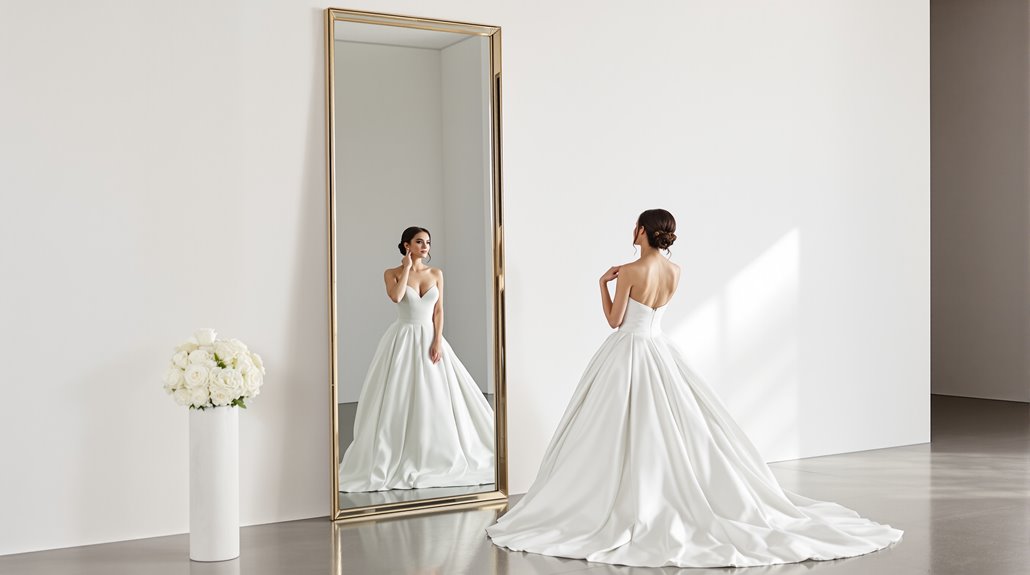
Every costume designer asks the defining question before sketching a single line: who is this character? Your wedding dress tells a story far beyond fabric and stitches—it’s a visual declaration of your wedding identity at this pivotal threshold. You’re simultaneously embodying multiple archetypal roles, each layered with meaning that communicates your personal narrative to everyone witnessing.
Which character aspects resonate most with your authentic transition? Consider:
- The Princess/Queen: elevated, otherworldly, magnificent—crowned as the ceremony’s hierarchical center
- The Maiden in Transition: marking the farewell to your unattached, single identity
- The Partner/Mature Woman: stepping into full relational power and committed partnership
- The Pure/Sacred Character: embodying love’s tenderness and spiritual transformation
Your dress wedding identity isn’t accidental—it’s deliberately chosen costume design. And yet, the most compelling bridal characters aren’t simplistic archetypes but nuanced combinations reflecting your genuine emotional journey across this threshold. This intricate decision-making process often mirrors the psychology of luxury weddings, where affluent couples weigh their choices against quality markers and return on investment.
What Story Are You Telling
How consciously have you considered the narrative your wedding dress broadcasts to everyone witnessing your ceremony? Your gown isn’t merely fabric—it’s a visual thesis statement, a declaration of values, history, and intention. Every wedding dress tells a story through calculated choices: a ball gown whispers fairy tales while a sleek sheath announces modernist priorities.
Bridal fashion meaning operates on multiple frequencies simultaneously. That white A-line? It’s communicating purity, balance, and Victorian traditions—your personal connection to 180 years of wedding dress symbolism. Those red embellishments? They’re signaling prosperity and cultural heritage to every guest who understands the code.
You’re not just selecting aesthetics, you’re curating significance. The beading, train length, neckline—each element builds your ceremonial character arc through visual language more immediate than vows. What you wear articulates who you’ve been, who you’re becoming, and which traditions you honor or reject.
How Dress Frames Ceremony Narrative
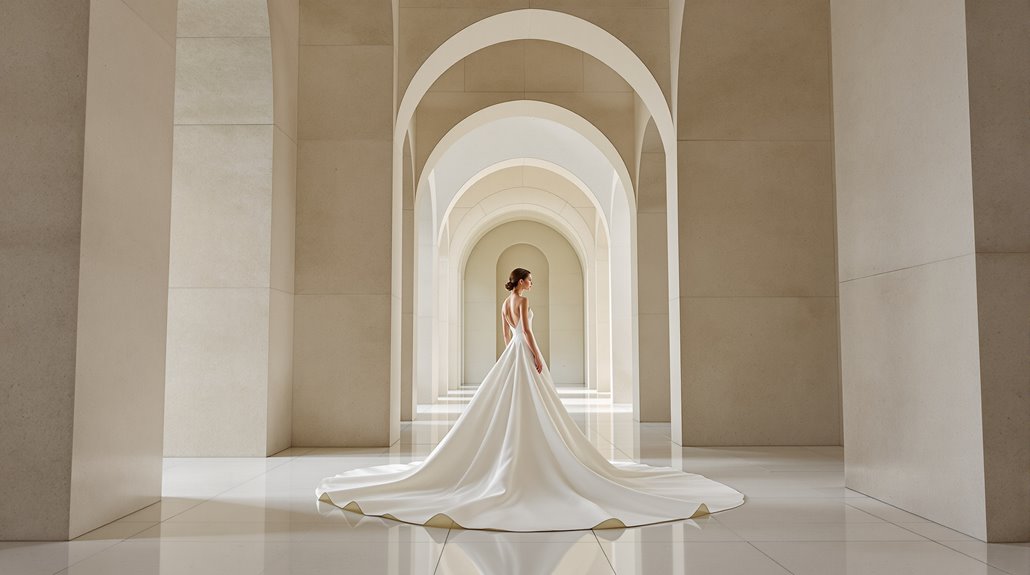
Your wedding dress doesn’t merely adorn the ceremony—it actively shapes it, directing focus, establishing visual rhythm, and orchestrating emotional cadence as deliberately as any film costume designer would. Wedding dress symbolism transforms throughout your ceremony, telling a story in four distinct acts: your first appearance (climactic reveal), your processional (movement as narrative), your vows (static tableau), and your recessional (transformed character arc).
Consider how your dress serves as costume design through:
- Material texture—silk’s liquid movement versus structured lace’s architectural presence
- Silhouette progression—how bodice structure commands attention during vows
- Color symbolism—whether traditional white purity or something that subverts expectations
- Transitional elements—removable trains, veils, or overlays that evolve your visual story
Your dress tells story through deliberate visual cues, not just aesthetic preferences. It’s your cinematography, your set design, your costume—and you’re both director and protagonist in this most personal production.
Guest Perception and Reading
While you prepare for months choosing the perfect wedding dress, your guests will spend less than an hour actively reading it as visual text—and yet those minutes constitute the most intensely scrutinized sartorial moment of your life. The numbers are stark: 60% of attendees identify your dress as their primary focus during the ceremony itself.
Your dress communicates volumes. Every design choice—silhouette, fabric, embellishment—functions as readable text for guests, creating visual shorthand that conveys your aesthetic sensibilities. They’ll catalog and interpret: traditional white (41%) signals convention, emerald green boldness, blush subtlety. And remember, this scrutiny extends far beyond the day itself. A full 72% of guests keenly anticipate professional photographs afterward, transforming your single-wear garment into a multimedia asset with extended involvement. You’re not just selecting fabric; you’re curating how you’ll be remembered, interpreted, and discussed—in perpetuity.
Choosing Dress as Storytelling Choice
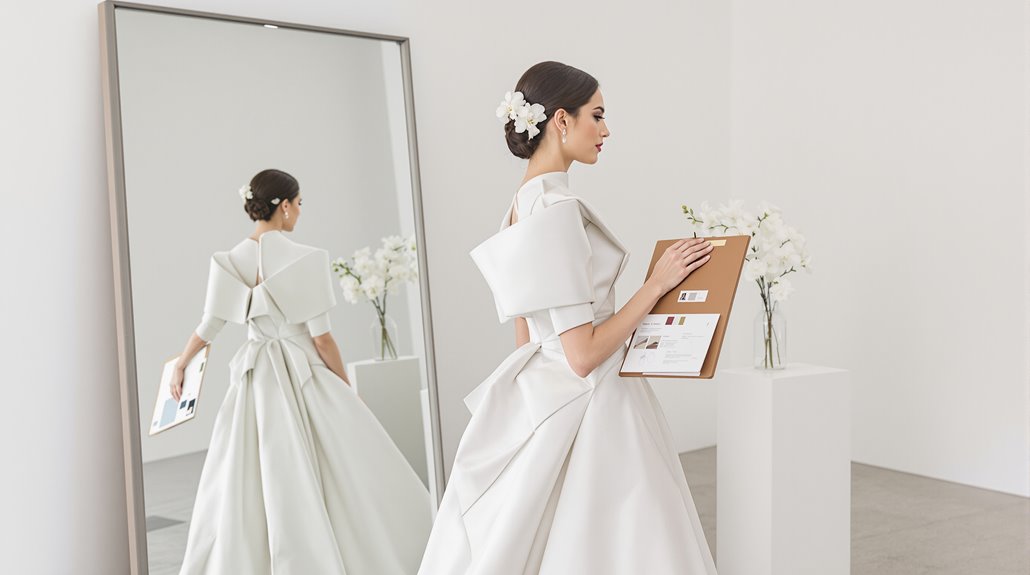
When you select a wedding dress, you’re not simply choosing fabric and thread—you’re authoring a visual autobiography. Your silhouette selection becomes an externalized narrative of your values—communicating volumes about your relationship to tradition, sustainability, and personal aesthetics in one sweeping gesture.
The four-dimensional storytelling inherent in your selection operates through:
- Structural design that frames your physical self-presentation—75% of couples admit this directly influences how they perceive themselves during the ceremony
- Color choices that telegraph your relationship to tradition (white) or contemporary values (green dresses amassing millions of views)
- Decorative elements that become focal points of visual attention, personalizing the mass-produced
- Digital presentation considerations that acknowledge the reality of how most guests will ultimately experience your look
You’re not just dressing yourself; you’re costuming a ceremony—positioning your body as both medium and message within the visual architecture of your most photographed day.
Conclusion
How often do we consider the profound implications of that white garment hanging in anticipation? You’re not merely selecting fabric and silhouette—you’re authoring visual autobiography, commissioning wearable art that telegraphs your essence to everyone present.
| Dimension | Mass-Produced | Custom-Designed | Couture |
|---|---|---|---|
| Expression | Limited options | Personal vision | Complete authorship |
| Craftsmanship | Machine-finished | Mixed techniques | Entirely handcrafted |
| Fit | Standard sizes | Modified patterns | Built for your body |
| Longevity | 1-5 years | 10-25 years | Generational |
| Investment | $500-2,500 | $2,500-8,000 | $8,000+ |
Your dress isn’t just clothing—it’s costume design for the most significant performance of your life. It’s anthropology, personal history, and future heirloom compressed into yards of fabric. You’re not “being bridezilla” by caring deeply about its details; you’re recognizing the garment’s profound storytelling power. And yet, paradoxically, its ultimate magic lies in how it becomes invisible once worn, allowing you—the authentic you—to shine through.