
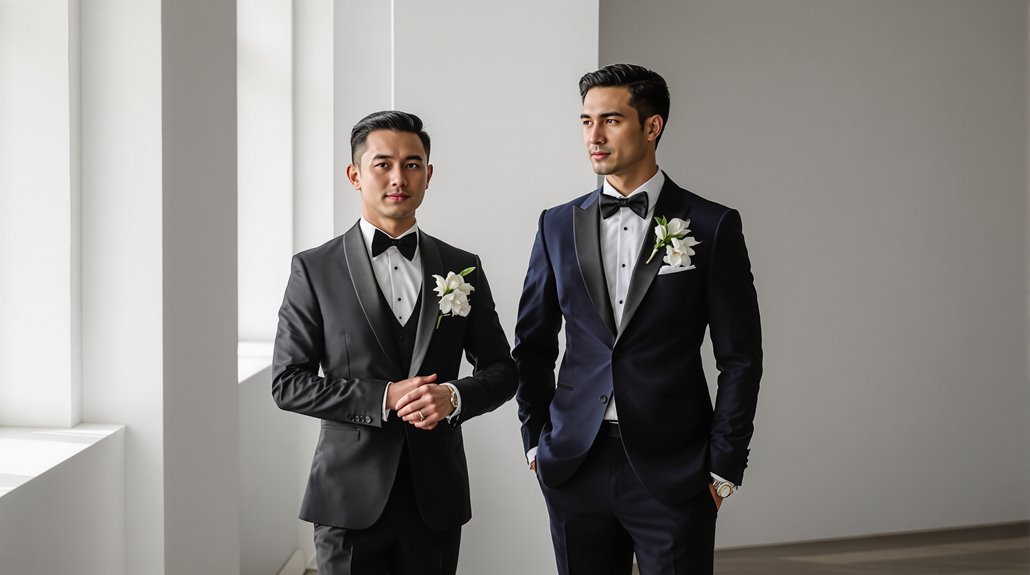
Your formalwear choice speaks volumes before you say a word. Tuxedos signal exceptional importance—reserved strictly for black-tie, evening events after 6pm. They raise occasions beyond ordinary time, announcing formality through satin lapels and ceremonial details. Suits, meanwhile, offer versatile elegance across multiple settings, communicating approachability while maintaining sophistication. The venue, timing, and dress code must align; wear a tuxedo to a casual gathering and you’ll appear tone-deaf rather than elegant. The right choice frames the entire event’s atmosphere.
What Formalwear Level Communicates
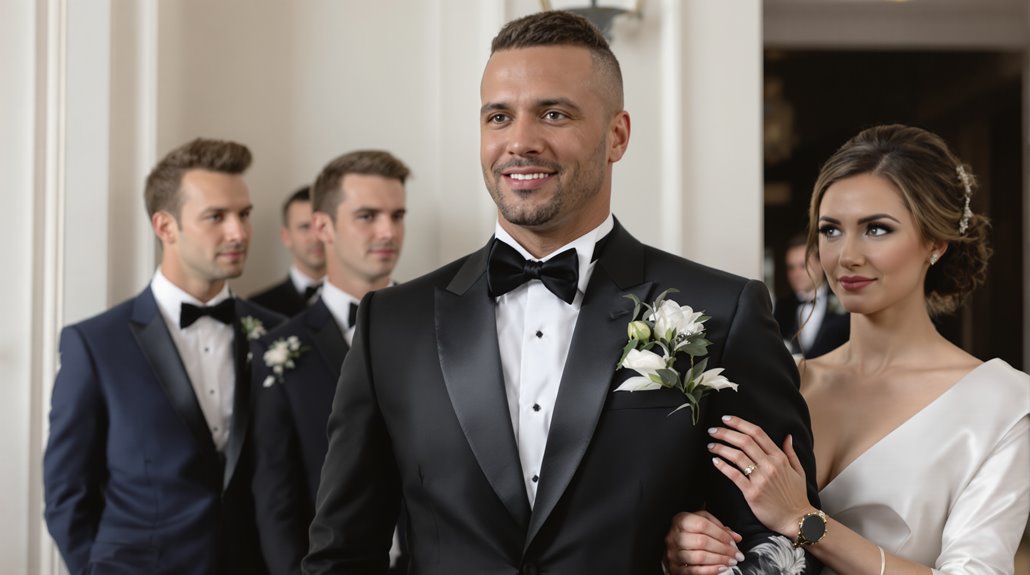
When you select between a tuxedo and suit, you’re not just picking clothes—you’re broadcasting a precise social signal about the occasion’s importance. The tuxedo level communicates exceptional significance—a night that exists outside ordinary time. Satin lapels, silk-covered buttons, and that distinctive trouser stripe announce: this moment matters.
Your wedding suit formality reflects expectations for guests, establishing a visual hierarchy. Choose a tuxedo, and you’ve declared this event sits firmly in black-tie territory—no exceptions. Choose a suit, and you’ve created breathing room, indicating elegance without rigid protocol. This decision can also impact your guests’ perceptions of the event’s luxury wedding experience, influencing their overall enjoyment and engagement.
Formalwear communication functions as silent dialogue between host and attendee. Those satin accents and absent belt loops on tuxedo trousers speak volumes about the caliber of celebration ahead. Tuxedos, with their origins in Regency England, were specifically designed to distinguish the most formal occasions from everyday events. And yet, the most confident hosts sometimes deliberately downshift formality, using suits to create approachable sophistication—signaling not just the event’s importance but its character.
Tuxedo Signals and Venue Appropriateness
Though slipping into a tuxedo transforms you instantly, not every venue warrants its splendor. Black-tie dress codes demand tuxedo appropriate attire specifically for evening events beginning after 6 PM—where your midnight blue or black ensemble communicates refined sophistication and respect for tradition. Understanding the spending optimization involved in your formalwear choice can also enhance your overall event experience.
You’ll find tuxedos perfectly at home at formal evening weddings, red-carpet galas, award ceremonies, and cultural openings. The formal event dress code at opera premieres, high-end charity benefits, and milestone celebrations specifically calls for that satin-lapeled distinction. Unlike versatile suits, tuxedos emphasize a high luxury impact through their distinctive satin details on lapels, buttons, and trouser sides. Venue appropriateness hinges on timing and setting: a New Year’s Eve gala at a historic estate practically demands it, while wearing one to a daytime wedding signals you’ve misread the room entirely.
Remember: your tuxedo speaks before you do, announcing your understanding of occasion weight and social protocol. When the invitation says “black tie,” it’s not a suggestion—it’s a requirement of participation.
Suit Signals and Versatility
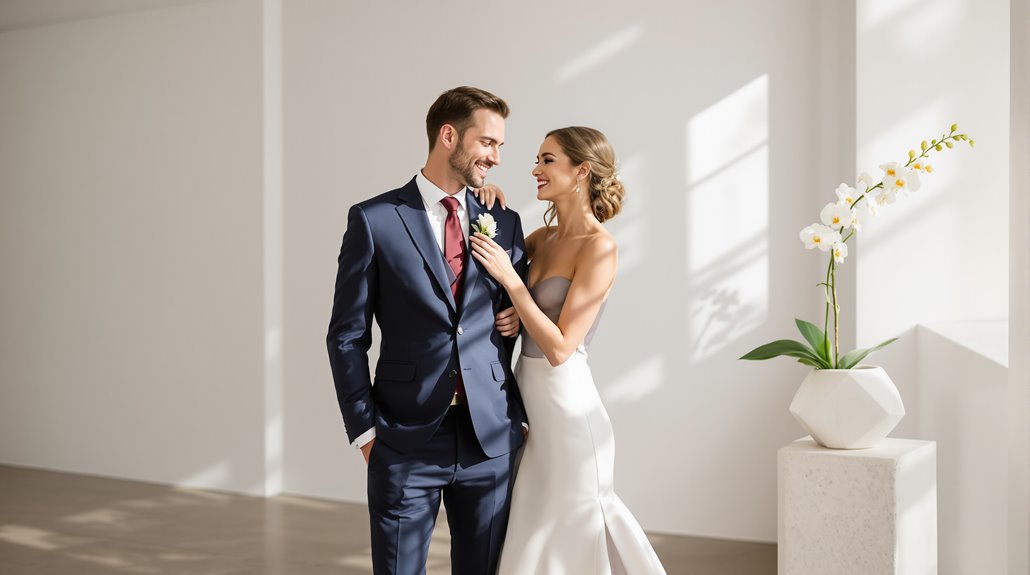
Unlike the tuxedo’s singular message of formality, a well-chosen suit speaks volumes through its versatility—communicating multiple signals across diverse contexts. Your wedding suit formality hinges on fabric and color: navy or charcoal wool projects business-appropriate authority, while royal blue announces festive confidence without breaching decorum.
When debating suit or tux wedding options, consider the message you’re sending to guests. A tailored suit—particularly in high-quality wool—signals approachable elegance rather than rigid formality, yet still conveys thoughtful investment in your appearance. The modern groom’s formalwear choices reflect this versatility—you’ll need this suit again, after all. The right fit transforms even mid-priced options into commanding pieces; your shoulders squared, lapels proportioned, the silhouette custom-cut to your frame. A suit isn’t just clothing but communication—declaring you understand context, occasion, and the subtle art of elegant restraint in appropriate dress.
Time-of-Day Conventions: Before vs After 6pm
The 6 PM dividing line in formal menswear isn’t merely tradition—it’s sartorial law. When weighing tuxedo vs suit options, understand that satin-accented tuxedos belong exclusively to nighttime events, while daytime formality demands morning suits or strollers. This isn’t arbitrary etiquette—it’s the fundamental architecture of men’s formal dress codes.
For weddings, the timing dictates your choice:
- Pre-6 PM ceremonies: Select a formal suit or morning coat—never a tuxedo regardless of venue grandeur
- Evening ceremonies (post-6 PM): A tux becomes not just appropriate but expected for black-tie affairs
- Twilight transitions: If your event spans the 6 PM threshold, lean toward suit options that connect the gap
The wedding tuxedo or suit decision isn’t about preference—it’s about respecting time-honored protocols. You’re not just dressing; you’re participating in a visual language that communicates your understanding of formality’s rhythms.
What You Signal to Guests About Dress Code
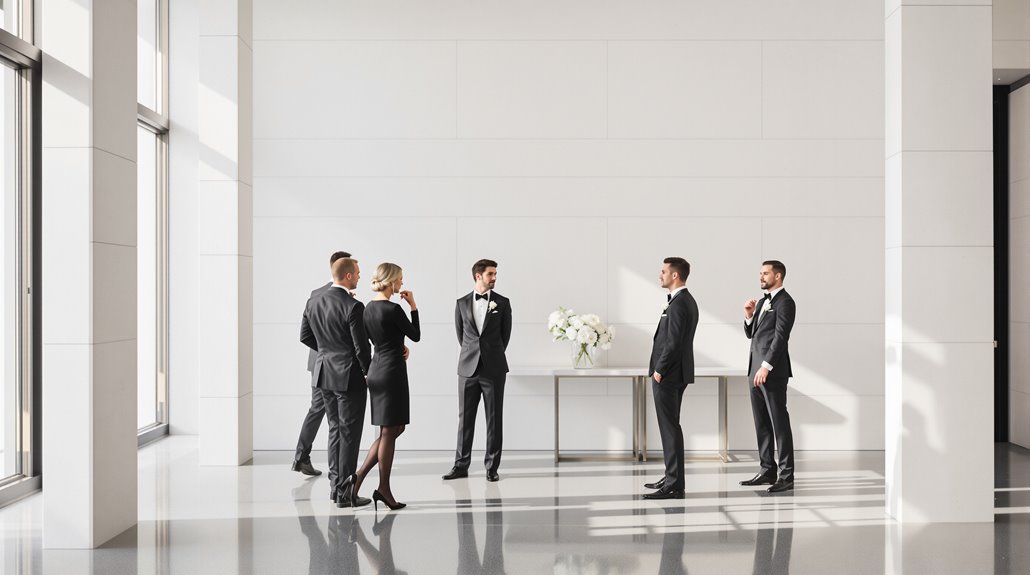
When you select between a tuxedo and suit for your event, you’re not merely choosing fabric—you’re establishing an unspoken contract with everyone who receives your invitation. Your wedding tuxedo or suit decision broadcasts clear expectations about how formally guests should dress.
Opt for a tuxedo, and you’re signaling a black-tie affair—those satin lapels and covered buttons telegraph unmistakable formality, prompting guests to enhance their attire accordingly. Wedding suit formality, while still polished, communicates a more approachable elegance, giving attendees permission to dress elegantly without evening gown requirements.
Research confirms this: 75% of people associate well-dressed men with confidence, and your choice ripples through the entire event atmosphere. The tuxedo vs suit wedding decision establishes whether you’re hosting a celebration steeped in tradition‘s highest formality or creating a refined yet less rigid environment. Either way, your selection becomes the North Star guiding every guest’s closet decisions.
Venue and Formality Alignment
Your venue choice represents a formality contract that demands proper attire alignment—nothing undermines an event’s sophistication faster than a groom in a business suit at a crystal-chandeliered ballroom affair. You’ve selected a space that sets expectations before guests arrive, and your attire must honor that implicit promise.
The timing-venue matrix dictates clear formality boundaries:
- Evening venues after 5 PM paired with ballrooms, luxury hotels, or black-tie specifications demand tuxedos—period.
- Daytime formal settings call exclusively for suits, as tuxedos read jarringly inappropriate before sunset.
- Themed venues recalibrate formality expectations—classic elegant spaces raise tuxedo requirements while modern venues permit suit flexibility.
The venue hierarchy establishes your minimum formality threshold, but the dress code you specify can override these baselines. A “black tie optional” notation allows suits in otherwise tuxedo-mandatory spaces, yet this compromise diminishes the venue’s intended atmosphere. Choose wisely.
When Tuxedo Warranted vs Performative
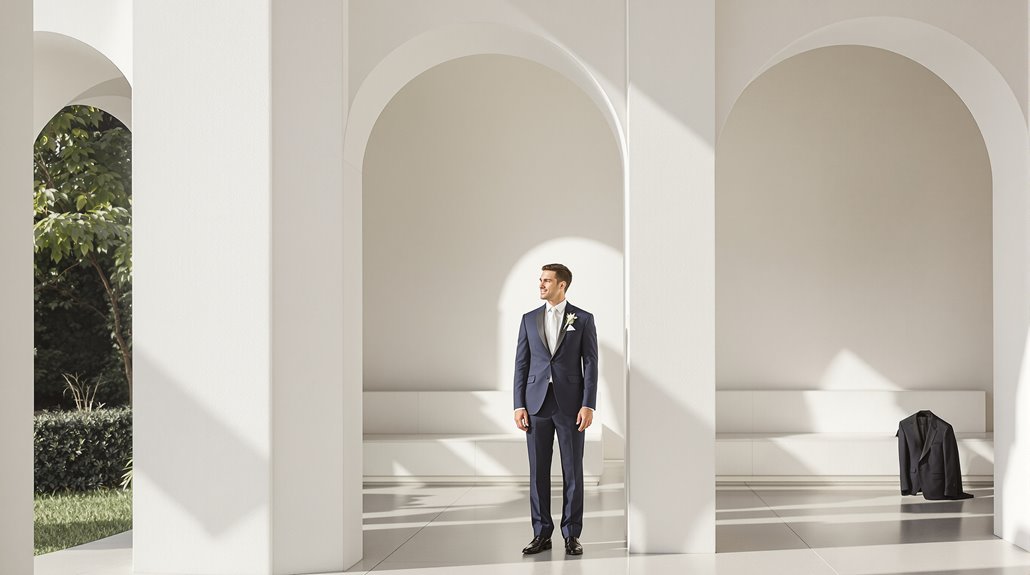
Recognizing the difference between warranted tuxedo occasions and performative overdressing separates the truly polished from the merely costumed. Black-tie events—galas, award ceremonies, opera premieres—demand tuxedos as proper respect for their ceremonial significance. You’re not just dressing up; you’re acknowledging the moment’s gravity through appropriate attire.
Wedding hierarchies provide perfect clarity: as groom or groomsman, your tuxedo signifies ceremonial importance within the wedding party. Guests? A suit suffices—and prevents the awkward faux pas of outshining the principal participants.
Modern standards have relaxed, and yet the fundamental truth remains: context determines appropriateness. Wearing a tuxedo to casual settings—bars, restaurants, standard social gatherings—broadcasts misalignment between your clothing and the occasion’s actual significance. It’s the sartorial equivalent of speaking formal Latin at a backyard barbecue—technically impressive but utterly disconnected from the moment’s true requirements.
Decision Framework by Wedding Style
The setting of your wedding fundamentally dictates the formality equation, transforming what might seem like a simple clothing choice into an elegant calibration of context, timing, and venue. Evening indoor ceremonies practically beg for the tuxedo’s satin lapels and patent leather sophistication—and yet, beach ceremonies render that same attire absurdly overdressed.
Your selection structure hinges on three essential considerations:
- Timing – After 6 PM welcomes tuxedo elegance; daylight hours favor suits regardless of stated formality
- Environment – Ballrooms and country clubs support formal black-tie; gardens, vineyards, and rustic settings pair naturally with suits
- Formality spectrum – Black/white-tie mandates tuxedos; cocktail or semi-formal opens suit possibilities
Destination weddings, with their inherent travel logistics, benefit from suit practicality. Tropical locations particularly resist tuxedo formality. Your choice simultaneously communicates expectations to guests while honoring the atmosphere you’ve cultivated—precision in this decision creates harmony rather than jarring disconnect.
Conclusion
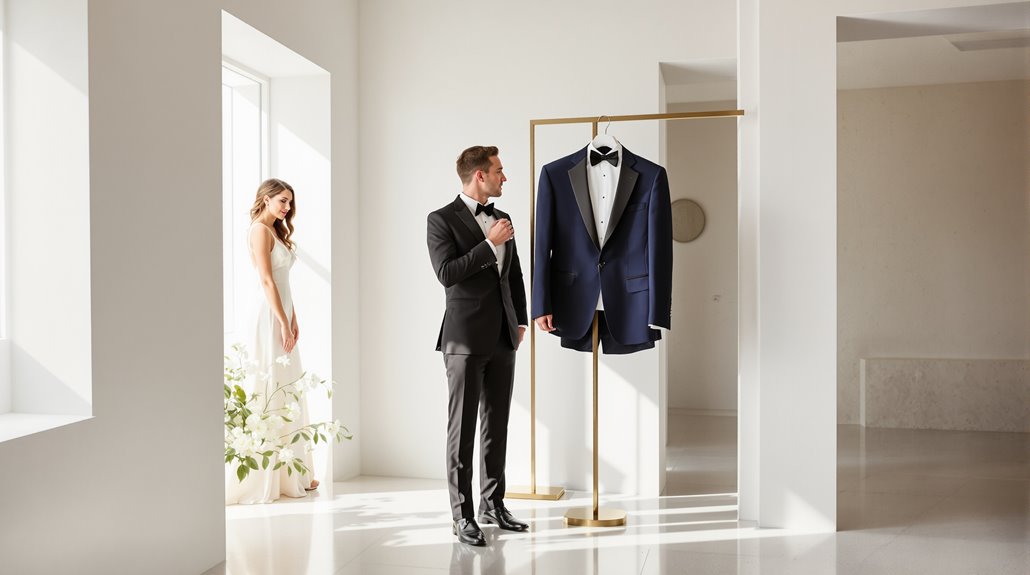
Ultimately, when discerning between tuxedos and suits, you’re not simply choosing fabric and buttons—you’re selecting a visual language that communicates precise expectations to everyone present. A tuxedo declares “exceptional occasion,” setting a tone of refinement that heightens your event beyond the everyday. Your choice anchors the formality spectrum for all attendees.
Suits offer versatility—that chameleon-like ability to shift between boardroom authority and celebratory elegance with minor accessory adjustments. And yet, this flexibility sometimes sacrifices the unmistakable gravitas a tuxedo commands in those truly milestone moments.
Consider this decision a form of social shorthand: tuxedos signal rare celebration demanding everyone’s finest presentation; suits suggest sophistication with breathing room. Your selection creates the invisible architecture of the evening, establishing boundaries and permissions that guests will instinctively follow. The question isn’t which is objectively superior, but which vocabulary best articulates your specific occasion’s significance.