
Spring dazzles with ephemeral tulips and fragrant lilacs—romantic, yes, but notoriously short-lived. Fall, though? You’ll get hardy dahlias and chrysanthemums delivering 4-8 weeks of reliable color versus spring’s fleeting 1-2 week shows. Spring bulbs create emotional impact but demand higher budgets (+3.8% YoY), while fall’s resilient blooms thrive through October with stable prices and predictable conditions. Your choice hinges on whether you crave brief drama or sustained performance through autumn’s golden light.
Seasonal Assumptions vs Realities
While we’ve all been conditioned to believe spring reigns supreme in the floral kingdom, the reality of seasonal blooming patterns shatters these simplistic assumptions with delightful complexity. You’ve planned your spring garden expecting a riot of color—tulips, peonies, cherry blossoms—but nature operates on its own timetable. Peonies peak in late May-June, tulips prove heartbreakingly brief.
In any seasonal bloom comparison, fall emerges as surprisingly competitive. Nearly 60% of gardeners prefer late-fall perennials, and the data backs this up: 29% of species actually peak in September, with chrysanthemums delivering color through November—not in spring’s fleeting moments. The highest diversity of flower colors is observed during these peak flowering periods, creating spectacular visual displays.
Your spring vs fall wedding flowers debate deserves reconsideration. Fall delivers reliable dahlias through October while asters paint terrains in blues and purples. Whether you’re planning wedding makeup or selecting your bouquet, understanding seasonal availability matters. Flower color patterns shift seasonally, but yellow blooms appear year-round, and whites dominate dry seasons. The flower season comparison isn’t simple—it’s gloriously complicated.
Spring Floral Offerings: Promises and Reality
Spring floral displays dazzle with staggering diversity that no gardener can fully appreciate in a single lifetime. You’re facing 32,000 daffodil cultivars, 4,000 tulip varieties, and 300 iris species—a cornucopia spanning every color except true blue. And yet, timing this abundance requires precision rarely acknowledged in seasonal flower options.
Those dreaming of perfect spring versus fall florals should note: early bloomers—crocuses, snowdrops, daffodils—often emerge while winter’s grip barely loosens, offering six weeks of reliable color. True spring arrives end of March, releasing hyacinths, iris, and pansies in succession.
What makes spring the ideal flower season for many isn’t just quantity but sensory richness—hyacinths’ intense fragrance, lilacs’ intoxicating scent, lily of the valley’s delicate perfume. Magnolias contribute significantly to this sensory experience with their large, fragrant flowers that bloom spectacularly before their leaves appear on deciduous varieties. Heights range dramatically too, from six-inch primrose to four-foot delphinium, allowing layered displays that fall gardens, magnificent as they are, rarely match. For couples planning intimate weddings, spring’s floral abundance provides endless options for creating memorable celebrations surrounded by nature’s peak performance.
Fall Floral Offerings: Promises and Reality
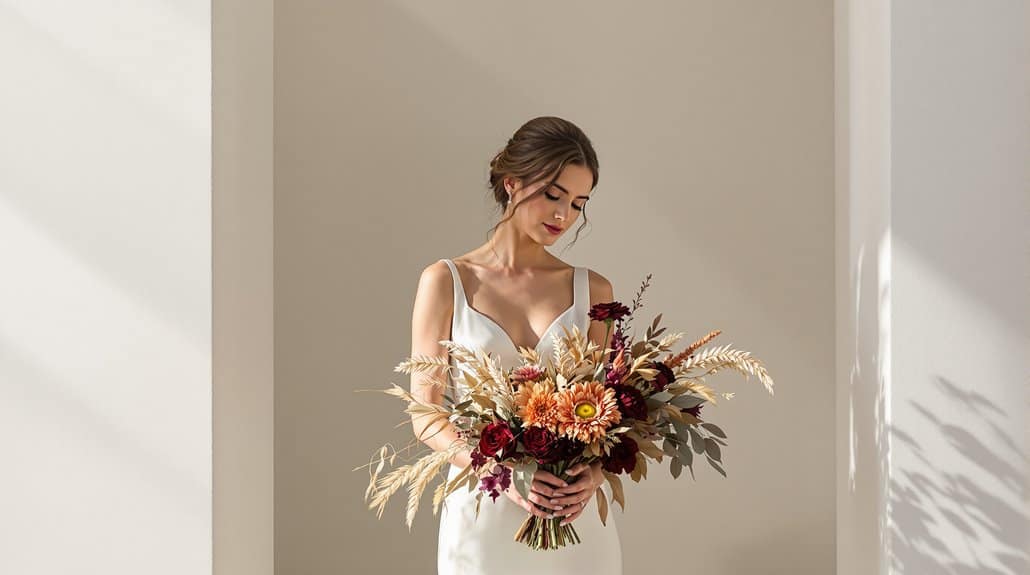
Unlike spring’s pastel pageant, fall’s floral selections deliver a spectacular finale that many gardeners overlook. You’re promised marigolds and dahlias for autumn weddings—and remarkably, fall delivers precisely what it advertises, then overachieves with spectacular bonuses. When comparing spring vs fall wedding flowers, autumn’s palette proves more reliable, with chrysanthemums blazing through November in rich yellows, oranges, and purples long after spring’s fragile tulips have withered.
The best season wedding flowers? Fall’s assortments bring substance—dahlias produce showstopping blooms until frost, available in 42 recognized varieties from pompons to star-shaped specimens. And yet, it’s not just about reliability; spring versus fall florals reveals autumn’s superior environmental performance. Your fall garden welcomes hardy perennials like asters (600+ species!) and Russian sage that shrug off drought while attracting late-season pollinators. They’re workhorses with staying power, maintaining lively color while providing essential support to bees preparing for winter. While Canadian marriage regulations don’t dictate your floral choices, planning an autumn celebration gives you access to these robust, dependable blooms that align perfectly with the season’s natural abundance.
Peak Bloom Period Timing
When it comes to timing your floral expectations, understanding peak bloom periods separates successful gardeners from the perpetually disappointed. You’re likely imagining spring’s bounty, but reality follows a more nuanced calendar—cherry blossoms fade quickly, and those peonies you’re dreaming of? They’re actually late May to June performers.
Climate change has shifted traditional timelines, with DC’s cherry blossoms now appearing seven days earlier than their historical April 4 average. You’ll need to adjust accordingly.
| Season | Early Bloomers | Peak Period | Duration |
|---|---|---|---|
| Spring | Tulips | April | 1-2 weeks |
| Late Spring | Peonies | Late May-June | 2-3 weeks |
| Summer | Heat-tolerant perennials | July-August | 4-6 weeks |
| Early Fall | Dahlias | September | 4-8 weeks |
| Late Fall | Autumn crocus | October-November | 2-3 weeks |
Temperature variations dramatically affect these windows—a warm spring hastens everything, while drought conditions wreak havoc on summer displays. If you’re planning a wedding around specific blooms, consider that California marriage licenses have their own timing requirements that might influence your floral selection window. Your best strategy? Layer plantings across bloom periods.
Variety Availability Comparison
Market information uncovers stark contrasts in what you’ll actually find available when shopping for flowers across seasons.
Seasonal flower markets reveal dramatic differences in selection, challenging garden shoppers to adapt their expectations accordingly.
Spring’s terrain appears lush with options—potted bulbs represented 9.3% of units sold in 2022, yet they delivered just 4.7% of revenue, suggesting their commercial value doesn’t match their cultural cachet. You’ll find tulips dominating cut flower sales at nearly 20%, but their ephemeral nature belies this market presence.
Fall, by comparison, offers exceptional staying power. Nearly 60% of gardeners prefer hardy fall perennials, with chrysanthemums generating 7.4% year-over-year growth. Their cold tolerance extends lively color—yellows, oranges, reds, purples—well into November. Asters provide low-maintenance alternatives in blues, pinks, and purples.
The contrast is unmistakable: spring brings beloved but fleeting classics, while fall delivers sturdy performers with sustained impact. Your flower dollar stretches further with autumn selections, but spring’s allure—that first tulip unfurling after winter—remains irresistible despite its brevity. When selecting flowers for wedding stationery or invitations, consider how seasonal blooms can inspire vintage-style wedding designs that capture the essence of your chosen season.
Price Optimization by Season
Beyond selection variety, your wallet feels seasonal fluctuations too—flower pricing operates by ruthless economic laws that shift dramatically between spring and fall. You’ll encounter spring’s paradox: natural abundance creates wholesale oversupply, potentially lowering costs—and yet Valentine’s Day and Mother’s Day introduce demand surges that obliterate those savings.
Fall offers surprising financial advantages. With wedding season winding down and holiday-specific floral demands still weeks away, you’re navigating calmer market waters. Dahlias remain available through October without the premium pricing that accompanies peak-demand periods. Transportation costs—the invisible multiplier affecting your bottom line—stabilize with predictable autumn shipping patterns.
Your strategy? Book fall events when possible. Spring arrangements require longer lead times and budget cushions (+3.8% spending increases year-over-year prove resilience despite economic pressures). Morning auctions consistently fetch higher prices, so instruct your florist to source later in the day for maximum value.
Which Season Serves Your Vision
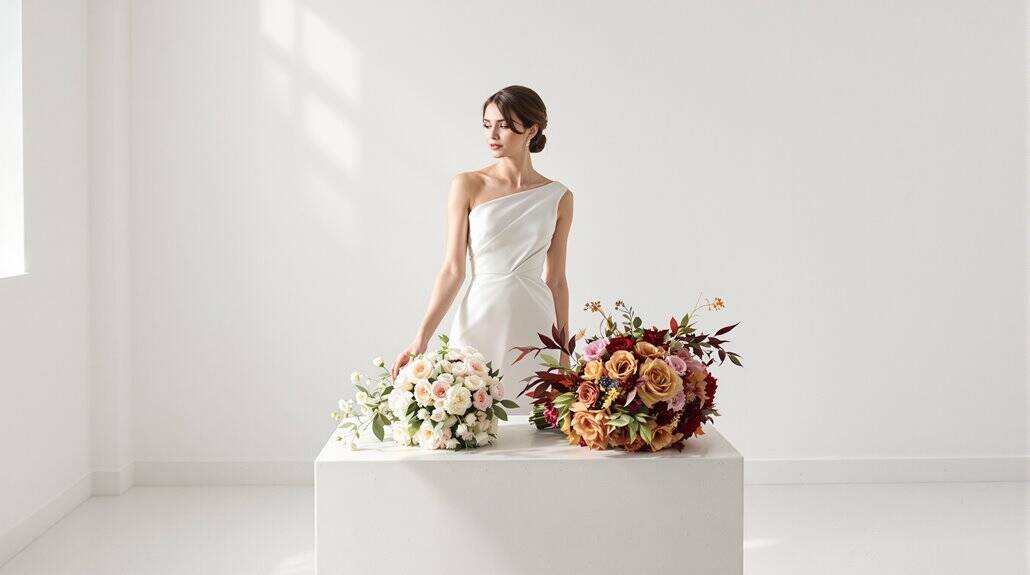
Your vision for floral magnificence hinges not merely on availability but on how each season serves your aesthetic aspirations differently—and understanding this opens transformative design possibilities. Fall planting aligns with nature’s rhythms—cooler air, warmer soil, diminished pests—creating the perfect storm for root development that translates to spectacular spring displays. Yet spring planting delivers immediate gratification through summer bloomers with their tropical flair and extended color presence.
Planting seasons aren’t just calendar entries—they’re design choices that shape your garden’s story from roots to bloom.
- Spring vision: Quick transformation with dahlias and begonias lasting through October—immediate but requiring intensive care during establishment
- Fall vision: Investment in tulips and peonies—delayed but dramatically more robust with six-month root development before flowering
- Mixed approach: “Lasagne planting” in fall for staggered spring blooms, complemented by strategic summer bulb placement—complex but yielding continuous color from March through frost
Your timeline matters—immediate impact demands spring planting; long-term garden structure requires fall’s patience. Consider how your bloom color choices will photograph throughout the season, as muted tones like blush and lavender reflect natural light more favorably than highly saturated hues that can appear unnatural on camera.
Conclusion
When weighing the merits of spring versus fall for your floral ambitions, we’ve discovered that neither season claims absolute victory—rather, each offers distinct advantages that align with different gardening philosophies and practical constraints.
Spring delivers that emotional punch—the romantic explosion of peonies and cherry blossoms we’ve dreamed about during winter’s dark months—and yet, its flowers prove frustratingly ephemeral. Tulips collapse after mere days; peonies tease with tight buds until late May. Fall, by contrast, rewards the patient gardener with dahlias that keep producing through October’s first frost, resilient against autumn’s temperature fluctuations.
Your choice ultimately hinges on whether you’re seeking that concentrated burst of color (spring’s undeniable forte) or steady, reliable production (fall’s quiet strength). Consider, too, your willingness to gamble—spring’s fickle weather patterns make timing precarious, while fall offers more predictable growing conditions. If you’re planning ahead for next year’s garden palette, consulting annual color trend forecasts can help you select flower varieties that align with upcoming design preferences. The seasons, like most worthwhile endeavors in life, offer different currencies of reward.