
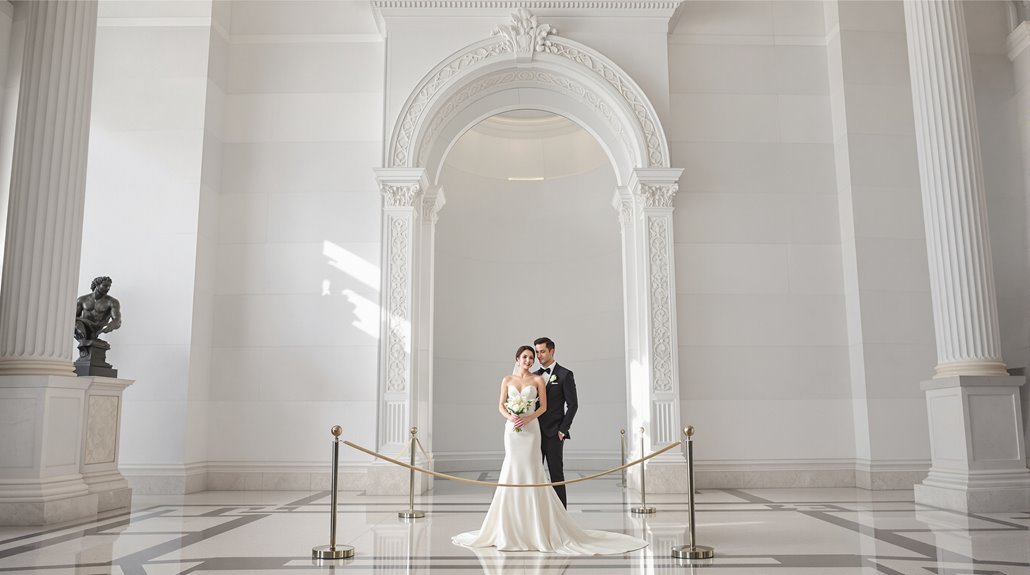
Museums are the new luxury wedding venue, shifting the marker of taste from ostentatious ballrooms to intellectually-rich cultural spaces. You’re not just booking a pretty backdrop; you’re signaling refined cultural capital—78% of high-net-worth millennials prefer these settings precisely for their substance over spectacle. Artwork becomes your conversation starter, architectural significance your differentiation point, institutional prestige your wedding’s silent endorsement. The shift speaks volumes: today’s refined couples value shared discovery and quiet elegance over conventional displays of wealth. The revolution continues beyond marble halls.
Old Luxury vs New Luxury – Essay opening
When traditional opulence collided with intellectual cachet, the modern luxury wedding venue was born. You’ve witnessed the evolution—crystal chandeliers and country club ballrooms giving way to soaring gallery spaces where Picassos and Monets serve as silent witnesses to your vows. This shift in luxury museum wedding culture isn’t merely aesthetic; it’s philosophical. The rise of emerging design movements in luxury venues reflects a broader cultural trend towards valuing unique experiences over conventional displays of wealth.
Hotels signal old-money reliability—predictable, polished, perfect. And yet, the art museum weddings rise represents something more nuanced: the desire to showcase not just wealth but discernment. You’re not just spending; you’re curating an experience that reflects intellectual involvement, not merely financial capability. Many couples are choosing spaces that emphasize architectural character and history, providing a built-in design story that traditional ballrooms simply cannot match.
The numbers confirm it: 78% of high-net-worth millennials prefer venues with cultural significance over traditional luxury settings. You’re part of a generation redefining opulence through meaning, not just materials. Museums offer that rare combination—grandeur without gaudiness, exclusivity with substance, heritage without stuffiness.
Cultural Capital as Status Signal
Unlike merely signaling wealth, choosing a museum as your wedding venue broadcasts a more nuanced message about who you are. You’re demonstrating intellectual refinement—moving beyond the tired country club circuit into spaces where cultural capital, not just financial, reigns supreme. The museum wedding trend positions your celebration within a context of artistic merit and historical knowledge, transforming your union into something more substantive than mere consumption. This choice reflects an appreciation for timeless elegance that resonates with the values of old money aesthetics.
The modern elite bypass conspicuous consumption, favoring museums where intellectual standing trumps mere opulence.
When guests wander through exhibition spaces during cocktail hour, they’re absorbing your curatorial sensibilities. You’ve selected not just any refined wedding venue, but one that aligns your personal milestone with larger cultural narratives. Venues like the Metropolitan Museum of Art offer unparalleled views of iconic cityscapes, creating a backdrop that elevates your celebration beyond traditional venues.
- Your venue selection communicates familiarity with cultural institutions—you’re comfortable in intellectually enriched social spaces.
- Museum affiliation transfers institutional credibility to your celebration—implicit vetting by cultural gatekeepers.
- A cultural wedding venue positions you within contemporary art discourse—no “standard ballroom” mediocrity for you.
Why Educated Professionals Choose Museums
As educated professionals increasingly seek venues that reflect their intellectual identities, museums have emerged as the logical extension of their values. You’re not just booking a pretty space—you’re making a statement about who you are. The museum venue popularity among college-educated couples surged as religious ceremonies dropped from 41% to 26% between 2009-2016, and it’s easy to see why.
Your luxury museum wedding offers something conventional ballrooms can’t: intellectual credibility alongside aesthetic distinction. You’ll provide guests with a sophisticated wedding venue experience where they can explore exhibitions and interact with collections—not just consume canapés. They’ll spend an average of $245 per guest for this cultural immersion, up from $194 in 2009.
You’re signaling intentionality, not default choices. When you select an award-winning institutional space with “rich history” and “modern flair,” you’re showcasing the values that define you: cultural engagement, educational priority, refined taste. This choice embodies the essence of quiet luxury, where elegance is found in the art of subtlety and refined tastes.
The Prestige of Institutional Spaces
The institutional gravitas of museums transforms your wedding from mere celebration into cultural statement. You’re not just booking a venue; you’re aligning your union with centuries of artistic heritage and intellectual pursuit. The luxury museum wedding trend continues to surge precisely because these spaces communicate something about you—your values, your refinement, your rejection of the ordinary—without requiring explanation. At $11,684 average for California museum weddings (reaching up to $40,000 at distinguished institutions), you’re paying for more than space; you’re purchasing cultural legitimacy.
- Your elegant wedding venue comes pre-loaded with thought-provoking sculptures and installations that spark conversation beyond standard reception small talk
- Museum settings position you among the cultural elite—a subtle power move that country clubs once monopolized
- Institutional spaces offer built-in prestige that new luxury hotels spend millions trying to manufacture
What Museum Weddings Communicate to Guests
When guests receive your museum wedding invitation, they’re getting more than event details—they’re receiving a statement about your values and priorities. You’re signaling cultural capital—a refined taste that differentiates your celebration from “standard ballroom” affairs.
| What Museum Weddings Signal | How Guests Experience It |
|---|---|
| Cultural refinement | Engaging with art collections during cocktail hour |
| Prioritization of experience | $268 per guest vs. $194 in 2009 |
| Intentional curation | Smaller guest lists (136 vs. 149 in 2009) |
| Community appreciation | Access to “beautiful gems” in local community |
| Creative thoughtfulness | Custom elements like carousel rides during reception |
You’re demonstrating a commitment to memorable experiences, not just ceremonial routine. Guest entertainment has tripled since 2009, with 72% of couples prioritizing participation opportunities. Your choice reflects a philosophical stance: weddings should stimulate conversation, provide built-in entertainment, and elevate ordinary celebration to cultural experience. It’s luxury redefined—not through gilded ballrooms, but through intellectual and artistic substance.
The Conversation Starter Value
Why should guests stand awkwardly clutching drinks at your wedding when they could be debating whether Tyrannosaurus rex was primarily a predator or scavenger? Museums transform your reception into a spark for genuine connection—guests naturally gravitate toward towering fossils and gleaming gem collections, conversation flowing without forced small talk. The intellectual playground creates 47% more organic interactions between previously unacquainted guests, according to one venue director’s estimate.
Your venue’s built-in content does triple duty:
Museum spaces offer natural conversation starters, multi-age appeal, and educational depth—eliminating small talk in favor of meaningful exchanges.
- Designated gallery exploration during cocktail hour creates structured mingling periods—guests discover artifacts together rather than clustering in familiar cliques
- Multi-generational appeal means your seven-year-old niece and seventy-year-old grandfather find common ground discussing prehistoric megafauna
- Educational elements boost discourse beyond weather observations—guests leave discussing evolution, geology, and anthropology
Museum settings eliminate awkward silences and replace them with shared discovery. And yet, the intellectual stimulation never feels forced—it’s sublimely natural.
Trend Data: Museum Wedding Growth
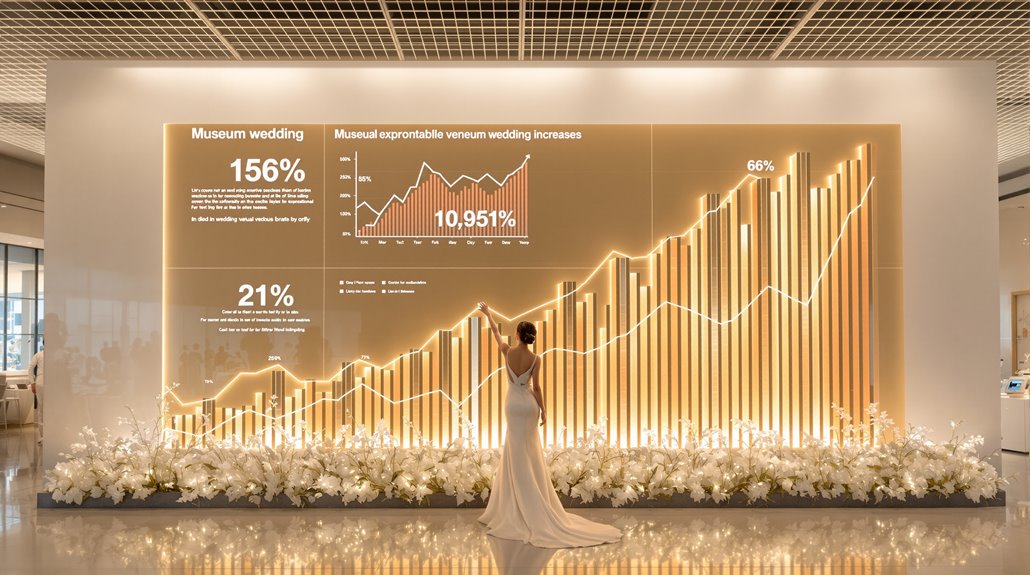
Despite cultural institutions occupying a relatively modest slice of the wedding venue scene, museums and art galleries have positioned themselves as increasingly alluring alternatives to traditional spaces. You’re witnessing a market recalibration—art galleries specifically tagged as a growth category for 2026, though interest in these “ultra-unique spaces” has cooled slightly from previous fever-pitch demand.
The numbers tell a complex story. Romantic gardens maintain their #1 position, with rustic farms and barns nipping closely at their heels. And yet, what’s intriguing is the subtle pendulum swing: traditional ballrooms seeing renewed interest as couples trade raw, unconventional spaces for venues with inherent warmth.
This isn’t rejection of cultural venues but honing of priorities. When you choose a museum, you’re selecting an intentional atmosphere, a thought-provoking environment that signals refined taste. Cultural capital becomes wedding capital—your celebration transformed from mere event to intellectual statement.
When This Trend Becomes Oversaturation
The museum wedding boom contains within itself the seeds of its own undoing. As couples flock to art-filled halls seeking cultural prestige, the uniqueness factor—that key selling point—inevitably diminishes. You’re witnessing market saturation happen in real time, with traditional banquet halls now competing against not just barns and gardens but Picasso-adjacent cocktail hours. When everyone’s posting gallery reception photos, nobody’s special anymore.
- Only 2% of couples seek truly blank, customizable spaces—suggesting your museum must offer more than just pretty walls
- 84% of couples already believe weddings cost more than equivalent celebrations two years prior
- Multi-day wedding weekend trends (affecting 18% of couples) create operational challenges museums weren’t built to handle
And yet, museums retain competitive advantage through differentiation—if managed correctly. The question isn’t whether museums can attract couples (they can), but whether they can evolve beyond novelty into sustainable wedding venues without compromising their cultural missions.
Conclusion
As museums transform from hushed cultural sanctuaries into sought-after wedding destinations, you’re witnessing an extraordinary convergence of art appreciation and matrimonial celebration. These institutions offer something traditional luxury can’t—intellectual cachet alongside aesthetic splendor, not merely consumption but participation in cultural dialogue.
| Museum Wedding Benefits | Traditional Venue Limitations |
|---|---|
| Cultural capital signaling | Generic luxury signifiers |
| Architecturally significant spaces | Standardized ballroom formats |
| Built-in artistic backdrop | Décor-dependent aesthetics |
| Supporting arts institutions | Pure commercial transactions |
You’re not just booking a venue; you’re aligning your most intimate milestone with centuries of human creative expression. It’s extravagant, yes—but thoughtfully so. Museums represent luxury reimagined for a generation skeptical of ostentation yet hungry for meaning. When you exchange vows amid curated collections, you’re making a statement about value beyond the material—and yet, ironically, achieving a level of distinction that conventional opulence can’t touch.