
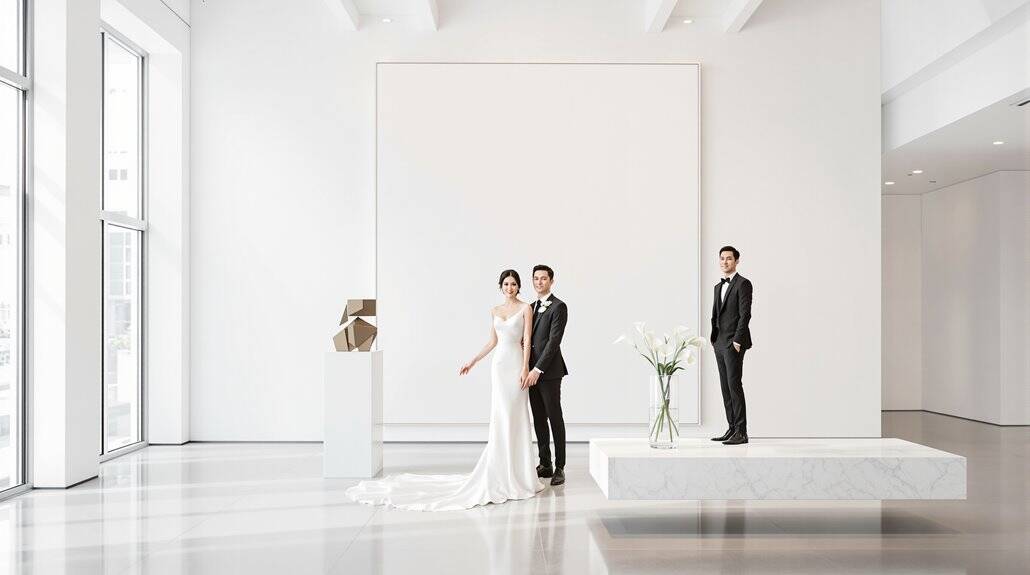
Museum weddings blend minimalist design with modern art for a refined celebration that’s both timeless and deeply personal. You’ll save on décor by letting the venue’s architecture shine—think soaring ceilings, dramatic lighting, and built-in artistic backdrops. Focus your budget on three statement floral installations instead of scattered arrangements, and embrace a monochromatic palette that photographs beautifully. The approach costs $40,000-$100,000, but transforms your wedding from mere event to immersive cultural statement that guests won’t forget.
The Couple’s Design Philosophy
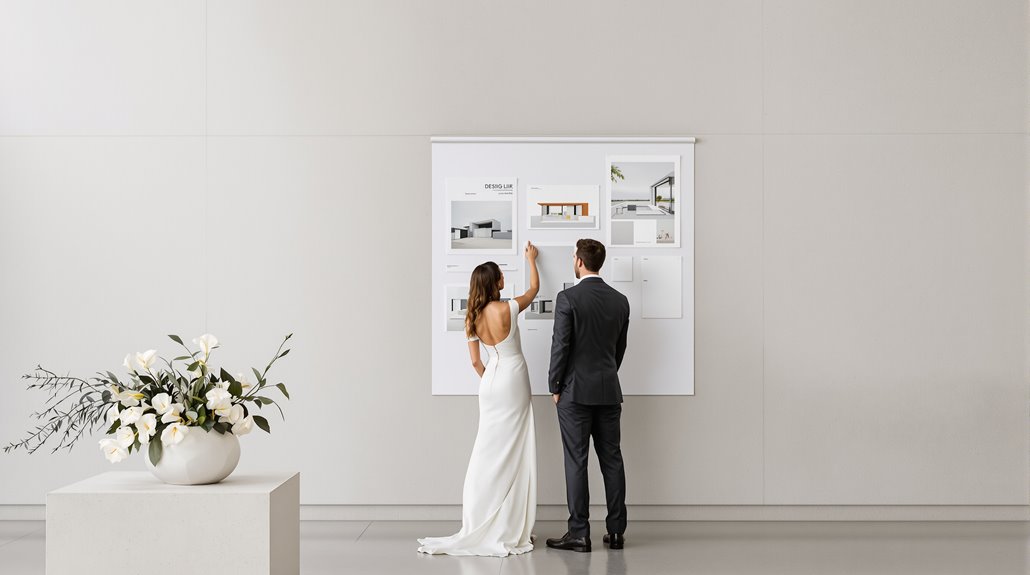
When planning their museum wedding, this couple embraced a radical truth: sometimes what you leave out matters more than what you include. Their museum wedding design wasn’t about filling space—it was about honoring it. The Speed Art Museum’s glass panes and architectural staircase didn’t need embellishment; they needed a complementary vision.
Their minimalist wedding philosophy centered on three questions: Does this spark joy? Does this reflect us? Does this compete with the venue? If any answer was “no,” the element was eliminated. Intentionality ruled every decision, from Ikebana-inspired centerpieces to the deconstructed aisle arch.
But contemporary art wedding aesthetics aren’t about coldness—they’re about clarity. This couple understood that restraint isn’t deprivation; it’s sophistication. Their unexpectedly warm and sunny December day added natural illumination to the museum’s already light-filled spaces. By selecting only what genuinely mattered—cappuccino roses, geometric accents, clean lines—they created a celebration that felt both modern and deeply personal. Their design choices supported the visitor-art connection that makes museum spaces so powerful. Less truly became more.
Venue: Contemporary Art Museum Selection
Unlike traditional venues that demand extensive decoration, contemporary art museums offer an entirely different proposition: spaces already animated by creative vision. In a contemporary museum wedding, you’re essentially borrowing intellectual cachet—250,000 square feet of gallery spaces where massive installations create conversation starters without a single centerpiece expense. Among the stunning options, the Spencer Finch Gallery features breathtaking multicolored lighting installations perfect for creating an artistic ambiance.
| Venue Space | Capacity | Site Fee Range |
|---|---|---|
| Axline Court | 430 | $3,500-$6,000 |
| Jacobs Hall | 247 | $3,000-$7,000 |
| Art Park | 247 | $2,500-$5,500 |
Art museum wedding features typically include soaring loft-style ceilings and those coveted ocean views (if you’re eyeing the La Jolla location). You’ll find spaces that accommodate intimate ceremonies and receptions for up to 400 guests, with flexible support areas for your wedding party. Peak season starts at $5,000, though off-peak can dip to $2,002—steep, yes, but you’re paying for museum-grade sophistication without decorating a thing. When discussing pricing with museum coordinators, consider booking during off-peak seasons like December through February to unlock better rates while maintaining the same architectural drama.
Spatial Restraint Strategy
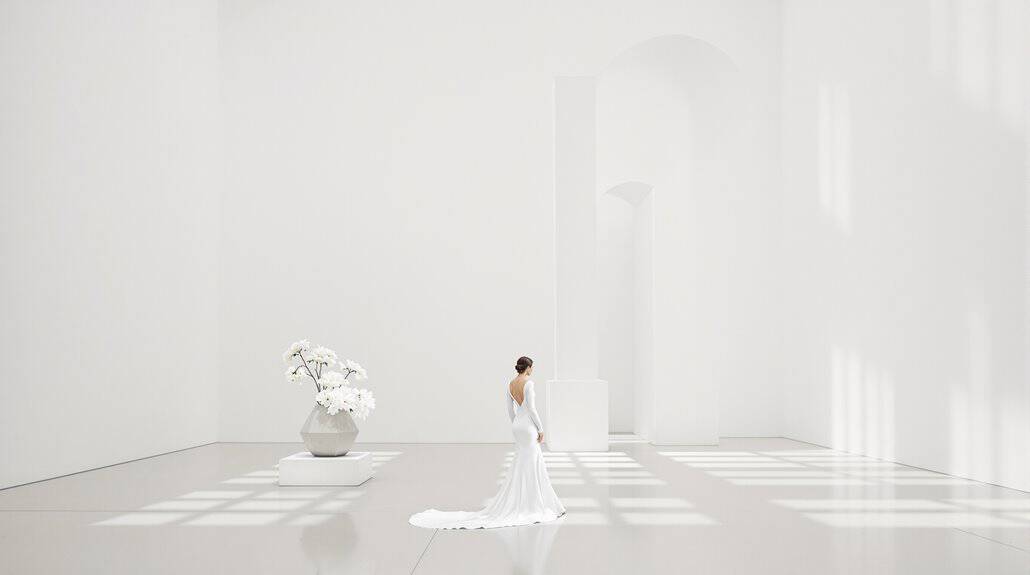
Beyond mere decoration-free simplicity, museum weddings demand a refined understanding of spatial restraint—the delicate art of knowing what to subtract rather than what to add. You’re not filling emptiness; you’re curating significance. When planning your contemporary museum wedding, resist the urge to compensate for gallery neutrality with excessive florals or signage. The venue itself—with its compression-release rhythm of intimate corridors opening to grand galleries—creates the drama.
Your minimalist museum wedding succeeds when guests discover moments rather than face bombardment. Position key elements (cake, guest book, photo displays) in strategic locations that encourage exploration through 3-4 distinct spatial zones. This breathing room prevents sensory overload while maintaining visual coherence. And yet, restraint doesn’t mean coldness—it means intentionality. Every chair, every candle, every table setting earns its place through purpose rather than mere presence, allowing the architecture itself to become your most sophisticated decoration. For couples planning destination celebrations in Canada, understanding Canadian marriage requirements ensures your minimalist vision proceeds without administrative complications.
Floral Installation: Three Large vs Fifty Small
Tactical floral volume creates the visual signature of your museum wedding more powerfully than sheer quantity ever could. Museum wedding design thrives on intentionality—three statement installations command attention while fifty scattered arrangements fragment it.
| Attribute | Three Large Installations | Fifty Small Arrangements |
|---|---|---|
| Visual Impact | Gravitational focal points | Diluted presence |
| Budget Allocation | Concentrated investment | Dispersed resources |
| Setup Logistics | Complex but contained | Time-intensive scatter |
| Artistic Coherence | Museum-worthy statements | Decorative afterthoughts |
Your modern museum celebration demands breathing room for both art and architecture. Large-scale floral installations become temporary exhibits themselves—commanding, conversational, conceptual. They metamorphose spaces without competing with permanent collections.
Fall flowers like dahlias and asters provide reliable, vibrant color that sustains these statement installations throughout your celebration, extending their visual impact well into the evening hours.
And yet, this isn’t about minimalism for its own sake. It’s calculated restraint. Each installation becomes photographically iconic, spatially revolutionary, and emotionally resonant. Your guests will remember three breathtaking moments rather than fifty pleasant ones—distinction rather than decoration.
Monochromatic Palette Execution
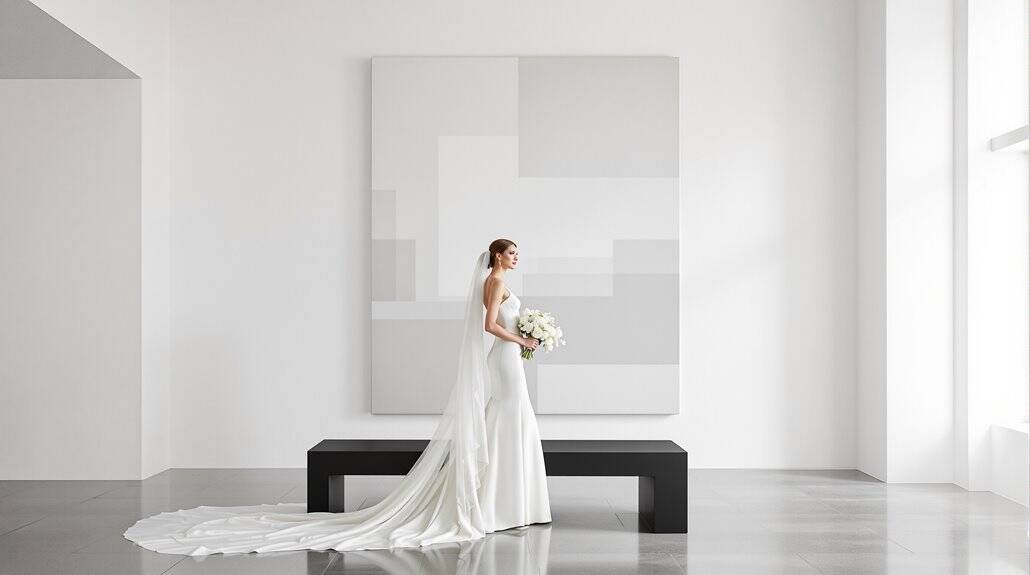
The monochromatic palette, when executed with precision, transforms your museum wedding from merely elegant to undeniably iconic. You’ll want to build on a foundation of black, white, cream, or muted grays—colors that whisper sophistication rather than shout for attention. In contemporary museum wedding design, this restraint isn’t boring; it’s brilliant.
Layer textures obsessively. Five different white textiles on lounge furniture, three metallic finishes on your barware, seven geometric patterns in your tablescapes—this depth prevents monochromatic from becoming monotonous. Your museum wedding design benefits from juxtaposition: crisp white phalaenopsis orchids against mushroom-toned accents create visual interest without color chaos. Consider a monochromatic plum sphere bouquet that achieves a perfect dome shape with stems positioned at consistent angles, demonstrating how a single hue emphasizes structure over color contrast.
Evening Timing for Dramatic Light
When considering museum weddings, evening timing transforms ordinary spaces into remarkable experiences through dramatic interaction of light. You’ll watch as soaring atriums transition from sun-drenched to artificially illuminated—a metamorphosis that demands strategic planning, yet rewards with incomparable ambiance.
| Timing Phase | Natural Light Impact | Lighting Strategy |
|---|---|---|
| Golden Hour | Warm glow through windows | Minimal supplemental lighting |
| Sunset Transition | Diminishing natural illumination | Activate architectural highlighting |
| Early Evening | City skyline activation | Implement pin spotting on focal points |
| Deep Evening | No natural light contribution | Full uplighting and pattern projection |
Your museum wedding design hinges on these natural light transitions—the skyline gradually illuminating as interior uplighting brings columned walls to life. Dramatic doesn’t mean theatrical here; it’s architectural highlighting that respects the art while transforming neutral spaces. The restraint that makes museums sophisticated during day becomes your canvas after sunset. Venues like SFMOMA feature retractable glass walls that maximize these transitions, offering unobstructed skyline views as natural light fades into evening illumination.
Photography: How Minimalism Read in Images
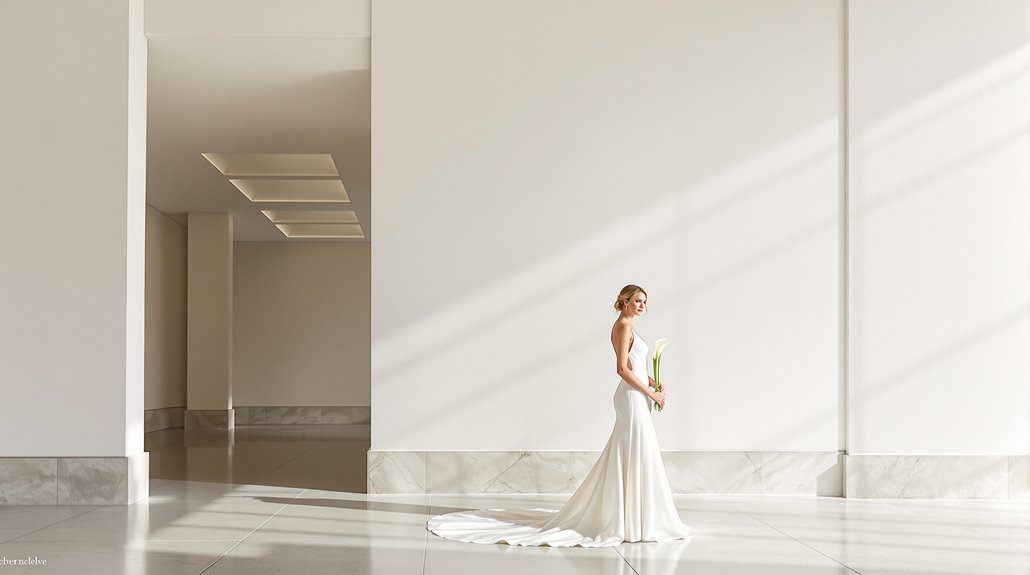
Minimalist wedding photography, despite its apparent simplicity, demands outstanding technical precision and compositional awareness to translate effectively in images. You’ll find that in a contemporary museum wedding, clean architectural lines become the subject themselves—not merely backdrop. Glass walls, polished floors, and geometric forms create reflective surfaces that require strategic positioning, yet these elements deliver editorial-quality portraits without added decoration.
Your monochromatic color strategy—whether classic black and white or modified neutrals with sage, copper, or deep green—creates instant sophistication, but requires texture and contrast to prevent visual flatness. The museum’s inherent lighting presents challenges and opportunities: natural daylight through atrium spaces creates midday glare, and yet this same glass-filtered light can illuminate minimalist photography with dramatic shadows when properly utilized. Consider how gallery lighting establishes warm ambience while clean walls prioritize your portraiture—making the couple the true artistic centerpiece in this design-forward environment.
Vendor Team and Execution
Selecting your vendor team requires as much curatorial attention as the art surrounding your museum ceremony. You’re not just hiring services; you’re assembling collaborators who understand the delicate balance between minimalism and meaningful execution. Review portfolios with ruthless specificity—does their aesthetic complement modern art sensibilities? Have they worked in similar spaces before? The answers matter, tremendously.
Establish a communication structure early—master timelines distributed to all, centralized contact information, regular check-ins. Your day-of coordinator becomes the essential hub, orchestrating vendor collaboration without disrupting the clean lines of your vision. And yet, the most seamless execution often comes from professionals who’ve worked together before; they’ve developed shorthand communication that prevents logistical hiccups.
Contracts aren’t just paperwork but protection of your aesthetic vision. Document every detail of your event coordination expectations—venue access, setup timing, breakdown protocols—leaving nothing to interpretation. Understanding the $284 per-guest metric can help you allocate your vendor budget proportionally, ensuring your minimalist vision doesn’t compromise the essentials like catering, photography, and florals that guests will experience. Trust, but verify.
Final Thoughts and Budget
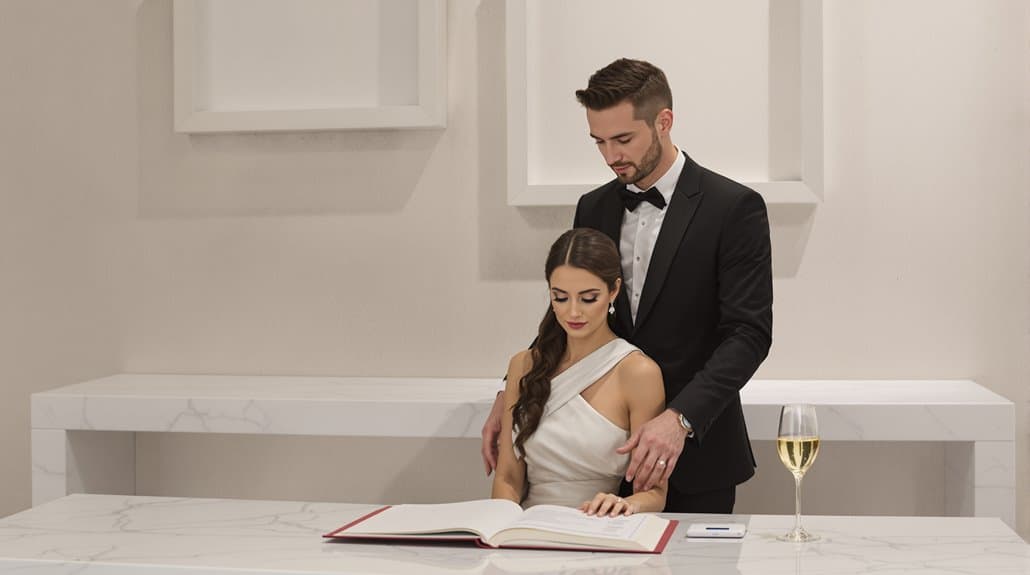
How honestly have you calculated the true investment of your museum wedding vision? Contemporary museum wedding costs run markedly higher than national averages—$40,000 to $100,000+ at venues like Milwaukee Art Museum, compared to the $33,391 national average. The venue fee alone ($15,000-$30,000 for premium spaces) represents your largest expense, followed by catering ($25,000-$55,000 for 150 guests).
Every museum wedding case study reveals the same pattern: high venue investment, substantial catering requirements, and non-negotiable professional planning support ($2,000-$20,000, depending on service level). And yet, these figures represent more than mere expense—they reflect a consciously curated experience. Your museum wedding design inherits gravitas from its setting, eliminating the need for excessive décor while demanding precise execution.
Set aside 5-10% for contingencies. Before finalizing your venue contract, ensure you’ve secured your California marriage license to meet all legal requirements for your ceremony date. Budget transparency means acknowledging both the financial commitment and the remarkable value: a wedding that doubles as an immersive cultural statement.
Conclusion
As your budget calculations lay bare the financial reality, they simultaneously reveal something more profound: museum weddings represent not just an expense but an investment in meaning itself. Contemporary museum wedding design transcends traditional venue limitations—you’re not merely renting space, but curating an experience where art becomes witness to your commitment.
| Museum Wedding Element | Traditional Benefit | Hidden Value |
|---|---|---|
| Modern Art Backdrop | Stunning photos | Intellectual conversation starters |
| Minimalist Design | Reduced décor costs | Forces focus on relationship |
| Curated Spaces | Unique setting | Reflects your personal aesthetic |
| Institutional Support | Professional staff | Legacy connection to cultural landmark |
| Artistic Context | Visual interest | Symbolic depth to ceremony |
Your museum wedding inspiration needn’t come from elaborate Pinterest boards or exhaustive planning guides. The power lies in restraint—letting the museum’s inherent character speak. However, before finalizing your venue choice, ensure you’ve conducted thorough due diligence on operational realities, from electrical capacity to load-in logistics, as historic and cultural venues often conceal infrastructure challenges behind their aesthetic appeal. Your guests won’t remember elaborate centerpieces, but they’ll never forget exchanging vows beneath that breathtaking installation piece.