
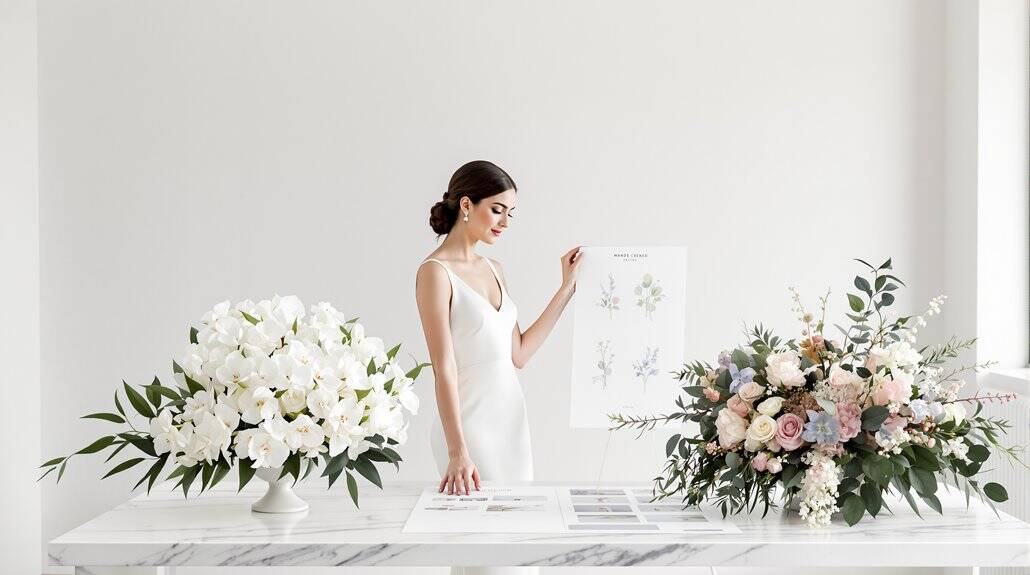
Mono-floral arrangements express minimalist confidence through repetition and restraint, creating visual clarity with a single bloom type. You’ll see refined impact through limitation rather than abundance—a sonnet versus a symphony. Mixed arrangements, nonetheless, celebrate complexity with layered textures and organized chaos, embracing nature’s diversity through asymmetrical balance. Your choice reveals deeper aesthetic values: simplicity versus richness, meditation versus celebration. The venue’s architecture and your philosophical stance on beauty will guide which approach truly strikes a chord.
Two Design Philosophies
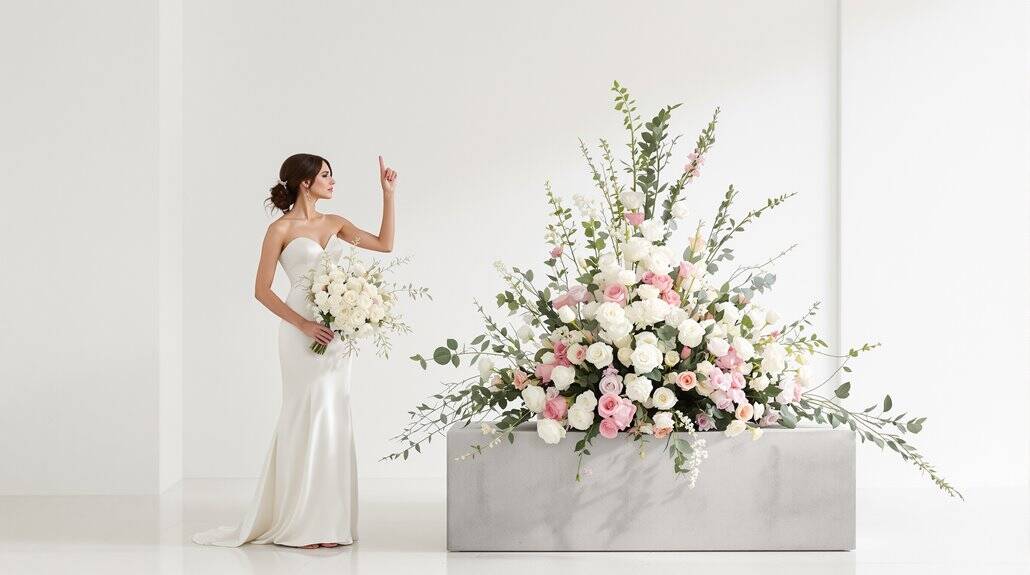
Two Design Philosophies
While many assume floral design boils down to aesthetic preference alone, the choice between mixed and mono-floral arrangements actually reflects two fundamentally different design philosophies—each with its own visual language and emotional impact.
The single flower vs mixed bouquet decision operates as a declaration of intent. Mono-floral wedding designs embrace minimalist confidence—twenty stems of one extraordinary bloom makes an unequivocal statement through repetition and singularity. And yet, mixed arrangements create visual complexity through layered textures, clustered focal points, and asymmetrical compositions that mimic nature’s beautiful disorder.
You’re not just selecting pretty flowers; you’re choosing between design languages. Mono-floral says “this one perfect thing deserves complete attention,” while mixed arrangements declare “complexity creates richness worth exploring.” The thoughtful use of negative space in mono-floral designs allows individual blooms to be truly appreciated without distraction. Your floral design philosophy reflects deeper aesthetic values—simplicity versus abundance, uniformity versus diversity, restraint versus exuberance. Just as private rooms on trains offer complimentary meals and focused luxury, mono-floral arrangements provide an undistracted sensory experience centered on a single botanical element.
Mono-Floral: Minimalist Confidence and Restraint
When you choose a mono-floral arrangement, you’re making a declaration of confident restraint that speaks volumes. Twenty stems of identical tulips—varying only in height, angle, and perhaps shade—creates a statement through deliberate limitation, not despite it. The restraint principle eliminates visual clutter while simultaneously elevating the singular beauty of your chosen bloom.
Unlike a mixed bouquet that dazzles through diversity, mono-floral wedding designs achieve sophistication through singularity. This approach creates a cohesive visual impact that immediately draws attention while maintaining elegance. You’ll notice how a cluster of twenty ranunculus—some fully open, others still tightly budded—creates textural complexity without introducing competing elements. This is the paradox of mono-floral arrangements: they appear simpler yet demand greater technical precision.
You’re not sacrificing intrigue for minimalism. Rather, you’re allowing the subtle variations—petal texture, stem curve, color gradation—to become the focal narrative. The uniformity also creates distraction-free foundations that photograph exceptionally well, ensuring your design choices translate beautifully through the camera lens for years to come. A visual whisper, and yet, often more memorable than the loudest floral shout.
Mixed Arrangements: Garden Abundance and Complexity
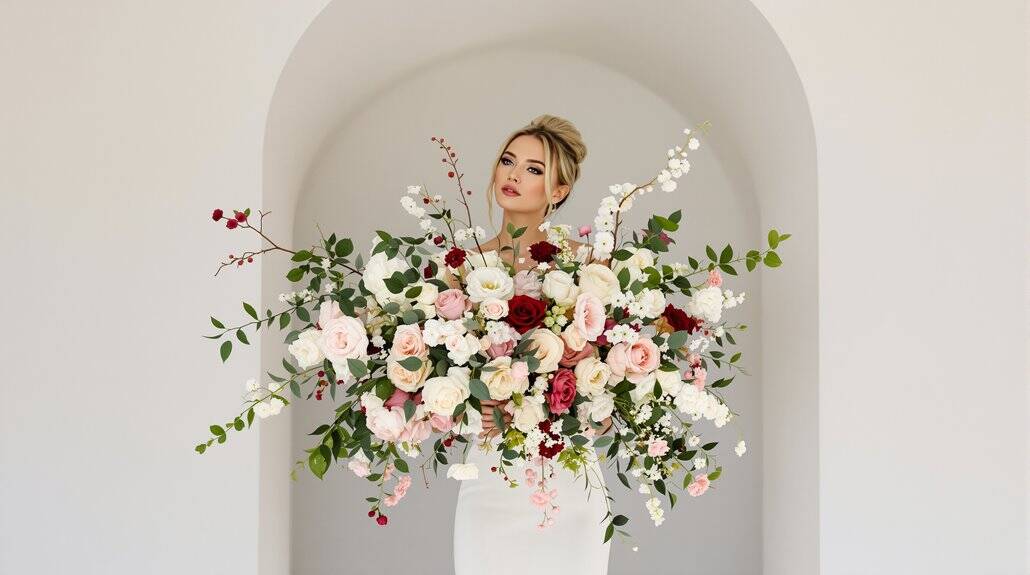
Unlike their mono-floral counterparts, mixed arrangements embrace the organized chaos of nature’s full spectrum. When you abandon the discipline of a single flower variety, you’re tasked with orchestrating visual harmony across multiple personalities—tough work, but transcendent when executed properly. You’ll need to balance three foundational hues, two complementary colors, and one strategic accent to prevent visual overload.
The magic happens in the interplay—soft peonies against spiky thistle, smooth roses beside textured eucalyptus. Mixed arrangement weddings demand this complexity, with asymmetrical balance achieved through careful distribution of visual weight. Large focal blooms on one side must be countered by clusters of smaller blooms opposite.
Monochromatic florals still have their place within mixed designs—repeating a single color through different flower types creates cohesion amid diversity. And yet, the true art lies in embracing the negative space between elements, allowing each bloom its moment while contributing to the collective abundance. Just as exceptional diamond engagement rings balance multiple facets to create singular brilliance, mixed arrangements unite diverse elements into one cohesive statement.
What Each Approach Communicates
Your floral choice serves as a silent manifesto of your aesthetic values and emotional intent. A mono floral wedding arrangement—twenty identical roses in perfect formation—declares precision and intentionality, communicating undiluted devotion through singular focus. You’re not scattered; you’re certain. The monochromatic florals make a deliberate statement: minimalism as luxury, restraint as sophistication.
And yet, your mixed bouquet tells an equally persuasive story—one of abundance, complexity, and celebration of diversity. Ten varieties showcased together suggest a mind that appreciates nuance, embraces contradiction, and finds beauty in unexpected combinations. It’s the difference between a sonnet and a symphony, both masterful but fundamentally different expressions.
The single flower vs mixed bouquet debate isn’t merely aesthetic—it’s philosophical. When you choose one approach, you’re telegraphing your relationship with simplicity, your comfort with complexity, and in the end, how you perceive beauty itself. These choices function as semiotic tools, shaping how guests subconsciously interpret your personality, values, and the emotional atmosphere you’re crafting for the celebration.
Cost Implications Comparison
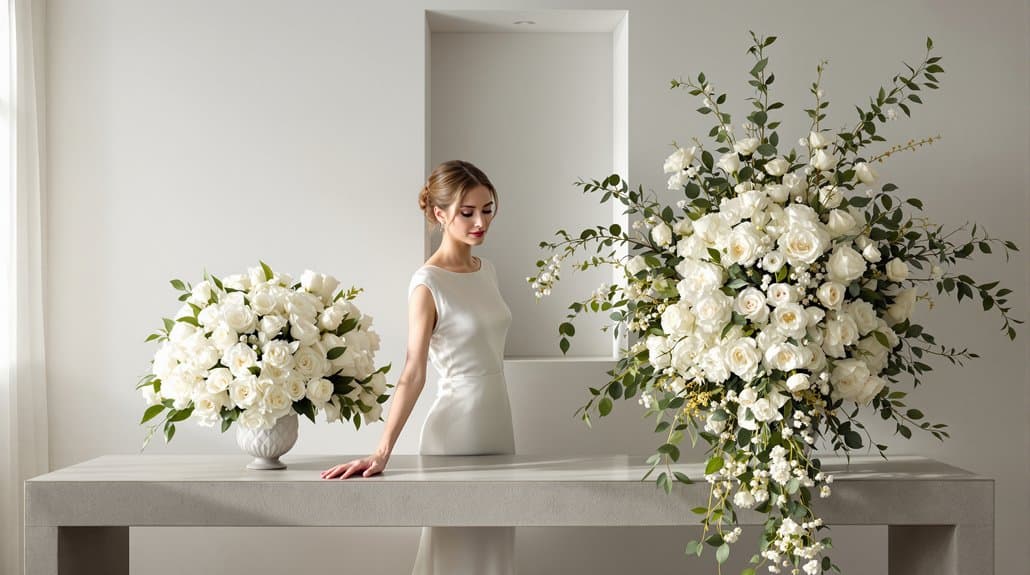
Beyond aesthetic considerations, the financial architecture of your floral choices deserves thorough examination. Twenty stems of a single exquisite bloom often commands less labor cost than an intricate mixed arrangement requiring meticulous placement—and yet, mono-floral designs frequently demand premium specimens where every imperfection stands exposed. You’re paying for perfection, not variety.
The single flower vs mixed bouquet equation shifts seasonally. A mono-floral arrangement of twenty peonies ($15-20 each) totals $300-400 for dramatic impact, while that same budget in a mixed design stretches further through strategic pairing: three focal garden roses ($8 each) surrounded by stock, astilbe, and affordable greenery.
Cost implications extend beyond stems to execution. Monochrome arrangements project luxury through simplicity—paradoxically requiring less design time. Mixed arrangements, however, offer flexibility; you’ll substitute unavailable blooms without compromising the overall floral design concept, potentially avoiding premium pricing for out-of-season varieties. Consider how your floral selections echo the material language established through fabric choices—the same principle of intentional restraint that makes mikado and crepe compelling also elevates mono-floral arrangements.
When Restraint Is More Impactful Than Variety
While abundance creates its own unmistakable spectacle, restraint often speaks with the clearer voice. A mono floral wedding arrangement—twenty stems of identical roses rather than a mixed bouquet—creates a focal point that commands attention through its unified vision. You’ll notice how a single flower type allows each bloom’s natural architecture to stand uncontested, creating visual clarity that mixed arrangements simply cannot achieve.
Monochromatic florals deliver sophistication through limitation, not despite it. The eye moves smoothly across varying heights and textures without the jarring shift of competing colors—a design principle that transcends trends and remains relevant across decades. Your guests won’t see “fewer flower types”; they’ll register the intentional curation, the deliberate artistic statement.
And yet, this restraint isn’t about minimizing impact. Rather, it’s about concentrating it—allowing emotional resonance to crystallize around one perfect botanical element instead of scattering across many. This approach proves especially effective in venues with distinctive architecture, where florals complement rather than compete with the natural beauty of the space itself.
Decision Framework by Aesthetic Sensibility
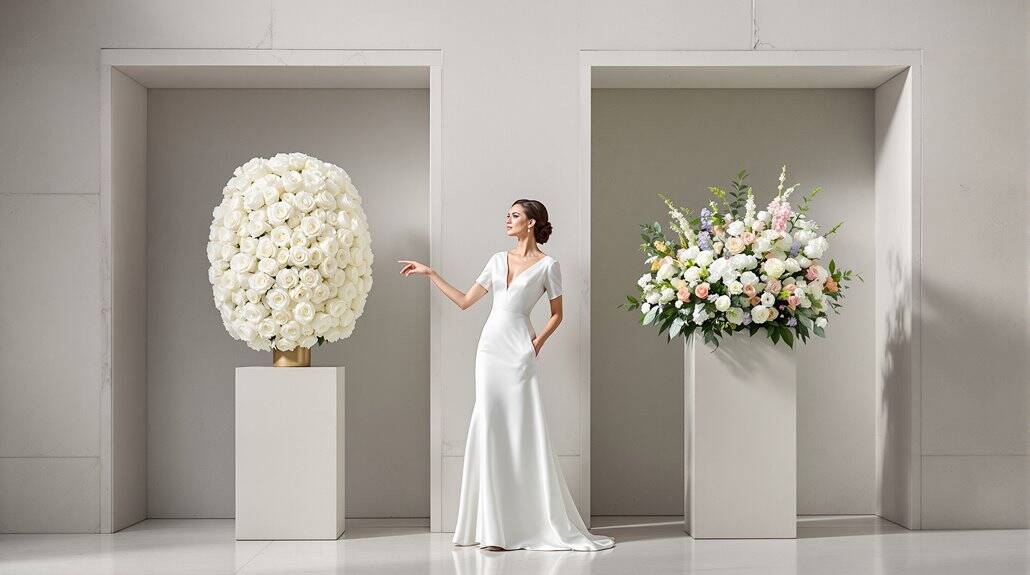
Selecting between mono-floral and mixed arrangements demands more than casual preference—it requires honest assessment of your underlying aesthetic sensibility. Are you drawn to the meditative focus of twenty identical roses standing in disciplined formation, or does your eye crave the textural conversation between ten different varieties? Monochromatic florals speak the language of confidence—a single flower variety repeated creates impact through commitment rather than diversity.
Your spatial preferences matter enormously here. If you’re instinctively attracted to symmetrical balance and formal settings, a mixed bouquet provides the structured abundance European traditions celebrate. And yet, if asymmetry feels more authentic to you, consider how a restrained mono-floral arrangement might better highlight the natural elegance you’re seeking. The decision isn’t merely decorative but philosophical—minimalists find greater resonance in the repetition of one exceptional bloom, while maximalists experience joy in the garden-like abundance of varied stems. Your choice reveals more than taste; it broadcasts your relationship with simplicity itself. Just as medical-grade cosmeceuticals deliver focused results through concentrated formulations, mono-floral arrangements achieve their impact through dedicated commitment to a single botanical element.
Conclusion
As you’ve journeyed through the mono-floral versus mixed arrangement scenery, the decision before you transcends mere aesthetic preference—it represents a philosophical stance on beauty itself. Monochromatic florals embody disciplined elegance, a statement of confidence through restraint. Twenty stems of one variety—bold, unapologetic, meditative. And yet, mixed bouquets dance with complexity, celebrating nature’s diverse palette in one lively conversation.
Your choice hinges on context and intention. Need calm sophistication in a visually busy space? The singular focus of mono arrangements delivers maximum visual impact with minimum competition. Seeking to energize a neutral backdrop? Mixed arrangements inject life, complexity, dimensions.
The versatility of both approaches means neither is inherently superior—just differently suited. Consider your space, occasion, maintenance capacity, and most importantly, the emotional resonance you seek to create. Just as luxury French beauty brands understand the importance of selecting the right products for special occasions, your floral choice should reflect the significance of your event. The perfect arrangement isn’t about trends but about authentic expression of the moment you’re commemorating.