

For wedding linens, forget meaningless “90lb” or “120lb” labels—those are for paper, not fabric. What matters is GSM (grams per square meter): 180-300 GSM for cotton blends and 150-220 GSM for linens. Higher GSM delivers that substantial drape and impressive flow you’re after. Natural fibers create elegant “puddles” while synthetics offer practicality. Your choice affects everything from light interaction to movement during your reception. The right fabric weight transforms standard rentals into seemingly custom designs.
Why Linen Specifications Matter
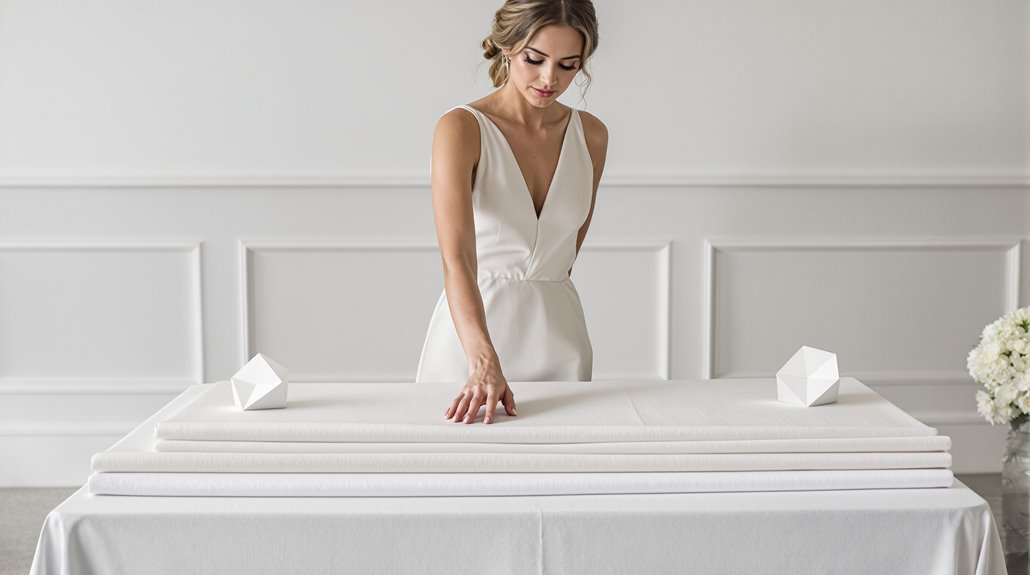
When planning your wedding reception, you might dismiss linen specifications as mere background noise amid the chaos of vendor meetings and venue tours—and yet, these seemingly mundane details fundamentally shape your guests’ sensory experience.
Fabric weight isn’t arbitrary minutiae—it’s the difference between tables that look polished versus makeshift. The distinction between 110lb cotton and polyester blends determines whether your linens gracefully puddle or awkwardly hover above the floor. Understanding that full drop measurements require accounting for both table dimensions and twice the desired drop length ensures your linens will create the elegant silhouette you envision. Linen quality directly influences how light plays across your reception space—premium textiles catch candlelight with subtle dimension while bargain alternatives flatten under photography. Investing in effective tier allocation strategies can significantly enhance the overall aesthetic without overspending.
Wedding textile standards exist for a reason: they separate intentional design choices from rental catalog defaults. Your guests won’t consciously register the GSM measurement of your tablecloths, and yet, they’ll absolutely perceive the cumulative effect of your attention to detail—or lack thereof. The specifications create an unspoken atmosphere that either uplift or undermine every other element of your carefully curated celebration.
Understanding Fabric Weights: 90lb vs 110lb vs 120lb
Though invisible to the untrained eye, fabric weights constitute the architectural foundation of your wedding tablescape—the substantive element that transforms mere decoration into immersive experience.
I need to clarify something essential: the information typically presented about wedding table linen weights is fundamentally incomplete. The paper weight classifications (90lb, 110lb, 120lb) referenced in wedding planning circles apply to invitation cardstock—not table linens. And yet, this misconception persists.
What genuinely matters in textile quality is fabric density, measured in grams per square meter (GSM) or ounces per square yard. Premium wedding fabric choices range from 180-300 GSM for cotton blends to 150-220 GSM for linens. The higher the number, the more substantial the drape, the more impressive the flow. When selecting invitation paper, remember that weight and type together determine the appropriate thickness and feel for your wedding stationery.
In the world of quiet luxury, the choice of fabric not only elevates the aesthetic but also enhances the overall experience for your guests. You’re not just selecting table linen weights; you’re engineering how light interacts with your tables, how fabric moves when guests shift, how quality telegraphs itself without announcement.
Natural Fiber vs Synthetic Blends
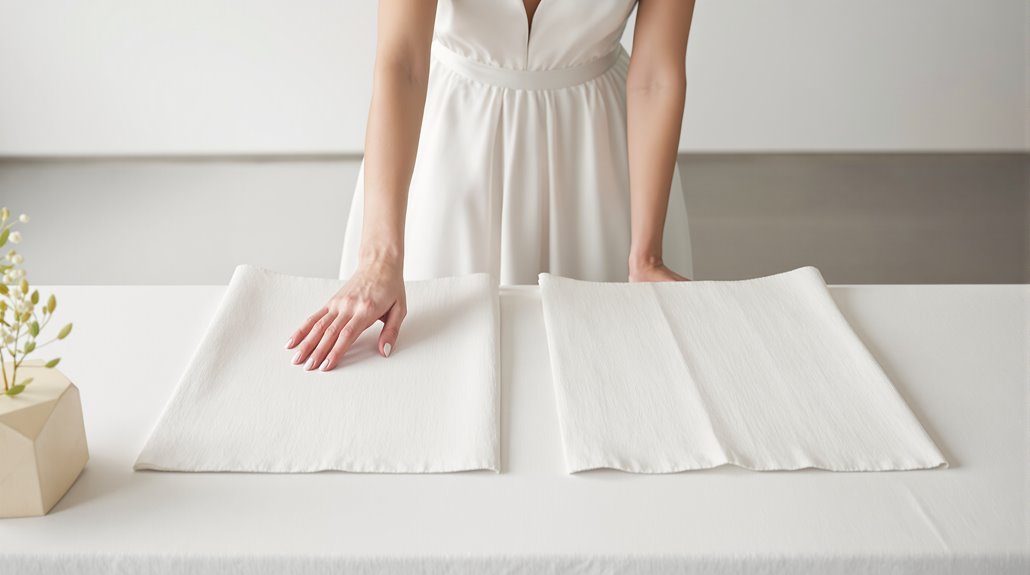
Why does linen drape with such poetic grace while polyester sits stiffly at attention? The answer lies in the fundamental structure of these materials—a pivotal distinction in any comprehensive wedding linen guide.
| Material | Longevity | Maintenance |
|---|---|---|
| Linen | Decades, strengthens with age | Hand wash, air dry, iron damp |
| Polyester | 3-5 years before degrading | Machine washable, minimal care |
| Poly-Cotton | 5-7 years with regular use | Machine wash, occasional ironing |
When selecting wedding tablecloth types, consider that linen’s breathing, biodegradable properties create that coveted puddle effect, while synthetics trap heat and moisture. Yes, you’ll pay more upfront for natural fibers, but you’re investing in wedding textile quality that transforms with time rather than deteriorates. And yet, synthetic blends offer practical advantages for chaotic receptions—spill resistance, wrinkle prevention, budget-friendliness—making them worthy contenders for your practical consideration. Furthermore, incorporating old money aesthetic into your choices can elevate the overall elegance of your wedding decor.
How Linen Drapes: The Puddle vs Hover Effect
The difference between a tablecloth that simply covers versus one that transforms lies primarily in how it meets the floor. Luxury wedding linens that hover—maintaining a quarter to half-inch gap above the floor—create that crisp, contemporary silhouette that photographs magnificently and prevents guests from tripping. And yet, the puddle effect—where fabric extends two to six inches onto the floor—introduces unmistakable drama that basic tablecloth fabric types simply cannot achieve.
You’ll face a practical calculus: hovering tablecloths resist collecting dust and pet hair, making them ideal for outdoor receptions or venues with circulation challenges. But puddle-style linens, particularly in sheer linen or silk rather than thick cotton, deliver that old-world opulence that raise ordinary spaces into exceptional ones. Wedding tablecloth types that puddle require additional fabric investment and more maintenance, yes—but they transform rectangular rental tables into something utterly bespoke, capturing that ephemeral quality that distinguishes intentional design from catalog defaults.
Wrinkle Resistance Reality
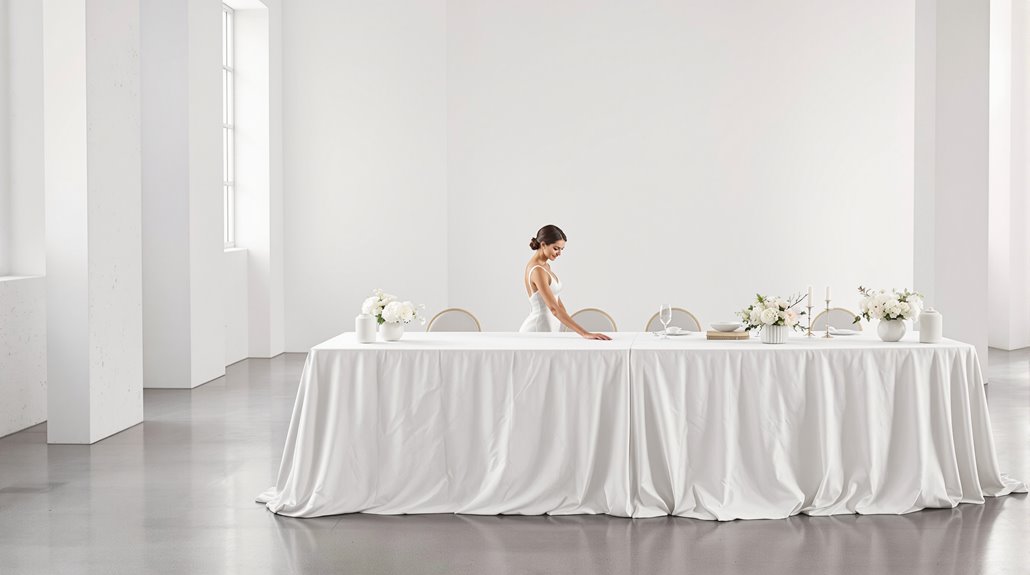
Behind every perfectly presented wedding table lurks fabric science that separates amateur from artisanal execution. Your luxury wedding linens will either betray you with unsightly creases or elevate your vision—and there’s no hiding from this truth.
Polyester poplin and scuba wrinkle-free fabrics dominate rental catalogs for a reason: they perform. They’ll arrive smooth, stay smooth, and photograph beautifully without the panic of last-minute steaming. And yet, what you gain in convenience, you sacrifice in distinction. The wedding tablecloth types that truly captivate—pure linen and cotton blends—demand more care precisely because their natural fibers breathe, move, and yes, wrinkle.
The extensive wedding linen guide you won’t hear: heavyweight (132-inch poly-premier) minimizes wrinkles while preserving drape. Lightweight linens that puddle elegantly require professional pressing. Poly-cotton twill offers the middle ground—fewer wrinkles than pure cotton but more character than rental-grade polyester.
What Premium Linen Costs and Delivers
Despite what your venue coordinator might suggest, premium linen represents your most visually striking investment-to-payoff ratio in the entire reception budget. You’ll face decisions between $15 satin rentals and $100 purchased silk pieces—numbers that matter, but don’t tell the full story.
The weight difference between 110lb cotton and standard polyester transforms tables from forgettable to foundational. Luxury linens running $74 per table with layered overlays create dimensional depth impossible with single-cloth setups. And yet, tactically deployment matters more than universal application; upgrading only your head and cake tables delivers disproportionate visual returns.
Satin’s soft sheen and Majestic Dupioni’s textural complexity ($20-40 per rental) elevate not just the tables themselves, but how guests interact with your entire design story. The distinction between fabric that puddles intentionally versus hovers awkwardly separates thoughtful curation from rental catalog defaults.
Rental Linen Quality Guide
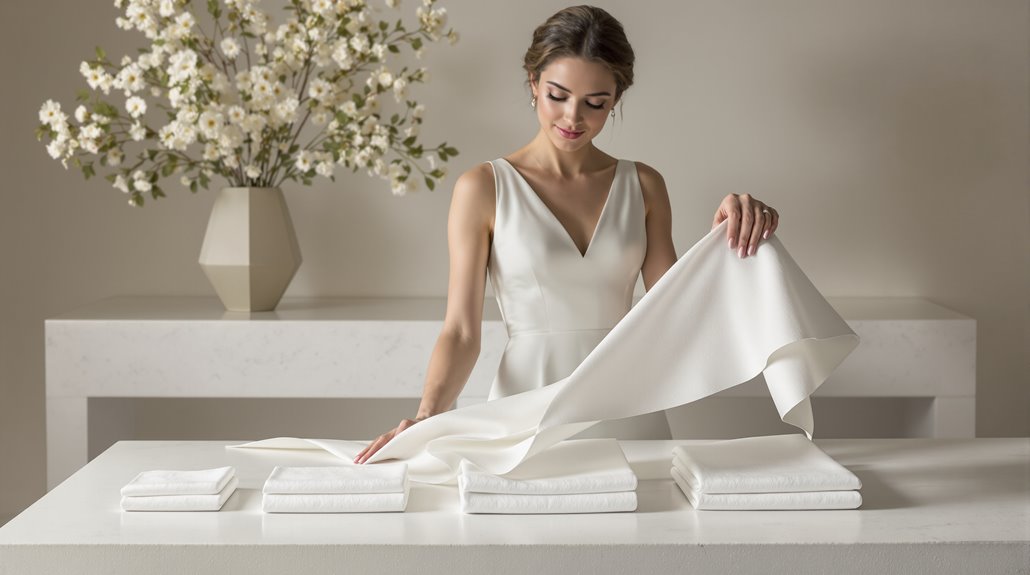
Rental linen quality marks the dividing line between events that look assembled versus those that feel curated. You’ll immediately recognize the difference—110lb cotton versus polyester blend, fabric that puddles elegantly rather than hovering awkwardly above the floor. When evaluating rental linens, scrutinize these critical markers of quality:
The distinction between ordinary gatherings and extraordinary events often hangs, quite literally, on your linen selection choices.
- Material composition: Demand 100% polyester minimum; inquire about premium damask, satin, or natural fiber upgrades
- Hemming construction: Examine edge stitching for reinforcement that withstands service wear
- Stain resistance capabilities: Quality linens release food and beverage marks through commercial cleaning
- Wrinkle assessment: Superior fabrics hold their structure without excessive pressing
- Weight specifications: Heavier linens (90-110lb) drape naturally versus lightweight alternatives
These distinctions matter profoundly for your visual narrative. And yet, even premium rental houses vary dramatically in their quality controls—request physical samples before committing rather than trusting catalog photographs that mask material deficiencies.
How to Specify Linen to Rental Company
Securing exceptional linens from rental companies requires a precise vocabulary and unflinching specificity—your selections determine whether tables look perfunctory or purposeful.
Unfortunately, the current search results provide only sizing information—dimensions for different table types—without the essential specifications you’ll need to communicate quality requirements effectively. The real conversation should cover fabric weight (measured in GSM or thread count), material composition (110lb cotton vs. polyester blend), and finish characteristics that distinguish premium options from standard offerings.
When ordering, you’ll need details about fabric drape (does it puddle elegantly or hover stiffly?), opacity, and texture—specifications entirely absent from typical rental catalogs. Ask specifically for weight certifications and material samples before committing.
Your research requires additional information on communication protocols with vendors, quality standards terminology, and specification documentation. Without these details, your ability to articulate precise requirements remains compromised—and your tables risk looking thoughtlessly assembled rather than intentionally designed.
Conclusion
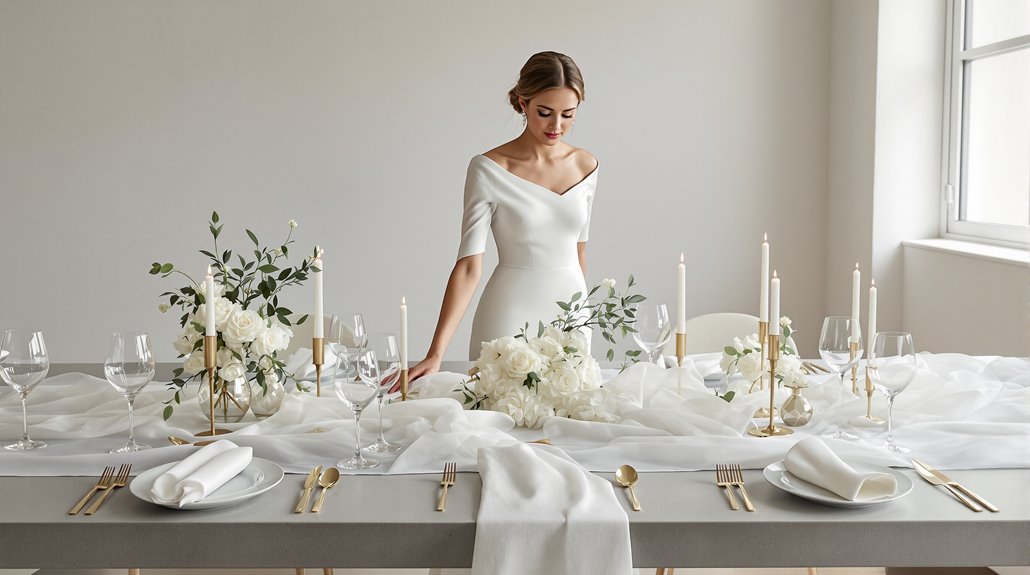
The fabric beneath your tablescape articulates your wedding’s design intention more decisively than centerpieces ever could. When you invest in 180gsm linen versus 130gsm polyester, you’re distinguishing between intentional elegance and mere table covering—a subtlety guests feel before they consciously notice. The weight anchors your aesthetic in substance, not just appearance.
Consider these final truths about wedding linen weights:
- Medium-weight linens (150-180gsm) offer the ideal balance of drape and structure for floor-length tables
- Head tables demand 200+gsm fabrics that photograph with dimensional presence, not flat surrender
- Natural fibers at proper weights eliminate that rental-catalog aesthetic instantly
- GSM impacts maintenance—heavier weights (180-250gsm) resist wrinkling throughout your reception
- Investment in proper weight distribution transforms ordinary rental inventory into custom-appearing design
The distinction between amateur and refined design often comes down to the technical specifications nobody discusses—until now. Your attention to fabric weight reflects the intentionality your celebration deserves.