
Your invitation creates psychological imprinting before guests arrive—47 seconds that shape their entire experience. Design it for tactile impact (120gsm card stock signals luxury), orchestrated revelation (17-second opening sequence), and multi-sensory involvement. Material weight, progressive information disclosure, and thoughtful visual aesthetics aren’t mere details—they’re your event’s emotional prelude. Invest in quality paper and refined design; guests unconsciously judge event value by that first touch. The envelope landing in their mailbox begins everything.
Guest Experience Begins at Mailbox – Essay opening
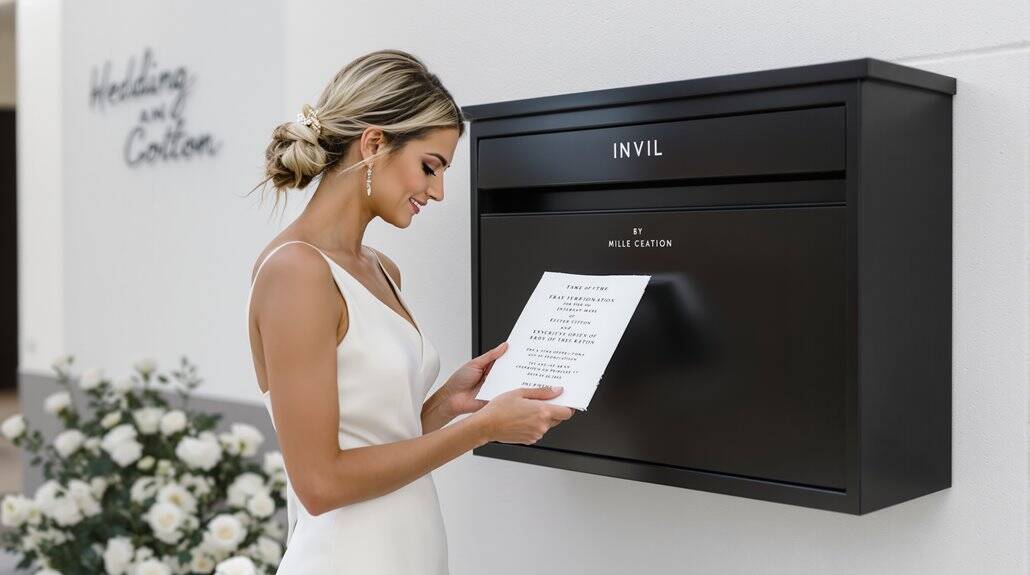
When was the last time you paused to contemplate that your event’s first impression occurs not at the venue door, but in your guest’s mailbox? The psychology behind this moment deserves your attention—when they lift that envelope, feel its weight, and experience their first tactile invitation interaction with your brand.
We obsess over venue lighting, menu selections, and entertainment logistics—and yet we often relegate invitations to afterthought status, forgetting they’re the literal prelude to everything that follows. This mailbox unboxing marks the true beginning of your guest’s journey: a 47-second experience that will frame every subsequent point of contact. Like how legal firms discovered that 24/7 coverage helps them capture 40% more leads, your invitation’s availability and immediate impact can dramatically affect attendance.
Consider what your invitation communicates: intentionality, attention to detail, value proposition. The thickness of card stock, the embossing technique, the opening sequence—these aren’t merely aesthetic choices but tactical decisions that telegraph your event’s significance. And your guests? They’re noticing everything, consciously or not.
Tactile Quality: Weight in Hand
While event planners obsess over floral arrangements and catering menus, the first sensory moment with your brand happens through fingertips—as your guest lifts your invitation from a stack of mundane mail. This is weight rendering at work, an opportunity you’re likely squandering.
Research confirms that tactile perception contributes up to 55% of force sensation at lighter weights—precisely where invitation cards operate. Your guests unconsciously evaluate quality through this multisensory integration before they’ve processed a single word. A substantive 120gsm card stock triggers different neural pathways than flimsy 80gsm alternatives. Surface texture and temperature also influence perceived heaviness, with smoother and colder materials typically feeling more substantial.
The physics are unforgiving: thicker, heavier invitations correlate directly with perceived luxury and value. When your invitation feels substantial—an object to be kept rather than discarded—you’ve engineered an affective response that preconditions acceptance. And yet, this weightiness must balance against elegant design; excessive heft becomes cumbersome rather than impressive. Like heirlooms that serve as bridges between eras, invitations create connections through their physical presence and deliberate craftsmanship. Choose deliberate weight, not maximum.
Reveal Sequence and Opening Experience

How you orchestrate the unfolding of your invitation determines whether it becomes ephemeral trash or ceremonial artifact. Your opening experience should mirror narrative architecture—beginning with curiosity, building anticipation, and delivering a satisfying payoff. Consider the 17 seconds most recipients spend interacting with your invitation, and design each micro-moment.
Your reveal sequence deserves storyboarding: envelope texture first touched, initial visual anchor when opened, and the progressive discovery of information. Test this journey with fresh eyes. Does it guide attention precisely where you intend? The most memorable invitation experiences design this sequence deliberately—using sealed components, fold-out panels, or layered inserts that create distinct “chapters” in your story.
Beware the impulse to reveal everything instantly. And yet, frustrating designs that withhold critical information create anxiety rather than intrigue. Balance is essential—surprise delights, confusion alienates. Your invitation isn’t merely information delivery; it’s the first act of your event’s emotional journey. Much like haute couture beauty presents itself through deliberate staging and theatrical unveiling, your invitation should choreograph its own reveal to create lasting impact.
Information Architecture and Discovery
The invitation’s true power emerges through its information architecture—not merely what you say, but how you structure its discovery. You’re crafting a cognitive journey, not just an event notice. Every fold, page turn, or swipe creates anticipation—these micro-moments form the backbone of invitation experience design.
Consider structuring your invitation with these progressive disclosure principles:
- Begin with essential information (event name, date, host) prominently positioned
- Layer secondary details (dress code, RSVP method) in logical progression
- Include navigational cues through visual hierarchy or physical elements
- Provide delightful discoveries—small surprises that reward exploration
Your invitation’s information architecture should mirror how humans naturally process information: from broad concepts to specific details. And yet, don’t sacrifice delight for efficiency. The most memorable invitations balance functional clarity with moments of unexpected discovery—creating cognitive landmarks that trigger emotional connections long before guests arrive at your event. Professional visual communication firms understand this principle deeply, applying information hierarchy not only to invitations but across corporate photography layouts, event materials, and design projects where first impressions determine engagement.
Visual Aesthetic as Event Prologue
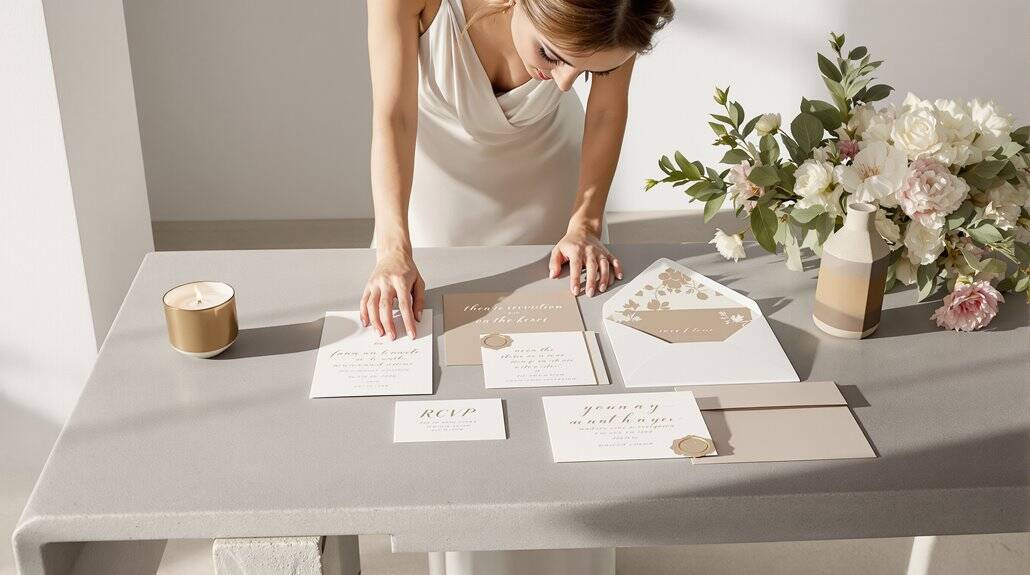
Your invitation’s visual language speaks volumes before a single word is read, functioning as the event’s emotional prelude and psychological primer. Every visual choice—from color psychology to typography weight—telegraphs the experience awaiting guests. You’re not just designing paper; you’re crafting anticipation.
| Aesthetic Element | Psychological Impact | Event Signal |
|---|---|---|
| Color palette | Emotional tone-setting | Event formality level |
| Typography | Brand personality | Information hierarchy |
| Material weight | Perceived value | Expected investment |
| Negative space | Sophistication level | Breathing room at event |
| Visual rhythm | Attention guidance | Experience pacing |
The 60-30-10 color ratio isn’t arbitrary—it’s visual mathematics that prevents cognitive overwhelm. Your invitation experience design must maintain disciplined visual hierarchy, yet allow moments of surprise that mirror what guests will encounter on-site. Balance is everything. Too consistent? Boring. Too chaotic? Confusing. Your visual language establishes expectations that your event must fulfill. Drawing from Japanese beauty rituals, the concept of intentional elegance in presentation creates an immediate sense of luxury and thoughtfulness that extends beyond the invitation itself into the entire guest experience.
Invitation as Experience Design
When did invitations transform from mere information vehicles into tactical experience design touchpoints? Your invitation isn’t just announcing an event—it’s the first moment guests interact with your vision. Consider that short subject lines (under five words) achieve 23% response rates, while custom-branded surveys outperform plain versions by nearly 3%. This isn’t coincidence; it’s invitation experience design at work.
Your wedding invitation design philosophy should prioritize:
- Sensory engagement – The weight, texture, and opening sequence create physical memory markers
- Strategic information revelation – Control how details unfold to build anticipation
- Mobile-responsive functionality – Single-question formats dramatically outperform cluttered layouts
- Embedded engagement elements – First questions within invitations boost response rates by 3.1%
You want your event to be memorable, and yet you’re overlooking the experience that begins before guests arrive. Personalization isn’t frivolous—it’s functional design that connects emotions to outcomes. Modern design platforms allow you to adapt your invitation design across both digital and print formats while maintaining consistent branding through integrated brand management tools.
Investment in First Touch

Financial wisdom in event planning lives not just in venue selection or menu curation, but in the resource allocation for that essential first moment. Your invitation as experience design establishes the relationship that colors every subsequent interaction—a truth backed by first-touch analytics that consistently show higher conversion rates from thoughtfully crafted initial contacts.
| Investment Area | ROI Potential | Quality Indicator | Implementation Focus |
|---|---|---|---|
| Paper/Material Quality | Tangible value perception | Tactile memory creation | Weight, texture, finish |
| Design Sophistication | Brand elevation | Attention retention | Typography, spacing, color |
| Information Architecture | Reduced follow-up questions | Guest preparation | Logical flow, completeness |
| Delivery Method | Memorability | Personalization | Timing, packaging, surprise |
When you invest in invitation guest experience, you’re not merely announcing an event—you’re establishing expectations. The invitation isn’t just paper and ink but rather your first opportunity to demonstrate how thoroughly you’ve considered your guests’ journey from beginning to end. Just as medical-grade cosmeceuticals demand precise formulation and premium materials to deliver transformative results, your invitation requires the same commitment to quality and intentional design to create lasting impact.
Conclusion
Throughout the journey from paper to perception, invitations stand as the silent architects of expectation, forming the foundation upon which every subsequent guest interaction builds. Your invitation isn’t merely information delivery—it’s your first opportunity for guest experience design, setting tonal expectations that echo throughout your event.
When crafting this essential first impression, remember:
- Multi-sensory engagement begins with texture, weight, and visual aesthetic—before a single word is read
- Personalization transforms a standard invitation into an emotional connection point
- Micro-details in invitation sequencing create anticipation and intrigue
- The unboxing experience mirrors your commitment to thoughtfulness throughout
You’ll spend countless hours perfecting venue aesthetics and service contact points—and yet, many overlook this vital first impression. The humble invitation carries disproportionate influence, establishing the narrative structure through which guests will interpret everything that follows. For formal occasions requiring sophisticated elegance, cotton paper from heritage stationery makers offers the substantial weight and refined texture that signals significance from the moment of touch. Design accordingly.