
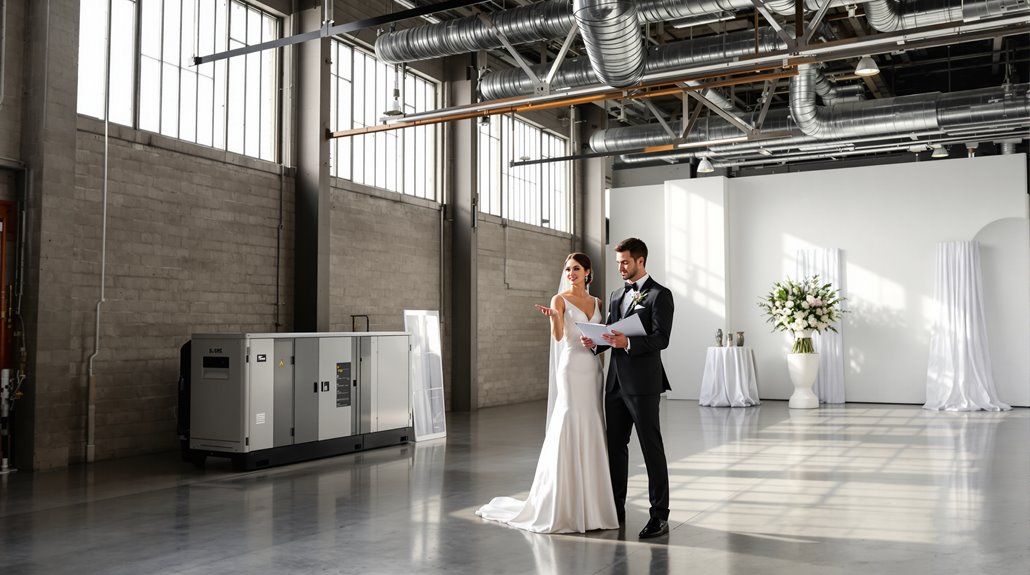
Industrial venues require extensive infrastructure you’d take for granted in traditional spaces: electrical systems with three-phase power, HVAC rentals ($2,000-5,000), bathroom trailers ($1,500-3,500), furniture packages ($15,000+), lighting rigs ($1,800-4,000), and backup generators ($800-2,500). Your Instagram-worthy raw space might offer creative freedom, but you’ll pay roughly triple the base rental fee once you’ve built out all these essentials. The true calculation isn’t just venue cost—it’s the hidden engineering beneath the aesthetic.
The Instagram vs Reality Problem
While industrial chic venues photograph remarkably on social media, they’re hiding a brutal financial reality that most couples discover far too late. You’ve seen those stunning Instagram posts—exposed brick, soaring ceilings, raw authenticity—but the gap between expectation and reality mirrors the wider “Instagram vs. Reality” phenomenon that’s documented tourist destinations worldwide.
Industrial venue requirements aren’t merely aesthetic; they’re infrastructural nightmares. Your warehouse wedding needs will include bathroom trailers ($3,000+), HVAC rental (another $2,500), and extensive generator backup systems. The industrial venue logistics extend beyond basic amenities to complete furniture packages—nothing comes standard in these raw spaces. These spaces often require significant financial investment to achieve the high-quality visuals that appear effortlessly beautiful on platforms like Pinterest and Instagram. To optimize your budget effectively, consider tier allocation strategies that can help manage these hidden costs.
You’re essentially building a venue from scratch, and yet couples continue booking them based on carefully curated social media imagery. Like Santorini’s overcrowded streets hidden from promotional photos, industrial venues conceal their logistical complexities behind filtered shots that showcase atmosphere while obscuring cost.
Infrastructure Checklist: What Raw Spaces Lack
Because raw industrial spaces lack virtually all essential infrastructure, you’re fundamentally renting an empty shell with four walls and calling it a “venue.” Those breathtaking warehouse spaces with their Instagram-worthy aesthetic require a staggering array of technical systems that established venues already have built in—and you’ll pay dearly for each one.
Your industrial venue requirements extend far beyond aesthetics. Consider what you’re truly signing up for:
- Electrical systems – Three-phase power distribution, multiple 20-amp circuits, and generator backups that cost thousands, not hundreds.
- Network infrastructure – 100+ Mbps dedicated bandwidth with redundant systems.
- Climate control – Independent HVAC rental for both guest comfort and equipment safety, which is often a critical factor in luxury wedding planning.
- Structural necessities – Bathroom trailers, furniture packages, lighting rigs.
Raw space wedding costs balloon precisely because warehouse wedding needs include recreating modern infrastructure within century-old shells. Ensuring proper room acoustics can be particularly challenging in these open, often echo-prone spaces. Pretty venues already solved these problems—you’re paying to solve them again.
Climate Control: HVAC Rental Mathematics
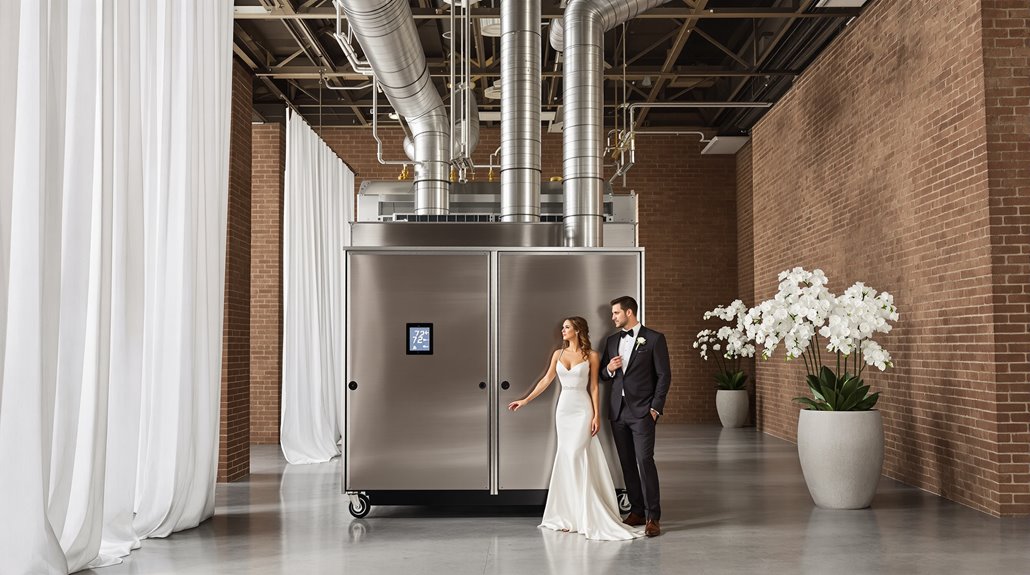
That sleek industrial warehouse with soaring ceilings and raw concrete might photograph beautifully, but it’ll become an unbearable sweatbox without proper climate control. HVAC rental isn’t just an afterthought—it’s essential mathematics requiring surgical precision in capacity calculation and assessment of electrical requirements. Emerging luxury trends, especially in venue design, emphasize the importance of climate control systems to enhance guest experiences.
| Venue Element | Standard Requirement | Hidden Cost | Planning Timeframe |
|---|---|---|---|
| Cooling Capacity | 12,000 BTU per 100 sq ft | Oversizing penalties | 3-4 weeks minimum |
| Power Supply | Three-phase verification | Generator backup | 1-2 weeks testing |
| Unit Configuration | 10-25 ton options | Delivery/positioning | Site survey required |
| Compliance | ASHRAE standards | Specialized protocols | Varies by jurisdiction |
You’ll need to verify your venue’s existing electrical infrastructure—most raw spaces can’t handle the amperage draw without upgrades. And yet, undersizing your system creates worse problems: overheated guests leave events early, while performers with temperature riders might refuse to perform altogether.
Bathroom Facilities and Trailer Rental
Few aspects of industrial venue planning expose the raw reality gap between Instagram aesthetics and logistical nightmares quite like bathroom facilities. You’ll need to master the mathematics of human necessity—calculating stations based not just on headcount but duration, alcohol service, and climate conditions. Industrial venue requirements demand precision here, not guesswork.
Your trailer rental strategy must include:
- Distribution planning – Position multiple trailers near food/bar areas rather than centralizing facilities
- ADA compliance – Each major zone needs accessible units with proper ramps and turning radii
- Capacity scaling – Expect 2-4 fixtures per 100 guests for standard events, increasing 25-50% for extended hours
- Regulatory documentation – Secure permits, waste removal contracts, and temporary installation approvals
You’ll need specific configurations—from two-stall units for intimate 150-person gatherings to complex systems of 8-12 trailers totaling 75-100 stations for festivals approaching 10,000 attendees. Instagram-worthy venues include this; you’ll need to rent it.
Furniture Package: Complete Build-Out Costs
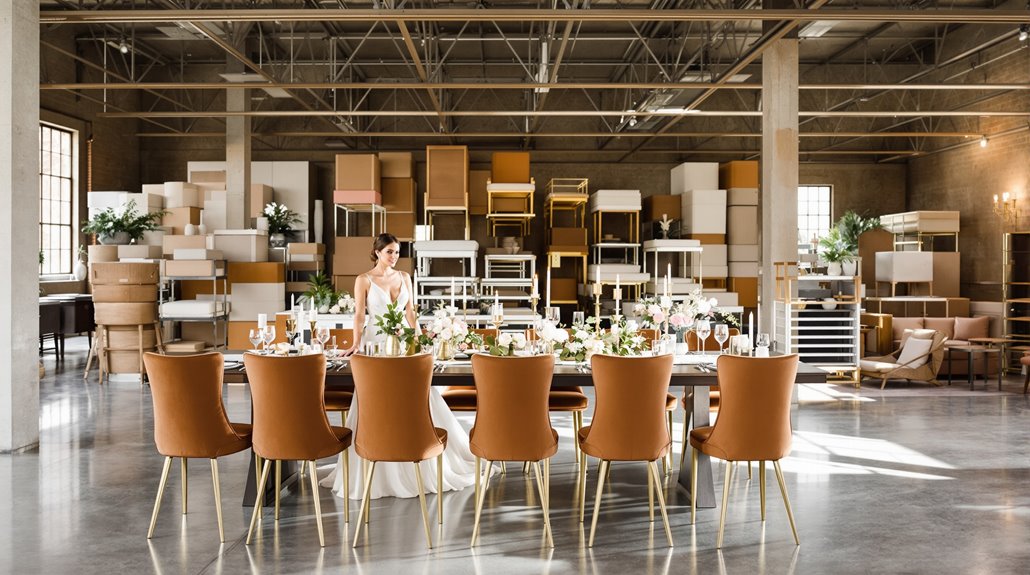
While bathroom logistics focus on necessity, furniture packages reveal where industrial venues truly empty your wallet. That raw warehouse aesthetic you’re swooning over? It requires everything—literally everything—to be brought in. We’re talking $15,000 minimum for industrial venue requirements before you’ve selected a single centerpiece.
Your standard venue includes tables, chairs, linens, bars, and staging. But when preparing an industrial venue, you’re starting with concrete floors and metal beams. Nothing else. Every lounge section ($1,200+), harvest table ($400+ each), bar setup ($3,000+), and dance floor ($2,500+) becomes an à la carte nightmare.
And yet, the warehouse wedding needs extend beyond furniture. You’ll require refined lighting packages to transform those cavernous spaces into something remotely intimate—another $5,000 minimum. The industrial appeal photographs beautifully, certainly, but remember: those magazine-worthy spaces were built, piece by costly piece, specifically for that photoshoot.
Lighting Installation Requirements
Before you fall in love with those dramatic shadows cast across exposed brick, understand what proper lighting in an industrial venue actually requires. You’re not simply hanging a few spotlights—you’re implementing a intricate system that meets stringent electrical safety codes while delivering both functionality and ambiance. Industrial spaces demand extensive lighting installation plans that address structural limitations most “pretty” venues have already solved.
Your industrial venue will require:
- Power assessment – 300-500 lumens per square meter minimum, with dedicated circuits for various fixture types (wash lights, spots, effects)
- NFPA 70 compliance – Including GFCI protection, certified connectors, and grounded connections to prevent interference
- Uniform distribution – tactical placement to eliminate hotspots while maintaining creative control
- Backup systems – Generator capacity for critical paths and emergency lighting
The raw industrial aesthetic photographs beautifully, yet demands professional-grade infrastructure that Instagram filters conveniently hide—infrastructure you’ll pay for in both upfront costs and ongoing maintenance.
Generator and Power Backup
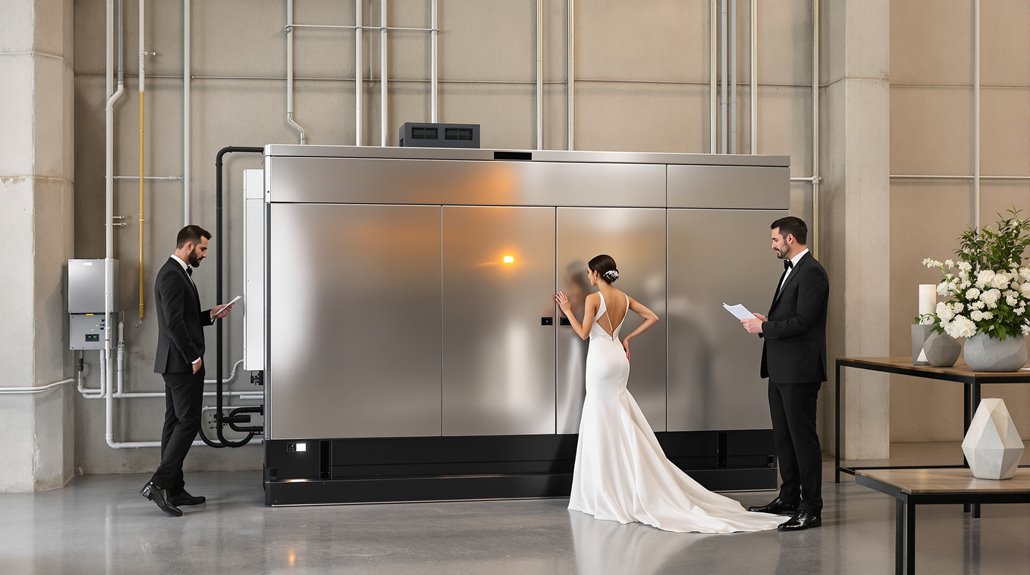
The lighting installation challenge leads directly to an even more fundamental concern: raw electrical power. Industrial venue requirements often far exceed what standard buildings can provide—and you’ll feel this truth most painfully when everything goes dark mid-reception. Your warehouse wedding needs serious amperage: multiple HVAC units drawing continuous power, catering equipment, sound systems, and that elaborate lighting design you’ve fallen in love with.
To prepare industrial venue spaces properly, start with a thorough power assessment calculating total demand—every fan, refrigerator, and spotlight must be inventoried. You’ll likely need trailer-mounted diesel generators (which consume up to 142 gallons per hour) with proper distribution panels. They’re not just contingencies but primary power sources. Consider concrete pad foundations with 5-foot setbacks, weatherproof enclosures, and GFCI protection throughout.
The romance of raw space comes with engineering realities. That exposed brick looks breathtaking, but it won’t power your DJ’s setup.
True Cost Calculation: Venue Fee Plus Infrastructure
Many couples fixate on the seemingly affordable base rental fee of industrial venues—a dangerous financial mirage that obscures the true price tag awaiting you. That warehouse wedding needs assessment must include infrastructure costs that pretty venues already build into their pricing structure.
When calculating the authentic cost of your industrial venue infrastructure, factor in these essential additions:
- HVAC rental systems ($2,000-5,000) – raw spaces rarely include climate control sufficient for guest comfort
- Bathroom trailer facilities ($1,500-3,500) – loft venue requirements typically don’t include adequate restrooms
- Comprehensive lighting packages ($1,800-4,000) – industrial spaces need substantial illumination beyond decorative elements
- Generator backup systems ($800-2,500) – older electrical systems weren’t designed for event demands
Your $5,000 industrial space might ultimately cost $15,000 after infrastructure requirements. Yet, when executed properly, industrial venues offer unrivaled creative freedom—but that freedom comes with a substantial, often unexpected price tag.
Conclusion
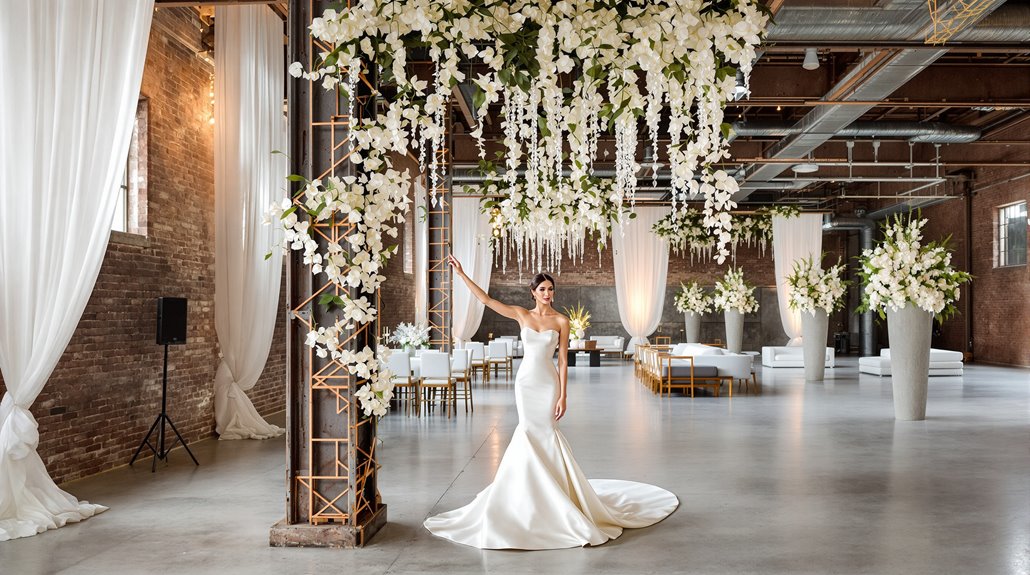
When choosing between industrial and attractive venues, your decision final hinges on priorities, not just perception of value. Industrial spaces offer raw creativity and customization—the blank slate many planners crave—and yet, they demand substantial investment in basic infrastructure that traditional venues already include.
Consider this: attractive venues might appear more expensive upfront but include HVAC, restrooms, furniture, and proper electrical systems. Industrial venues require you to build this infrastructure from scratch—bathroom trailers, generator backup, lighting packages—costs that quickly compound.
Your choice reflects your event planning philosophy: invest in establishing comfort and function, or pay for spaces where these elements already exist. The industrial infrastructure requirements create budgetary complexities that aren’t immediately visible on the venue fee. When calculating true value, account for everything: rental fees plus infrastructure investments versus all-inclusive pricing. And remember, while industrial chic photographs beautifully, those stunning visuals come with substantial behind-the-scenes venue requirements.