
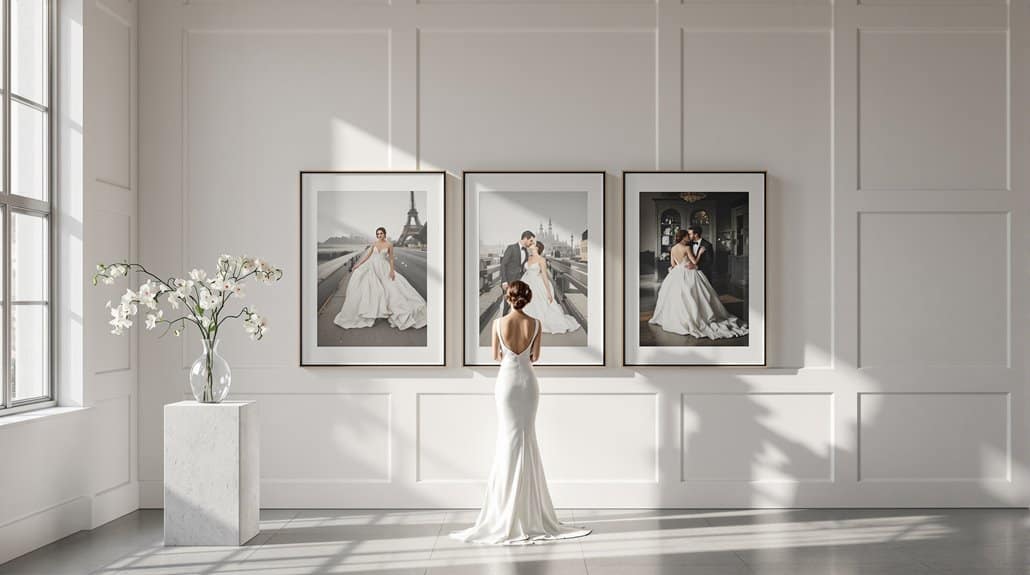
Fine art wedding photography raises above standard work through seven distinct markers: mastery of natural light, film-like aesthetics, refined composition, deliberate color grading, emotional narrative focus, gallery-wide consistency, and signature post-processing. You’ll recognize it by intentional negative space, authentic moment capture, and technical precision that creates a curated visual legacy rather than mere documentation. The difference lies not just in individual images but in creating a cohesive emotional journey—and these markers reveal the artistic intention behind every frame.
Defining Fine Art Wedding Photography
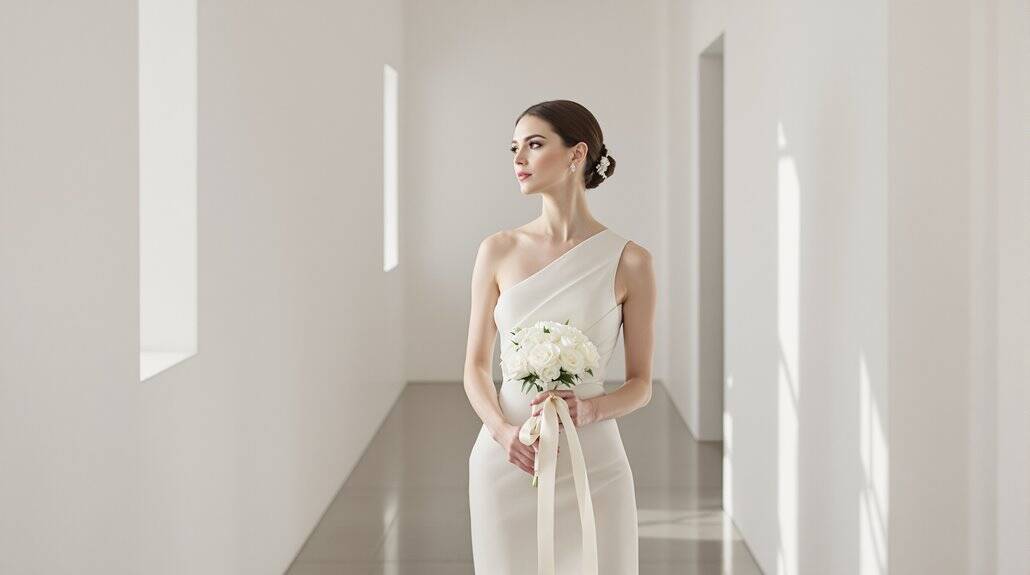
While the term “wedding photography” conjures images of cheesy poses and shotgun documentation for most, fine art wedding photography occupies an entirely different sphere—one where technical precision meets artistic vision in a dance as delicate as the wedding day itself. You’re witnessing a deliberate elevation of craft, not mere documentation.
The refined wedding photography approach transforms your celebration into art—meticulously composed frames where every shadow and highlight serves intention. Unlike standard photographers who capture what happens, fine art photo style practitioners create what happens, bending light and composition to their creative vision. This approach heavily draws inspiration from film photography techniques, creating that signature soft, romantic aesthetic that distinguishes fine art wedding images.
Editorial photo quality emerges when photographers slow down, studying the interaction between your gown’s texture and the late-afternoon sunlight. In Ontario, couples planning their celebration must first obtain their marriage license before focusing on these artistic details. It’s this restraint—choosing six perfect images over sixty adequate ones—that separates artistry from adequacy. Your gallery becomes less a catalog of events and more a curated exhibition of emotional moments.
Marker 1: Natural Light Mastery
Because the difference between pedestrian documentation and fine art wedding imagery often hinges on a single factor, natural light mastery stands as the most immediately recognizable hallmark of artistic wedding photography. You’ll notice fine art photographers positioning subjects with meticulous intention—90 degrees to window light for dimensional portraits or in tree shade for even illumination across all skin tones.
Their obsession with golden hour isn’t casual; they’re calculating those precious 20-30 minutes before sunset, often underexposing by 1-2 stops to preserve highlight detail. And yet, the true masters work confidently at high noon, transforming harsh 10 AM-2 PM light through calculated positioning and shadow management. They’ll place you with the sun behind, exposing for highlights rather than shadows. Fine art photographers frequently utilize overcast conditions as an opportunity rather than a setback, embracing the soft, even light for creating consistently flattering portraits. Just as settings that enhance emotional value transform engagement rings into meaningful symbols, masterful light positioning elevates wedding portraits from simple documentation into timeless art.
What separates them isn’t gear—it’s their understanding of light direction, using backlighting for rim effects and side lighting to create depth that lifts subjects from backgrounds with dimensional precision.
Marker 2: Film Aesthetic Whether Digital or Analog
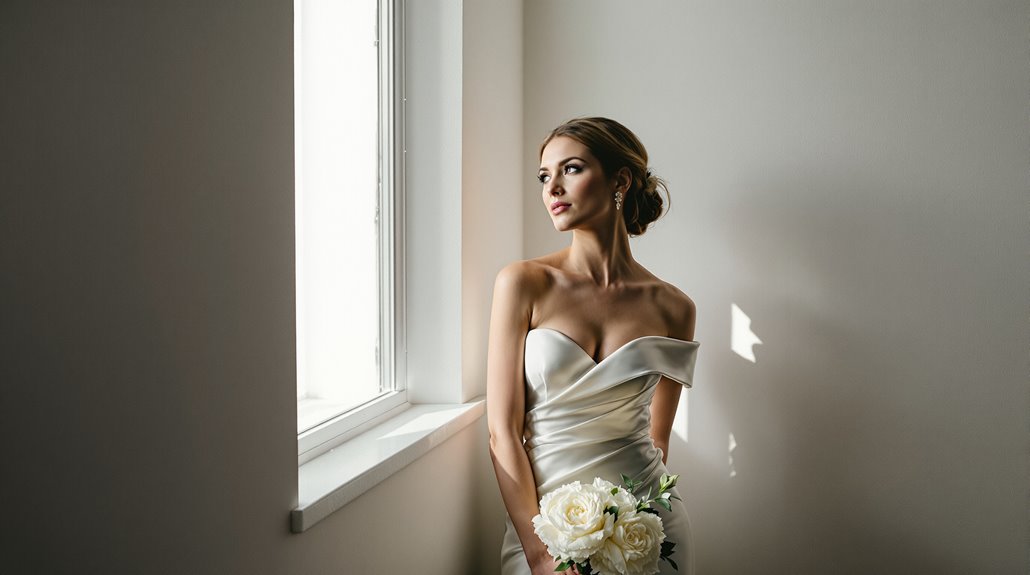
The second dividing line between standard wedding photography and its fine art counterpart reveals itself through a distinct film aesthetic that permeates every image—even when shot digitally. You’ll recognize this immediately: creamy highlights, soulful shadows, and that ineffable timeless quality that makes photos feel like treasured heirlooms before they’ve even been printed.
| Film Aesthetic Element | Digital Approach | Analog Result | Emotional Impact | Key Indicator |
|---|---|---|---|---|
| Grain Structure | Added in post | Inherent, organic | Intimacy, nostalgia | Visible texture |
| Color Palette | Preset grading | Stock selection | Warmth, authenticity | Natural tones |
| Flow | Seamless progression | Physical limitation | Depth, dimension | Shadow detail |
| Highlight Handling | Recovery tools | Graceful blowouts | Ethereal quality | Gentle transitions |
| Contrast Profile | Custom curves | Chemical process | Emotional weight | Tonal separation |
This quality transcends mere technique—it’s a philosophical approach. Fine art photographers embrace these limitations deliberately, finding creative freedom in constraint rather than technical perfection. Just as luxury skincare elevates a bride’s natural radiance before the camera, the film aesthetic enhances the inherent beauty of each captured moment without relying on heavy-handed digital manipulation.
Marker 3: Compositional Restraint and Sophistication
Perhaps most revealing of a fine art wedding photographer’s true caliber lies not in what they include, but what they deliberately leave out. You’ll notice how these artists employ negative space with mathematical precision—creating 8:1 ratios that isolate moments within expansive environments, letting emotions breathe rather than suffocating them with visual noise.
Their refined framing techniques reveal a disciplined eye: foreground elements deliberately blurred, subjects positioned at golden ratio intersections, architectural patterns incorporated without overwhelming. And yet, they’ll knowingly break these same rules when emotional truth demands it. They’ll place your silhouette against a hotel window, deliberately asymmetrical, because that tension mirrors your pre-ceremony nervousness.
This minimalism isn’t emptiness—it’s calculated restraint. When standard photographers fill every pixel with detail, fine art photographers understand that wedding days already overflow with stimuli. Their compositions don’t add chaos; they distill it into something enduring. The same principle applies to reception design, where positioning subjects at 90-degree angles enhances intimacy and connection, transforming spatial relationships into visual narratives that feel organic rather than staged.
Marker 4: Color Grading Excellence
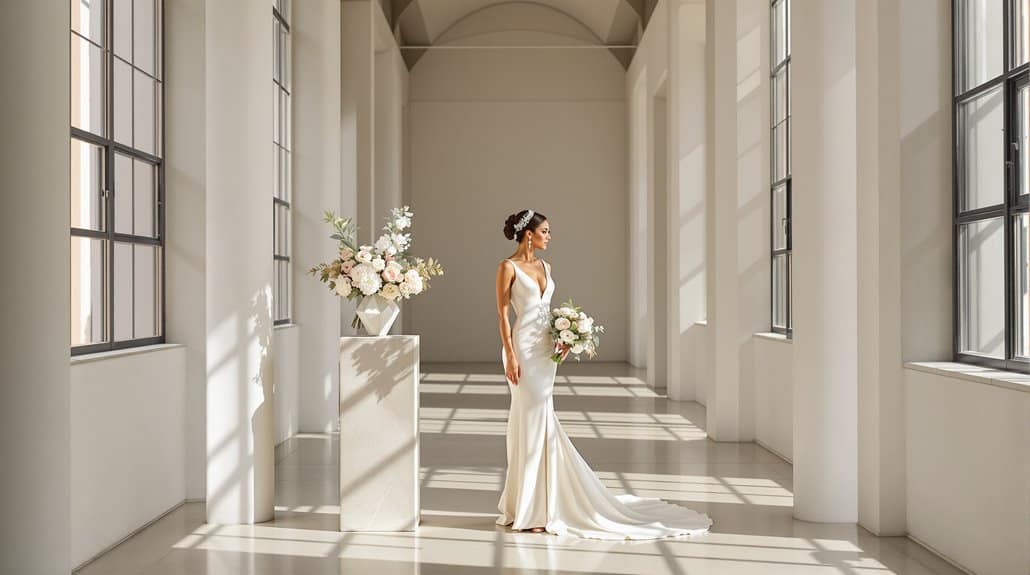
Fine art photographers reveal themselves most definitively through their signature color grading—that ineffable quality where technical mastery meets artistic vision. You’ll notice their work maintains scrupulous color harmony throughout entire galleries, not just isolated hero shots. They’re reducing vibrance (minus 10) and saturation (minus 20) with surgical precision, yet somehow images feel more alive, not less.
- Neutralize color casts by identifying true gray points where RGB values sit within 10% of each other
- Apply selective HSL adjustments that leave skin tones intact while dramatically shifting blues and greens
- Create consistency across all lighting conditions—making 2PM harsh sun and 8PM golden hour feel cohesive
- Balance white balance correction with intentional warmth or coolness that serves the mood, not technical perfection
- Implement gradient masks for environmental color shifts without affecting subjects
Their black and white conversions aren’t afterthoughts but deliberate artistic choices that heighten emotional impact by stripping away chromatic distraction. Drawing inspiration from haute couture beauty aesthetics, fine art wedding photographers craft color palettes that reflect the same refined elegance found in luxury fashion photography.
Marker 5: Storytelling Over Coverage
While technical excellence separates professionals from amateurs, storytelling distinguishes fine art photographers from mere technicians. You’re not hiring someone to document an event; you’re commissioning an artist to craft your narrative through images.
The fine art approach prioritizes emotional resonance over exhaustive documentation—capturing the nervous glance before vows over photographing every single guest. It’s the difference between 1,000 decent photos and 300 exceptional ones that transport you back to that day’s essence. Your photographer should frame compositions that speak volumes: strategic negative space emphasizing raw emotion, thoughtful layering of subjects creating multi-dimensional storytelling, capturing personal artifacts that anchor your unique journey.
The narrative flows chronologically, yes, but moves beyond checklist completion—preparation nervousness, ceremony solemnity, reception joy—creating a visual storybook with coherent emotional progression. Just as wedding etiquette guidance shapes how you navigate ceremonial traditions, fine art photography captures the genuine emotions beneath those formal moments. And yet, the best storytelling feels effortless, like poetry disguised as documentation.
Marker 6: Consistency Across Full Wedding
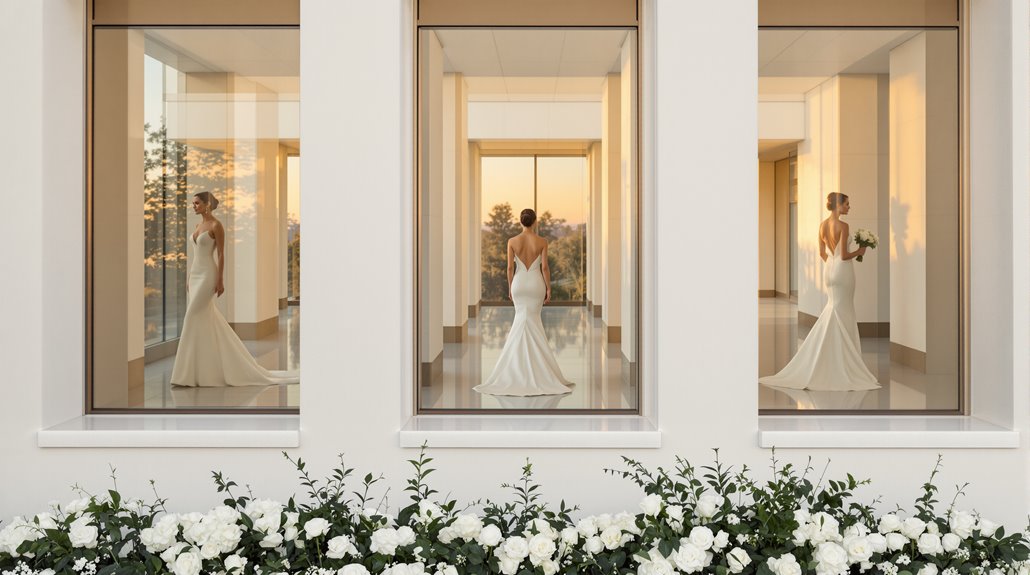
As discerning couples review wedding portfolios, they’re searching not just for beautiful individual images but for a photographer who delivers reliability across every phase of their celebration. Fine art photographers maintain a cohesive style from getting ready shots through the final dance—creating a visual narrative that feels intentionally crafted rather than coincidentally captured. This consistency transforms isolated moments into a singular artistic statement.
The discerning couple seeks not merely beautiful moments, but a cohesive visual story told with intentional artistic vision.
Your fine art photographer achieves this through:
- Unwavering technical standards—same aperture selections, identical white balance settings, consistent exposures
- Post-production discipline—reference window techniques ensuring every image lives in the same visual universe
- Compositional signatures—predictable framing devices and negative space integration
- Lighting philosophy—natural light mastery that persists from morning preparations to evening receptions
- Color palette commitment—predetermined editing approach that won’t drift with trends or venue changes
This reliability isn’t merely technical—it’s the hallmark of artistic intention, separating hobbyists from professionals, standard from fine art. Just as couples explore curated registry essentials to build a cohesive home aesthetic, they should expect their wedding photographer to deliver a unified visual collection that reflects consistent artistic vision throughout their entire celebration.
Marker 7: Post-Processing Artistry
The moment your images leave the camera, they enter the domain of artistic interpretation. Your post-processing approach becomes the definitive signature that heightens mere documentation to fine art photo style. This isn’t about slapping on presets—it’s about developing a consistent visual language through deliberate color grading decisions: the careful lifting of shadows, tactical highlight compression, and nuanced tonal adjustments that create dimensional depth.
You’ll need to master batch consistency across hundreds of images while maintaining that elusive artistic touch. Light and airy, bold and lively, matte-look, high contrast—each requires specific technical adjustments in luminance channels and RGB curves. And yet, the best processing feels invisible, never announcing itself as “edited.”
The most captivating fine art work emerges when you’ve developed a processing approach that honors your unique perspective—manipulating color temperature, contrast, and clarity not as technical exercises but as emotional translation tools. Building a visual idea collection on platforms like Pinterest can help you refine your aesthetic direction and establish the cohesive style that distinguishes your post-processing signature.
How to Evaluate Portfolios for These Markers
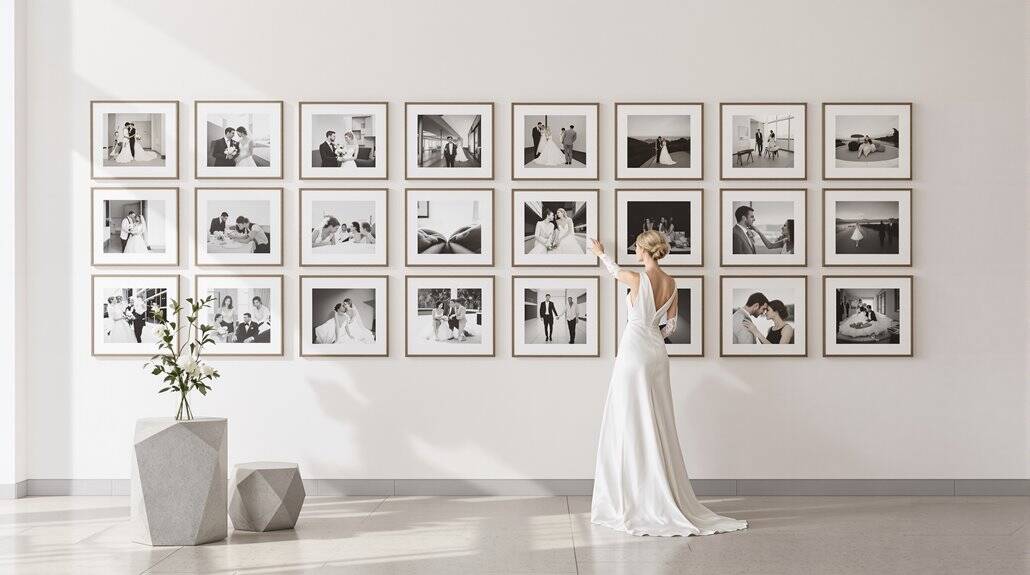
Identifying genuine fine art wedding photographers requires forensic scrutiny beyond what most couples initially consider. When evaluating portfolios for true artistic style, you’ll need to examine complete galleries—not just Instagram highlights—looking for consistent quality across all lighting conditions, not merely perfect golden hour portraits. Request 2-3 full wedding collections from similar events to yours, then dissect them for both technical mastery and emotional resonance.
- Examine low-light execution first—church interiors and receptions reveal technical limitations that sunset portraits often hide
- Look for compositional restraint—fine art wedding photography demonstrates intentional negative space and balanced framing
- Verify consistency between highlight images and mundane moments—true artists maintain their aesthetic throughout
- Assess the film aesthetic—even digital work should have the tonal quality and thoughtful pacing of film photography
- Compare emotional storytelling versus merely pretty pictures—fine art elevates documentation to narrative
- Evaluate the photographer’s use of visual hierarchy—images should guide your eye through deliberate arrangement rather than competing elements demanding attention simultaneously
Conclusion
Choosing fine art wedding photography transforms your celebration from a documented event into a curated visual legacy that transcends time. This artistic approach demands more—higher investment, deeper trust, and fuller surrender to vision—and yet, what you receive transcends mere documentation. You’re commissioning artwork that happens to feature you as its subject.
| Approach | Standard Photography | Fine Art Photography |
|---|---|---|
| Purpose | Records events | Creates timeless artwork |
| Process | Captures what exists | Shapes what could be |
| Result | Documents authenticity | Uplifts authenticity |
The distinction isn’t about elitism but intention. Your wedding deserves more than snapshots—it warrants thoughtful preservation through imagery that will remain relevant decades from now. When your grandchildren discover these photographs, they won’t see dated trends but rather timeless moments, artistically rendered with the same care given to any museum-worthy piece. This isn’t just photography—it’s visual poetry.