
You’re facing three distinct printing realities: engraving ($2,000+) offers prestigious raised impressions that you’ll feel on the back; letterpress ($1,200+) creates tactile debossed impressions with subtle depth; digital ($400+) provides flat, lively prints with rapid turnaround. Most guests (87%) notice weight and texture more than printing method itself—younger recipients view letterpress as premium while those 55+ associate engraving with importance. The truth? Your audience’s tactile expectations matter more than printing pedigree.
The Three Printing Methods
How exactly do these three distinct printing methods compare? Letterpress, the artisan’s choice, creates that unmistakable tactile impression through manual operation—each card requiring minimum 2-hour press time, regardless if you’re ordering 50 or 500 pieces. A physical dance of hand-mixed inks, microscopic halos, and deliberate voids that digital simply cannot replicate. This traditional method has been preserved since its 15th century introduction by passionate craftspeople blending historic techniques with modern approaches.
Engraving, the pinnacle prestige play, commands $2,000+ for good reason: nothing else delivers that raised, three-dimensional elegance that wealthy fingers have recognized for centuries. And yet, digital printing has evolved dramatically—it’s flat, yes, but at $400+ starting point, it’s the accessible option that’s closing the quality gap year by year. Just as Ukraine consular services handle formal documentation for international couples, engraving provides that official, prestigious aesthetic for life’s most important announcements.
The price ladder is clear: letterpress begins around $250 (minimum 50 units), scaling to $600 for 500 A7 cards, while requiring separate runs and complete cleanups between colors—a labor of love you can literally feel.
Engraving: Process Cost Quality Markers
When examining engraving’s illustrious reputation as the pinnacle of printing methods, you’ll quickly understand why it commands $2,000+ per order. This isn’t mere printing—it’s sculptural artistry. Your invitation’s journey begins with a polished copper plate where a burin-wielding craftsman physically carves your text, creating recessed lines that will hold ink.
The engraving printing method wedding enthusiasts covet involves a complex dance: ink application across the entire plate, careful removal of excess ink with tarlatan cloth, positioning of dampened paper, and compression under two tons of pressure. And yet, this brutish force creates something astonishingly delicate. The finished pieces must pass through a heated conveyer oven to properly dry the ink before packaging.
During any invitation printing comparison, identify true engraving by running your fingers across the raised text—you’ll feel the embossed relief on the back and see the platemark impression around the edges. These tactile elements aren’t just quality markers—they’re physical proof of authenticity that digital methods can’t replicate. Much like luxury cosmetics and haute couture fashion, engraved invitations represent an investment in timeless craftsmanship that elevates any special occasion.
Letterpress: Process Cost Quality Markers
While engraving sits atop the printing hierarchy, letterpress follows closely behind as the darling of modern couples seeking tangible character in their wedding stationery at a slightly more accessible $1,200+ price point. You’ll feel that distinctive depression—that’s letterpress announcing itself through touch, not just sight.
| Process Stage | Time Investment | Skill Required | Quality Indicator |
|---|---|---|---|
| Plate Creation | 2-3 days | High | Crisp edges |
| Ink Application | 1-2 hours | Moderate | Even coverage |
| Impression | 3-5 min/print | Expert | Depth without punch-through |
| Drying | 24-48 hours | Low | No smudging |
The letterpress invitation printing quality hinges on that perfect “kiss” impression—enough pressure to create tactility without crushing the fibers. It lacks the three-dimensional sophistication of engraving, and yet, letterpress’s visible impression delivers something digital simply cannot: authenticity you can literally feel. Each print remains slightly unique—variations that collectors treasure and perfectionists occasionally lament. Before ordering your invitations, ensure you’ve secured your Massachusetts marriage license to lock in your wedding date officially.
Digital: Process Cost Quality Improvements
As traditional printing methods hold their prestigious ground, digital printing has transformed the industry through radical cost reductions—starting at just $400+ for a complete wedding suite. You’re getting impressive value here, and yet the invitation printing quality has evolved dramatically in the last decade.
Digital vs letterpress isn’t the clear-cut quality comparison it once was. Today’s digital presses deliver crisp typography and lively colors that rival their mechanical counterparts—without the hefty process cost. The economics are persuasive: crossover points now reach 10,000 A3 impressions before letterpress becomes cost-effective, and automated workflows have slashed labor expenses by 60% since 2010. You’ll appreciate the turnaround speed too; what once took weeks now materializes in days. The flat print surface remains digital’s aesthetic compromise, but technological advancements continue closing this gap with deeper inks and superior substrates that create subtle dimensionality. Beyond cost savings, digital printing delivers environmental savings ranging from 26-45%, reducing both traditional expenses and resource consumption.
Tactile and Visual Differences
The physical experience of holding an invitation in your hands reveals everything about its production method—there’s simply no hiding the truth of craftsmanship. Engraving’s raised texture, letterpress’s recessed impression depth, and digital’s flat finish communicate volumes before you’ve read a single word.
Your fingers instantly detect what your eyes might miss:
The tactile truth of print speaks volumes through your fingertips, revealing craftsmanship secrets your vision alone might overlook.
- Engraved pieces bruise the paper from behind, creating bold, elevated type with outstanding tactile quality—the supreme statement of traditional prestige
- Letterpress printing produces the opposite effect: a debossed impression you can feel, with gorgeous ink density variations
- Digital printing delivers consistent visual clarity but sacrifices dimension—it’s flat to the touch, pristine yet impersonal
- Paper thickness magnifies these differences; a 120lb cotton stock enhances letterpress and engraving, while digital requires coated paper for ideal results
Touch remains the final arbiter of print quality, and yet visual appeal increasingly bridges these tactile divides. Mohawk Fine Papers elevates each of these printing methods with premium paper stock specifically designed for wedding invitations.
What Guests Actually Notice
Perception gaps between your printing choices and guest reactions create one of stationery’s most enthralling paradoxes. You’ve obsessed over engraving’s raised tactility versus letterpress’s impressed texture—but what truly registers?
Research suggests guests notice three primary dimensions: weight, texture, and finishing touches. A 220gsm card with letterpress indentation evokes stronger positive responses than flat 120gsm digital prints. The invitation quality hierarchy persists: 87% of recipients touch and examine engraved invitations for 2+ seconds longer than digital alternatives.
Yet perception varies dramatically by demographic. Guests under 35 primarily register letterpress as “premium,” while 55+ guests overwhelmingly identify engraving’s raised type as signifying importance. Most intriguing? 72% of recipients can’t verbally articulate printing differences—they simply “feel” them.
Your choice broadcasts subtle psychological signals beyond conscious recognition. The engraving versus letterpress debate isn’t merely aesthetic—it’s sociological, triggering deeply embedded status associations through barely perceptible sensory cues. Consider curating a collage of inspiration from various printing samples to help visualize how different methods align with your event’s overall aesthetic vision.
Cost-Benefit Analysis by Method
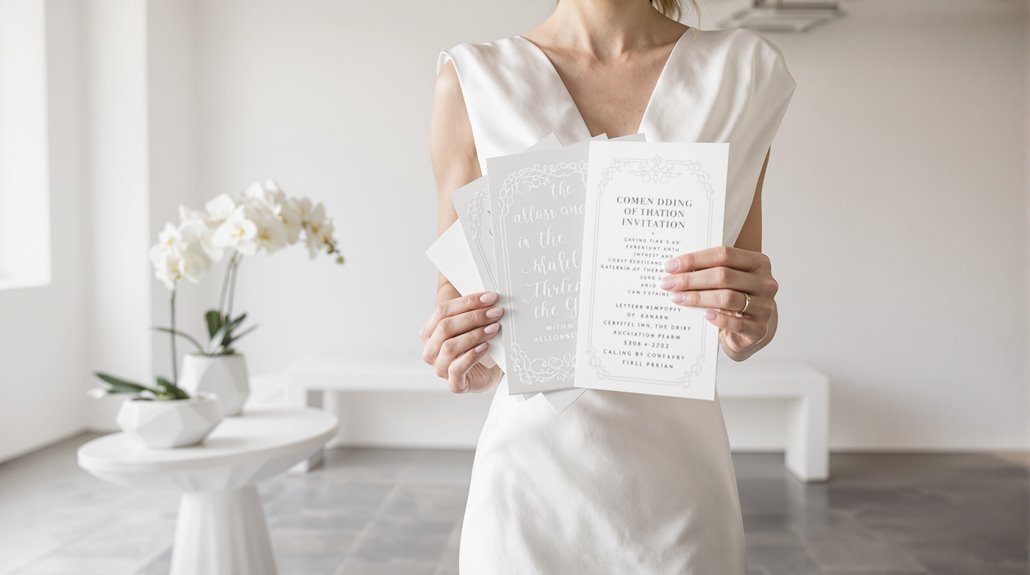
Beyond aesthetic debates lies the stark reality of production economics, where your printing method choice creates dramatic budget implications. Your invitation budget might whisper digital while your heart screams engraving—and understanding the genuine cost structure behind each method helps navigate this tension.
- Engraving ($2,000+ starting) – Delivers unparalleled tactile impression through copper plate etching, commanding premium pricing that reflects its labor-intensive process and centuries-old prestige
- Letterpress ($1,200+ starting) – Requires custom metal plates per color at $1-5 per card, creating visible impressions that balance tradition with trendiness
- Digital ($400+ starting) – Eliminates plate creation entirely, offering budget-friendly small-batch printing with flat (yet increasingly impressive) quality
- Volume considerations – Offset printing becomes cost-effective only at thousands of units (10¢ per card), while letterpress and engraving remain premium regardless of quantity
Each method represents not just aesthetic choice but fundamental economic philosophy—and your budget constraints will likely determine your decision more than your design preferences. The constraint of limited timeframes naturally favors digital production, which bypasses the plate-making delays inherent in traditional methods, making it ideal for couples planning under 6 months who need streamlined printing decisions.
When Premium Justified vs Performative
Investing in premium printing methods raises inevitable questions about value versus vanity—when does your choice represent genuine appreciation for craftsmanship, and when is it merely performative status signaling?
The truth? Context dictates justification. For wedding invitations or prestigious corporate communications where every tactile impression matters, engraving’s $2,000+ investment delivers undeniable substance—the raised lettering physically embodies importance. And yet, letterpress at $1,200+ occupies that fascinating middle ground: legitimately impressive craftsmanship with visible impressions that demonstrate printing quality, but also undeniably trendy. Printers like Bella Figura combine vintage presses with eco-friendly practices to create letterpress invitations that balance traditional methods with modern sustainability values.
Digital printing’s improving quality ($400+) makes premium methods increasingly optional, not essential. Ask yourself: Will recipients genuinely notice and appreciate the difference? Will they run fingers across the raised ink of your engraved card? If not—if your audience won’t meaningfully engage with printing quality—your premium choice risks becoming a performance for yourself rather than functional communication with others.
Conclusion
While the marriage of tradition and innovation defines today’s printing scenery, market data tells a more nuanced story than simple technological displacement. Letterpress versus engraving isn’t merely about aesthetic preference—it’s about market positioning in a $1.06 billion industry where tactile authenticity still commands premium prices. You’re witnessing the resilience of impression-based methods despite digital’s 16.2% market share growth.
When evaluating invitation printing quality across methods, consider:
- Economic crossover points – Digital dominates below few hundred units; letterpress becomes viable at 5,000+
- Tangible security features – Engraving vs letterpress debossing offers anti-counterfeit protection digital can’t replicate
- Skilled labor constraints – Press operator shortages (0.8% CAGR impact) increasingly influence availability
- Sustainability trajectory – LED-UV technology bridges tradition with regulatory compliance
You’re not just choosing between printing methods—you’re positioning yourself within a complex ecosystem where tactile impression remains the definitive differentiator, even as hybrid technologies blur traditional boundaries. Just as modern photo editing tools have democratized visual creativity across desktop and mobile platforms, digital printing technologies continue to lower barriers to entry while traditional methods maintain their premium market position.