
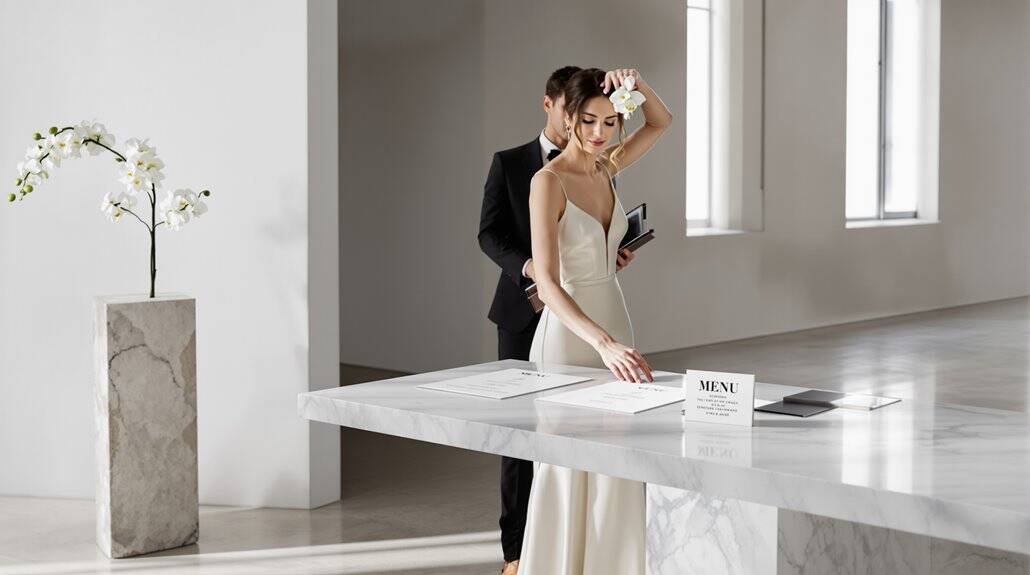
You need less paper than you think, but more than nothing. Essentials include programs (for complex ceremonies), place cards (for assigned seating), and table numbers (always). Optional elements: menus and directional signage. Skip the unnecessary fluff—favor tags, napkin wraps, and timeline posters cost $75-300 yet go largely unnoticed by guests. Focus on functional items that serve your guests rather than performative pieces. The difference between stressed-out guests and a seamless celebration often hinges on these tactical paper choices.
The Day-Of Paper Possibilities
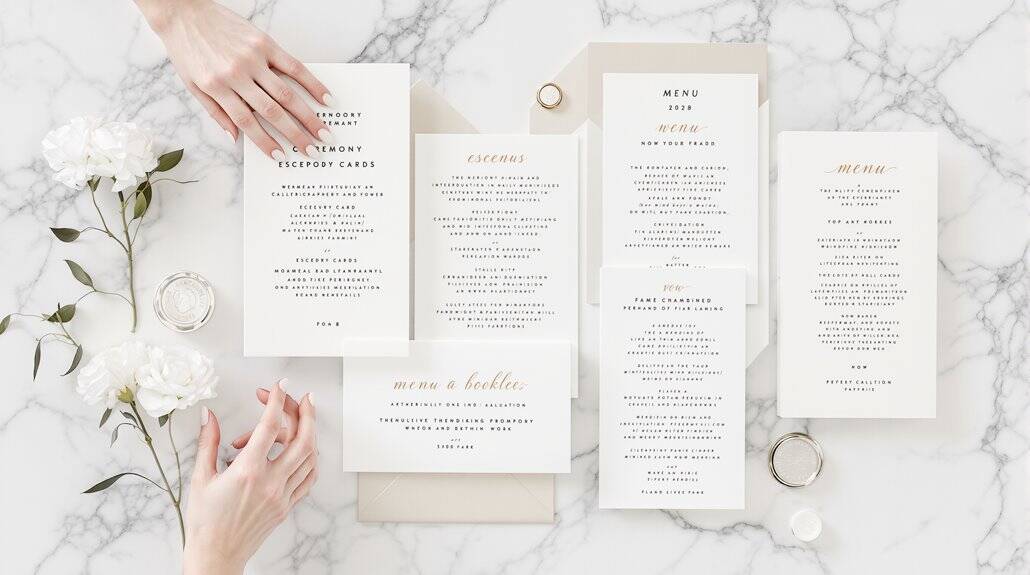
When does paper become the unsung hero of your wedding day? It’s when your carefully curated day-of stationery transforms from mere paper products into essential communication tools for your guests. Programs, menus, place cards, table numbers—these aren’t just pretty accessories, they’re functional necessities guiding your loved ones through your celebration.
Ceremony programs provide structure to your service, detailing who’s who and what’s happening when. Wedding signage directs traffic, from welcome boards to bar menus to hashtag reminders. Place cards eliminate the awkward table-hunting dance. Table numbers prevent chaos. Favor tags add that personal touch.
And yet, not every paper element is essential. Your budget and aesthetic preferences should dictate which pieces you prioritize. A vineyard wedding might demand wine-pairing menu cards, but a casual backyard affair could skip programs entirely. Many eco-conscious couples are choosing recycled paper options that maintain elegance while supporting sustainability. Consider adding wine markers to your table settings to help guests keep track of their glasses throughout the evening. The question isn’t just what’s possible, but what’s necessary for your specific celebration.
Essential: Programs for Complex Ceremony
Let’s talk about programs—specifically for those of you planning ceremonies with layers of tradition, multiple readings, or religious elements that need explaining. Wedding paper necessities often begin and end with programs when your ceremony demands context. A heavy cardstock booklet or elongated card (4.25×9″ is ideal) becomes your guests’ roadmap through unfamiliar religious customs, lengthy proceedings, or multilingual elements. Programs should be printed on sturdy cardstock to ensure they remain intact during outdoor ceremonies, especially on windy days.
Your essential ceremony reception paper should include:
- Complete order of service with timing for processional, readings, vows, and recessional
- Full wedding party listing with roles and relationships
- Explanations of cultural or religious elements unfamiliar to many guests
- Expression of gratitude to attendees
Programs remain the most practical essential wedding signage investment—one per couple, not per person—when ceremonies run complex. For couples seeking elevated aesthetics, consider incorporating elements of haute couture beauty into your program design to complement an upscale celebration. Order quantity matching your invitation count plus 10-15 extras, and submit designs 3-4 weeks before your date. They’re worth it, trust me.
Essential: Place Cards for Assigned Seating
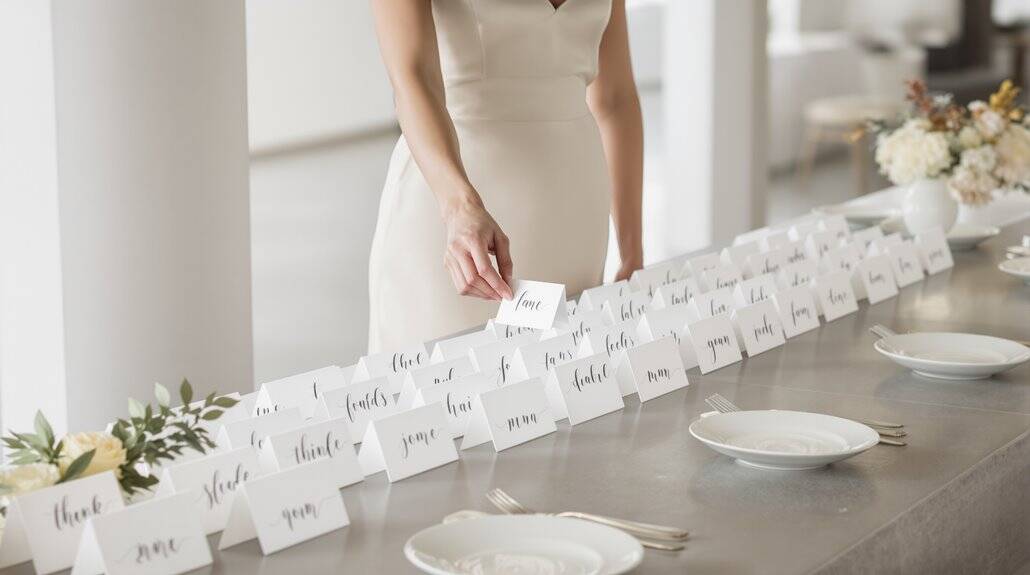
Why exactly does your wedding need those tiny, elegant cards with each guest’s name displayed at their precise seat? Because they’re among the most practical wedding paper necessities you’ll invest in—directing traffic, preventing chaos, and elevating your reception’s formality in one elegant swoop.
| Place Card Purpose | For Formal Weddings | For Casual Weddings |
|---|---|---|
| Meal Designation | Critical for plated service | Optional for buffets |
| Seating Control | Prevents awkward groupings | Creates intentional mingling |
| Service Logistics | Helps servers identify orders | Simplifies meal delivery |
You’ll need these wedding print materials whenever you’re serving a plated dinner—full stop. They’re non-negotiable when you’ve collected meal choices in advance, and they’re invaluable for keeping feuding relatives at opposite ends of tables. And yet, they’re useless without a corresponding seating chart directing guests to their tables first. For couples hosting celebrations at Museum of Modern Art private event spaces, place cards add an extra layer of sophistication that complements the venue’s artistic atmosphere. Among wedding paper goods needed, they’re the perfect marriage of function and formality.
Essential: Table Numbers Always
Though place cards direct guests to their exact seats, table numbers remain the indispensable navigational tool that gets them to the right vicinity in the first place. Among all wedding paper necessities, these modest markers wield outsized influence on your reception’s flow—preventing bottlenecks and confused wandering that inevitably delays dinner service. Your day-of wedding paper arsenal isn’t complete without them.
For maximum functionality, verify your table numbers:
- Measure between 4×6″ and 5×7″ (with 5×7″ being ideal for visibility from a distance)
- Feature bold, legible numerals rather than written-out words
- Stand tall enough to be seen over centerpieces
- Complement your overall design scheme without sacrificing clarity
Wedding paper goods needed will vary based on your preferences, but table numbers remain non-negotiable. They’re the silent orchestrators of your reception, guiding guests efficiently while giving wait staff clear reference points—and yet, they’re also another canvas for personal expression through design, color, and creative numbering systems. Maintaining clear sight lines to table numbers supports visual accessibility and helps guests navigate the space without confusion or delay.
Optional: Menus
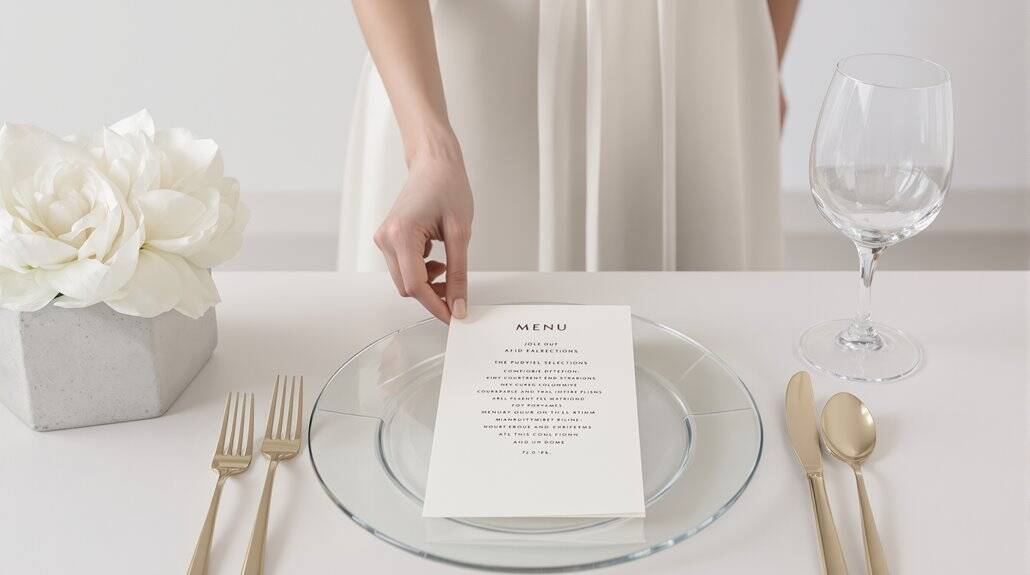
While table numbers keep your reception orderly, menus serve as both logistical tool and aesthetic flourish—a perfect example of form meeting function at your wedding celebration. They’re not strictly necessary, and yet they’re often expected at formal receptions, offering guests clarity about their dining experience while reinforcing your wedding’s visual identity.
Timing is critical: design these 4-6 months out, but don’t print until 2-3 weeks pre-wedding when your final headcount solidifies. Order one per place setting, plus 10% extra for contingencies—spills happen, photographers need styling props.
Cost-wise, menus consume a notable slice of your 2-5% stationery budget allocation, particularly if you’re incorporating luxe touches like wax seals or letterpress. But they’re also the day-of paper most likely to be pocketed as keepsakes, immortalizing your carefully curated feast while completing your tablescape design. Worth the splurge? That depends entirely on your priorities.
Optional: Signage Directional and Informational
Where exactly are your guests supposed to go during your wedding day? Clear signage prevents the awkward spectacle of confused relatives wandering into storage closets or—worse yet—missing your carefully choreographed ceremony entrance. You’ll need tactically placed signs at decision points, sized appropriately (11×14 inches for critical wayfinding), with high-contrast text that’s actually readable (60-80 pt minimum).
Lost guests can’t celebrate properly. Give them clarity with strategic signage that prevents confusion and keeps your wedding flowing seamlessly.
Your essential directional arsenal should include:
- Ceremony-to-cocktail hour transitions with bold 100 pt arrows
- Restroom indicators (critical when facilities aren’t immediately obvious)
- Transportation/shuttle information for destination venues
- Photo booth and gift table locations to prevent constant “where’s the…?” interruptions
Signs seem like minor details, yet they dramatically impact guest experience. The right directional elements create seamless flow and confident movement—allowing everyone to focus on celebrating you rather than deciphering your venue’s labyrinthine layout. Contemporary museum venues with their open-floor plans and minimal built-in wayfinding require especially thoughtful directional signage to guide guests through flexible spaces. Worth every penny of your stationery budget.
Unnecessary: Favor Tags Napkin Wraps Timeline Posters
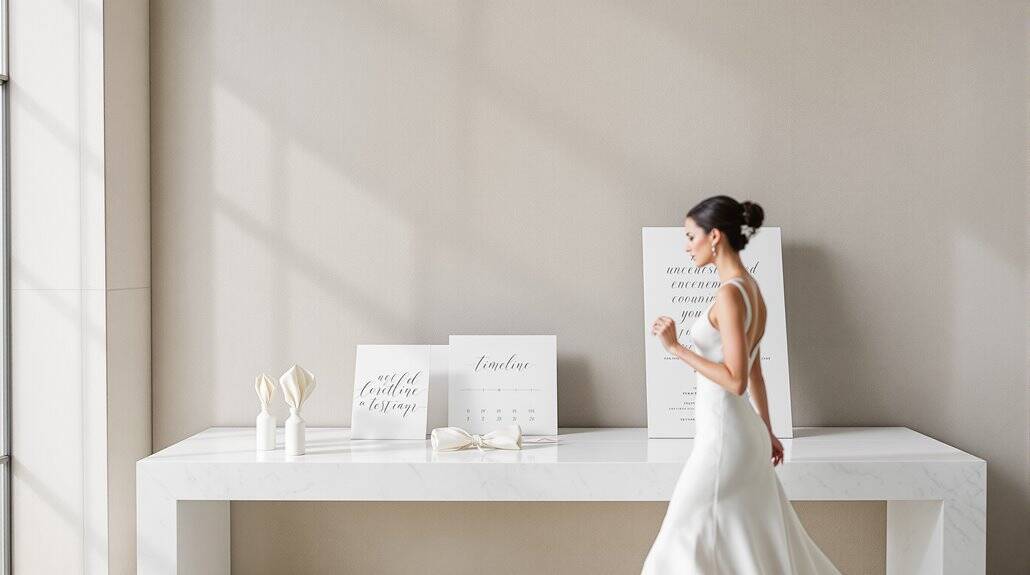
Despite the stationery industry’s efforts to convince you *alternatively*, certain paper elements add zero meaningful value to your wedding day experience. They’re pure profit generators—pretty, yes, but functionally superfluous and first to be forgotten in post-wedding memory consolidation.
| Item | Cost Range | Guest Notice Factor | Preservation Rate |
|---|---|---|---|
| Favor Tags | $75-200 | 12% | Discarded within 24hrs |
| Napkin Wraps | $150-300 | 8% | Thrown away immediately |
| Timeline Posters | $120-250 | 35% | Redundant with coordinators |
| Program Booklets | $250-800 | 41% | Left behind on chairs |
You’ll agonize over font pairings and paper weight for elements guests will barely register. And yet, this isn’t universal truth—if you’re planning a design-forward celebration where aesthetic cohesion matters profoundly, these paper touches might actually merit investment. But for most couples? Skip these without a moment’s remorse. If you’re seeking personalized guidance on coordinating wedding details, consider scheduling a private appointment with a dedicated concierge who can help streamline your planning decisions.
What Serves Guests vs What’s Performative
The wedding industry thrives on convincing you that certain paper elements are non-negotiable, when the truth sits uncomfortably between necessity and pure theater. With couples spending between $3,000-$4,000 on wedding stationery, it’s essential to distinguish between what genuinely aids your guests and what merely photographs well for Instagram.
Guest-serving items provide functional communication:
- Programs guide attendees through your ceremony sequence (essential for non-traditional formats)
- Seating cards eliminate confusion and reduce reception bottlenecks
- Menu cards address dietary concerns and set expectations
- Signage directs guests through unfamiliar venues
And yet, 61.22% of couples now choose economy options or DIY these elements—acknowledging their value while refusing industry markup. The explosion of digital alternatives (52% of invitations) demonstrates this shift toward practicality. You need paper that works, not paper that performs—a distinction your guests unconsciously appreciate but rarely verbalize. For couples who prioritize substance and quality over volume, cotton paper delivers the tactile weight that communicates intentionality without requiring excessive day-of elements.
Conclusion

When evaluating your day-of paper needs, you’re fundamentally making decisions at the intersection of sentiment and practicality—investments that balance both tangible experience and financial reality. Programs, menus, place cards, and table numbers serve functional purposes while signage, favor tags, and napkin wraps often veer into aesthetic territory.
Ask yourself: Will your guests reference this item during your celebration? Will they keep it afterward? The $518 average couples spend on stationery speaks volumes—28% prioritize customized pieces because they understand paper’s lasting impact. Consider allocating budget where it matters most—elegant menus at $2-4 per guest create conversation pieces, while basic programs at $1-2 each ensure everyone follows your ceremony. And yet, the most cherished items are often those serving dual purposes—place cards doubling as favors or programs containing personal stories. Your day-of paper strategy should reflect your priorities, budget, and the specific experience you’re crafting for your guests. Don’t forget to allocate resources for your own bridal beauty essentials, as luxury skincare and makeup can help ensure you look radiant in all those wedding photos your stationery will help orchestrate.