
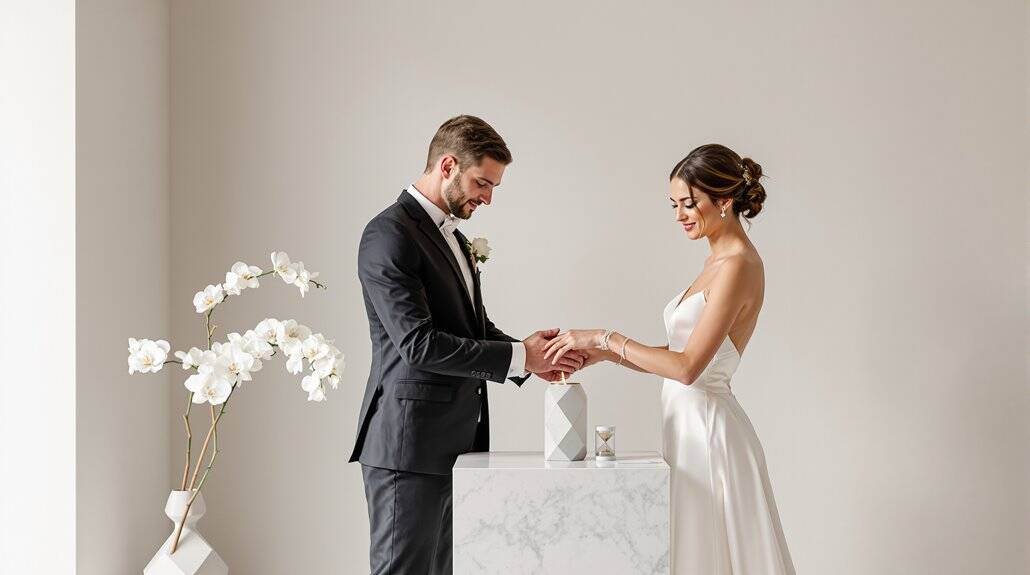
To create meaningful rituals, start with deliberate intention rather than borrowed Pinterest aesthetics. Your practice needs five foundations: authentic personal resonance (not performative gestures), symbolic elements that transcend literal function, consistent repetition (showing up 6-7 days without reminders), and connection to larger values. Effective rituals create clear before-and-after distinctions in your mental terrain while reducing anxiety by 26-31%. Test your ritual’s authenticity by asking whether it would feel sacred without an audience—the most enduring ceremonies emerge from genuine emotional investment, not social media potential.
Why Invented Rituals Often Fail
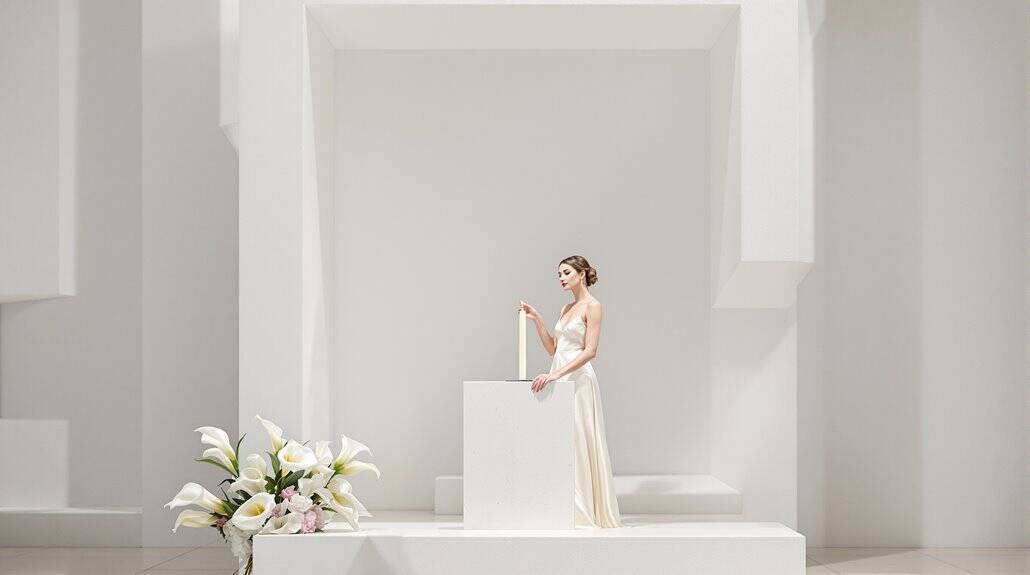
Despite our earnest intentions to craft meaningful ceremonies from scratch, most invented rituals collapse under their own artifice. You’ve seen it—the unity sand ceremony that felt forced, or that love lock tradition that seemed empty the moment you clicked the padlock shut. Invented rituals fail precisely because they lack the essential ingredients: historical weight, communal verification, and emotional impact built through repeated practice. Ethnographic records consistently show that practitioners use auxiliary hypotheses to explain away failures rather than abandoning their ritual practices altogether.
When you create ritual ideas without grounding them in something personally significant, they become hollow performances rather than transcendent experiences. The Bayesian brain craves ritual consistency; it needs to witness efficacy multiple times before embedding the practice in your personal mythology. And yet, the most successful personal rituals often emerge organically—reading your grandmother’s letters annually, lighting candles for deceased relatives, or blending cultural heritage traditions. Ritual failure happens when we impose form without authentic meaning, when we prioritize Instagram-worthy moments over private significance that strikes a chord through repetition. Consider how museum wedding venues transform ordinary vows into ceremonies steeped in cultural gravitas, borrowing institutional weight to elevate personal commitments.
Failed Pinterest Rituals: Unity Sand Love Locks
How quickly does the gleam fade from those picture-perfect ceremony moments you’ve pinned to your wedding board? Unity sand ceremonies—where couples pour colored sands together into a keepsake vessel—promise visual symbolism of two lives merging. And yet, these Instagram-ready moments often collect dust afterward, becoming awkward glass containers you’re not quite sure where to display.
Similarly, love locks—those padlocks couples attach to bridges as eternal symbols—have become problematic in practice: cities removing tons of metal from collapsing structures, keys tossed into polluted waters below.
Why do these wedding rituals fall flat? They lack the essential ingredient of authentic ritual: meaningful connection to your actual lives. They’re borrowed aesthetics rather than personal symbolism, designed more for photographers than for your relationship’s narrative. Despite their intention to embody enduring love and unity, these ceremonies rarely maintain their significance beyond the wedding day. The most enduring ceremonies aren’t the ones that photograph perfectly—they’re the ones that feel perfectly, unmistakably yours, regardless of how they translate to social media. In contrast, wedding bands and engagement rings become daily, tangible reminders of your vows, woven seamlessly into the fabric of your life together.
Successful Personal Rituals: What Works
While Pinterest-perfect ceremonies wither into awkward keepsakes, authentic personal rituals quietly thrive in the rhythms of real lives. You’ll notice that meaningful personal ritual creation emerges from genuine connection—not aesthetic perfection. The most enduring rituals reflect your actual values, not your Instagram aspirations.
When you design wedding ritual elements, draw from what genuinely matters: reading letters from grandparents, incorporating cultural heritage objects, or blending family traditions. For couples in California, obtaining a marriage certificate serves as the official foundation that transforms ceremonial rituals into legal commitment. The data confirms this works: couples with consistent rituals report markedly higher relationship satisfaction. And yet, the ritual’s power isn’t in its photogenic quality but its repetition and meaning.
Custom ceremony traditions stick when they facilitate authentic connection. Morning mindfulness practices prepare 80% of top performers for demanding days. Evening reflections guide improvement. Families with established rituals experience less stress during gatherings. The rituals that last? They’re the ones that honor who you actually are—not who you think you should be.
Framework for Meaningful Ritual Creation
When you attempt to create personal rituals without understanding their psychological architecture, you’re fundamentally building a house without blueprints. The most meaningful personal ceremony rituals emerge from a three-step structure—communication, design, and performance—that honors psychological needs while creating symbolic resonance.
To create wedding rituals or new wedding traditions that actually matter:
- Begin by deeply listening to all participants’ values and histories
- Identify existing symbols that already carry emotional weight in your relationship
- Connect your ritual to broader cultural contexts, even if reimagining them
- Design actions that address specific functions (transformation, separation, connection)
- Ensure the ritual allows for self-transcendence beyond individual experience
Your ritual isn’t just about aesthetic appeal or Instagram moments, but about crafting something that regulates emotions and enhances social connections. Invented rituals fail when they’re arbitrary gestures—and yet they thrive when symbolically meaningful action meets intentional presence. Consider how your venue selection can reinforce the symbolic weight of your ceremony, as institutional spaces like museums carry their own cultural resonance that can amplify your ritual’s meaning.
Avoiding Performative Photo Moments
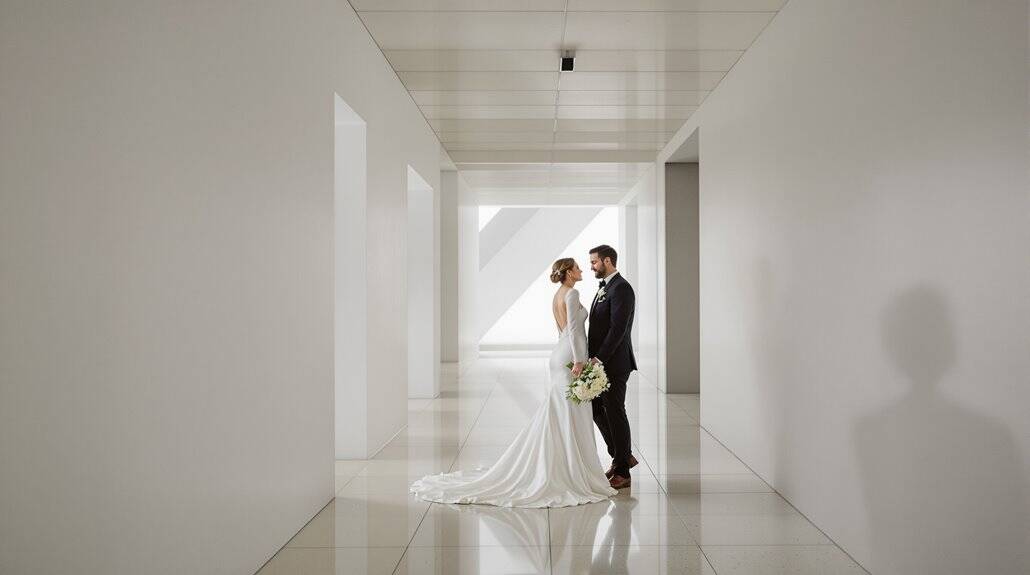
Our most meaningful rituals collapse when reduced to photo opportunities. When you design wedding ritual elements, ask yourself: will this moment feel sacred, or just photograph well for Instagram? The unity sand ceremony—once profound—has devolved into color-coordinated spectacle, divorced from genuine meaning and captured primarily for social media circulation.
Your personal ceremony rituals deserve protection from the networked performance trap. Instead of curating “candid” moments that appear authentic while actually being carefully orchestrated, create wedding rituals that would remain meaningful even if no cameras existed. Consider: Would you still incorporate this element if photography were prohibited? Would it matter without an audience?
The most powerful rituals happen in the spaces between posed shots—the whispered vows exchanged privately before the official ceremony, the hand squeeze during a tense moment, the authentic tears you didn’t anticipate. These unplanned revelations contain the truth of your commitment. Just as your chosen palette functions as visual language communicating values before words are exchanged, your rituals should speak authentically to who you are rather than to an invisible audience of scrolling strangers.
Testing Ritual for Actual Meaning
True ritual meaning emerges not from how photogenic the moment appears but from measurable emotional resonance that transforms your experience. You’ll know your ritual works when it consistently produces feelings of significance—not just in the moment, but days later. The most effective personal rituals create a before-and-after distinction in your mental terrain; they’re preparation spaces that improve performance while reducing anxiety by 26-31%.
Test your ritual’s actual meaning through:
- Personal involvement score: Do you feel actively engaged or merely going through motions?
- Performance impact: Fewer errors, more deliberate responses in tasks following ritual
- Emotional regulation: Anxiety reduction that persists beyond the immediate activity
- Consistency desire: You complete it 6-7 days without reminders because you want to
- Appraisal metrics: It feels special, meaningful, powerful—not merely pleasant
Your ritual must stand up to repeated use, yet remain resistant to becoming mindless routine. Meaning lives in this tension. Like haute couture beauty traditions that transform daily grooming into artful practice, your personal rituals should elevate ordinary moments through intentional design and authentic emotional investment.
Examples: Personal Rituals That Resonated
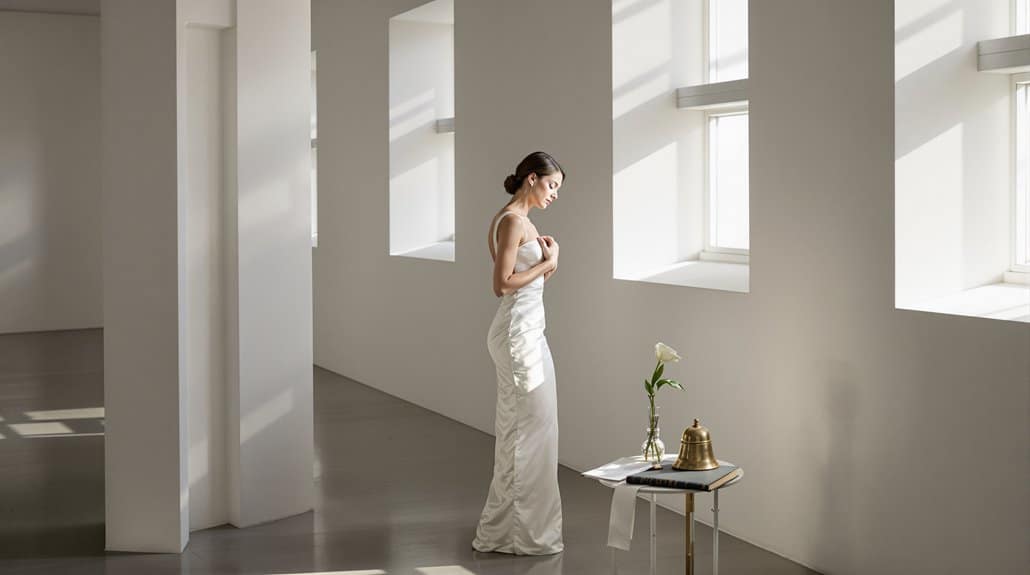
What makes a personal ritual stick rather than fizzle? Look at the evidence: invented ceremonies like unity sand often fall flat, while deeply personal practices thrive. The difference lies in authentic emotional resonance—not performative gestures.
Consider how couples who participate in special activities together report measurably higher relationship satisfaction. Or how hospice workers who develop personal commemoration rituals show compassion satisfaction scores of 43.8 versus 40.1 for those who don’t. These aren’t arbitrary traditions; they’re intentional practices that deliver concrete benefits.
Your morning routine—seemingly mundane—qualifies as a recognized ritual type, with 33% of consumers citing structure as its primary benefit. And family gatherings? They become less stressful when infused with deliberate rituals. The most successful personal rituals aren’t imported wholesale but rather emerge from genuine meaning: reading meaningful letters, honoring deceased relatives, blending cultural heritage—practices that feel true rather than borrowed. For wedding ceremonies specifically, modern etiquette guidance emphasizes creating moments that reflect the couple’s authentic values rather than simply adhering to outdated expectations.
Conclusion
When we examine the fabric of successful rituals against those that quickly unravel, a consistent pattern emerges. The most enduring practices aren’t necessarily elaborate or Instagram-worthy—they’re deeply personal, intentionally crafted, and regularly practiced. You’re not seeking perfection here, but authenticity.
The pathway to meaningful ritual creation requires:
- Deliberate intention—knowing precisely why you’re establishing this practice
- Personal resonance—connecting to your values, not borrowed sentimentality
- Consistent repetition—showing up even when the initial novelty fades
- Symbolic significance—incorporating elements that transcend their literal function
- Adaptability—allowing your ritual to evolve as you do
Your rituals can become powerful anchors in an increasingly fragmented world. They’re uniquely yours—personal technologies for meaning-making that no algorithm can replicate. And yet, their power lies not in their uniqueness but in how they connect you to something larger: your values, your community, your humanity. Consider how formal ceremonies like marriage certificate documentation serve as both legal record and symbolic milestone—a reminder that meaningful rituals often blend practical purpose with deeper significance.