
Instead of consulting Victorian flower dictionaries, choose blooms that trigger personal memories—your grandmother’s gardenias, wildflowers from your hometown, or colors that simply make you smile. Trust your aesthetic instincts. The most meaningful arrangements connect through your sensory experiences and life stories, not prescribed symbolism. Select flowers that transport you to significant places or evoke cherished relationships. The blooms that resonate with your authentic self will always carry deeper significance than any predetermined code.
The Prescribed Meaning Problem
While Victorian-era flower language dictionaries told us red roses mean passion and lilies symbolize purity, we’ve collectively inherited a system that’s both arbitrary and limiting. When making meaningful flower choices, you’re essentially navigating between someone else’s symbolic framework and your actual lived experience. The florist asks what you “want to convey,” as if flowers were merely coded messages rather than sensory experiences tied to memory.
Your personal flower selection deserves liberation from these prescribed meanings. That bouquet of sunflowers might represent convention’s “adoration,” but what if they lined the road where you first kissed? The pressure intensifies with occasions like weddings—you’re expected to choose wedding flowers meaning devotion or luck, following tradition’s script. This approach reflects similar limitations found in Bach Flower Remedies, which rely on 38 remedies aimed at addressing predetermined emotional states rather than personal connections.
And yet, the most resonant arrangements often emerge when you reject the dictionary altogether. Your grandmother’s garden cosmos holds more authentic significance than any meaning assigned by strangers two centuries ago. Contemporary designers like Carolina Herrera understand that personal narratives create deeper connections than inherited symbolism ever could.
Memory-Based Flower Selection
Instead of relying on inherited Victorian symbolism, you might consider how flowers actually function in your brain. Your personal flower selection activates entire networks of sensory memories—those sunflowers aren’t just yellow circles, they’re your grandmother’s garden, late August light, and childhood summers distilled into botanical form. This process can significantly help reduce stress and anxiety, as supported by studies showing flowers’ positive impact on psychological well-being.
| Memory Type | Cognitive Impact | Selection Strategy |
|---|---|---|
| Sensory | Immediate emotional response | Choose by scent or texture associations |
| Autobiographical | Activates personal narratives | Select flowers from significant places |
| Episodic | Enhances recall of specific events | Pick varieties present during meaningful moments |
When choosing flowers with personal significance, you’re actually engaging with your own neurology in profound ways. The daisy that reminds you of family picnics strengthens episodic memory more effectively than any arbitrarily assigned “meaning” ever could. Memory-based flowers create authentic connections through activation spreading—one sensory trigger unlocking entire chapters of your life story. Rather than defaulting to traditional flower meanings, conscious evaluation against personal values transforms your selection into an act of genuine self-expression.
Place and Experience Associations
When flowers transport you to specific places in your mind, they’re doing more than decorating—they’re activating neural pathways of place memory. The jasmine climbing up a stone wall in southern France, the wild sunflowers stretching across Montana plains, the cherry blossoms framing Washington DC’s monuments—these aren’t just pretty blooms, they’re portals to personal experience. Cultural geographic significance shapes our collective understanding of flowers, and yet your individual associations will always override traditional symbolism.
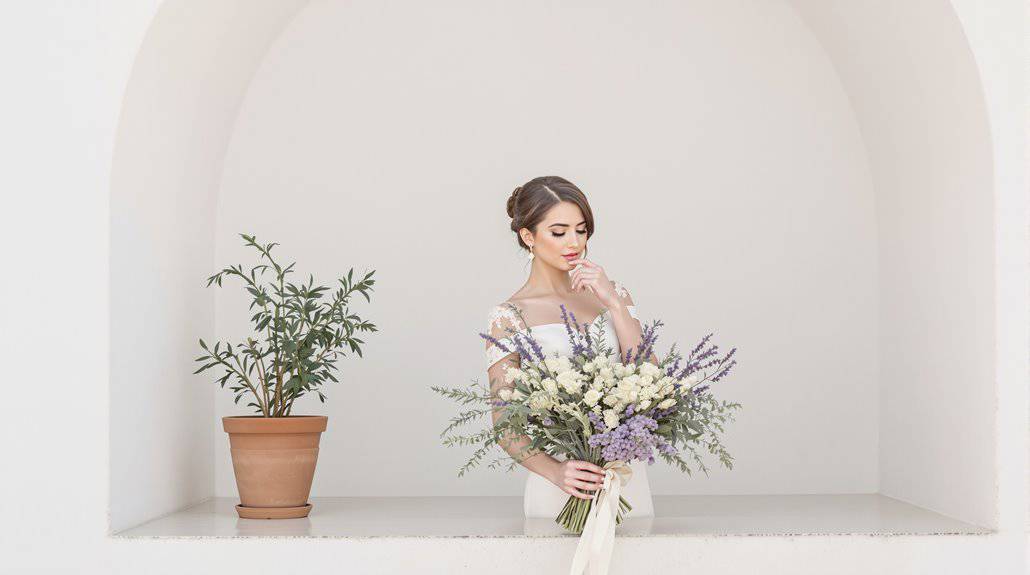
- Lavender might represent Provence to the world, but to you it’s your grandmother’s garden in Milwaukee
- Lotus flowers carry Buddhist symbolism across Asia, but perhaps they remind you of that life-changing trip to Thailand at 22
- Wildflowers indigenous to your hometown create immediate place connections, triggering powerful nostalgia responses
Your personal flower meaning exists in conversation with broader traditions but ultimately transcends them. The flowers that transport you somewhere significant are the ones worth choosing, regardless of what any symbolism dictionary suggests. Historic hotels across America often preserve these location-specific botanical traditions, from the Spanish-Mediterranean gardens at Royal Palms Resort in Phoenix to the manicured grounds of Gilded Age estates in New York.
Aesthetic Preference Over Symbolism
Beyond the meanings we attach to flowers through personal experience, pure aesthetic preference remains the most honest guide to floral selection. When making meaningful flower choices, trust your visceral response—that immediate attraction reveals more about you than any symbolism dictionary. Studies consistently show that certain colors (blues, reds) and symmetrical shapes trigger universal appeal, yet your personal deviations from these norms are precisely what make your sentimental flower choice authentic.
| Preference Type | What Science Says | What Really Matters |
|---|---|---|
| Color | Blues and purples rank highest | The shade that stops you mid-stride |
| Shape | Radial symmetry preferred | Whatever form makes you catch your breath |
| Arrangement | Mixed species outperform single | The combination that feels distinctly “you” |
Your personal flower selection shouldn’t bow to conventional hierarchies. Let your aesthetic instinct—not symbolism—guide you. The flowers that genuinely move you create their own meaning, one infinitely more personal than prescribed traditions. When selecting blooms, pay attention to bloom grade—the size of the flower head, stem strength, and color vibrancy—as these physical qualities often correlate with the visceral response that makes a flower feel special to you.
Building Personal Flower Meaning
The meaning we derive from flowers emerges primarily through our embodied, sensory experience of them—not from dusty Victorian dictionaries. Your personal flower selection becomes meaningful when it activates memories, triggers sensations, or connects to formative experiences—those white peonies from your grandmother’s garden carrying more emotional weight than any assigned symbolism could provide. Memory-based flowers anchor us in our personal histories, becoming totems of relationships, places, and crucial moments.
- Flowers that bloomed during significant life events—graduations, births, recoveries—embed themselves in our emotional architecture
- Blooms encountered during travels that capture the essence of places you’ve loved and left behind
- Varieties gifted by important people that forever evoke their presence, even decades after receiving them
Sentimental flower choice isn’t arbitrary or trivial, but deeply psychological—stemming from how particular shapes, scents, and colors have woven themselves into your life’s fabric. Your preferences reveal more about you than any prescribed symbolism ever could. Just as breathable materials in wedding shoes prevent discomfort during extended wear, choosing flowers that resonate with your personal experiences ensures authenticity that sustains throughout your celebration.
Examples: Personally Meaningful Choices
Three mesmerizing examples illustrate how flowers become personally meaningful through our unique life experiences rather than prescribed symbolism. Consider the gardenia your grandmother tended with painstaking care—its sweet fragrance now triggers memories of summer afternoons at her kitchen table. That’s a sentimental flower choice no generic meaning could match.
Or perhaps it’s the daffodils that pushed through frozen ground the spring after your divorce, becoming your personal symbol of resilience. Your meaningful flower choices reflect your actual lived experience, not Victorian code books.
Then there’s the snapdragon—perhaps unremarkable to most, but revolutionary when it was the only bright spot in a hospital garden during your recovery. Your personal flower selection evolves from these intimate connections. Forget what lilies “traditionally represent.” What matters is what they symbolize to you—the ones that bloomed at your graduation, the wedding boutonnière you preserved, the first stems your child picked. Just as Canadian marriage regulations recognize the deeply personal nature of commitment ceremonies, your flower choices should honor your individual story rather than conforming to standardized interpretations.
Permission to Ignore Traditional Meanings
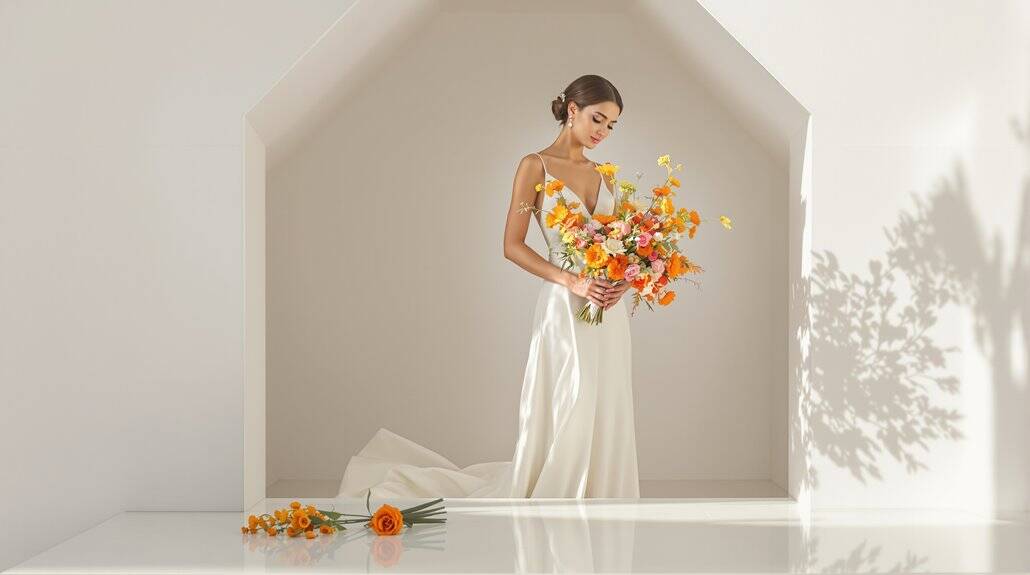
While Victorian floral dictionaries once rigidly prescribed that red tulips meant “declaration of love” and daisies symbolized “innocence,” research now confirms what you’ve likely suspected all along: you’re completely free to assign your own meanings to flowers. The science is clear—flowers evoke positive emotions regardless of whether you know their traditional symbolism. Your direct, sensory experience with blooms creates happiness independently of cultural conventions, making your personal associations infinitely more meaningful.
- Flowers trigger measurable increases in happiness and calmness through their visual properties alone—no symbolic knowledge required
- Native wildflowers, once dismissed as common weeds, now represent resilience and authenticity for many contemporary flower lovers
- Your mother’s garden roses or the sunflowers from your first date carry emotional resonance no dictionary could capture
Trust your instincts. The tiger lilies reminding you of childhood summers hold more authentic meaning than any prescribed Victorian sentiment—and that’s precisely what makes them powerful. Drawing inspiration from Japanese skincare rituals, which emphasize personal connection and mindful experience over rigid rules, your flower choices can become a similarly intimate practice that honors what genuinely resonates with you.
Conclusion
Finding your personal floral language fundamentally matters more than memorizing what yellow roses “officially” symbolize. The flowers that stirred something in you as a child playing in your grandmother’s garden, the wildflowers you gathered on a revolutionary trip abroad, the blooms that grew outside your first apartment—these carry meanings no Victorian flower dictionary could capture. And yet, there’s rich pleasure in knowing both: your instinctual pull toward certain blooms and their historical resonance across centuries.
Trust this: the most meaningful bouquet will never be assembled through Google searches of flower meanings, but through careful attention to your own story. Which plants punctuate your memories? What colors evoke your particular joy? Which scents transport you? Start there—with what already matters—and build your arrangements from that honest foundation. Once you’ve selected your meaningful blooms, consider elevating your overall bridal beauty with complementary skincare and makeup that enhances your natural radiance. The most authentic floral language is written in your own experience, not prescribed by tradition.