
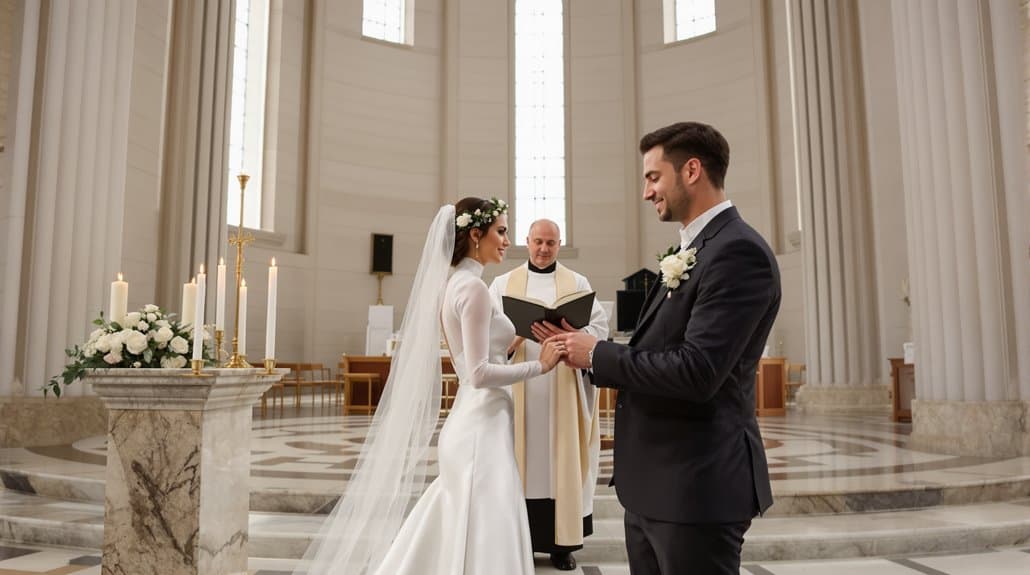
Catholic weddings require non-negotiable elements: proper consent, authorized clergy, two witnesses, and canonical form (church setting). You’ll need baptismal certificates, pre-Cana classes (6+ months prior), and marriage license. Yet parish-specific customs determine much else—ceremony timing, decorations, music selections (always sacred, never recorded), and whether you’ll have full Mass or ceremony-only format. The doctrinal requirements guarantee validity; the customary elements allow for meaningful personalization within sacred boundaries.
Catholic Wedding Basics
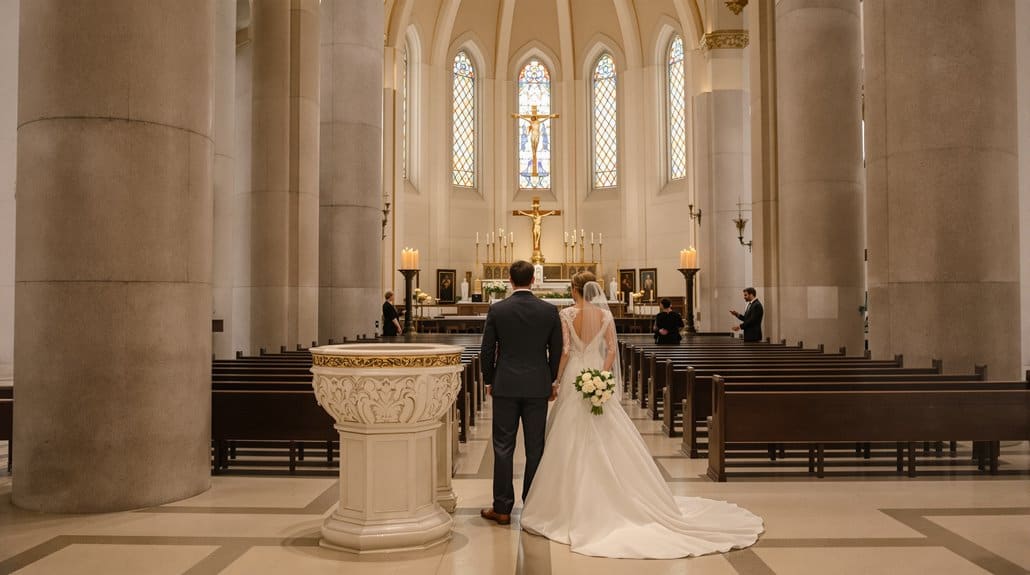
Stepping into the sacred journey of Catholic matrimony demands understanding its foundational requirements—non-negotiable elements that have endured for centuries. The Church requires three essential components: capability, consent, and canonical form. You’re capable when you’re a man and woman free from impediments—previous marriages, close blood relationships, or age restrictions. And yet, documentation proving this freedom isn’t optional; it’s mandatory.
Catholic marriage builds upon three pillars: capability, consent, and canonical form—each element sacred, each requirement absolute.
Consent transforms intention into covenant. You’ll verbally affirm—during your ceremony—that you’re entering marriage freely, wholeheartedly, and irrevocably. This isn’t just romantic sentiment; it’s binding theological commitment.
Catholic wedding requirements insist on proper location—typically parish churches, not beaches or barns. Catholic marriage preparation includes Pre-Cana courses, meetings with clergy, and discernment about accepting children. A minimum preparation period must be completed before the wedding ceremony can take place.
The Rite of Marriage structures your ceremony—with or without Mass. Both are valid, contrary to what your grandmother might insist, provided you’re both baptized Christians.
Pre-Cana Requirement: Marriage Preparation Classes
Beyond those foundational elements lies the Church’s structured involvement with your impending marriage—a formative process you’ll need to embrace before that altar moment arrives. The pre-Cana requirement stands firmly in the “non-negotiable” column of catholic wedding mandatory elements, requiring your commitment six months before your wedding date—though some parishes offer expedited options for unique circumstances.
You’ll encounter various formats to fulfill this catholic ceremony rule—each designed to prepare you for lifelong commitment through structured conversation about faith, finances, and family planning. These programs also include completion of premarital inventory questionnaires that help identify potential areas of disagreement before marriage.
| Format | Time Investment | Best For |
|---|---|---|
| Weekend Retreat | 2-3 days intensive | Busy couples needing immersion |
| Mentor Couple | 6 sessions (10+ hours) | Those wanting personalized guidance |
| Online Course | 5-13 hours self-paced | Distance relationships or tight schedules |
These programs aren’t merely bureaucratic hoops, but rather profound opportunities to strengthen your relationship’s foundation before exchanging vows—demanding, yes, but transformative. Consider enhancing your ceremony’s atmosphere with luxury rental furniture that reflects the elegance and significance of your sacred celebration.
Church Availability and Booking Process
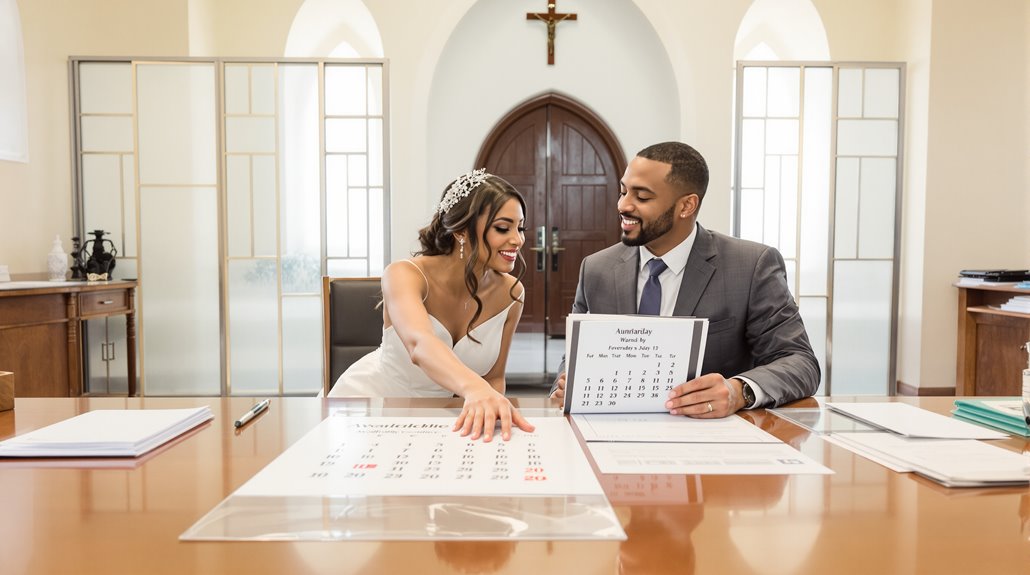
Five essential steps mark your journey toward booking a Catholic church for your wedding day—a process requiring forethought, patience, and proper timing. You’ll need to initiate parish contact 6-12 months before your desired wedding date—sooner if you’re eyeing a popular season. Most parishes require at least six months for preparation, yet some demand a full year’s notice.
Securing a Catholic wedding venue requires early action—initiate contact up to a year ahead for your sacred celebration.
- Contact your parish first, reception venue second—sacred commitment trumps party logistics, always
- Request baptismal certificates dated within six months of your wedding date—seemingly arbitrary, yet non-negotiable
- Schedule your initial clergy meeting immediately—the calendar fills faster than you’d imagine
- Understand that Catholic ceremonies must occur in sacred spaces—beaches and barns won’t suffice
- Prepare for flexibility—your first-choice wedding date may already belong to another couple
Remember: the church booking process isn’t merely administrative but spiritual preparation for a sacrament of lifelong significance. Before finalizing your wedding plans, ensure you’ve obtained your Connecticut marriage license according to state vital records requirements.
Full Mass vs Ceremony: Guest Considerations
When deciding between a full Catholic Mass and a ceremony-only wedding, you’re not merely selecting a timeframe—you’re crafting the fundamental spiritual experience your guests will share. Full Mass weddings run 45-90 minutes (versus 20-60 for ceremony-only), incorporating Eucharist that only Catholics may receive—a catholic church wedding reality that warrants consideration when your guest list includes non-Catholics.
Your non-Catholic friends won’t receive communion during Mass, creating an unavoidable separation. And yet, the Mass beautifully emphasizes the sacramental nature of your union for those who understand its significance. Ceremony-only formats (mandatory in some interfaith situations) eliminate this energetic entirely.
Catholic ceremony rules still apply regardless—the exchange of vows, nuptial blessing, and essential prayers remain intact. The difference? Time, communion access, and liturgical structure. Be transparent with guests about duration, especially for Traditional Latin Mass weddings that might stretch beyond two hours, impacting everything from vendor scheduling to reception timing. Like Jewish wedding traditions that include specific ceremonial elements such as the chuppah and ketubah signing, Catholic weddings incorporate distinctive rituals that carry deep spiritual significance for participants.
Music Restrictions: No Secular During Mass
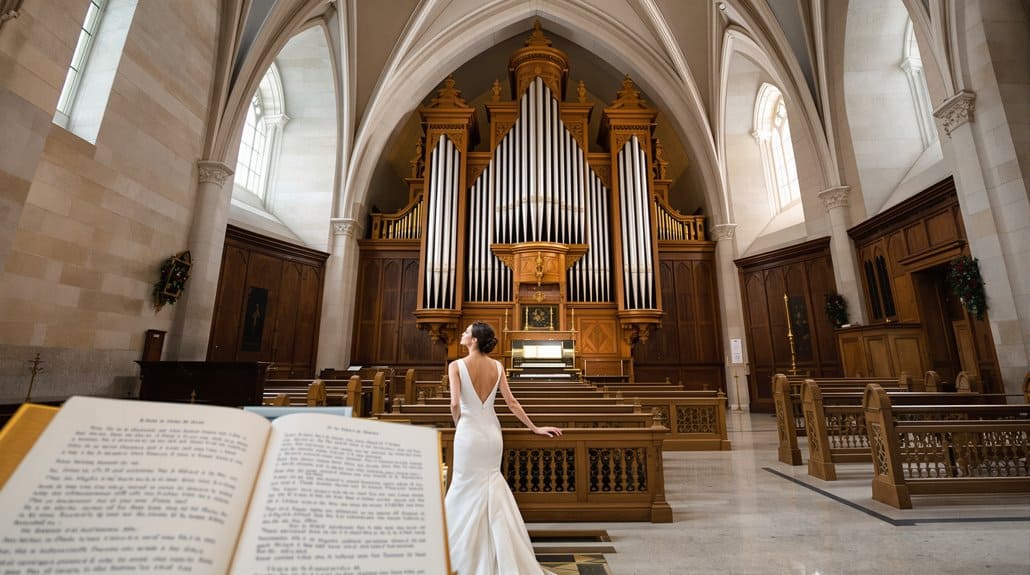
Although you’ve curated the perfect Spotify playlist capturing your love story, you’ll need to save those tracks for your reception—Catholic wedding liturgies maintain strict boundaries around musical selections. The Catholic wedding requirements regarding music aren’t suggestions but mandatory directives enforced by your parish’s Director of Liturgy and Music, who holds final approval authority over every note played within the sacred space.
When *navigating* catholic ceremony rules, remember these non-negotiables:
- No recorded music whatsoever—live musicians only during the liturgy
- Secular songs are explicitly prohibited regardlessof their personal significance to you
- Music texts must reflect both your love AND God’s love for you—purely secular expressions won’t qualify
- Popular love songs—yes, even “your song”—have no place in the sacramental celebration
- Pre-recorded music is forbidden before, during, and after the ceremony within church walls
These restrictions might feel limiting, but they ensureyour wedding remains true to its sacramental nature—a liturgical celebration, not merely a romantic event. The Catholic marriage sacrament emphasizes that the ceremony is a sacred covenant before God, which is why the Church maintains these musical guidelines to preserve the liturgical integrity of the celebration.
What’s Doctrinally Required vs Parish Preference
Many Catholic couples find themselves confused by the seemingly arbitrary rules their parish imposes, since distinguishing between universal Church doctrine and local parish preferences often feels like steering a theological maze. Let’s demystify what’s non-negotiable versus what’s simply parish custom.
| Requirement | Doctrinally Mandatory | Parish Preference |
|---|---|---|
| Authorized minister | Yes – priest/deacon | Which priest officiates |
| Two witnesses | Yes – canonical requirement | Who serves as witnesses |
| Church building | No (with dispensation) | Decoration restrictions |
| Full Mass | No – ceremony-only option exists | Time of day limitations |
| Confirmation | No (though recommended) | Timeline requirements |
You’re absolutely bound by canonical form—an authorized minister plus two witnesses—and your consent must be free, full, and faithful. And yet, much of what parishes present as “the rules” are actually local customs. Those beautiful flowers you want? The Saturday evening timeframe? The specific readings? These fall under parish discretion, not doctrine—important distinctions when planning your Catholic wedding. Before you can celebrate your Catholic wedding, you’ll need to obtain a valid marriage license from your state, which has its own separate civil requirements independent of Church doctrine.
Navigating Church Bureaucracy Respectfully
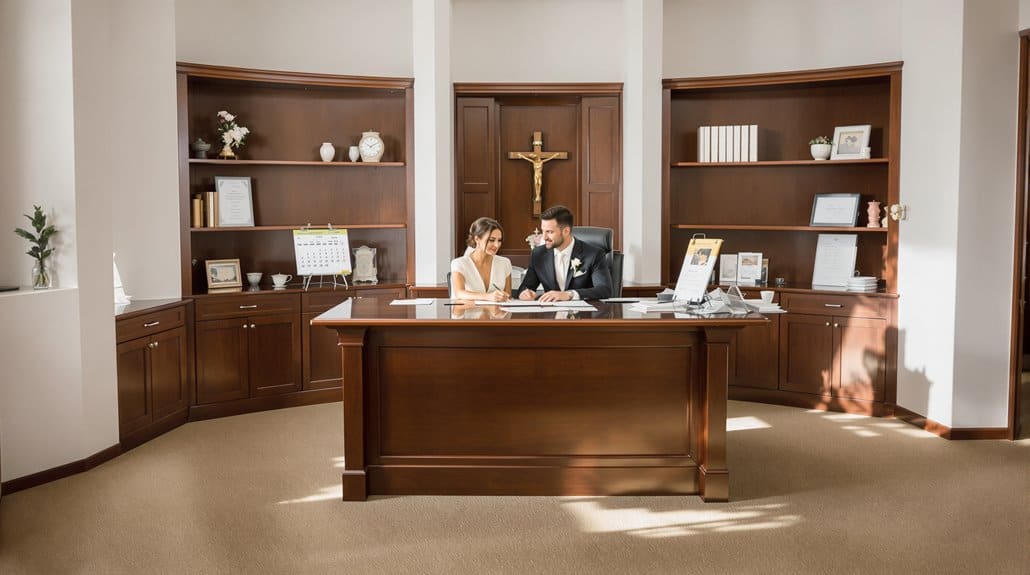
Diving into Catholic wedding preparation means confronting a labyrinth of paperwork, deadlines, and requirements that can feel overwhelming at first glance. You’ll need to start early—at least 9-12 months before your desired date—and yes, that timeframe is non-negotiable in most parishes. The church operates on its own calendar, not yours.
When approaching parish staff, remember they’re gatekeepers to your sacrament, deserving both your patience and prompt responses. Your demeanor matters immensely.
- Request baptismal certificates within the required six-month validity window
- Schedule your Pre-Cana coursework immediately after securing your date
- Prepare for the prenuptial investigation with radical honesty
- Recognize diocese-specific requirements aren’t suggestions but mandates
- Accept that some aspects (like paperwork timing) aren’t flexible, while others might be
The process demands deference to tradition and protocol, and yet, approaching it with genuine respect often reveals unexpected flexibility where it matters most.
Conclusion
While maneuvering the complex requirements of a Catholic wedding may initially seem daunting, you’ll find that each element serves a deeper purpose within the Church’s understanding of matrimony as a sacred covenant. The mandatory elements—proper authorization, impediment verification, canonical form, genuine consent, and specific adaptations for interfaith unions—aren’t arbitrary bureaucracy but safeguards ensuring your marriage stands on solid theological ground.
You’re embarking on not just a ceremony but a sacrament requiring meticulous preparation. Two witnesses, baptismal certificates issued within six months, and prescribed liturgical forms aren’t optional—they’re non-negotiable components of validity. And yet, within these requirements exists remarkable flexibility. The Church distinguishes between what’s essential for sacramental validity and what’s simply traditional or preferred.
Just as Japanese beauty rituals honor time-tested traditions while allowing personal expression, the Catholic wedding ceremony balances sacred requirements with meaningful customization opportunities.
Remember: A properly performed Catholic wedding ceremony reflects both ecclesiastical law and divine intention—transforming legal requirements into sacred participation in a tradition spanning two millennia.