
Briefing florists for installations demands 4-6 times more detail than arrangements. You’ll need precise measurements, structural specifications, and venue constraints upfront—not just aesthetic preferences. Share exhaustive moodboards explaining scale, texture, and emotional impact; conduct technical walkthroughs with venue managers; allocate appropriate budget (installations start at $1,000 minimum); and schedule 2-5 hours pre-event access. This isn’t just about pretty flowers, but engineering invisible armatures that transform spaces while meeting weight limits and fire codes. The difference lies in the details.
Installation vs Arrangement Briefing
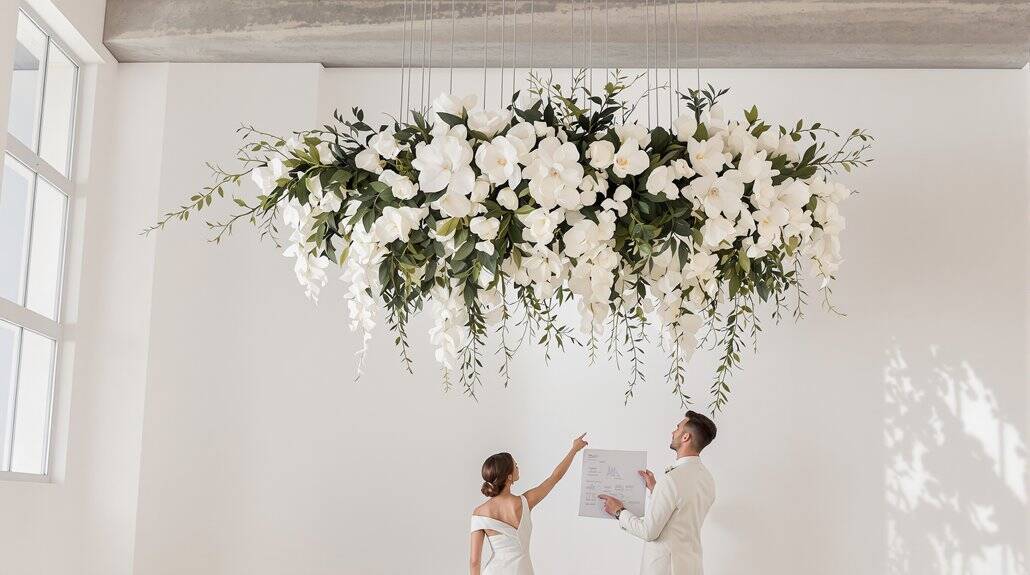
Why do so many clients fail to understand the extensive chasm between briefing for a traditional arrangement versus commissioning a full floral installation? The distinction isn’t subtle—it’s architectural. When communicating your floral vision, you’re not simply selecting blooms; you’re articulating spatial transformation requiring 4-6 times more detailed direction.
Installation floral design demands briefing that addresses structural integrity, spatial flow, and venue-specific engineering—not merely aesthetic preferences. You’ll need to provide ceiling heights (exact measurements, not approximations), weight-bearing capacities, and access points. These installations transform venues by creating immersive environments that interact with the existing architecture.
Comprehensive spatial architecture requires meticulous technical specification—not vague aesthetic dreams.
Floral installation planning encompasses critical logistics: a 90-minute arrangement setup versus an 8-hour installation build requiring venue coordination, specialized equipment, and breakdown windows. For intimate weddings, consider exploring unconventional spaces that may offer unique architectural features complementing your installation design. Your brief must acknowledge this fundamental reality.
The stakes are dramatically higher, and yet clients often approach both with identical preparation—a devastating miscalculation that undermines even the most imaginative design concepts before they begin.
Communicating Spatial Vision
Conveying spatial vision demands an entirely different language from arranging tabletop florals. You’ll need to develop a thorough visual inspiration system—combining your reference images with the designer’s portfolio work—to create an all-encompassing spatial blueprint. Those mood boards aren’t mere decoration; they’re essential translation tools that condense complex three-dimensional concepts into digestible reference points.
Your spatial language must evolve beyond “pretty” or “romantic.” Extract emotional cues from conversations, identifying whether you envision movement that flows energetically through a space or anchors it with deliberate stillness. This vocabulary bridges the gap between feeling and form—crucial for installations that occupy significant cubic footage, not just surface area. Standardizing your wording for design styles can significantly improve communication efficiency with your florist and ensure consistent understanding throughout the planning process.
Design principles become exponentially important at scale. Be prepared to discuss line, dominance, contrast, and rhythm with mathematical precision. A 6-foot installation commands 36 times the visual weight of a 12-inch arrangement, and yet—the principles guiding its impact remain fundamentally consistent, just dramatically amplified. Consider staggered heights below 60 inches to maintain clear sightlines and prevent installations from overwhelming the primary focal points in your space.
Structural Requirements Discussion
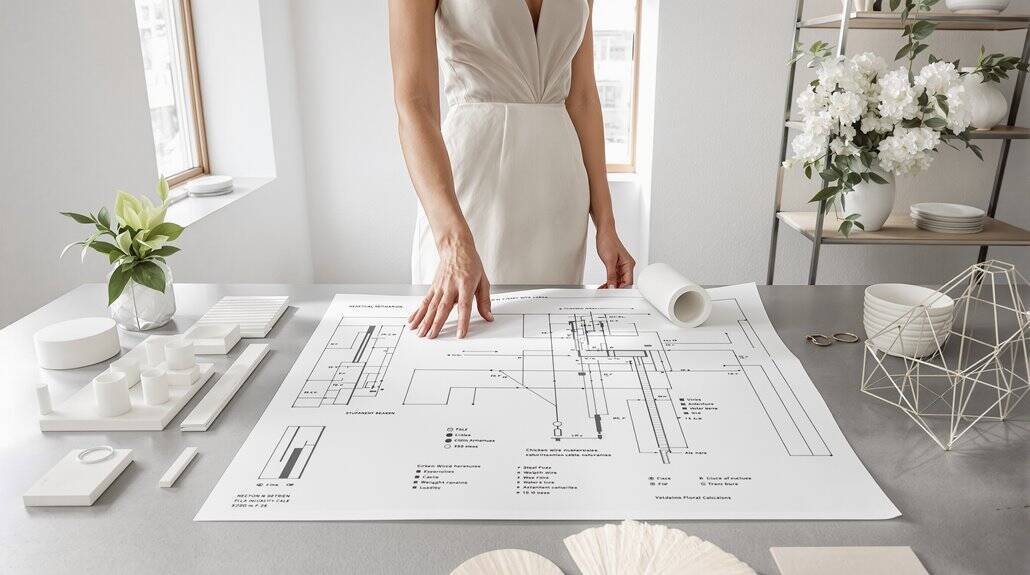
Unlike arrangement consultations, structural requirements for floral installations demand detailed engineering conversations alongside creative ones. You’ll need to outline precise framework specifications—not vague ideas about “something dramatic.” Discuss load-bearing needs explicitly: will you need rebar supports for that ceiling installation, or will bamboo suffice? Those decisions impact your budget by hundreds, possibly thousands.
Custom builds bolster costs but ensure stability. You must articulate exactly how your architectural florals will stand securely for 8+ hours without toppling. And yet, technical discussions needn’t sacrifice beauty—describe how internal armatures (chicken wire, foam alternatives) will support your vision while remaining invisible to guests.
For floral installation planning, provide venue constraints upfront: ceiling weight limits, wall attachment restrictions, floor protection requirements. These aren’t afterthoughts—they’re fundamental to success. If your venue is historic, load calculations from structural engineers may be required to verify that original ceiling beams can safely support rigging equipment or suspended installations. Remember, your florist is building something that must be simultaneously ethereal and structurally sound, a paradox requiring meticulous preparation.
Venue Coordination Essentials
When coordinating with venues for floral installations, your success hinges entirely on understanding the space’s hidden restrictions before—not after—your design plans solidify. Request the detailed floor plan, scrutinizing not just empty spaces but traffic flow patterns that will affect your installation’s visibility and structural integrity.
You’ll need to coordinate three critical timing windows for floral installation planning: vendor access (typically 4-6 hours before event), teardown scheduling (often midnight to 2am), and a 30-minute final inspection with venue management. And yet, timing isn’t everything—power outlet locations will dictate lighting possibilities, while HVAC systems directly impact flower longevity.
The most successful venue coordination essentials for installation floral design involve pre-scheduling a technical walkthrough with the venue’s operations manager, not just the event coordinator. They’ll reveal load-bearing capacities, fire marshal restrictions, and those maddeningly specific insurance requirements that can derail your most ambitious installations if discovered too late. Just as bridal fashion collaborations require careful coordination between designers and brands to achieve sculptural excellence, your floral installations demand the same level of detailed planning and partnership with venue stakeholders.
Installation Access and Timing
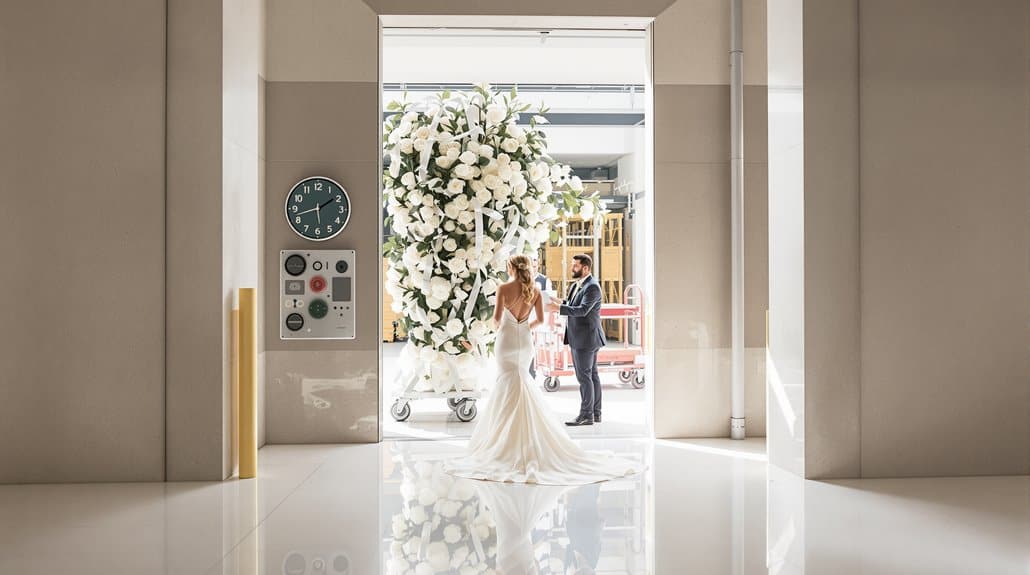
Installation access and timing determine whether your floral vision materializes or melts down in the final hours. Your florist needs 2-5 hours before ceremony start—a timeframe that contracts dramatically at historic venues and expands with suspended installations. You’ll need to secure venue-specific timing constraints during your walk-through, noting attachment limitations around HVAC systems and emergency signage that affect installation floral design execution.
Most venues allocate 8-10 hours from setup through breakdown, yet this window shrinks with multi-vendor events. Early access time requirements should be confirmed rather than assumed; extra hours often trigger additional fees. Place flower orders 2-4 weeks ahead, but coordinate delivery logistics even earlier.
Consider weather contingencies for outdoor setups—they’ll affect installation pace dramatically. Museums often enforce strict load-in windows from 5-9pm with overtime charges reaching $500 per hour for violations. Triple-check access times with your venue coordinator, and remember: the most exquisite installation in the world is worthless if your team can’t properly execute it within your venue’s rigid timeframe.
Budget Framework for Ambitious Work
The financial structure for your floral installation deserves brutal honesty—it’ll make or break your vision. When planning large scale florals brief, you need precise allocation benchmarks. Standard weddings dedicate 10-15% of total budget to flowers, but ambitious installations demand more.
| Budget Tier | Total Wedding | Floral Allocation | Installation Minimum |
|---|---|---|---|
| Modest | $20,000 | $2,000-3,000 | $1,000 |
| Standard | $50,000 | $5,000-7,500 | $3,000 |
| Premium | $75,000+ | $7,500-11,250+ | $5,000+ |
Just as crop production research focuses on economical yields while maintaining quality, your floral budget
Collaborative Design Process
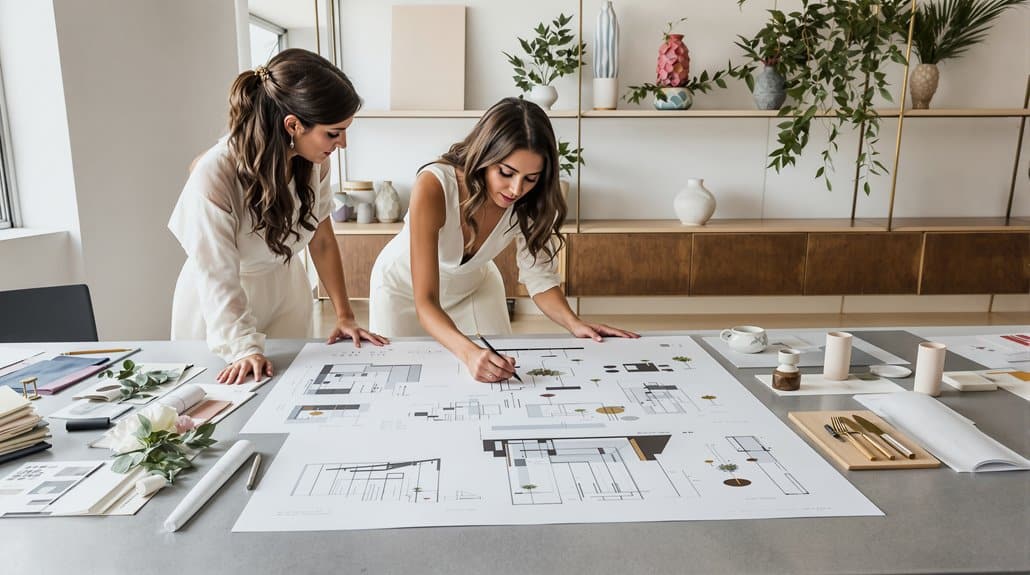
Successful floral installations begin with a dance of ideas, not just a presentation of portfolios. You’ll need to share far more than color preferences when briefing florist installation projects—bring moodboards, fabric swatches, and architectural drawings that speak to spatial relationships, not just aesthetics.
Your floral installation planning should involve multiple stakeholders. Insist on venue walkthroughs with your florist and planner simultaneously—this three-way conversation reveals sightline issues, structural limitations, and creative opportunities impossible to capture in photos alone. Share Pinterest boards, yes, but accompany them with written explanations of what specifically resonates about each image: scale, texture, negative space, or emotional impact.
The collaborative process demands vulnerability, and yet it requires boundaries. Be explicit about budget parameters from the outset, but flexible about execution details. Great installation floral design emerges when you articulate your vision boldly, then step back to let technical expertise reshape possibilities. Consider bringing fabric swatches from your gown or bridal accessories to ensure your floral installations harmonize with your wedding day aesthetic.
Conclusion
Why, after all this detailed planning, do so many installation briefs fall apart at implementation? Because they’re missing a critical capstone—a crystallizing conclusion that ties together your vision, requirements, and expectations into an executable plan. When briefing a florist on installation design, your wrap-up determines whether your conceptual dreams materialize into physical reality.
| Brief Component | Common Error | Professional Approach |
|---|---|---|
| Timeline | Vague deadlines | Hour-by-hour breakdown |
| Budget | Hidden costs | Itemized contingencies |
| Decision Authority | Unclear approvals | Named stakeholders |
The final moments of your floral installation planning should codify accountability—establish who signs off on what, by when, and the exact revision process when things inevitably shift. Consider your conclusion less an ending and more a contract, outlining the precise mechanics of how your installation will shift from concept to construction. Just as Government of Canada documentation requires precise stakeholder identification for marriage and citizenship processes, your floral brief must clearly designate decision-makers and approval chains. A masterful brief florist installation document doesn’t merely inspire; it creates an unambiguous roadmap for execution.